Experience the perfect harmony of bright citrus and savory garlic with these tender, crispy-skinned chicken thighs. This simple one-pan meal creates a rich, buttery sauce that elevates a standard weeknight dinner into something truly special. By focusing on searing the skin and basting with the pan-infused butter, you achieve restaurant-quality flavor with minimal cleanup.
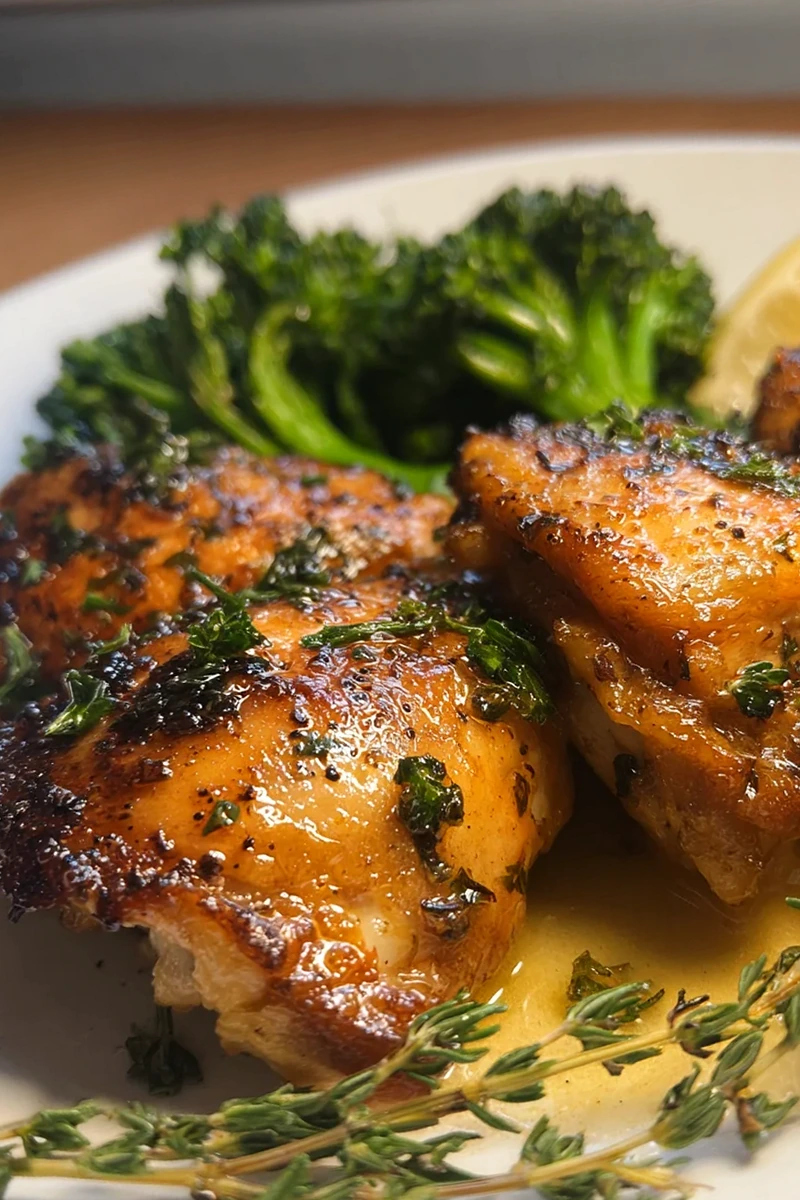
List of ingredients
- 4 bone-in, skin-on chicken thighs
- 2 tablespoons olive oil
- 4 tablespoons unsalted butter
- 4 cloves garlic, minced
- 1 tablespoon fresh lemon zest
- Juice of 1 lemon
- 1 teaspoon dried thyme
- 1 teaspoon paprika
- Salt and black pepper to taste
- Fresh parsley, chopped for garnish
step-by-step instructions
- Step: Pat the chicken thighs dry with paper towels and season both sides generously with salt and black pepper.
- Step: Heat olive oil in a large skillet over medium-high heat, add chicken thighs skin-side down, and sear for 5-7 minutes until golden brown; flip and cook for another 5 minutes.
- Step: Reduce heat to medium, add butter, garlic, lemon zest, lemon juice, thyme, and paprika; stir and cook for about 2 minutes until fragrant.
- Step: Spoon the sauce over the chicken occasionally and cook for an additional 10 minutes until the internal temperature reaches 165°F (75°C).
- Step: Remove from skillet, allow to rest for a few minutes, then drizzle with remaining sauce and garnish with chopped parsley.
Refining Your Searing Technique
Achieving Maximum Skin Crispiness
The secret to a great sear lies in moisture control. If the chicken skin is damp when it hits the hot oil, the steam created will prevent the Maillard reaction that turns skin golden and crunchy. Always take the extra thirty seconds to blot the surface of the chicken with a fresh paper towel before seasoning.
Selecting the Right Pan Material
Using a heavy-bottomed stainless steel or cast-iron skillet provides the best heat distribution. These materials hold heat well, preventing the pan temperature from dropping drastically when the cold chicken is added. Avoid non-stick pans if possible, as they rarely achieve the same level of deep, flavorful browning on the skin.
Managing Garlic and Herb Infusion
Preventing Garlic From Turning Bitter
Garlic has a tendency to burn quickly, which can turn an otherwise perfect sauce bitter. By adding the garlic only after the chicken has been seared and the heat reduced to medium, you protect the delicate aromatics. Constant basting helps distribute the flavor of the garlic into the meat of the chicken while keeping the sauce stable.
Enhancing the Sauce Texture
To ensure a smooth, emulsified sauce, swirl the pan periodically once the butter has melted. If the sauce looks a bit thin, you can continue to cook it for an extra minute to allow the lemon juice to reduce slightly. The combination of the chicken drippings, butter, and lemon juice creates a natural reduction that clings perfectly to the meat.
Flavor Variations and Substitutions
Incorporating Fresh Herbs
While dried thyme is reliable, you can swap it for fresh rosemary or oregano if you prefer a different profile. If using fresh woody herbs, add them at the same time as the garlic to allow their oils to infuse into the butter. Avoid adding tender herbs like basil until the very end, as they lose their brightness when subjected to high heat.
Adjusting the Citrus Profile
If you want a more complex citrus flavor, you can replace the lemon zest with half lemon zest and half lime zest. This creates a brighter, slightly more exotic undertone that pairs beautifully with the garlic. If you find the lemon too intense, you can mellow the sauce by stirring in a tablespoon of honey or maple syrup to balance the acidity.
Optimal Serving Pairings
Choosing the Perfect Starch
Because this dish produces a generous amount of flavorful butter sauce, a starchy base is essential for soaking up every drop. Creamy mashed potatoes, roasted baby potatoes, or even simple steamed jasmine rice serve as excellent sponges for the lemon-garlic emulsion. Alternatively, tossed al dente fettuccine with the pan sauce creates a quick and elegant side.
Balancing With Vegetables
To contrast the richness of the butter, include a fresh or charred vegetable side. Asparagus spears roasted with olive oil or steamed green beans provide a crisp texture that complements the tender chicken. For a heartier option, roasted Brussels sprouts or honey-glazed carrots bring a natural sweetness that stands up well to the zesty lemon sauce.
Strategic Storage and Reheating
Maintaining Meat Quality During Storage
Keep any leftover chicken in an airtight container, preferably with a bit of the pan sauce to keep the meat hydrated. It will remain safe and flavorful in the refrigerator for three to four days. When storing, try to keep the skin exposed to as little liquid as possible to preserve some of the texture, though the sauce will naturally soften it over time.
Restoring Texture via Reheating
To reheat, use an oven set to 350°F (175°C) to allow the skin to crisp back up slightly. Avoid the microwave if possible, as it tends to make the skin rubbery and the meat overly soft. If you must use a stovetop, heat the thighs in a skillet with a tiny splash of water or broth, covered, to prevent the butter sauce from scorching while the meat warms through.
Commonly Asked Questions
Can I prepare this dish with boneless thighs?
Yes, boneless, skinless or skin-on thighs work perfectly fine with this recipe. Reduce the total cook time to about 12-15 minutes, as boneless cuts cook much faster. Watch the temperature carefully to ensure they do not dry out.
Is it necessary to use unsalted butter?
Unsalted butter is recommended because it allows you to control the exact amount of salt in the final sauce. If you only have salted butter, simply reduce or omit the added salt in the seasoning phase to keep the balance correct.
Can I add onions to the skillet?
Yes, thinly sliced shallots or yellow onions can be added to the pan after searing the chicken but before adding the butter. Sauté them until translucent, then continue with the rest of the steps for a deeper, more savory sauce base.
Why did my skin not get crispy?
This is usually due to moisture or pan temperature. If the pan was not hot enough or the chicken was wet, the skin will not sear properly. Ensure the oil is hot and the chicken is thoroughly patted dry before adding it to the pan.
What is the benefit of letting the meat rest?
Resting the chicken allows the internal juices to redistribute throughout the muscle fibers. If you cut into the chicken immediately, the juices will run out onto the plate instead of staying inside the meat, which can make the chicken feel dry.
Print
Lemon Garlic Butter Chicken Thighs: A Flavorful One-Pan Dinner
- Total Time: 30 minutes
- Yield: 4 servings 1x
- Diet: Low carb
Description
Lemon Garlic Butter Chicken Thighs is a vibrant and flavorful dish that transforms ordinary weeknight dinners into delightful culinary experiences. Succulent chicken thighs are seared to golden perfection, then bathed in a luscious garlic butter sauce infused with zesty lemon and aromatic herbs. This one-pan wonder is not only quick to prepare but also makes for an impressive presentation at any gathering.
Ingredients
- 4 bone-in, skin-on chicken thighs
- 2 tablespoons olive oil
- 4 tablespoons unsalted butter
- 4 cloves garlic, minced
- 1 tablespoon fresh lemon zest
- Juice of 1 lemon
- 1 teaspoon dried thyme
- 1 teaspoon paprika
- Salt and black pepper to taste
- Fresh parsley, chopped for garnish
Instructions
- Step: Pat the chicken thighs dry with paper towels and season both sides generously with salt and black pepper.
- Step: Heat olive oil in a large skillet over medium-high heat, add chicken thighs skin-side down, and sear for 5-7 minutes until golden brown; flip and cook for another 5 minutes.
- Step: Reduce heat to medium, add butter, garlic, lemon zest, lemon juice, thyme, and paprika; stir and cook for about 2 minutes until fragrant.
- Step: Spoon the sauce over the chicken occasionally and cook for an additional 10 minutes until the internal temperature reaches 165°F (75°C).
- Step: Remove from skillet, allow to rest for a few minutes, then drizzle with remaining sauce and garnish with chopped parsley.
Notes
Ensure chicken is patted dry thoroughly before searing to achieve crispy skin. Always use a meat thermometer to ensure the chicken reaches an internal temperature of 165°F (75°C).
- Prep Time: 10 minutes
- Cook Time: 20 minutes
- Category: Main
- Method: Skillet
- Cuisine: American
Nutrition
- Serving Size: 1 thigh
- Calories: 370 kcal
- Sugar: 0 g
- Sodium: 480 mg
- Fat: 27 g
- Saturated Fat: 9 g
- Unsaturated Fat: 16 g
- Trans Fat: 0 g
- Carbohydrates: 2 g
- Fiber: 0 g
- Protein: 32 g
- Cholesterol: 120 mg