Baking chicken breast at a high temperature like 425°F is the most effective method to achieve a beautiful golden-brown exterior while maintaining a moist, tender center. This high-heat technique locks in natural juices quickly, preventing the meat from drying out during the baking process. Follow this straightforward guide to master perfectly roasted chicken every single time.
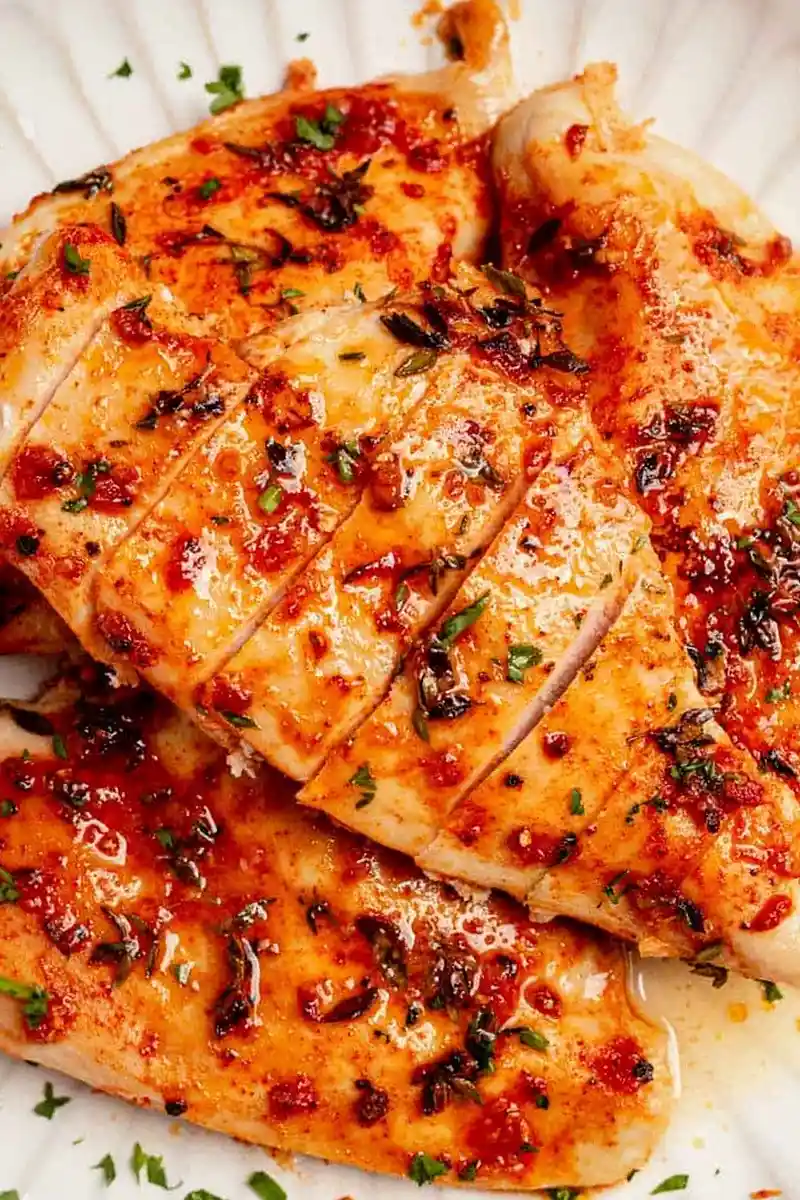
List of ingredients
- 4 (5-6 ounce) chicken breasts, pounded to an even thickness
- 1 Tablespoon olive oil
- 1 teaspoon kosher salt
- 1/4 teaspoon fresh cracked black pepper
- 1 teaspoon paprika
- 1 Tablespoon brown sugar or coconut sugar
- 2 minced garlic cloves or 1 teaspoon garlic powder
- 2 teaspoons fresh thyme leaves
- Pinch of red pepper flakes (optional)
step-by-step instructions
- Step: Preheat the oven to 425°F. Line a baking sheet or baking dish with foil or parchment paper.
- Step: Pat the chicken dry with a paper towel and pound the chicken down to an even thickness using a meat mallet, rolling pin, back of a frying pan, or even your fist.
- Step: Mix the seasoning including the salt, pepper, paprika, brown sugar, garlic, and thyme in a small dish.
- Step: Place the chicken upside down in the prepared pan or dish and sprinkle with half of the seasoning and drizzle with half of the olive oil. Use your fingers to rub the seasoning into the chicken. Flip the chicken over and repeat with the remaining seasoning and olive oil.
- Step: Bake in the preheated oven for 18-20 minutes or until the internal temperature reaches 165°F. Remove from the oven and allow the chicken breasts to rest for 5-10 minutes to lock in the juices.
Refining the Preparation Process
Achieving Uniform Thickness for Consistent Results
Using a meat mallet is the most reliable way to flatten chicken breasts without damaging the structural integrity of the meat. If you do not own a mallet, a heavy-bottomed skillet or rolling pin works perfectly well to achieve that desired half-inch consistency. Consistent thickness is the single most important factor in preventing some parts of the chicken from becoming rubbery while others remain undercooked.
The Role of High Heat in Texture Development
Cooking at 425°F creates an immediate sear on the surface of the chicken, which acts as a protective barrier for the moisture trapped inside. Low-temperature roasting often leads to a prolonged cooking time, which evaporates too much moisture and leaves the meat stringy. By utilizing a hotter oven, you decrease the overall time the chicken spends exposed to heat, resulting in a superior, succulent outcome.
Refining Your Seasoning Profiles
Enhancing Flavor with Dried Herb Alternatives
If fresh thyme is unavailable, you can substitute it with dried versions, though you should adjust the ratio. Use 1 teaspoon of dried thyme instead of 2 teaspoons of fresh, as dried herbs are more concentrated in flavor. Other excellent additions include dried oregano, rosemary, or even a blend of Italian herbs to vary the flavor profile for different meals.
Managing Sugar Content for Caramelization
The brown sugar in this recipe is crucial for building a deep, caramelized crust on the chicken exterior. If you prefer to minimize sugars, you can omit it, but you will notice a difference in the depth of the crust. If you use coconut sugar, the flavor remains earthy and deep, which pairs exceptionally well with the garlic and paprika components.
Successful Storage and Reheating
Proper Refrigeration Techniques
Once the chicken has cooled to room temperature, place it in an airtight container to maintain its quality. Properly stored chicken breast will last for up to 4 days in the refrigerator. Avoid storing it in thin plastic wrap, as this can allow the meat to dry out significantly faster than a sealed container.
Reheating Without Sacrificing Moisture
To reheat chicken without it becoming tough, place it in a baking dish and add a small splash of broth or water to create steam. Cover the dish with foil and heat it in a 350°F oven for approximately 15 minutes. This gentle reheating method restores the internal temperature without evaporating the remaining moisture in the meat.
Practical Serving and Usage Suggestions
Incorporating into Fresh Garden Salads
This roasted chicken is an ideal candidate for cold salads because the exterior has a pleasant texture that holds up well against dressings. Try slicing the chicken into thin strips and layering it over a bed of mixed greens, apples, and toasted walnuts for a satisfying, nutrient-dense lunch. The savory, slightly sweet seasoning profile complements crisp orchard fruits and sharp vinaigrettes beautifully.
Creating Hearty Warm Bowls
You can use the cooked chicken as a primary protein for grain-based bowls. Combine the sliced chicken with cooked quinoa, roasted root vegetables, and a spoonful of tahini or lemon-based dressing. The neutrality of the chicken seasoning means it can transition easily between Mediterranean, Mexican, or Asian-inspired ingredient pairings.
Frequently Asked Questions
Why does my chicken sometimes taste woody?
Woody or rubbery texture is often a result of selecting chicken breasts that are naturally too large, typically over 8 ounces. When selecting protein at the grocery store, aim for smaller, organic breasts, or consistently slice larger ones into cutlets to ensure the muscle fibers do not become dense and tough during the cooking process.
Is a meat thermometer necessary for this recipe?
Yes, an instant-read thermometer is the only way to guarantee accuracy and safety without relying on guesswork. Because oven performance varies from household to household, relying on a timer alone can lead to either undercooked meat or overcooked, dry chicken. Always aim for the internal temperature to reach 165°F for food safety.
Can I grill the chicken instead of baking it?
You can adapt this recipe for the grill, but you must be mindful of the high sugar content in the spice rub, which can char quickly over an open flame. If grilling, keep the heat at a medium-high level and monitor the internal temperature closely to prevent burning the crust before the center is finished cooking.
Why should I rest the chicken before serving?
Resting allows the muscle fibers, which tighten when exposed to heat, to relax and reabsorb the juices that have migrated toward the center. Cutting into the chicken immediately after pulling it from the oven causes those juices to run out onto the cutting board, resulting in a drier bite. Always set a timer for that five-to-ten-minute window.
Can I freeze cooked chicken breast?
Yes, cooked chicken can be frozen for up to three months. Wrap the cooled chicken tightly in plastic wrap and then place it in a freezer-safe bag, removing as much air as possible to prevent ice crystals from forming. Thaw it in the refrigerator overnight before reheating it using the oven method for the best texture and flavor recovery.
Print
How to Bake Chicken Breast at 425
- Total Time: PT23M
- Yield: 4 servings 1x
- Diet: Healthy
Description
Baking chicken breast at 425°F helps caramelize the outside and lock in the juices quickly. This easy recipe results in a tender, juicy chicken breast every time.
Ingredients
- 4 (5-6 ounce) chicken breasts, pounded to an even thickness
- 1 Tablespoon olive oil
- 1 teaspoon kosher salt
- 1/4 teaspoon fresh cracked black pepper
- 1 teaspoon paprika
- 1 Tablespoon brown sugar or coconut sugar
- 2 minced garlic cloves or 1 teaspoon garlic powder
- 2 teaspoons fresh thyme leaves
- Pinch of red pepper flakes (optional)
Instructions
- Step: Preheat the oven to 425°F. Line a baking sheet or baking dish with foil or parchment paper.
- Step: Pat the chicken dry with a paper towel and pound the chicken down to an even thickness using a meat mallet, rolling pin, back of a frying pan, or even your fist.
- Step: Mix the seasoning including the salt, pepper, paprika, brown sugar, garlic, and thyme in a small dish.
- Step: Place the chicken upside down in the prepared pan or dish and sprinkle with half of the seasoning and drizzle with half of the olive oil. Use your fingers to rub the seasoning into the chicken. Flip the chicken over and repeat with the remaining seasoning and olive oil.
- Step: Bake in the preheated oven for 18-20 minutes or until the internal temperature reaches 165°F. Remove from the oven and allow the chicken breasts to rest for 5-10 minutes to lock in the juices.
Notes
Large Chicken Breasts: If the chicken breasts are 8 ounces or larger, slice them in half lengthwise to create chicken cutlets. Thyme: You can swap this for 1 teaspoon of dried thyme or another dried herb of choice like oregano or rosemary.
- Prep Time: PT5M
- Cook Time: PT18M
- Category: Dinner
- Method: Baking
- Cuisine: American
Nutrition
- Serving Size: 1 serving
- Calories: 213 kcal
- Sugar: 2.3 g
- Sodium: 375 mg
- Fat: 7.3 g
- Saturated Fat: 1.2 g
- Unsaturated Fat: 5.5 g
- Trans Fat: 0 g
- Carbohydrates: 3.2 g
- Fiber: 0.3 g
- Protein: 32.1 g
- Cholesterol: 103.4 mg