This vibrant baked salmon pasta brings a sophisticated, Mediterranean-inspired flavor profile to your dinner table with minimal cleanup. By roasting the salmon alongside cherry tomatoes, zesty shallots, and tangy feta cheese, you create an effortless, flavor-packed sauce that coats every strand of pasta perfectly. It is the ideal solution for those busy weeknights when you want a restaurant-quality meal that takes less than forty minutes from start to finish.
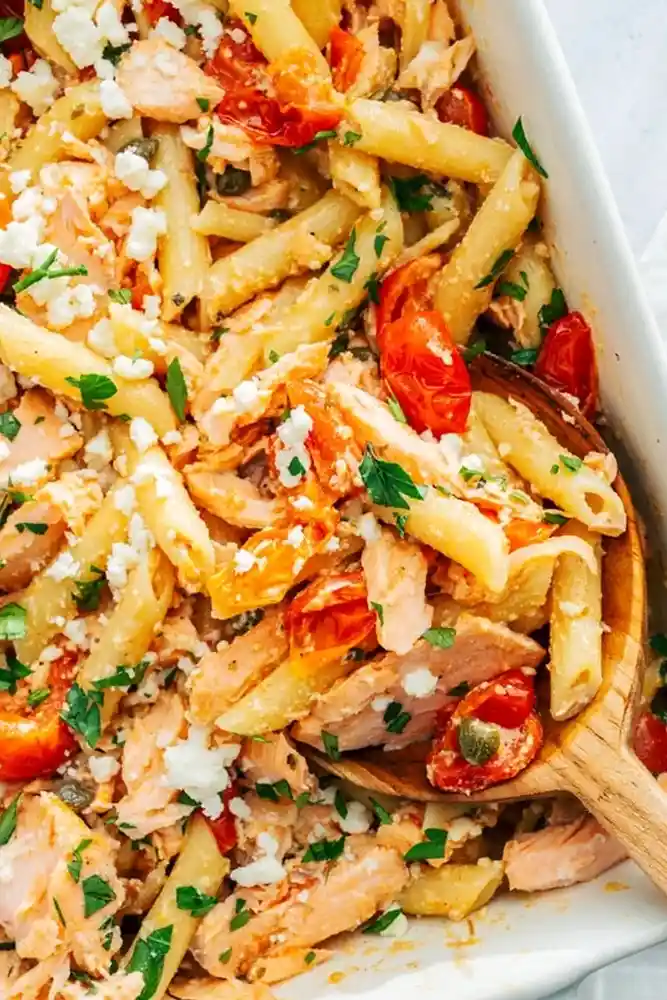
List of ingredients
- 1 pound salmon fillets
- 1 pint cherry tomatoes, sliced in half
- 1 large shallot, thinly sliced
- 2 garlic cloves, minced
- 3 tablespoons capers, drained
- 1 tablespoon olive oil, plus more for drizzling
- 1 teaspoon kosher salt
- Fresh ground black pepper
- 4 ounce block feta cheese
- 2 teaspoons dried oregano
- 3 tablespoons lemon juice
- 8 ounces penne pasta
- Chopped fresh Italian parsley, for garnish
step-by-step instructions
- Step: Preheat the oven to 425 degrees Fahrenheit. Allow the fish to stand at room temperature while prepping the vegetables.
- Step: Place the chopped vegetables and drained capers in the bottom of a 9 x 13″ baking dish. Mix with 1 tablespoon olive oil, 1/8 teaspoon salt, and fresh ground black pepper. Crumble the feta cheese into rough chunks and add it to the pan, tossing gently to combine.
- Step: Pat the fish dry. Rub it with 1 drizzle of olive oil and 1/2 teaspoon kosher salt. Sprinkle with the dried oregano and a few grinds of black pepper. Place the fillets on top of the vegetables in the baking dish, then gently drizzle with the lemon juice.
- Step: Place the baking dish in the oven and bake for about 20 to 30 minutes, until the fish is flaky and the internal temperature is at least 130 degrees Fahrenheit.
- Step: Meanwhile, boil the penne until al dente, then drain. Return to the pan and toss with a small drizzle of olive oil.
- Step: When the salmon is done, remove it to a plate and flake it into chunks with a fork.
- Step: Pour the pasta into the baking dish with the vegetables and stir to combine with 1/4 teaspoon kosher salt. Add the salmon and gently stir to combine. Serve immediately.
Refining Your Pasta Texture
Mastering the Al Dente Technique
Achieving the perfect pasta texture is critical for this dish, as you want the noodles to retain a slight chew that contrasts with the tender roasted salmon. Start checking your pasta two minutes before the package instructions recommend, pulling a piece out to test for that tiny, stubborn white dot in the center. Once you achieve this, drain it quickly to prevent residual heat from softening the noodles into a mushy consistency.
Preventing Clumping After Draining
Once you have drained your pasta, it can become tacky very quickly, which interferes with the sauce coating process. A light drizzle of high-quality olive oil tossed into the pot immediately after draining creates a protective barrier around the starch. This allows the pasta to remain loose and separate, ensuring that the feta and tomato juices can cling to every piece.
Selecting and Handling Salmon
Choosing Quality Fillets
The flavor of your finished pasta is heavily dependent on the quality of your salmon, so prioritize fresh, firm fillets. Look for salmon with a vibrant color and a fresh, clean scent rather than a strong fishy odor. If you choose frozen, make sure to thaw it slowly in the refrigerator overnight before patting it dry to ensure the fish does not release excess moisture into your roasting dish.
Managing Moisture During Roasting
Patting your fish dry with paper towels before seasoning is a non-negotiable step for getting the best result. Excess surface moisture can cause the fish to steam rather than roast, which leads to a pale, rubbery texture. Removing that moisture allows the seasonings to adhere properly and encourages the exterior to develop a nice, concentrated flavor as it hits the heat of the oven.
Customizing Your Flavor Profile
Balancing Saltiness and Acidity
Because feta and capers are inherently salty, always taste your pasta after tossing it with the vegetables before adding extra salt. If the dish feels too rich or heavy, add a fresh squeeze of lemon juice at the end to provide a bright, acidic pop. This lift acts as a palate cleanser, making the overall flavor profile feel much more balanced and refreshed.
Adjusting Herb Profiles
While dried oregano provides a classic Mediterranean flavor, you can swap it out if you prefer different aromatic notes. Dried thyme or a small amount of dried basil works exceptionally well with roasted tomatoes and salmon. If you enjoy a bit of heat, add a pinch of crushed red pepper flakes to the vegetables before placing the pan in the oven.
FAQ
Can I prepare this dish ahead of time?
You can prep your vegetables and measure your seasonings up to twenty-four hours in advance, keeping them in an airtight container in the refrigerator. However, it is best to cook the salmon fresh when you are ready to eat, as the texture of fish changes significantly if it is baked and then kept for too long.
How should I store leftovers?
Store any remaining pasta in a sealed container in the refrigerator for up to two days. Because fish is delicate, it is important to seal it well to keep the aroma contained and to ensure the pasta remains as fresh as possible for your next meal.
Is there a way to make this dish without dairy?
You can omit the feta cheese entirely if you prefer a dairy-free meal, though you may want to increase the olive oil and add a bit more salt to ensure the sauce has enough body. Alternatively, use a high-quality dairy-free feta alternative that is designed to soften or melt when exposed to heat to maintain that creamy element.
What should I serve on the side?
Because this pasta is quite filling and rich, it pairs best with lighter side dishes like a simple green salad dressed with a vinaigrette. A crisp arugula salad with shaved Parmesan or a classic garden salad provides the perfect crunch and bitterness to contrast with the tender salmon and creamy pasta sauce.
Effective Reheating Strategies
Avoiding Overcooked Fish
Reheating salmon can be tricky because it tends to dry out quickly if blasted with high heat in a microwave. The most effective way to reheat this dish is to place it in a skillet over low heat with a tiny splash of water or broth. Cover the skillet and let the steam gently warm the noodles and fish for three to five minutes, stirring occasionally to distribute the heat evenly.
Oven Warming for Larger Portions
If you are reheating a larger amount, spread the pasta out in a shallow baking dish and cover it tightly with foil. Place it in an oven set to 300 degrees Fahrenheit for about ten to fifteen minutes, checking periodically. The foil trap creates a moist environment that prevents the salmon from becoming tough, ensuring that your leftovers taste just as good as the first night.
Enhancing the Vegetable Mix
Incorporating Seasonal Additions
While cherry tomatoes are the standard choice for this recipe due to their high water content and sweetness, you can experiment with other vegetables. Thinly sliced zucchini or yellow squash works well when roasted alongside the salmon, as they become tender and absorb the tomato juices. Ensure any additional vegetables are cut to a similar size to maintain an even cooking time across the pan.
Maximizing Roasted Garlic Flavor
For an even deeper flavor, consider adding cloves of roasted garlic in addition to the minced garlic. You can toss whole, peeled garlic cloves into the bottom of the dish with the tomatoes, allowing them to soften into sweet, spreadable morsels during the roasting process. This adds a layer of complexity that pairs beautifully with the saltiness of the feta and the flakiness of the fish.
Print
Baked Salmon Pasta
- Total Time: 40 minutes
- Yield: 4 servings 1x
- Diet: Pescatarian
Description
This salmon pasta recipe is bursting with flavor! Roast the salmon with veggies then toss them together for a tasty, easy dinner.
Ingredients
- 1 pound salmon fillets
- 1 pint cherry tomatoes, sliced in half
- 1 large shallot, thinly sliced
- 2 garlic cloves, minced
- 3 tablespoons capers, drained
- 1 tablespoon olive oil, plus more for drizzling
- 1 teaspoon kosher salt
- Fresh ground black pepper
- 4 ounce block feta cheese
- 2 teaspoons dried oregano
- 3 tablespoons lemon juice
- 8 ounces penne pasta
- Chopped fresh Italian parsley, for garnish
Instructions
- Step: Preheat the oven to 425 degrees Fahrenheit. Allow the fish to stand at room temperature while prepping the vegetables.
- Step: Place the chopped vegetables and drained capers in the bottom of a 9 x 13″ baking dish. Mix with 1 tablespoon olive oil, 1/8 teaspoon salt, and fresh ground black pepper. Crumble the feta cheese into rough chunks and add it to the pan, tossing gently to combine.
- Step: Pat the fish dry. Rub it with 1 drizzle of olive oil and 1/2 teaspoon kosher salt. Sprinkle with the dried oregano and a few grinds of black pepper. Place the fillets on top of the vegetables in the baking dish, then gently drizzle with the lemon juice.
- Step: Place the baking dish in the oven and bake for about 20 to 30 minutes, until the fish is flaky and the internal temperature is at least 130 degrees Fahrenheit.
- Step: Meanwhile, boil the penne until al dente, then drain. Return to the pan and toss with a small drizzle of olive oil.
- Step: When the salmon is done, remove it to a plate and flake it into chunks with a fork.
- Step: Pour the pasta into the baking dish with the vegetables and stir to combine with 1/4 teaspoon kosher salt. Add the salmon and gently stir to combine. Serve immediately.
Notes
Leftovers last 2 days refrigerated. For gluten-free, use gluten-free pasta.
- Prep Time: 10 minutes
- Cook Time: 30 minutes
- Category: Main Dish
- Method: Baked
- Cuisine: American
Nutrition
- Serving Size: 1 serving
- Calories: 485 kcal
- Sugar: 4 g
- Sodium: 720 mg
- Fat: 22 g
- Saturated Fat: 7 g
- Unsaturated Fat: 14 g
- Trans Fat: 0 g
- Carbohydrates: 42 g
- Fiber: 3 g
- Protein: 30 g
- Cholesterol: 85 mg