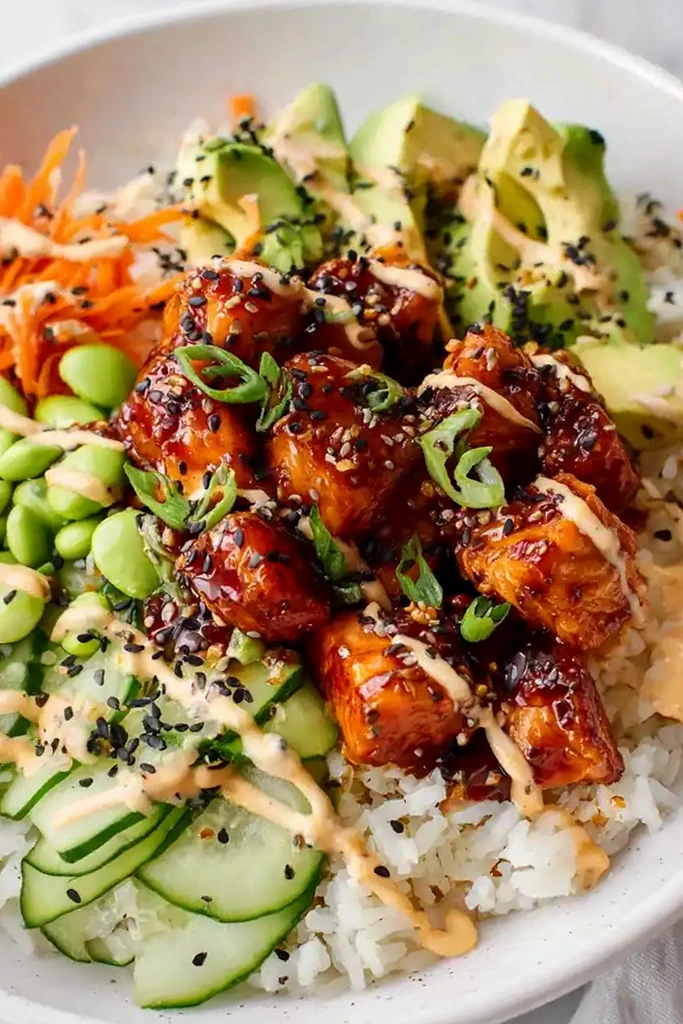
This vibrant spicy salmon rice bowl features tender, seasoned salmon fillets served over a bed of warm grains with fresh vegetables and a bold, creamy sesame-based dressing. It is a fantastic option for a quick weeknight dinner, as the entire meal comes together in less than thirty minutes without sacrificing depth of flavor. By combining high-protein fish with crisp textures and a zesty sauce, you get a satisfying and balanced bowl that feels like a restaurant-quality experience.
List of ingredients
- 2 salmon fillets (6 ounces each), cubed
- 1 tablespoon soy sauce
- 1 teaspoon sesame oil
- 1/2 teaspoon garlic powder
- 1/4 teaspoon salt
- 1/4 teaspoon black pepper
- 1 tablespoon oil
- 2 cups cooked rice
- 1 cup diced cucumber
- 1 avocado, diced
- 1/2 cup shredded carrots
- 1/2 cup steamed edamame
- 1 green onion, sliced
- 1 tablespoon sesame seeds
- Chili crisp (optional)
- Seaweed snacks or furikake (optional)
- 1/3 cup mayonnaise
- 1-2 tablespoons sriracha
- 2 teaspoons soy sauce
- 1 teaspoon sesame oil
- 1 teaspoon honey
- 1 clove garlic, grated (or 1/4 teaspoon garlic powder)
- Juice of 1/2 lime
step-by-step instructions
- Step: Add mayonnaise, sriracha, soy sauce, sesame oil, honey, garlic, and lime juice to a bowl. Whisk until smooth and creamy. Taste and adjust, then set aside.
- Step: Pat salmon dry and cube into bite-sized pieces. Season with soy sauce, sesame oil, garlic powder, salt, and pepper.
- Step: Heat oil in a skillet over medium-high heat. Add salmon and cook 2–3 minutes per side or until lightly crisp and cooked through. Drizzle a tablespoon of the spicy sauce over the cooked salmon and toss lightly to coat.
- Step: Warm cooked rice. Dice cucumber, cube avocado, shred carrots, and steam edamame if not already cooked.
- Step: Add 1 cup of rice to each bowl. Add cucumber, avocado, carrots, edamame, and green onions.
- Step: Add salmon on top. Drizzle generously with the spicy sesame mayo sauce. Finish with sesame seeds, chili crisp, or furikake.
- Step: Serve immediately with extra sauce on the side and optional lime wedges.
Refining Your Rice Bowls
Choosing the Ideal Rice Variety
For the most authentic experience, opt for short-grain sushi rice or jasmine rice. These varieties possess a natural stickiness that holds the ingredients together and absorbs the sauce better than long-grain or parboiled rice. Always ensure the rice is warm during assembly, as the heat helps the fats in the mayo sauce melt slightly into the grains for a richer mouthfeel.
Achieving the Perfect Salmon Sear
Using a high-smoke-point oil and a preheated pan is essential for getting a crisp exterior on your salmon cubes without overcooking the inside. Avoid flipping the salmon too early, as letting it sit undisturbed for at least two minutes will ensure a beautiful golden-brown crust. If you prefer to bake the salmon instead, cook it at 400 degrees Fahrenheit for approximately ten to twelve minutes until the flakes are tender and buttery.
Customizing Your Flavor Profile
Balancing the Spicy Mayo Sauce
The beauty of this sauce lies in its adaptability to your personal spice tolerance. Start with one tablespoon of sriracha and taste the mixture before adding the second, as the heat can build quickly depending on the brand of chili sauce you use. If you find the sauce is too thick for drizzling, thin it out by adding an extra half-teaspoon of lime juice or water until it reaches your desired consistency.
Incorporating Diverse Vegetable Textures
While cucumber and carrots are traditional, feel free to introduce other vegetables based on seasonal availability. Thinly sliced radishes, blanched snap peas, or finely shredded purple cabbage can add exciting crunch and color variations. Using a mandoline slicer ensures your vegetables are uniform, which makes every bite a consistent mix of flavors and textures.
Managing Prep and Storage
Efficient Meal Prep Strategies
You can easily prepare the components of this bowl in advance, but keep the salmon and sauce separate from the fresh vegetables. Store the cooked salmon in an airtight container for up to two days, and reheat it briefly in a skillet or microwave just before assembling. The sauce will remain fresh in the refrigerator for up to five days, provided it is kept in a sealed jar or container.
Handling Leftovers Properly
If you have leftover rice, store it in the refrigerator immediately after it has cooled to prevent bacterial growth. When reheating, a splash of water added to the rice before microwaving will help it regain its fluffy texture rather than becoming dry or hard. Never store a fully assembled bowl, as the avocado will brown and the vegetables will soften when sitting in the sauce for extended periods.
Troubleshooting Common Issues
Preventing Watery Bowls
If your bowls are becoming watery, it is likely due to excess moisture in the cucumbers or the rice. When preparing cucumbers, you can lightly salt them and let them sit for five minutes before patting them dry to remove excess surface water. Similarly, allow your steamed rice to cool for just a minute or two to let steam escape before piling it into the bowls, preventing the heat from wilting your fresh greens prematurely.
Achieving Consistency with Garlic
Grated fresh garlic provides a stronger, more pungent flavor than garlic powder, which is ideal for a bold sauce. If you find the raw garlic taste too sharp, let the sauce sit in the refrigerator for at least twenty minutes before serving to allow the flavors to mellow and integrate. If you prefer a smoother sauce without bits of garlic, use a fine microplane to create a garlic paste that will dissolve completely into the mayonnaise base.
Frequently Asked Questions
Can I prepare this dish using raw sushi-grade salmon?
Yes, you can substitute the cooked salmon for high-quality, sashimi-grade raw salmon cubes. If using raw fish, omit the pan-searing step and toss the cubes directly in a mixture of soy sauce and sesame oil before layering them onto the rice. Ensure you are purchasing your fish from a trusted source that labels it specifically as safe for raw consumption.
Is it possible to make this dish without soy products?
You can replace the soy sauce with coconut aminos, which offer a similar savory and slightly sweet profile without the use of soy. This is a common and effective swap that maintains the integrity of the sauce’s flavor profile while accommodating different dietary preferences or ingredient availability.
How do I stop the avocado from browning?
The best way to prevent browning is to slice and add the avocado at the final moment of assembly. If you must prep it ahead of time, toss the cubes in a small amount of fresh lime juice to act as an antioxidant barrier. Keeping the avocado in a sealed container and covering it with plastic wrap pressed directly against the surface can also help minimize air exposure.
Print
Spicy Salmon Rice Bowl with Creamy Sesame Mayo Sauce
- Total Time: 20 minutes
- Yield: 2 bowls 1x
- Diet: Pescatarian
Description
This spicy salmon rice bowl combines tender, perfectly seasoned salmon with warm rice, crisp vegetables, and a rich, creamy spicy sesame mayo sauce. The dish comes together in under 30 minutes and delivers the perfect balance of heat, creaminess, freshness, and crunch.
Ingredients
- 2 salmon fillets (6 ounces each), cubed
- 1 tablespoon soy sauce
- 1 teaspoon sesame oil
- 1/2 teaspoon garlic powder
- 1/4 teaspoon salt
- 1/4 teaspoon black pepper
- 1 tablespoon oil
- 2 cups cooked rice
- 1 cup diced cucumber
- 1 avocado, diced
- 1/2 cup shredded carrots
- 1/2 cup steamed edamame
- 1 green onion, sliced
- 1 tablespoon sesame seeds
- Chili crisp (optional)
- Seaweed snacks or furikake (optional)
- 1/3 cup mayonnaise
- 1–2 tablespoons sriracha
- 2 teaspoons soy sauce
- 1 teaspoon sesame oil
- 1 teaspoon honey
- 1 clove garlic, grated (or 1/4 teaspoon garlic powder)
- Juice of 1/2 lime
Instructions
- Step: Add mayonnaise, sriracha, soy sauce, sesame oil, honey, garlic, and lime juice to a bowl. Whisk until smooth and creamy. Taste and adjust, then set aside.
- Step: Pat salmon dry and cube into bite-sized pieces. Season with soy sauce, sesame oil, garlic powder, salt, and pepper.
- Step: Heat oil in a skillet over medium-high heat. Add salmon and cook 2–3 minutes per side or until lightly crisp and cooked through. Drizzle a tablespoon of the spicy sauce over the cooked salmon and toss lightly to coat.
- Step: Warm cooked rice. Dice cucumber, cube avocado, shred carrots, and steam edamame if not already cooked.
- Step: Add 1 cup of rice to each bowl. Add cucumber, avocado, carrots, edamame, and green onions.
- Step: Add salmon on top. Drizzle generously with the spicy sesame mayo sauce. Finish with sesame seeds, chili crisp, or furikake.
- Step: Serve immediately with extra sauce on the side and optional lime wedges.
Notes
Store leftover sauce in an airtight container for up to five days. Adjust heat level by adding more or less sriracha.
- Prep Time: 10 minutes
- Cook Time: 10 minutes
- Category: Main Course
- Method: Stovetop
- Cuisine: Asian
Nutrition
- Serving Size: 1 bowl
- Calories: 650 kcal
- Sugar: 6 g
- Sodium: 850 mg
- Fat: 32 g
- Saturated Fat: 5 g
- Unsaturated Fat: 22 g
- Trans Fat: 0 g
- Carbohydrates: 58 g
- Fiber: 8 g
- Protein: 34 g
- Cholesterol: 95 mg