Experience a sophisticated, restaurant-grade dinner that comes together in less than half an hour. This creamy lemon garlic salmon combines a perfectly seared, golden crust with a velvety, zesty sauce that elevates the natural richness of the fish into a true culinary centerpiece. Whether you are preparing a quick weeknight meal or an elegant dinner for guests, this dish offers a reliable and luxurious result every time.
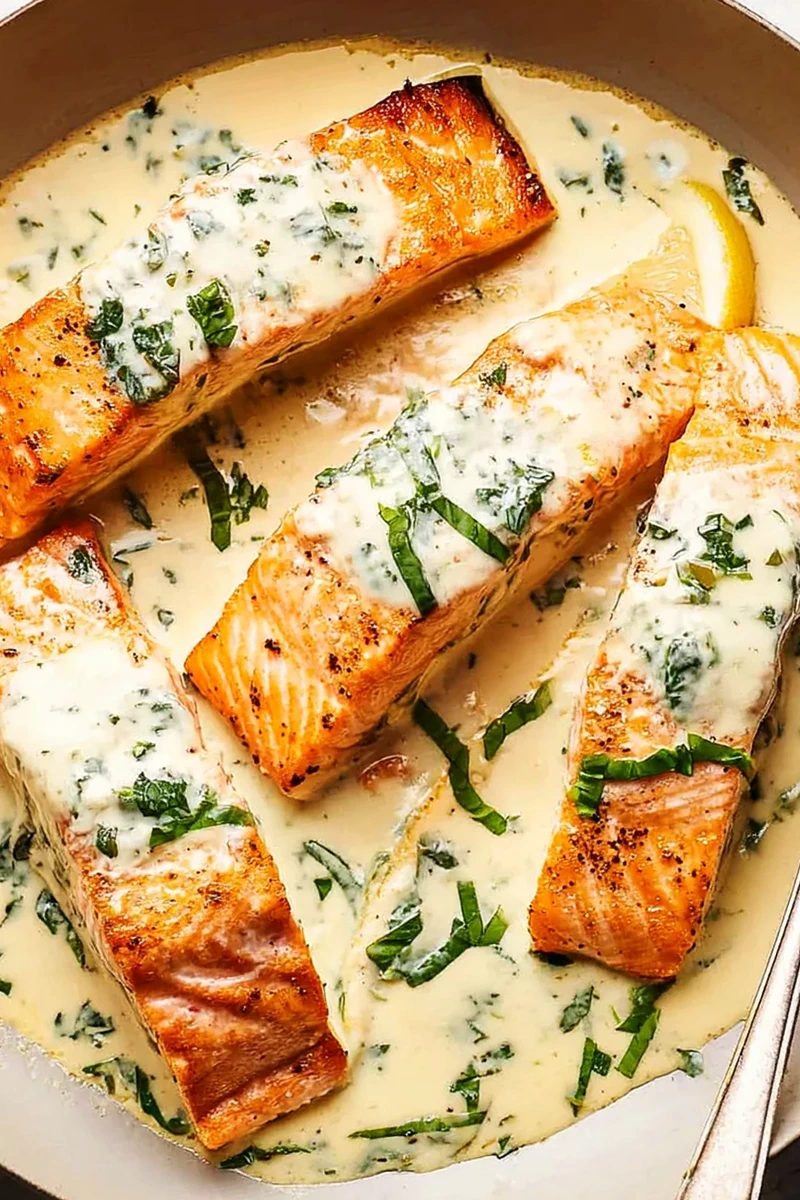
List of ingredients
- 1 pound Salmon fillets
- Salt to taste
- Freshly ground black pepper to taste
- 2 tablespoons avocado oil
- 1 1/4 cups heavy cream
- 2 tablespoons fresh lemon juice
- 3 cloves garlic, minced
- 2 tablespoons fresh parsley, chopped
step-by-step instructions
- Prepare the Salmon: Gently pat your salmon fillets dry and season generously with salt and freshly ground black pepper on both sides.
- Sear the Salmon: Heat the avocado oil in a cast iron skillet or a sturdy pan over medium-high heat until it shimmers. Carefully place the salmon fillets into the hot pan, skin-side up. Cook for about 4-6 minutes until the salmon is browned and easily releases from the pan.
- Finish Cooking: Flip the salmon to the other side and continue cooking for another 3-5 minutes, or until the skin is crispy and the salmon is cooked through to an internal temperature of 145°F. Remove the salmon from the pan and set it aside to rest.
- Make the Creamy Sauce: Reduce the heat to medium. In the same pan, whisk together the heavy cream, fresh lemon juice, and minced garlic. Let the sauce simmer gently for a few minutes, stirring occasionally, until it thickens slightly.
- Season and Serve: Season the sauce with a pinch of salt and pepper to taste, then stir in the freshly chopped parsley. Spoon the rich, creamy lemon garlic sauce over your perfectly cooked salmon fillets.
Refining Your Technique
Achieving The Perfect Sear
The secret to a restaurant-quality sear lies entirely in the moisture level of your salmon. Always use a paper towel to remove surface moisture before seasoning, as damp fish will steam instead of forming a crispy crust. Ensure your oil is shimmering before the fish touches the pan to prevent sticking.
Managing Pan Temperature
Cast iron is the preferred tool because it maintains heat consistently throughout the searing process. If you notice your garlic or cream browning too quickly during the sauce phase, do not hesitate to slide the pan off the heat for thirty seconds. Regulating your heat is a fundamental skill for creating delicate pan sauces.
Understanding Ingredient Choices
Selecting Your Fat Source
Avocado oil is recommended due to its high smoke point, which keeps the kitchen air clean and the salmon flavor neutral. If you prefer to use olive oil, ensure it is regular olive oil rather than extra virgin, as the latter breaks down faster under high heat. High-quality butter can be used for the sauce step if you want to increase the richness, though it should be added at the end.
Selecting Your Dairy Alternatives
Full-fat coconut cream is the best dairy-free alternative because it mimics the viscosity of heavy cream. Ensure you use the thick portion found in canned coconut cream rather than the thin coconut milk found in cartons. The slight coconut flavor is subtle and pairs surprisingly well with the citrus acidity of the lemon.
Strategic Serving Concepts
Pairing With Starch
Since the sauce is quite rich and flavorful, pair this dish with a neutral starch to help balance the plate. Creamy mashed potatoes, steamed jasmine rice, or even a simple cauliflower mash are excellent at absorbing the leftover lemon garlic sauce. If using pasta, choose a long shape like linguine, which holds the creamy sauce effectively.
Incorporating Fresh Vegetables
The richness of the sauce benefits significantly from the contrast of fresh, crisp vegetables. Blanched asparagus spears, roasted Brussels sprouts, or quick-sautéed green beans provide the necessary crunch. A simple salad with arugula and a light lemon vinaigrette also provides a sharp, peppery counterpoint to the buttery salmon.
Maintaining Quality Through Storage
Storing Leftovers
If you have leftovers, place the salmon and the sauce in separate airtight containers within the refrigerator. Keeping them separate prevents the fish from becoming overly saturated and soggy. They will remain high-quality for up to 48 hours when stored correctly in the coldest part of your fridge.
Gentle Reheating
Never microwave the salmon on a high setting, as the proteins will seize and become rubbery. Instead, place the salmon in a small skillet with a tablespoon of water and cover with a lid over low heat to gently steam it. Once warm, you can briefly toss the sauce back in the pan until it reaches a pouring consistency.
Solving Common Preparation Issues
Dealing With A Separated Sauce
If the sauce looks like it is breaking or appearing oily, remove the pan from the heat immediately. Whisk in a tablespoon of cold heavy cream or a teaspoon of water vigorously to re-emulsify the fats and liquids. Keep the heat lower next time to avoid the cream reaching a rapid boil.
Managing The Fish Skin
If you prefer to keep the salmon skin on for a crispy result, avoid moving the fish at all until the 5-minute mark. If you feel resistance when trying to lift the fillet, it is not ready to flip. Let the Maillard reaction perform the work of releasing the fish from the pan surface naturally.
Frequently Asked Questions
What should I do if my sauce is too thick?
If the sauce has reduced more than you intended, simply whisk in one tablespoon of water, broth, or additional cream at a time. This will loosen the consistency without losing the depth of flavor you achieved from the garlic and lemon.
Can I add capers to the sauce?
Capers are an excellent addition if you enjoy a briney, salty punch. If adding them, reduce the added salt in the initial seasoning stages, as capers are naturally preserved in high-sodium brines that will change the final salt balance of the sauce.
Is it necessary to use a thermometer?
While checking the flakes is a common visual method, using a digital probe thermometer is the only way to ensure the salmon is consistently cooked to 145°F. This minimizes the risk of overcooking the thin tail ends while ensuring the thicker center is perfectly tender.
Print
Creamy Lemon Garlic Salmon
- Total Time: 25 minutes
- Yield: 4 servings 1x
- Diet: Keto, Low-carb
Description
A delicious and easy-to-make creamy lemon garlic salmon dish, perfect for a healthy, low-carb dinner.
Ingredients
- 1 pound Salmon fillets
- Salt to taste
- Freshly ground black pepper to taste
- 2 tablespoons avocado oil
- 1 1/4 cups heavy cream
- 2 tablespoons fresh lemon juice
- 3 cloves garlic, minced
- 2 tablespoons fresh parsley, chopped
Instructions
- Prepare the Salmon: Gently pat your salmon fillets dry and season generously with salt and freshly ground black pepper on both sides.
- Sear the Salmon: Heat the avocado oil in a cast iron skillet or a sturdy pan over medium-high heat until it shimmers. Carefully place the salmon fillets into the hot pan, skin-side up. Cook for about 4-6 minutes until the salmon is browned and easily releases from the pan.
- Finish Cooking: Flip the salmon to the other side and continue cooking for another 3-5 minutes, or until the skin is crispy and the salmon is cooked through to an internal temperature of 145°F. Remove the salmon from the pan and set it aside to rest.
- Make the Creamy Sauce: Reduce the heat to medium. In the same pan, whisk together the heavy cream, fresh lemon juice, and minced garlic. Let the sauce simmer gently for a few minutes, stirring occasionally, until it thickens slightly.
- Season and Serve: Season the sauce with a pinch of salt and pepper to taste, then stir in the freshly chopped parsley. Spoon the rich, creamy lemon garlic sauce over your perfectly cooked salmon fillets.
Notes
Nutrition Information (per serving): Calories: 521, Total Carbs: 6g, Net Carbs: 6g, Fats: 41g, Protein: 29g. For a dairy-free option, use full-fat canned coconut cream.
- Prep Time: 5 minutes
- Cook Time: 20 minutes
- Category: Main Course
- Method: Pan-searing
- Cuisine: Contemporary
Nutrition
- Serving Size: 1 fillet with sauce
- Calories: 521 kcal
- Sugar: 2 g
- Sodium: 350 mg
- Fat: 41 g
- Saturated Fat: 18 g
- Unsaturated Fat: 20 g
- Trans Fat: 0 g
- Carbohydrates: 6 g
- Fiber: 1 g
- Protein: 29 g
- Cholesterol: 110 mg