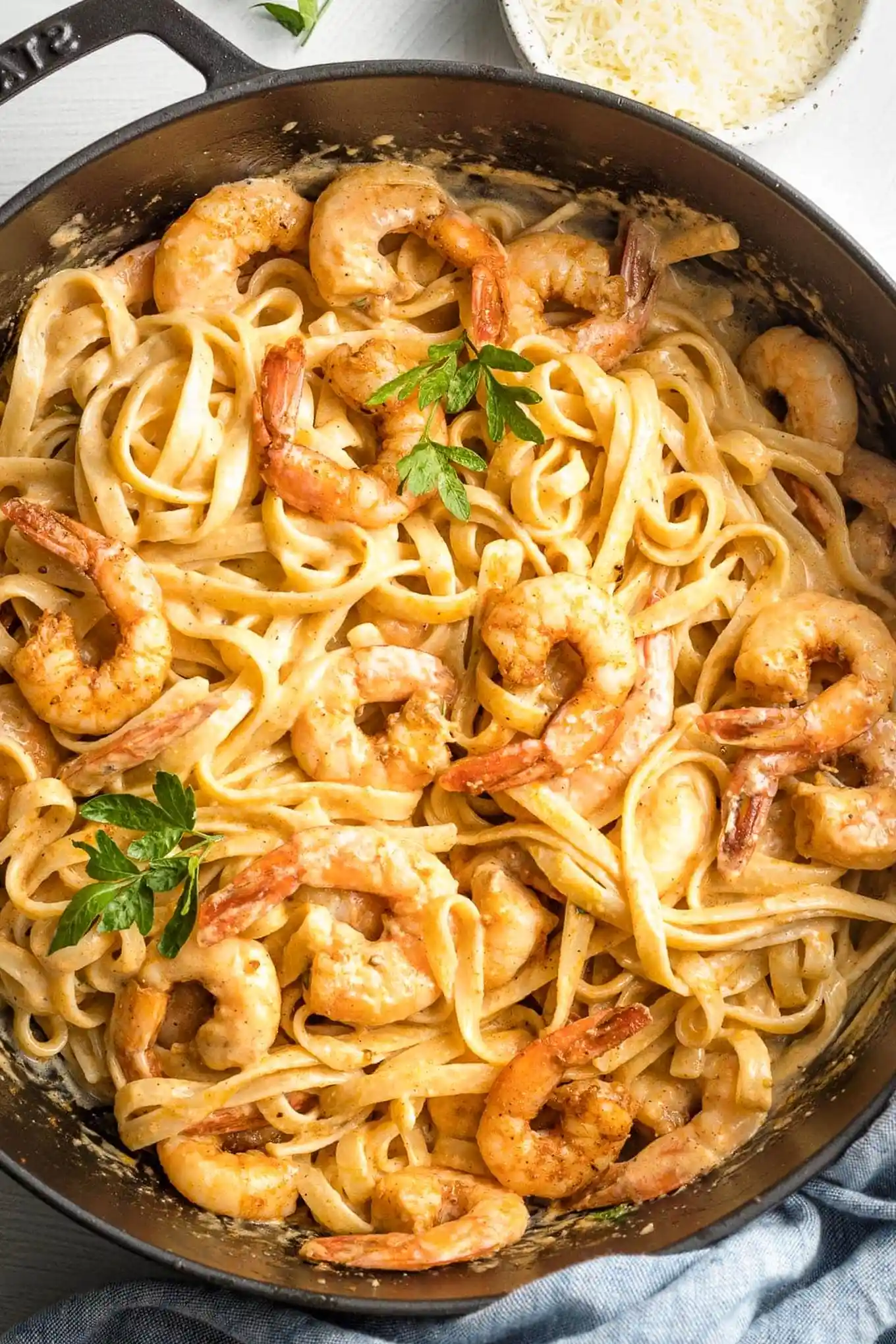
This blackened shrimp Alfredo is a robust, restaurant-quality meal that you can effortlessly prepare in your own kitchen in under 30 minutes. By combining the bold, spicy crust of blackened shrimp with a velvety, rich cream sauce, this dish creates a perfect balance of intense heat and soothing comfort. It is an ideal solution for busy weeknights when you want something that tastes sophisticated yet remains approachable for family dinners.
List of ingredients
- 1 pound raw shrimp (peeled and deveined)
- 3 tablespoons olive oil (divided)
- 2 tablespoons blackening seasoning
- 12 ounces fettuccine (or other pasta)
- 3 tablespoons butter
- 1 tablespoon flour
- 3/4 cup chicken or veggie broth
- 1 teaspoon lemon juice
- 1 cup heavy cream
- 1/2 teaspoon garlic powder
- 1/2 teaspoon salt
- 8-10 cranks fresh-ground black pepper
- 1/2 cup grated Parmesan cheese
step-by-step instructions
- Step: In a medium bowl, combine shrimp, 2 tablespoons of the olive oil, and blackening seasoning. Stir to evenly coat the shrimp. Set aside to use right away, or, for more heat, cover and refrigerate for up to 12 hours.
- Step: Bring a large pot of salted water to a boil. Cook pasta to al dente according to package directions. Drain and set aside.
- Step: While pasta cooks, warm remaining 1 tablespoon oil in a large skillet set over medium-high heat. Add shrimp and cook for 1-2 minutes per side, just until charred and cooked through. Remove cooked shrimp to a plate.
- Step: After removing the shrimp, melt butter in the same skillet, then whisk in flour and cook for 60 seconds.
- Step: Reduce heat to medium. Whisk in broth and lemon juice.
- Step: Add cream, garlic powder, salt, and pepper. Whisk until smooth, then let the sauce simmer for 1-2 minutes to thicken slightly.
- Step: Stir in Parmesan. Let it melt until the sauce smooths out once again. Taste and add more salt or pepper as desired. Stir in the pasta, toss well, top with cooked shrimp, and serve.
Refining your seasoning and heat levels
Adjusting the spice intensity
The heat level of this dish is primarily dictated by how long the shrimp marinate in the seasoning blend. If you prefer a mild dinner, season the shrimp immediately before they hit the pan. If you enjoy a bold, spicy experience, allow the shrimp to sit in the seasoning for several hours in the refrigerator, as the spices will penetrate the protein and intensify during the searing process.
Selecting the right blackening blend
Commercial blackening seasonings vary greatly in their ratio of cayenne pepper, paprika, and dried herbs. Always taste a tiny pinch of your seasoning before applying it to the shrimp to gauge its saltiness and heat. If your particular blend is very salty, reduce the additional salt added to the cream sauce to ensure the final result remains balanced.
Perfecting the sauce texture
Ensuring a smooth consistency
Using freshly grated Parmesan cheese makes a significant difference compared to pre-shredded or powdered versions. Pre-grated products often contain anti-caking agents like cellulose that can prevent the cheese from melting into a smooth emulsion. For the silkiest results, buy a block of Parmesan and grate it yourself just before making the sauce.
Managing heat during sauce reduction
When you add the cream, be careful not to let the sauce boil rapidly. A gentle simmer is all that is required to thicken the cream and allow the flavors to harmonize. If the sauce becomes too thick while tossing with the pasta, simply add a splash of reserved pasta water or extra broth to thin it out to your preferred consistency.
Smart preparation and storage
Efficiently thawing your seafood
If you are starting with frozen shrimp, avoid using warm water to thaw them, as this can encourage uneven cooking or bacterial growth. Place the frozen shrimp in a colander under a steady stream of cold, running water for about five to ten minutes. Once they are pliable and cool to the touch, pat them dry with paper towels to ensure the seasoning adheres correctly during the coating phase.
Handling leftover portions
If you find yourself with leftovers, store them in an airtight container in the refrigerator for up to four days. To maintain the best quality, try to store the pasta and the sauce together, as the noodles will continue to absorb the creamy flavors. When you are ready to enjoy it again, keep in mind that the cream sauce may thicken significantly as it cools.
Reheating guidelines
Maintaining the creamy consistency
When reheating the dish, place it in a skillet over low heat rather than using a microwave. The high, uneven heat of a microwave can cause the dairy in the sauce to break or separate, resulting in a greasy texture. Add a tablespoon of milk, cream, or water to the skillet while stirring gently to help loosen the sauce and return it to a creamy, luscious state.
Avoiding overcooked shrimp
Since shrimp are naturally delicate, reheating them can often result in a rubbery texture if they are cooked for too long. If you are preparing the meal for multiple sittings, consider setting aside a portion of the sauce and pasta to reheat separately, and gently warming the shrimp for only a minute or two at the end. This preserves the succulent quality of the protein.
Common preparation questions
Can I use a different type of pasta?
While fettuccine is traditional for Alfredo-style dishes because its wide surface area holds heavy sauces beautifully, you can certainly use other varieties. Linguine, pappardelle, or even penne work exceptionally well. The most important factor is to cook whichever pasta you choose to the al dente stage to ensure it has enough structure to stand up to the rich, thickened cream sauce.
Is there a substitute for heavy cream?
While heavy cream provides the signature richness and stability required for a classic Alfredo sauce, you can use half-and-half in a pinch. Be aware that the sauce will be thinner and may require a little more simmering time or a slightly higher amount of flour to reach the desired consistency. Avoid using plain milk, as it lacks the necessary fat content to thicken effectively with the butter and flour base.
How do I know when the shrimp are done?
Shrimp cook incredibly fast, often in under three minutes total. You will know they are ready when they turn a distinct opaque pink color and form a loose “C” shape. If they curl into a tight “O” shape, they have likely been overcooked and may become firm. The dark char from the blackening seasoning provides a good visual guide, but focus primarily on the physical transformation of the shrimp meat.
Enhancing your dining experience
Vegetable additions
If you want to add more fiber and color to the plate, consider stirring in some steamed broccoli florets or sautéed spinach during the final stage of tossing the pasta. These vegetables pair perfectly with the garlic and Parmesan notes in the cream sauce. Ensure any vegetables you add are cooked separately and added at the very end to prevent them from becoming mushy or releasing too much water into your sauce.
Suggested garnishes
A simple sprinkle of freshly chopped flat-leaf parsley adds a necessary visual contrast to the dish, cutting through the richness with a clean, herbaceous note. For those who enjoy extra heat, a small pinch of red pepper flakes can be added just before serving. To add a bit of texture, a light dusting of toasted breadcrumbs or extra Parmesan on top of each bowl before serving can provide a satisfying crunch.
Print
Blackened Shrimp Alfredo
- Total Time: 20 minutes
- Yield: 6 servings 1x
- Diet: Pescatarian
Description
A home-run dish with pan-fried shrimp and pasta swimming in a simple yet irresistible cream sauce. Easily control the heat and have this on the table in 30 minutes.
Ingredients
- 1 pound raw shrimp (peeled and deveined)
- 3 tablespoons olive oil (divided)
- 2 tablespoons blackening seasoning
- 12 ounces fettuccine (or other pasta)
- 3 tablespoons butter
- 1 tablespoon flour
- 3/4 cup chicken or veggie broth
- 1 teaspoon lemon juice
- 1 cup heavy cream
- 1/2 teaspoon garlic powder
- 1/2 teaspoon salt
- 8–10 cranks fresh-ground black pepper
- 1/2 cup grated Parmesan cheese
Instructions
- Step: In a medium bowl, combine shrimp, 2 tablespoons of the olive oil, and blackening seasoning. Stir to evenly coat the shrimp. Set aside to use right away, or, for more heat, cover and refrigerate for up to 12 hours.
- Step: Bring a large pot of salted water to a boil. Cook pasta to al dente according to package directions. Drain and set aside.
- Step: While pasta cooks, warm remaining 1 tablespoon oil in a large skillet set over medium-high heat. Add shrimp and cook for 1-2 minutes per side, just until charred and cooked through. Remove cooked shrimp to a plate.
- Step: After removing the shrimp, melt butter in the same skillet, then whisk in flour and cook for 60 seconds.
- Step: Reduce heat to medium. Whisk in broth and lemon juice.
- Step: Add cream, garlic powder, salt, and pepper. Whisk until smooth, then let the sauce simmer for 1-2 minutes to thicken slightly.
- Step: Stir in Parmesan. Let it melt until the sauce smooths out once again. Taste and add more salt or pepper as desired. Stir in the pasta, toss well, top with cooked shrimp, and serve.
Notes
For a pop of color, a few leaves of parsley sprinkled on top are nice.
- Prep Time: 5 minutes
- Cook Time: 15 minutes
- Category: Main
- Method: Stovetop
- Cuisine: American
Nutrition
- Serving Size: 1 serving
- Calories: 558 kcal
- Sugar: 1 g
- Sodium: 1350 mg
- Fat: 30 g
- Saturated Fat: 16 g
- Unsaturated Fat: 13 g
- Trans Fat: 1 g
- Carbohydrates: 43 g
- Fiber: 2 g
- Protein: 28 g
- Cholesterol: 315 mg