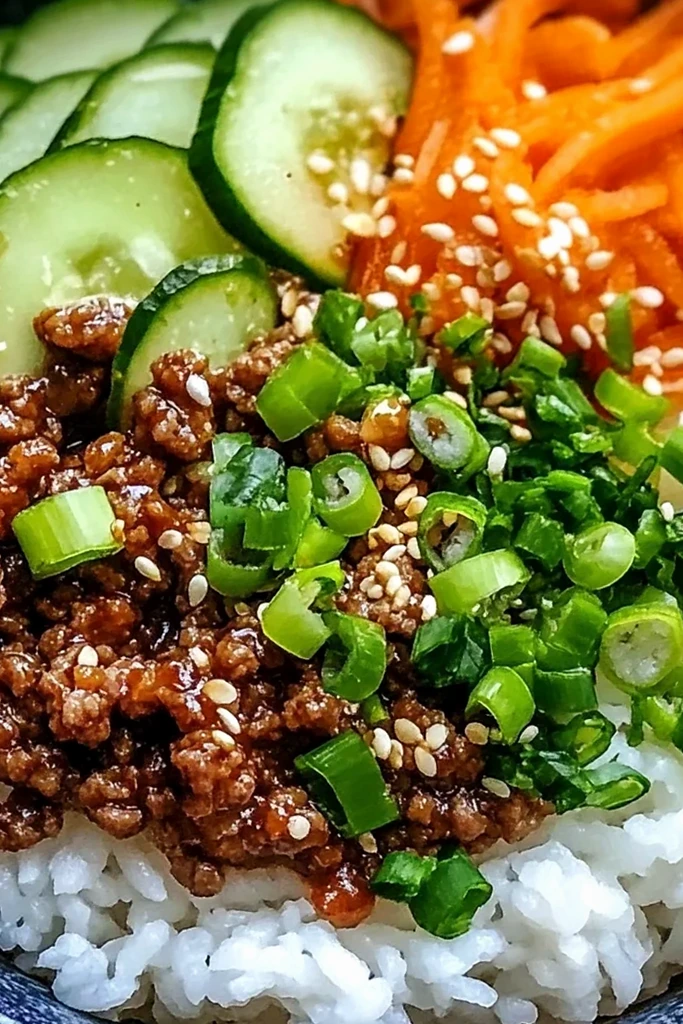
This Korean-style ground beef bowl offers a fast, flavorful solution for busy evenings when you crave restaurant-quality comfort food without the long wait. By combining savory, sweet, and aromatic ingredients in a single pan, this meal achieves a depth of flavor that is truly remarkable for such a simple preparation. It is a reliable, crowd-pleasing dish that transforms basic pantry staples into an impressive dinner in under thirty minutes.
List of ingredients
- 500 grams ground beef
- 3 tablespoons soy sauce
- 2 tablespoons brown sugar
- 1 tablespoon sesame oil
- 3 cloves garlic, minced
- 1 tablespoon fresh ginger, grated
- 2 tablespoons green onions, chopped
- 2 cups cooked rice
- Sesame seeds for garnish
- Salt and pepper to taste
step-by-step instructions
- Brown the meat: In a large skillet, cook the ground beef over medium-high heat until browned, seasoning with salt and pepper to taste. Drain excess fat if necessary.
- Add aromatics: Stir in the minced garlic and grated ginger, cooking for about 1 minute until fragrant.
- Season: Pour in the soy sauce, brown sugar, and sesame oil. Stir well and simmer for 2-3 minutes to allow the sauce to glaze the meat.
- Serve: Scoop the cooked rice into bowls, top with the beef mixture, and garnish with chopped green onions and sesame seeds.
Practical Cooking Advice
Managing Heat Levels
When cooking the ground beef, maintain a medium-high heat initially to achieve a nice browning effect on the surface of the meat. This browning provides extra depth that improves the overall flavor profile of the dish. If the meat begins to char too quickly, lower the heat slightly to ensure it cooks through evenly.
Selecting the Right Beef
While standard ground beef works well, opting for a slightly higher fat content can add more moisture if you find the final dish too dry. Conversely, if you prefer a leaner meal, use a 90/10 or 95/5 lean-to-fat ratio. Always ensure you drain the pan thoroughly after browning if you notice excess liquid, as this helps the glaze adhere better to the meat.
Effective Substitutions
Natural Sweetener Options
If you prefer not to use brown sugar, honey or maple syrup can be used as alternatives to achieve the necessary sweetness. Keep in mind that these liquid sweeteners may slightly alter the consistency of the final glaze, so add them gradually. These alternatives offer a slightly different, more complex flavor profile that complements the soy sauce beautifully.
Ginger and Garlic Freshness
While fresh ginger and garlic are highly recommended for the best flavor, you can substitute with powders in a pinch. Use approximately 1/4 teaspoon of garlic powder and 1/4 teaspoon of ground ginger for every clove or tablespoon of fresh product. Remember that fresh ingredients typically provide a more vibrant and aromatic experience compared to their dried counterparts.
Flavor Variations
Incorporating Seasonal Vegetables
You can easily turn this into a one-pan vegetable and protein meal by adding finely diced carrots, bell peppers, or baby spinach during the cooking process. Adding these vegetables alongside the aromatics ensures they are tender yet retain a bit of texture. This practice increases the nutritional content without compromising the quick nature of the recipe.
Adjusting the Texture
For a different mouthfeel, consider adding toasted cashews or water chestnuts when you add the soy sauce mixture. These additions introduce a contrasting crunch that breaks up the tenderness of the ground beef. Always add these crunchy elements right at the end to ensure they maintain their integrity before serving.
Serving and Presentation Ideas
Building the Perfect Bowl
To maximize the aesthetic appeal, place the rice slightly to one side of the bowl and heap the beef mixture on the other. This allows guests to mix the ingredients at their own pace. Drizzling a tiny amount of extra toasted sesame oil over the finished bowl just before serving can significantly enhance the aroma.
Accompaniments for Contrast
Consider serving this dish with a side of quick-pickled cucumbers or shredded carrots to cut through the richness of the beef. A cold, crisp vegetable side provides a refreshing contrast to the warm, savory meat. This balancing act is a hallmark of traditional flavor combinations used in similar cuisines.
Storage and Reheating Guidelines
Maintaining Freshness
Store any leftover beef in an airtight container in the refrigerator for up to three days. It is best to store the beef and the rice in separate containers if possible to prevent the rice from absorbing too much moisture from the glaze. This practice helps maintain the individual textures of both components.
Reheating for Best Results
To reheat, use a microwave-safe dish and heat in short intervals, stirring the meat in between. If the mixture appears too dry after refrigeration, add a tiny splash of water or a few drops of soy sauce to restore the desired consistency. Avoid overheating, as this can toughen the texture of the beef.
Common Kitchen Inquiries
Can I make this meal ahead of time?
Yes, the flavor often improves when the beef is allowed to sit in the marinade for a few hours before or after cooking. You can prepare the meat mixture up to a day in advance and reheat it just before you plan to serve. This is an excellent way to streamline dinner prep during a busy work week.
What is the best way to prevent the sauce from becoming too salty?
Start with the recommended amount of soy sauce and taste the meat before adding any additional salt. Soy sauce naturally contains a high level of sodium, so the dish rarely requires extra table salt. If you accidentally add too much soy, adding a small splash of rice vinegar or extra sugar can help balance the intensity.
Is it possible to use turkey instead of beef?
Ground turkey or chicken can be used as direct replacements for ground beef in this recipe. Since poultry is naturally leaner, you may need to add a teaspoon of vegetable oil to the pan when browning the meat. The cooking time remains mostly the same, though you should ensure the poultry is cooked thoroughly to food safety standards.
Print
Easy Korean-Style Ground Beef Rice Bowl
- Total Time: 30 minutes
- Yield: 4 servings 1x
- Diet: General
Description
A quick, savory, and satisfying Korean-style ground beef bowl that brings the flavors of a Korean BBQ right to your kitchen. Perfect for a busy weeknight meal.
Ingredients
- 500 grams ground beef
- 3 tablespoons soy sauce
- 2 tablespoons brown sugar
- 1 tablespoon sesame oil
- 3 cloves garlic, minced
- 1 tablespoon fresh ginger, grated
- 2 tablespoons green onions, chopped
- 2 cups cooked rice
- Sesame seeds for garnish
- Salt and pepper to taste
Instructions
- Brown the meat: In a large skillet, cook the ground beef over medium-high heat until browned, seasoning with salt and pepper to taste. Drain excess fat if necessary.
- Add aromatics: Stir in the minced garlic and grated ginger, cooking for about 1 minute until fragrant.
- Season: Pour in the soy sauce, brown sugar, and sesame oil. Stir well and simmer for 2-3 minutes to allow the sauce to glaze the meat.
- Serve: Scoop the cooked rice into bowls, top with the beef mixture, and garnish with chopped green onions and sesame seeds.
Notes
Feel free to add vegetables like broccoli, bell peppers, or spinach during the cooking process to add more nutrients and texture to your meal.
- Prep Time: 10 minutes
- Cook Time: 20 minutes
- Category: Dinner
- Method: Stovetop
- Cuisine: Korean
Nutrition
- Serving Size: 1 bowl
- Calories: 350 kcal
- Sugar: 8 g
- Sodium: 780 mg
- Fat: 15 g
- Saturated Fat: 6 g
- Unsaturated Fat: 7 g
- Trans Fat: 0 g
- Carbohydrates: 32 g
- Fiber: 1 g
- Protein: 22 g
- Cholesterol: 75 mg