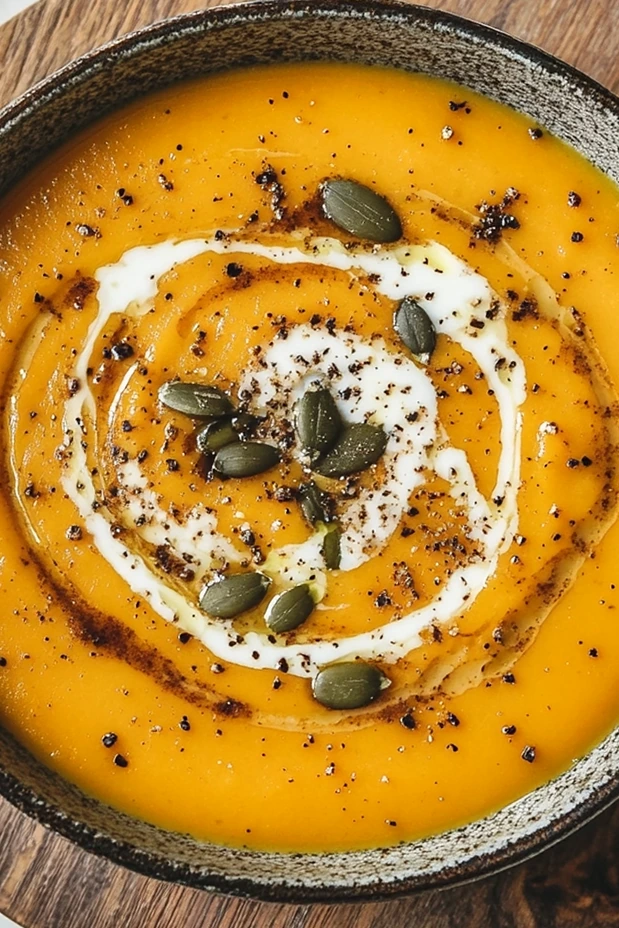
This roasted pumpkin soup elevates humble ingredients by caramelizing pumpkin chunks in a high-heat oven until they reach a deep, golden sweetness. By blending the roasted flesh with aromatic garlic and warm spices, you create a velvety, restaurant-quality bowl that is perfect for any cool-weather gathering. Follow this straightforward method to achieve a rich, silky texture that highlights the natural, earthy essence of fresh pumpkin.
List of ingredients
- 1 medium pumpkin (about 2 pounds), peeled and cut into chunks
- 2 tablespoons olive oil
- 4 cloves garlic, minced
- 1 teaspoon ground cinnamon
- 1/2 teaspoon ground nutmeg
- 4 cups vegetable broth
- 1 cup canned coconut milk
- salt and pepper to taste
step-by-step instructions
- Step: Preheat your oven to 400°F (200°C). Toss the pumpkin chunks with olive oil and spread them in a single layer on a baking sheet. Roast until the edges are caramelized and the flesh is tender, about 30-35 minutes.
- Step: Remove the pumpkin from the oven and let it cool slightly. Peel off any remaining skin if necessary, or leave it on for added flavor.
- Step: Place the roasted pumpkin flesh into a large pot. Add the minced garlic, cinnamon, and nutmeg. Sauté over medium heat for 2-3 minutes until fragrant and slightly softened.
- Step: Pour in the vegetable broth and bring the mixture to a gentle simmer. Cook uncovered for about 10 minutes, allowing flavors to meld.
- Step: Add the coconut milk to the soup. Use an immersion blender directly in the pot, or transfer to a blender and puree until smooth and velvety.
- Step: Return the pureed soup to a gentle simmer. Taste and season with salt and pepper as needed. Add more broth if desired to adjust consistency.
- Step: Serve hot, garnished with a swirl of coconut milk or a sprinkle of extra spices if desired.
Practical Preparation Methods
Achieving Uniform Roast
To ensure your pumpkin roasts evenly, focus on cutting your chunks into consistent two-inch pieces. Irregular sizes lead to some pieces becoming mushy while others remain raw in the center, which complicates the blending process. Using a sharp chef’s knife and a stable cutting board allows for clean, consistent slices that result in a uniform texture for the final soup.
Maximizing Natural Sweetness
Caramelization is the secret to a high-quality pumpkin soup, so do not crowd your baking sheet. If the pumpkin pieces are touching or stacked on top of each other, they will release steam and boil rather than roast, preventing those delicious, darkened brown edges. If you have a large amount of pumpkin, use two baking sheets rather than overloading one, ensuring that hot air can circulate around each piece for deep, sugary development.
Refining Texture and Consistency
Blender Technique Safety
When using a standard blender instead of an immersion tool, never fill the jar more than halfway with hot liquids. Steam pressure can build up inside a sealed blender, potentially causing the lid to pop off and creating a dangerous mess; always remove the center cap and cover with a folded towel while blending. Working in small, manageable batches ensures the vortex pulls the pumpkin down efficiently, resulting in a much smoother final product without any lingering chunks.
Balancing Soup Thickness
If you find that your soup has become too thick after blending, adjust the viscosity by adding warm vegetable broth one-quarter cup at a time. Conversely, if the soup is thinner than you prefer, simply let it simmer uncovered for an additional five to seven minutes to reduce the liquid content. The coconut milk adds body, but even without it, you can achieve a dense, satisfying texture by controlling the total amount of broth added during the final seasoning stage.
Flavor Enhancement and Variations
Layering Aromatic Profiles
While cinnamon and nutmeg provide a classic fall profile, you can experiment with other ground spices to shift the flavor of this soup. A pinch of ground ginger adds a sharp, refreshing bite that cuts through the sweetness of the pumpkin, while a small amount of coriander brings a subtle, citrus-like floral note. Always add ground spices during the sautéing step rather than after blending, as the heat helps release the essential oils trapped within the dried spices, intensifying their impact throughout the entire batch.
Adding Depth with Savory Aromatics
Beyond the minced garlic, you can introduce other aromatics into the pot during the initial sauté step for a more complex base. Sautéing finely diced yellow onions or leeks until they are translucent and slightly browned adds a savory foundation that rounds out the sweetness of the roasted pumpkin. If you prefer a sharper edge, a small amount of minced shallot provides a more refined, delicate onion flavor that works exceptionally well with the earthy notes of the squash.
Storing and Reheating Best Practices
Managing Leftovers
Store any leftover soup in an airtight container in the refrigerator for up to four days to ensure optimal freshness. Because this recipe relies on simple, fresh ingredients, the flavors often develop and deepen after sitting for twenty-four hours. Glass containers are preferable for storage as they do not absorb the strong aromatics of the garlic or spices and are easy to clean.
Gentle Reheating Techniques
When reheating individual portions, use a saucepan on the stovetop over low heat rather than the microwave. Microwaving tends to heat the soup unevenly, which can cause the coconut milk or fats to separate or leave hot spots that might scald your mouth. Stir the soup frequently while heating, and if it has thickened significantly in the fridge, splash in a tablespoon of water or broth to restore its original, silky consistency before serving.
Frequently Asked Questions
Can I use a different type of squash?
Yes, you can substitute the pumpkin with butternut, acorn, or kabocha squash with excellent results. These varieties share the same roasted texture and sweet flavor profile, ensuring your soup remains equally delicious regardless of which winter squash is currently in season.
How can I make the soup more filling?
To turn this soup into a more substantial meal, serve it alongside crusty artisan bread, a side of toasted pumpkin seeds, or a small salad of hearty greens. Adding a spoonful of cooked lentils or chickpeas into the bowl just before serving also increases the protein and fiber content, making the dish feel much more like a complete main course.
Does the coconut milk change the flavor?
The coconut milk adds a mild, nutty creaminess that pairs beautifully with the roasted pumpkin, but it does not overpower the soup’s primary flavor. If you find the coconut flavor too distinct, you can reduce the amount to half a cup or use a neutral plant-based cooking cream instead to achieve the same smooth texture.
Can I freeze this roasted pumpkin soup?
You can successfully freeze this soup for up to three months without losing the structural integrity of the base. Ensure you leave enough headspace in your containers, as liquids expand during the freezing process, and thaw the soup slowly in the refrigerator overnight before reheating it gently on the stove. This makes it an ideal meal-prep candidate for busy weeks when you need a quick, nourishing dinner on hand.
Print
Roasted Pumpkin Soup
- Total Time: 60 minutes
- Yield: 6 servings 1x
- Diet: Vegan, Gluten-Free
Description
This roasted pumpkin soup is made by caramelizing pumpkin chunks in the oven, blending them into a smooth, velvety base, and finishing with warm spices. The dish features tender roasted pumpkin flesh with crispy edges, resulting in a rich, golden-orange soup with a silky texture and aromatic spice notes.
Ingredients
- 1 medium pumpkin (about 2 pounds), peeled and cut into chunks
- 2 tablespoons olive oil
- 4 cloves garlic, minced
- 1 teaspoon ground cinnamon
- 1/2 teaspoon ground nutmeg
- 4 cups vegetable broth
- 1 cup canned coconut milk
- salt and pepper to taste
Instructions
- Step: Preheat your oven to 400°F (200°C). Toss the pumpkin chunks with olive oil and spread them in a single layer on a baking sheet. Roast until the edges are caramelized and the flesh is tender, about 30-35 minutes.
- Step: Remove the pumpkin from the oven and let it cool slightly. Peel off any remaining skin if necessary, or leave it on for added flavor.
- Step: Place the roasted pumpkin flesh into a large pot. Add the minced garlic, cinnamon, and nutmeg. Sauté over medium heat for 2-3 minutes until fragrant and slightly softened.
- Step: Pour in the vegetable broth and bring the mixture to a gentle simmer. Cook uncovered for about 10 minutes, allowing flavors to meld.
- Step: Add the coconut milk to the soup. Use an immersion blender directly in the pot, or transfer to a blender and puree until smooth and velvety.
- Step: Return the pureed soup to a gentle simmer. Taste and season with salt and pepper as needed. Add more broth if desired to adjust consistency.
- Step: Serve hot, garnished with a swirl of coconut milk or a sprinkle of extra spices if desired.
Notes
If the soup is too thick, splash in warm vegetable broth to loosen it. If you forgot to peel the pumpkin, roast it longer to soften the skins for easier removal. This recipe is naturally plant-based and dairy-free.
- Prep Time: 15 minutes
- Cook Time: 45 minutes
- Category: Main Course
- Method: Roasting, Simmering
- Cuisine: Comfort Food
Nutrition
- Serving Size: 1 bowl
- Calories: 180 kcal
- Sugar: 6 g
- Sodium: 450 mg
- Fat: 9 g
- Saturated Fat: 7 g
- Unsaturated Fat: 2 g
- Trans Fat: 0 g
- Carbohydrates: 22 g
- Fiber: 4 g
- Protein: 3 g
- Cholesterol: 0 mg