This Thai-inspired potsticker soup provides a comforting and aromatic meal that comes together in under thirty minutes. By poaching tender dumplings directly in a savory ginger-garlic broth, you create a harmonious dish that balances earthy mushrooms, bright citrus notes, and satisfying textures. It serves as an ideal solution for busy weeknights when you desire a restaurant-quality bowl of warmth prepared entirely in your own kitchen.
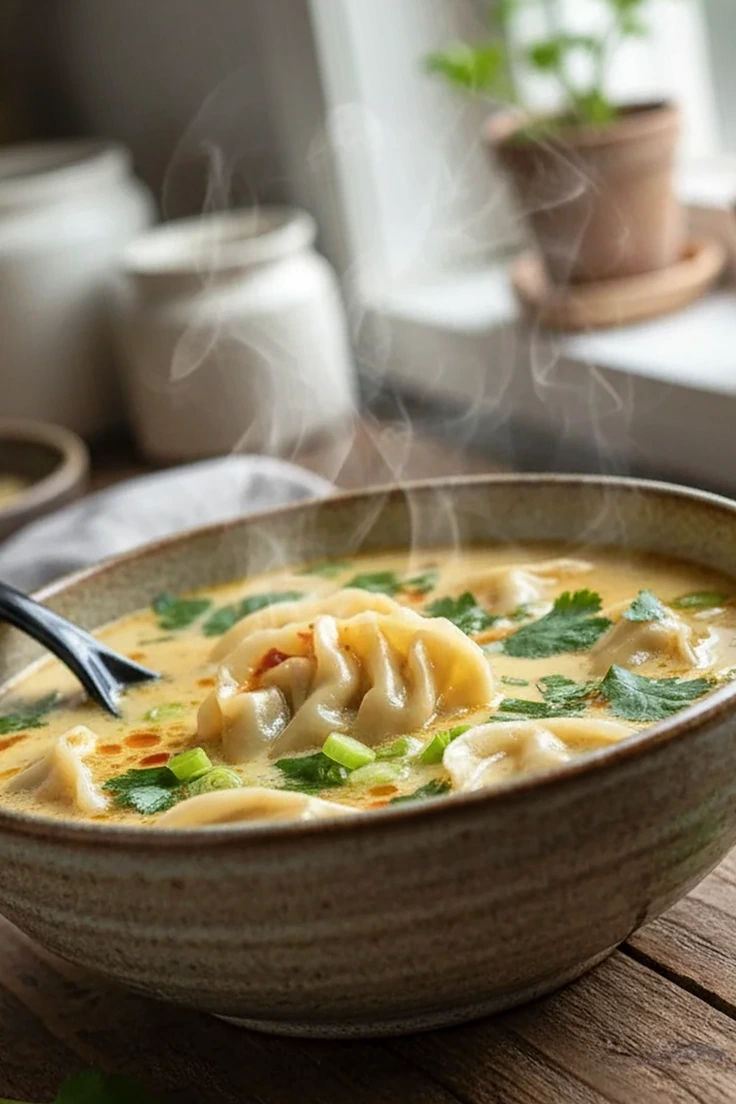
List of ingredients
- 6 cups low-sodium chicken broth
- 1 tbsp avocado or vegetable oil
- 1 tbsp fresh ginger, grated
- 3 cloves garlic, minced
- 8 oz cremini mushrooms, thinly sliced
- 3 tbsp soy sauce (or tamari)
- 1 tbsp fish-free seasoning sauce (for depth)
- 12-16 frozen chicken or vegetable potstickers (do not thaw)
- 3 cups fresh spinach
- 1 tbsp fresh lime juice
- Thinly sliced green onions, fresh cilantro leaves, lime wedges for serving
step-by-step instructions
- Step: Heat the oil in a large pot or Dutch oven over medium heat. Add the grated ginger and minced garlic. Sauté for about 60 seconds, until fragrant and golden.
- Step: Add the sliced mushrooms to the pot. Cook, stirring occasionally, for 4-5 minutes until they have softened and started to release their liquid.
- Step: Pour in the chicken broth, soy sauce, and fish-free seasoning sauce. Bring the broth to a gentle boil, then reduce the heat to maintain a steady simmer. Let it simmer for 5 minutes.
- Step: Carefully add the frozen potstickers to the simmering broth. Gently nudge them so they’re submerged. Let them cook for 5-7 minutes, or until they are cooked through and float to the surface.
- Step: Turn off the heat. Stir in the fresh spinach and lime juice. The residual heat will wilt the spinach perfectly in just a minute.
- Step: Ladle the soup into bowls, making sure each serving gets a few potstickers. Top with plenty of sliced green onions and fresh cilantro. Serve immediately with lime wedges on the side for squeezing over.
Refining the Broth Flavor
Achieving Depth through Aromatics
Building a robust flavor base begins with the initial sauté of your ginger and garlic. If these aromatics are cooked too quickly over high heat, they can turn bitter, so ensure your stove is set to a moderate temperature. Taking this extra minute to sweat the ingredients allows their essential oils to infuse the oil, which later coats every mushroom slice for maximum impact.
Balancing Umami and Saltiness
The combination of soy sauce and fish sauce provides a layered saltiness that is far more complex than salt alone. Because different brands of broth and soy sauce contain varying sodium levels, always taste your broth after the five-minute simmer but before adding the dumplings. If you find the flavor lacking, add a quarter-teaspoon of extra soy sauce at a time until the seasoning feels balanced.
Managing Dumpling Texture
Maintaining Wrapper Integrity
The secret to keeping your potstickers from falling apart is maintaining a gentle, rolling simmer rather than a violent, rapid boil. When the liquid bubbles too aggressively, the kinetic energy can cause the thin wrappers to tear, releasing the filling into your clear broth. If you notice the pot is too full, cook the dumplings in two smaller batches to ensure they have enough room to circulate without bumping into one another.
Preventing Mushiness from Excess Heat
Potstickers reach their ideal texture the moment they float to the surface, signaling they are cooked through. Leaving them in the broth for too long after they have fully softened will result in a mushy wrapper that loses its bite. Serving the dish immediately after the spinach has wilted ensures that you enjoy the contrast between the tender dough and the crisp, fresh garnishes on top.
Substitutions and Dietary Adjustments
Adapting for Plant-Based Diets
You can easily transform this into a vegetarian-friendly meal by swapping the chicken broth for a high-quality vegetable stock. Use vegetable-filled potstickers and double the quantity of mushrooms or add sliced firm tofu to ensure the soup remains filling. Since vegetable broth can sometimes be lighter in body, consider adding a dash of toasted sesame oil at the end to provide a richer mouthfeel.
Incorporating Gluten-Free Alternatives
If you are avoiding gluten, swap the standard soy sauce for tamari, which is typically brewed without wheat. Ensure that the frozen potstickers you purchase are specifically marked as gluten-free, as many conventional brands use wheat-based wrappers. These substitutions allow you to maintain the signature flavor profile while adhering to dietary restrictions without sacrificing any of the meal’s intended impact.
Enhancing the Soup with Vegetables
Building a Heartier Bowl
If you want to stretch the meal further or incorporate more fiber, consider adding thinly sliced vegetables that cook quickly. Carrots cut into matchsticks, bok choy stems, or snow peas can be added at the same time as the mushrooms. These vegetables add vibrant color and varying textures that complement the soft potstickers and earthy broth perfectly.
Managing Moisture Levels
When adding additional watery vegetables like bok choy or frozen corn, be mindful that they will release extra liquid into your broth. You may need to taste and re-adjust your seasoning with a splash of extra soy sauce or a pinch of salt to ensure the broth stays flavorful. Always keep the vegetable pieces relatively small so they reach the desired level of tenderness within the same window as the dumplings.
Preparation and Storage Considerations
Maximizing Efficiency with Pre-Chopping
The total cooking time of this recipe is quite short, meaning you will benefit from having all your ingredients pre-prepped. You can chop your mushrooms, mince the garlic, and grate the ginger several hours before you intend to serve. Keep these items in a covered container in the refrigerator so that the actual cooking process remains a relaxing, fluid experience.
Handling Leftovers
Because the potsticker wrappers tend to absorb the broth and soften significantly over time, this soup is best consumed immediately. If you do have leftovers, it is highly recommended to store the broth and the dumplings in separate airtight containers. When you are ready to eat again, heat the broth on the stove until simmering, then gently reheat the potstickers in the liquid for just a minute or two to restore their texture.
Common Cooking Questions
Can I use homemade potstickers instead of frozen?
Yes, homemade potstickers work beautifully in this recipe. If you have prepared them from scratch, simply add them to the simmering broth as you would the frozen ones, keeping in mind that fresh dough might require a slightly shorter cooking time depending on the thickness of the wrapper.
What is the best way to add more heat?
To introduce a spicier element, you can add a tablespoon of chili garlic sauce or freshly sliced Thai bird’s eye chilies along with the ginger and garlic during the initial sauté. Alternatively, providing a small dish of red pepper flakes or chili oil at the table allows each diner to customize the heat level of their specific bowl.
Is this soup freezer-friendly?
The broth itself is perfectly freezer-friendly and can be kept for up to three months in a sealed container. However, do not freeze the soup with the potstickers inside, as the dumplings will disintegrate upon thawing and reheating. It is better to freeze only the broth and prepare fresh or frozen dumplings whenever you decide to thaw and serve the soup.
Print
Thai Potsticker Soup Recipe with Fragrant Broth
- Total Time: 30 minutes
- Yield: 4 servings 1x
- Diet: Dairy-Free
Description
Make this easy 30-minute Thai Potsticker Soup for a cozy meal. Tender dumplings in a flavorful ginger-garlic broth. Perfect for a quick and comforting dinner.
Ingredients
- 6 cups low-sodium chicken broth
- 1 tbsp avocado or vegetable oil
- 1 tbsp fresh ginger, grated
- 3 cloves garlic, minced
- 8 oz cremini mushrooms, thinly sliced
- 3 tbsp soy sauce (or tamari)
- 1 tbsp fish-free seasoning sauce (for depth)
- 12–16 frozen chicken or vegetable potstickers (do not thaw)
- 3 cups fresh spinach
- 1 tbsp fresh lime juice
- Thinly sliced green onions, fresh cilantro leaves, lime wedges for serving
Instructions
- Step: Heat the oil in a large pot or Dutch oven over medium heat. Add the grated ginger and minced garlic. Sauté for about 60 seconds, until fragrant and golden.
- Step: Add the sliced mushrooms to the pot. Cook, stirring occasionally, for 4-5 minutes until they have softened and started to release their liquid.
- Step: Pour in the chicken broth, soy sauce, and fish-free seasoning sauce. Bring the broth to a gentle boil, then reduce the heat to maintain a steady simmer. Let it simmer for 5 minutes.
- Step: Carefully add the frozen potstickers to the simmering broth. Gently nudge them so they’re submerged. Let them cook for 5-7 minutes, or until they are cooked through and float to the surface.
- Step: Turn off the heat. Stir in the fresh spinach and lime juice. The residual heat will wilt the spinach perfectly in just a minute.
- Step: Ladle the soup into bowls, making sure each serving gets a few potstickers. Top with plenty of sliced green onions and fresh cilantro. Serve immediately with lime wedges on the side for squeezing over.
Notes
Using frozen potstickers saves time and works perfectly here. Taste the broth before adding the potstickers and adjust seasoning if needed. This soup is best served right away for the best texture of the dumplings.
- Prep Time: 15 minutes
- Cook Time: 15 minutes
- Category: Main Course
- Method: Stovetop
- Cuisine: Thai
Nutrition
- Serving Size: 1 bowl
- Calories: 280 kcal
- Sugar: 3 g
- Sodium: 1200 mg
- Fat: 9 g
- Saturated Fat: 1.5 g
- Unsaturated Fat: 6 g
- Trans Fat: 0 g
- Carbohydrates: 32 g
- Fiber: 3 g
- Protein: 18 g
- Cholesterol: 30 mg