This oven-baked chicken breast is tender, juicy, and flavorful with perfect caramelization thanks to just a hint of brown sugar in a signature seasoning blend. It is a quick and straightforward preparation that yields a protein-packed meal suitable for any busy weeknight. By following a precise temperature and resting process, you can achieve professional results in your own kitchen every single time.
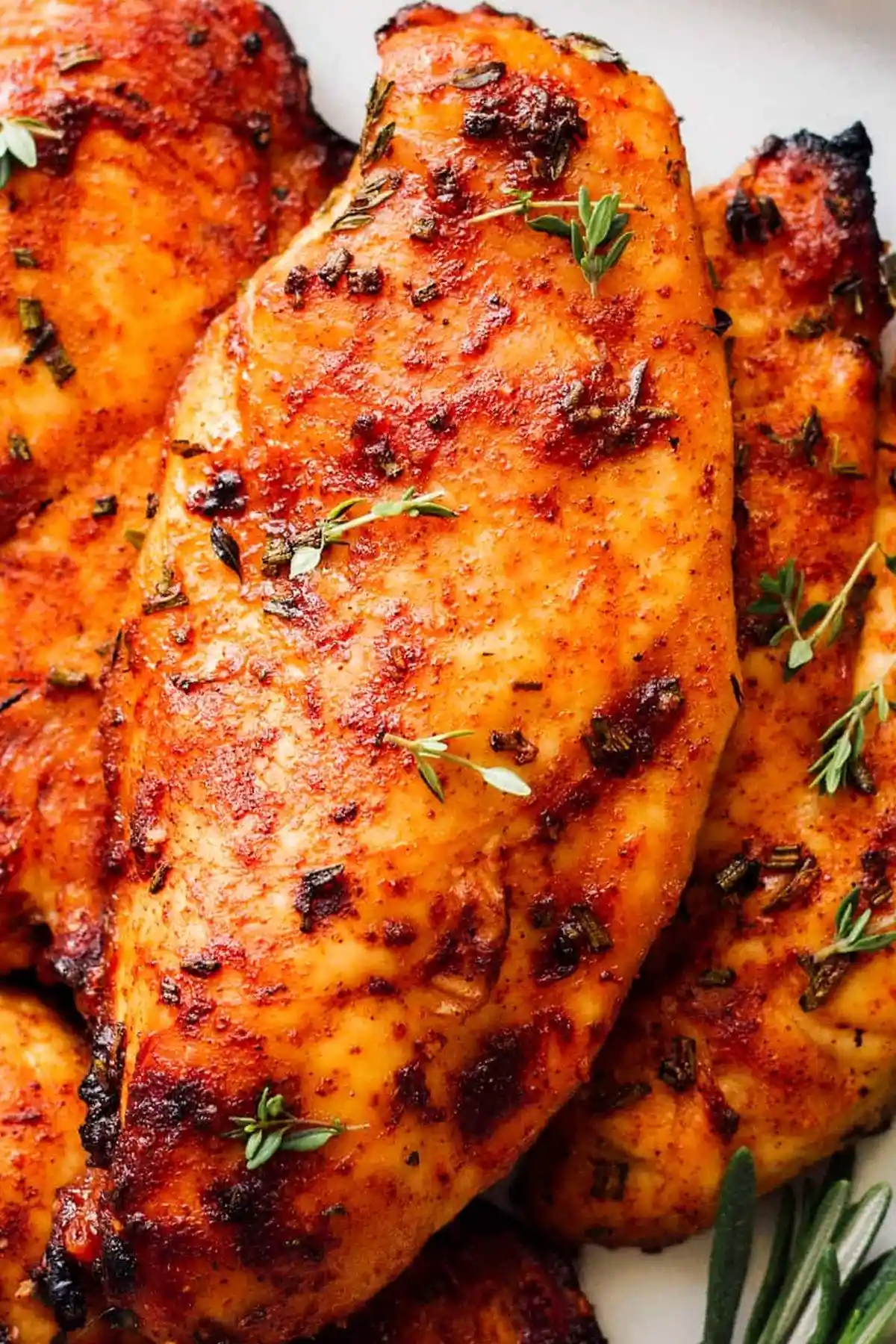
List of ingredients
- 2 boneless, skinless chicken breasts
- 1½ tablespoons brown sugar
- 1 teaspoon ground paprika
- ½ teaspoon garlic powder
- 1 teaspoon fresh thyme
- 1 teaspoon fresh rosemary
- 1 tablespoon extra virgin olive oil
step-by-step instructions
- Step: Preheat oven at 350℉.
- Step: In a medium sized bowl, add brown sugar, paprika, garlic powder, thyme, and rosemary. Mix well.
- Step: Drizzle olive oil over chicken breasts to coat evenly.
- Step: Add chicken breasts to the bowl with the spice mixture, and evenly coat the chicken breasts.
- Step: Line a sheet pan with parchment paper.
- Step: Add seasoned chicken breast to the sheet pan, add fresh herbs if desired, and bake in the oven for 30 minutes, or until chicken is fully cooked through to an internal temperature of 165℉.
- Step: Slice chicken breasts and enjoy!
Essential Preparation Techniques
Bringing Ingredients to Ambient Temperature
Allowing your chicken to sit on the counter for about 20 to 30 minutes before seasoning helps significantly with even heat distribution during the baking process. When the center of the meat is not icy cold, the exterior and interior cook at a more consistent rate. This simple step prevents the outer layer from overcooking or drying out while waiting for the core temperature to climb.
Ensuring Proper Seasoning Adhesion
The success of this rub relies entirely on the quality of the oil coating you apply initially. Make sure you massage the olive oil thoroughly into the chicken surface, especially in the crevices and under any natural folds of the meat. If the surface is too dry, the sugar and herb mixture will fall off during transfer to the pan rather than forming a delicious crust.
Mastering the Internal Temperature
Investing in a high-quality instant-read thermometer is the most reliable way to guarantee juicy results. Because chicken breasts can vary in size and thickness, using a timer alone is never as accurate as checking the internal temperature at the thickest point. Aim for exactly 165℉ to ensure the meat is safe to eat while remaining succulent.
Refining Your Culinary Approach
Managing Oven Heat and Humidity
Using a standard sheet pan allows for better airflow around the meat than using a deep-sided casserole dish. The parchment paper creates a non-stick barrier that ensures the caramelized brown sugar rub stays attached to the chicken rather than getting stuck to the bottom of the tray. Avoid overcrowding the pan, as this can cause the chicken to steam instead of roast, leading to a loss of texture.
Selecting Herb Varieties
Fresh herbs provide a brightness that dried herbs often lack, but if you must use dried, reduce the quantity by half to avoid an overwhelming flavor. Always strip the leaves from the woody stems of the thyme and rosemary before chopping them finely to ensure they distribute evenly throughout the sugar mixture. This refined method keeps the seasoning blend consistent across both breasts.
The Importance of Post-Bake Resting
Never skip the five-minute rest period after pulling the pan from the oven. Resting allows the internal juices to redistribute throughout the meat fibers instead of running out onto your cutting board the moment you make the first slice. This final window of time is crucial for maximizing tenderness and ensuring each bite remains moist and flavorful.
Common Questions Regarding This Recipe
Can I substitute the brown sugar with a different sweetener?
While brown sugar provides a unique molasses-like caramelization, you can use coconut sugar as a direct replacement. Avoid using liquid sweeteners like honey or maple syrup, as they tend to burn too quickly under high-heat oven conditions and will not create the same textural crust as a granular sugar.
How do I know if my chicken breasts are overcooked?
Overcooked chicken will feel firm to the touch and appear chalky or fibrous when sliced. If you find the meat has reached 170℉ or higher, it will likely lose its characteristic juiciness. If this happens, you can salvage the leftovers by shredding the meat and tossing it with a bit of broth or olive oil to restore moisture for use in salads or wraps.
Can this recipe be scaled for larger groups?
This recipe is easily doubled or tripled to suit your needs, provided you have enough space on your baking sheet. Arrange the chicken breasts so they do not touch each other to ensure the hot air can circulate freely. If you are using a large batch, you may find that the internal temperature checks take a moment longer, so test each piece individually for precision.
Why did my seasoning burn?
If your oven runs hot, the sugar may start to darken too quickly before the center of the chicken is cooked. If you notice the tops browning prematurely, you can loosely tent a piece of aluminum foil over the top of the tray for the final 10 minutes of baking. This reflects heat away from the surface while still allowing the core of the chicken to reach the safe temperature of 165℉.
Flavor Variations and Serving Options
Enhancing the Savory Profile
If you prefer a bolder flavor, consider adding a quarter-teaspoon of smoked paprika to the spice blend instead of plain paprika. The smokiness complements the sweetness of the brown sugar beautifully and adds a depth that mimics barbecue-style preparation. A tiny pinch of onion powder can also be added to the mix if you desire a more pungent, aromatic profile.
Pairing Suggestions for Balanced Meals
Serve this chicken alongside roasted root vegetables like carrots or parsnips, which also benefit from the gentle caramelization of a hot oven. Steamed green beans or a crisp garden salad with a bright vinaigrette provides a nice textural contrast to the tender chicken. For a heartier option, a side of fluffy quinoa or brown rice makes an excellent base to soak up any juices remaining on the plate.
Storage for Future Consumption
For best results, store your leftovers in a shallow, airtight container once they have cooled to room temperature. Placing the meat in the refrigerator promptly preserves its quality for up to four days. If you plan on freezing it, wrapping the cooled breasts individually in wax paper followed by a layer of foil prevents freezer burn and keeps the texture optimal for future use.
Efficient Reheating Strategies
When reheating, moisture is your best friend. Sprinkle a teaspoon of water or vegetable broth over the chicken before covering the container and warming it in the microwave or a low-temperature oven. Bringing the chicken back to a temperature of 165℉ is sufficient, but avoid overheating it, as repeated cooking cycles will eventually deplete the natural juices and lead to a tough final product.
Print
Baked Brown Sugar Chicken Breast
- Total Time: 40 minutes
- Yield: 2 servings 1x
- Diet: High Protein
Description
This oven-baked chicken breast is tender, juicy, and flavorful with perfect caramelization thanks to just a hint of brown sugar in a special seasoning blend.
Ingredients
- 2 boneless, skinless chicken breasts
- 1½ tablespoons brown sugar
- 1 teaspoon ground paprika
- ½ teaspoon garlic powder
- 1 teaspoon fresh thyme
- 1 teaspoon fresh rosemary
- 1 tablespoon extra virgin olive oil
Instructions
- Step: Preheat oven at 350℉.
- Step: In a medium sized bowl, add brown sugar, paprika, garlic powder, thyme, and rosemary. Mix well.
- Step: Drizzle olive oil over chicken breasts to coat evenly.
- Step: Add chicken breasts to the bowl with the spice mixture, and evenly coat the chicken breasts.
- Step: Line a sheet pan with parchment paper.
- Step: Add seasoned chicken breast to the sheet pan, add fresh herbs if desired, and bake in the oven for 30 minutes, or until chicken is fully cooked through to an internal temperature of 165℉.
- Step: Slice chicken breasts and enjoy!
Notes
If using bone-in breasts, increase the baking time by 5-15 minutes. Allow the chicken to come to room temperature before seasoning to ensure the rub adheres properly. Let the chicken rest for 5 minutes after baking to lock in the juices.
- Prep Time: 10 minutes
- Cook Time: 30 minutes
- Category: Main Course
- Method: Baking
- Cuisine: American
Nutrition
- Serving Size: 1 breast
- Calories: 361 kcal
- Sugar: 9 g
- Sodium: 266 mg
- Fat: 13 g
- Saturated Fat: 2 g
- Unsaturated Fat: 9 g
- Trans Fat: 0 g
- Carbohydrates: 10 g
- Fiber: 1 g
- Protein: 48 g
- Cholesterol: 145 mg