Chicken Milanese is a quintessential Italian-inspired dish that pairs a perfectly crispy, golden-crusted chicken cutlet with a refreshing, zesty salad. By pounding the chicken breasts thin, you ensure they cook in just a few minutes, remaining succulent and tender on the inside. This elegant meal is surprisingly straightforward to prepare at home, making it an excellent choice for a quick weeknight dinner or a refined lunch that impresses with minimal effort.
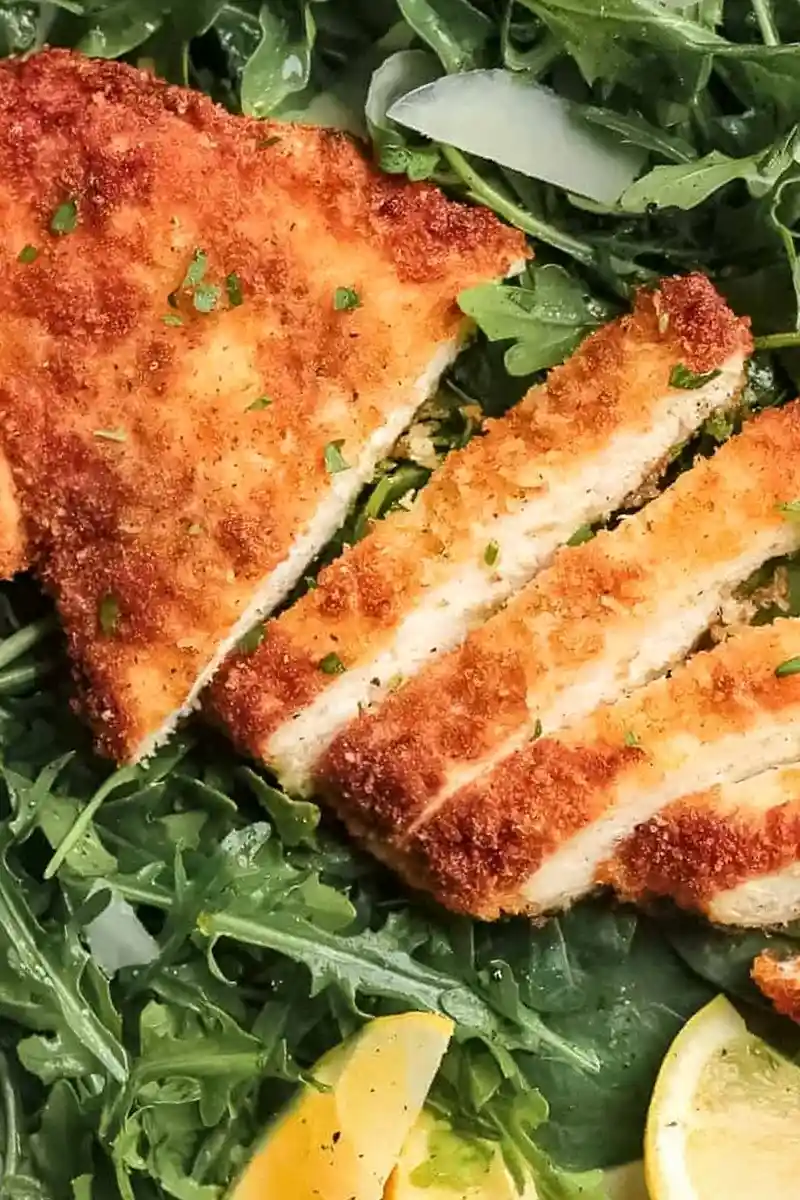
List of ingredients
- 2 boneless, skinless chicken breasts
- ½ cup all-purpose flour
- 2 large eggs
- ½ cup milk
- 1 cup Panko breadcrumbs
- ¼ cup grated Parmesan cheese
- ½ teaspoon kosher salt
- ¼ teaspoon ground black pepper
- 6 tablespoons olive oil, divided
- 2 tablespoons olive oil (for dressing)
- 1 tablespoon lemon juice
- ½ clove garlic, minced
- 4 cups arugula
- shaved Parmesan cheese, optional
step-by-step instructions
- Step: Slice each chicken breast in half horizontally.
- Step: Place each piece of chicken between 2 pieces of parchment paper or plastic wrap and pound flat using a meat mallet or rolling pin.
- Step: Sprinkle each piece of chicken with salt and pepper to taste.
- Step: Prepare 3 dishes: flour in the first; whisked eggs and milk in the second; and a mixture of Panko, Parmesan, salt, and pepper in the third.
- Step: Dip each piece of chicken into the flour, then the egg mixture, and finally coat thoroughly in the breadcrumb mixture.
- Step: Heat 3 tablespoons of olive oil in a large skillet over medium heat and cook two chicken pieces at a time for about 2 minutes per side until golden brown and the chicken reaches 165°F.
- Step: Repeat the process with the remaining 3 tablespoons of olive oil and remaining chicken.
- Step: In a bowl, whisk together 2 tablespoons of olive oil, lemon juice, garlic, salt, and pepper.
- Step: Add arugula to the bowl and toss to coat.
- Step: Serve the chicken alongside the dressed arugula salad topped with shaved Parmesan.
Refining Your Frying Technique
Maintaining Consistent Oil Temperature
The secret to a non-greasy, crispy crust is managing your skillet temperature properly. Ensure your oil reaches a shimmering state before adding the chicken, which seals the surface immediately and prevents the breading from soaking up excess fat. If the oil is too cold, the breading becomes heavy; if it is too hot, the exterior darkens before the meat is cooked through.
Preventing Coating Separation
To keep the breading intact, always allow your breaded chicken to rest on a wire rack for at least ten minutes before it hits the skillet. This brief rest period allows the moisture from the chicken to partially hydrate the flour, creating a more cohesive bond. Additionally, ensure you press the Panko breadcrumbs firmly into the meat with your palm so they do not fall off during the frying process.
Effective Ingredient Substitutions
Modifying the Breading Profile
If you prefer a gluten-free approach, swap the all-purpose flour for a high-quality gluten-free flour blend and substitute Panko with crushed gluten-free cornflakes or almond flour. While the texture will vary slightly, these alternatives provide excellent crispness. For those who find Panko too coarse, you can use fine breadcrumbs, though the resulting crust will be more compact rather than light and airy.
Enhancing the Arugula Salad
If you find raw arugula too peppery for your taste, try mixing it with mild baby spinach or tender butter lettuce. You can also introduce additional textures to the salad by adding thinly sliced radishes for crunch or pomegranate seeds for a sweet, tart pop that complements the acidity of the lemon dressing. These small adjustments customize the side dish to suit your specific palate while keeping the overall meal balanced.
Smart Storage and Preparation
Managing Make-Ahead Components
You can streamline the cooking process by prepping your dredging stations and chicken cutlets several hours in advance. Once breaded, lay the cutlets in a single layer on a parchment-lined tray and refrigerate them, uncovered or lightly covered, for up to twenty-four hours to help set the crust. When you are ready to cook, simply pull them from the fridge and let them sit at room temperature for fifteen minutes before frying.
Reheating for Maximum Crispiness
Avoid the microwave at all costs when reheating leftovers, as it will inevitably lead to a soft, soggy texture. To restore the original crunch, place your refrigerated chicken on a wire rack over a baking sheet and heat in a preheated 400°F oven for about eight to ten minutes. Using an air fryer is even more effective, requiring only five minutes at 375°F to achieve that fresh-from-the-pan sensation.
Addressing Common Cooking Issues
Avoiding Overcrowded Pan Surfaces
One of the most common pitfalls is trying to cook all the chicken at once, which lowers the oil temperature and creates steam instead of a crust. Always fry in batches, leaving enough space between each piece of chicken to allow for proper airflow in the skillet. If you are serving a large crowd, keep the finished pieces warm in a low oven set to 200°F, ideally placed on a wire rack to prevent moisture buildup underneath.
Ensuring Internal Chicken Doneness
Because these cutlets are pounded very thin, they cook rapidly, making it easy to accidentally dry them out. Use an instant-read meat thermometer to verify that the internal temperature has reached exactly 165°F. Once the chicken hits this mark, remove it from the skillet immediately to stop the cooking process and preserve the juiciness of the meat.
Understanding Breaded Finger Syndrome
To keep your fingers clean and prevent the coating from sticking to your skin instead of the chicken, designate one hand as the ‘wet’ hand and one as the ‘dry’ hand. Use the dry hand to handle the flour and breadcrumbs, and use the wet hand exclusively for the egg wash. This simple trick makes the dredging process much more efficient and less messy, allowing you to coat multiple cutlets quickly without needing to stop and wash your hands between every piece.
Print
Classic Chicken Milanese with Lemon Arugula Salad
- Total Time: PT15M
- Yield: 4 servings 1x
- Diet: High Protein
Description
This traditional chicken Milanese features thin, tender chicken cutlets breaded in a savory Parmesan-Panko coating and pan-fried until golden. Served with a bright lemon arugula salad.
Ingredients
- 2 boneless, skinless chicken breasts
- ½ cup all-purpose flour
- 2 large eggs
- ½ cup milk
- 1 cup Panko breadcrumbs
- ¼ cup grated Parmesan cheese
- ½ teaspoon kosher salt
- ¼ teaspoon ground black pepper
- 6 tablespoons olive oil, divided
- 2 tablespoons olive oil (for dressing)
- 1 tablespoon lemon juice
- ½ clove garlic, minced
- 4 cups arugula
- shaved Parmesan cheese, optional
Instructions
- Step: Slice each chicken breast in half horizontally.
- Step: Place each piece of chicken between 2 pieces of parchment paper or plastic wrap and pound flat using a meat mallet or rolling pin.
- Step: Sprinkle each piece of chicken with salt and pepper to taste.
- Step: Prepare 3 dishes: flour in the first; whisked eggs and milk in the second; and a mixture of Panko, Parmesan, salt, and pepper in the third.
- Step: Dip each piece of chicken into the flour, then the egg mixture, and finally coat thoroughly in the breadcrumb mixture.
- Step: Heat 3 tablespoons of olive oil in a large skillet over medium heat and cook two chicken pieces at a time for about 2 minutes per side until golden brown and the chicken reaches 165°F.
- Step: Repeat the process with the remaining 3 tablespoons of olive oil and remaining chicken.
- Step: In a bowl, whisk together 2 tablespoons of olive oil, lemon juice, garlic, salt, and pepper.
- Step: Add arugula to the bowl and toss to coat.
- Step: Serve the chicken alongside the dressed arugula salad topped with shaved Parmesan.
Notes
If thin-sliced chicken breasts are available, use 4 of those to save time. Regular breadcrumbs may be used, though Panko provides better crunch.
- Prep Time: PT5M
- Cook Time: PT10M
- Category: Main Course
- Method: Pan-fried
- Cuisine: Italian
Nutrition
- Serving Size: 1 cutlet with salad
- Calories: 585 kcal
- Sugar: 3 g
- Sodium: 559 mg
- Fat: 37 g
- Saturated Fat: 7 g
- Unsaturated Fat: 27 g
- Trans Fat: 0 g
- Carbohydrates: 26 g
- Fiber: 1 g
- Protein: 35 g
- Cholesterol: 178 mg