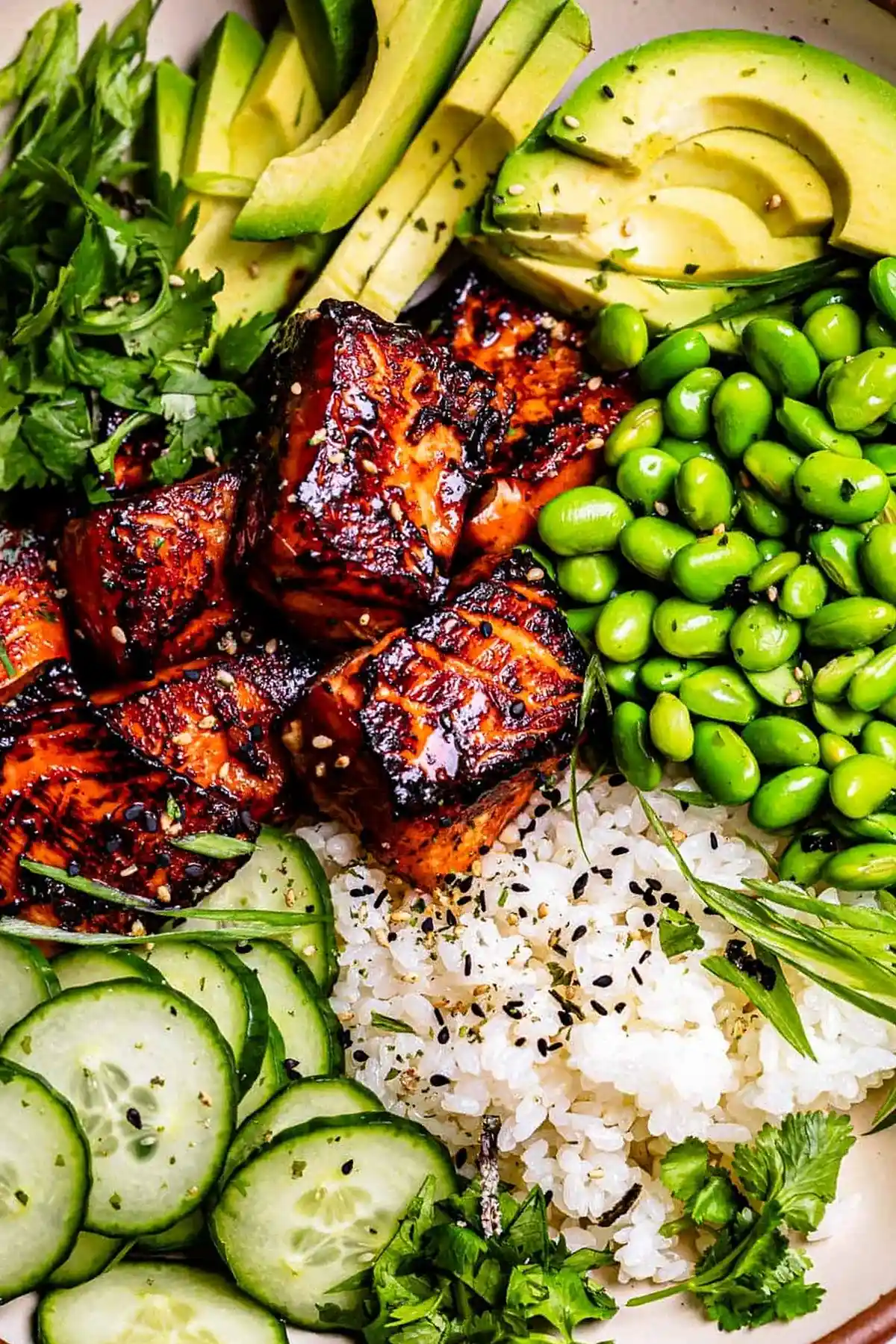
These vibrant salmon bowls balance sweet honey, spicy chili, and savory aromatics for a restaurant-quality meal you can assemble in under forty minutes. By searing marinated fish to create a crispy exterior while keeping the center flaky, you achieve a perfect contrast to the cooling sushi rice and fresh vegetables. This versatile meal offers a satisfying blend of textures and nutrients, making it an excellent choice for a healthy, crowd-pleasing dinner.
List of ingredients
- 1 tablespoon cornstarch
- 1 1/2 teaspoons baking soda
- 1/3 cup soy sauce
- 2 teaspoons sriracha
- 1/4 cup honey
- 2 tablespoons sesame oil
- 1 tablespoon garlic, smashed and minced
- 1 tablespoon fresh ginger, minced
- 2 pounds salmon filets
- 1 tablespoon sesame oil, for searing
- 1 1/2 cups sushi rice
- 1 1/2 cups water
- 1 teaspoon kosher salt
- 2 tablespoons granulated sugar
- 1/3 cup rice vinegar
- 3/4 cup mayonnaise
- 1 tablespoon sriracha
- 2 teaspoons rice vinegar
- 2 English cucumbers
- 10 ounces edamame
- 2 large avocados
- 1/2 cup green onions, sliced thin
- 1/2 cup cilantro, chopped
- 2 tablespoons black sesame seeds
- 2 tablespoons rice seasoning
step-by-step instructions
- Step: In a medium bowl, whisk together cornstarch, baking soda, soy sauce, sriracha, honey, 2 tablespoons sesame oil, garlic, and ginger.
- Step: Chop salmon into 3-4 inch pieces, add to the marinade, and set aside at room temperature.
- Step: Rinse sushi rice, then combine with water and salt in a pot; bring to a boil, cover, reduce heat to low, and cook for 10 minutes. Remove from heat and steam covered for 10-20 minutes.
- Step: Dissolve 2 tablespoons sugar in 1/3 cup rice vinegar.
- Step: Fluff rice and fold in the vinegar mixture, keeping the pot covered.
- Step: Whisk 3/4 cup mayonnaise, 1 tablespoon sriracha, and 2 teaspoons rice vinegar together in a small bowl.
- Step: Prepare vegetables: slice cucumbers and avocados, steam edamame according to package, and chop green onions and cilantro.
- Step: Heat a skillet over medium-high heat for 1-2 minutes; add 2 tablespoons oil.
- Step: Sear salmon pieces in batches for 1-2 minutes until crispy, flip, and cook for another 1-3 minutes until opaque and flaky.
- Step: Assemble bowls with rice, salmon, vegetables, and garnish with green onions, cilantro, black sesame seeds, and rice seasoning.
Flavor and Texture Enhancements
Achieving the Perfect Sear
To ensure your salmon develops that characteristic blackened, crispy exterior, always dry the fish pieces with a paper towel before adding them to the marinade. Additionally, avoid overcrowding your skillet, as excess moisture will cause the fish to steam rather than brown. Maintaining a high heat is critical, so listen for a loud sizzle as soon as the salmon hits the pan to signal that the caramelization process has begun.
Balancing the Marinade Intensity
The combination of soy sauce, honey, and baking soda creates a powerful reaction that tenderizes the surface of the fish while facilitating browning. If you prefer a less salty profile, you can swap half of the soy sauce for water or a splash of orange juice, which adds a subtle citrus note. Always remember that the baking soda is responsible for the unique, slightly crispy edge, so be careful not to exceed the recommended amount to avoid an overly alkaline taste.
Customizing Your Bowl Components
Replacing Sushi Rice with Healthier Grains
If you are looking to increase the fiber content or reduce the glycemic load of your meal, consider using forbidden black rice, brown rice, or even quinoa. These options pair beautifully with the flavors of the honey-sriracha marinade and provide a nuttier texture. When using these alternatives, adjust your water ratios according to the grain’s specific cooking requirements to ensure a tender, fluffy result.
Expanding Your Vegetable Selection
While cucumbers and edamame are classic pairings, you can easily adapt this dish to what is currently in your refrigerator. Shredded carrots, quick-pickled radish slices, or lightly blanched snap peas offer excellent crunch and color. For a heartier bowl, consider adding roasted seaweed strips or pickled ginger, both of which complement the sushi-inspired theme and enhance the overall umami experience.
Smart Preparation and Storage Strategies
Organizing Ingredients for Efficiency
Because this recipe involves several components, success lies in efficient mise-en-place. Chop all your vegetables and whisk your sauces while the rice is undergoing its steam cycle, which keeps your kitchen space organized and ensures the salmon is served hot off the skillet. Keeping your salmon at room temperature before searing is also a vital step that prevents the center from remaining cold while the outside gets too dark.
Properly Storing Leftover Components
To maintain the best possible quality for your leftovers, store the salmon, rice, vegetables, and sauce in separate airtight containers within the refrigerator. Combining the warm components with fresh vegetables will cause the latter to wilt and become unappealing within a few hours. When you are ready for a second meal, reheat the rice and salmon gently in the microwave or a pan before topping them with the fresh, chilled ingredients.
Frequent Inquiries
Can I make this meal gluten-free?
Yes, you can easily substitute traditional soy sauce with tamari or coconut aminos in equal measurements. Ensure that your rice seasoning or other additions are certified gluten-free, as some processed seasonings may contain wheat-based fillers. The remaining ingredients, including honey, sriracha, and rice vinegar, are generally naturally gluten-free.
What is the best way to handle frozen salmon?
The most efficient way to thaw frozen salmon for this dish is to place the vacuum-sealed package in a bowl of cool water for 20 to 30 minutes. This method is safe, fast, and does not compromise the texture of the fish. Always ensure the fish is completely patted dry after thawing to allow the marinade to adhere properly and to encourage the best possible sear during cooking.
Why is the rice vinegar and sugar mixture necessary?
The vinegar-sugar solution mimics the traditional seasoning used for sushi rice, which provides a delicate, signature tang that cuts through the richness of the salmon. Skipping this step would result in plain, flat-tasting rice. The sugar serves to balance the acidity of the vinegar, ensuring the rice is vibrant and well-seasoned, which is crucial for a balanced, harmonious bowl.
Can I grill the salmon instead of pan-searing?
Grilling is a fantastic alternative for this recipe, especially if you want to impart a smoky flavor to the salmon. If using a grill, ensure the grates are well-oiled to prevent sticking, and cook over medium-high heat until the fish reaches the desired flake point. You may lose some of the specific crispy texture created by the starch-heavy marinade, but the flavor profile will remain excellent and the dish will be equally satisfying.
How do I adjust the spiciness?
The level of heat in these bowls is fully adjustable based on your sensitivity. If you find the recommended amount of sriracha to be too mild, you can add extra chili flakes to the marinade or increase the amount of sriracha in the mayo. Conversely, if you prefer a milder bowl, reduce the sriracha by half or use a sweet chili sauce instead, which provides a similar texture with less intensity.
Print
Honey Sriracha Salmon Bowls
- Total Time: 45 minutes
- Yield: 6 servings 1x
- Diet: Pescatarian
Description
I am recently OBSESSED with these Honey Sriracha Salmon Bowls! It is my new favorite last minute weeknight dinner. Salmon rice bowls look fancy but everything comes together so fast! A quick marinade and then a hot sear for the salmon, plus cucumbers, edamame, avocado, and sushi rice. You will feel like a super human after eating all this green stuff! Such an easy recipe.
Ingredients
- 1 tablespoon cornstarch
- 1 1/2 teaspoons baking soda
- 1/3 cup soy sauce
- 2 teaspoons sriracha
- 1/4 cup honey
- 2 tablespoons sesame oil
- 1 tablespoon garlic, smashed and minced
- 1 tablespoon fresh ginger, minced
- 2 pounds salmon filets
- 1 tablespoon sesame oil, for searing
- 1 1/2 cups sushi rice
- 1 1/2 cups water
- 1 teaspoon kosher salt
- 2 tablespoons granulated sugar
- 1/3 cup rice vinegar
- 3/4 cup mayonnaise
- 1 tablespoon sriracha
- 2 teaspoons rice vinegar
- 2 English cucumbers
- 10 ounces edamame
- 2 large avocados
- 1/2 cup green onions, sliced thin
- 1/2 cup cilantro, chopped
- 2 tablespoons black sesame seeds
- 2 tablespoons rice seasoning
Instructions
- Step: In a medium bowl, whisk together cornstarch, baking soda, soy sauce, sriracha, honey, 2 tablespoons sesame oil, garlic, and ginger.
- Step: Chop salmon into 3-4 inch pieces, add to the marinade, and set aside at room temperature.
- Step: Rinse sushi rice, then combine with water and salt in a pot; bring to a boil, cover, reduce heat to low, and cook for 10 minutes. Remove from heat and steam covered for 10-20 minutes.
- Step: Dissolve 2 tablespoons sugar in 1/3 cup rice vinegar.
- Step: Fluff rice and fold in the vinegar mixture, keeping the pot covered.
- Step: Whisk 3/4 cup mayonnaise, 1 tablespoon sriracha, and 2 teaspoons rice vinegar together in a small bowl.
- Step: Prepare vegetables: slice cucumbers and avocados, steam edamame according to package, and chop green onions and cilantro.
- Step: Heat a skillet over medium-high heat for 1-2 minutes; add 2 tablespoons oil.
- Step: Sear salmon pieces in batches for 1-2 minutes until crispy, flip, and cook for another 1-3 minutes until opaque and flaky.
- Step: Assemble bowls with rice, salmon, vegetables, and garnish with green onions, cilantro, black sesame seeds, and rice seasoning.
Notes
I usually discard the marinade after searing the salmon, but if you want extra-saucy bowls, add the marinade to the hot pan after searing, and cook for 1-2 minutes until thickened.
- Prep Time: 20 minutes
- Cook Time: 25 minutes
- Category: Main Course
- Method: Pan-searing
- Cuisine: Asian
Nutrition
- Serving Size: 1 bowl
- Calories: 700 kcal
- Sugar: 13 g
- Sodium: 850 mg
- Fat: 37 g
- Saturated Fat: 5 g
- Unsaturated Fat: 27 g
- Trans Fat: 0 g
- Carbohydrates: 53 g
- Fiber: 8 g
- Protein: 40 g
- Cholesterol: 89 mg