This comforting dish pairs tender, golden-seared chicken breasts with a sophisticated, velvety mustard cream sauce. Served atop a bed of fluffy, buttery mashed potatoes, this meal offers the perfect balance of richness and savory depth. It is an ideal choice for both quiet family dinners and special evening gatherings where you want to impress without spending hours in the kitchen.
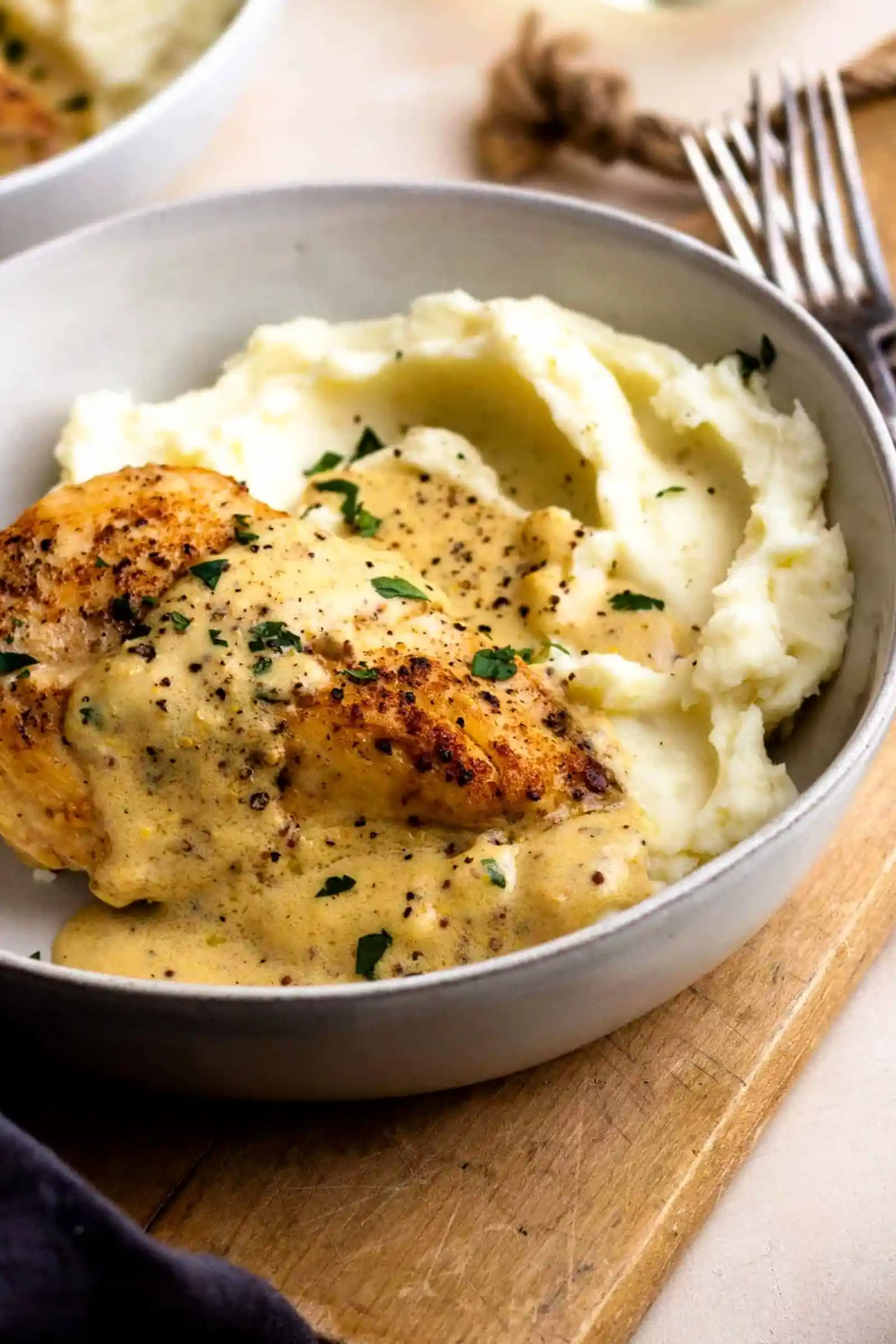
List of ingredients
- 2 pounds russet potatoes, peeled and cut into quarters
- 2 tablespoons butter
- 1/2 cup heavy whipping cream
- 1 teaspoon salt
- 2 tablespoons butter
- 1 tablespoon olive oil
- 4 chicken breasts
- 1/2 teaspoon garlic powder
- Salt, to taste
- Pepper, to taste
- 2 tablespoons butter
- 2 garlic cloves, minced
- 1 tablespoon all-purpose flour
- 1 cup chicken broth
- 2-3 tablespoons dijon mustard
- 1/2 teaspoon salt
- 1/4 teaspoon pepper
- 1 cup heavy whipping cream
- Optional garnish: chopped parsley
step-by-step instructions
- Step: Add the potatoes to a large pot and cover with water. Bring to a boil and cook until fork tender.
- Step: Strain the potatoes, return to the pot, and add butter, heavy cream, and salt. Mash until smooth and keep warm.
- Step: Season chicken with salt, pepper, and garlic powder. Sear in butter and olive oil in a skillet over medium-high heat for 5 minutes per side. Remove chicken and set aside.
- Step: Preheat oven to 375 degrees F.
- Step: In the same skillet, melt butter and cook garlic. Whisk in flour for one minute. Gradually pour in chicken broth and whisk in dijon mustard, salt, pepper, and heavy cream. Simmer for 1-2 minutes until thickened.
- Step: Add chicken back to the skillet, then bake for 15-18 minutes until fully cooked. Serve over mashed potatoes.
Secrets to Achieving Silky Mashed Potatoes
Achieving the Right Potato Texture
Using starchy varieties like russets is critical for achieving that signature fluffy texture. When potatoes are boiled until they offer no resistance to a fork, they release the necessary starches to emulsify with the cream and butter. Avoid over-boiling, which can lead to water-logged potatoes that won’t hold the creamy sauce effectively.
The Benefit of Electric Mixing
While a manual masher works well for a rustic texture, an electric hand mixer is the secret to achieving a professional, velvet-like consistency. When using an electric mixer, ensure you add the warm heavy cream and butter gradually to allow the potatoes to absorb the fats evenly. This step incorporates air into the starch, resulting in a lighter and more luxurious final product that pairs beautifully with the rich dijon sauce.
Refining Your Dijon Sauce Technique
Managing Sauce Consistency
The flour-thickening method is highly effective, but the key is consistent whisking. By adding the chicken broth slowly, you prevent the formation of clumps and ensure the roux is perfectly incorporated. If you find the sauce is too thick after simmering, add a splash more chicken broth one tablespoon at a time until you reach the desired consistency for drizzling.
Balancing the Mustard Flavor
Dijon mustard carries a significant amount of tang, so it is best to start with two tablespoons and conduct a taste test. If you prefer a sharper profile, add the third tablespoon at the end. Because the cream dilutes the intensity, adjusting the seasoning after adding the dairy ensures the flavor is perfectly balanced to your preference.
Substitutions and Ingredient Adaptations
Choosing the Best Chicken Cut
If you prefer white meat that stays moist, chicken tenders can be used, though they will require a shorter searing and baking time. If you use bone-in, skin-on chicken, the searing time will need to be extended to ensure the skin becomes crispy. Always ensure the internal temperature of the chicken reaches 165 degrees Fahrenheit regardless of the cut used.
Adjusting the Creaminess
For those who want a lighter sauce, half-and-half can replace the heavy cream, though the resulting sauce will be thinner. To maintain the thickness when using lighter dairy, simply increase the flour by half a teaspoon or simmer the sauce slightly longer to reduce the volume. Avoid using milk, as the lack of fat content can cause the sauce to separate or curdle when combined with the acidity of the mustard.
Effective Meal Preparation Strategies
Efficient Time Management
The most effective way to manage this recipe is to time the boiling of the potatoes to coincide with the chicken searing phase. Once the chicken is in the oven, you have exactly the right amount of time to finish the mashed potatoes while the oven heat completes the cooking process for the poultry. This ensures both components of the meal are ready at the same time without any stress.
Storing and Reheating
If you have leftovers, store the chicken and potatoes in airtight containers in the refrigerator for up to three days. When reheating, do so slowly on the stove with a splash of chicken broth added to the skillet to loosen the sauce. This prevents the cream from breaking and keeps the chicken tender rather than drying it out in the microwave.
Common Questions Regarding This Dish
Can I use dried herbs in the sauce?
Yes, dried herbs such as tarragon or thyme work exceptionally well with dijon mustard and cream. Add these herbs during the sauté phase with the garlic to help toast them and release their oils into the sauce base. Avoid using too much dried seasoning, as it can become gritty; a quarter teaspoon is usually sufficient for this volume of sauce.
Why does my sauce look thin?
A thin sauce is often the result of not allowing the flour and butter mixture to cook long enough before adding the liquids. The flour needs to be fully hydrated by the butter to form a proper base. Ensure that your sauce reaches a gentle simmer for the full two minutes indicated in the instructions, as this is when the starch fully expands to thicken the mixture.
What should I do if my potatoes become gummy?
Gummy potatoes are usually caused by over-processing or working the potatoes too long after they have cooled. Always mash the potatoes while they are steaming hot and avoid using a food processor, which breaks down the starch cells too aggressively. Using a standard hand mixer or a classic potato ricer will help keep the potatoes light and airy instead of dense or gummy.
Is this dish suitable for meal prepping?
While the chicken and sauce are best when made fresh, the mashed potatoes are excellent for make-ahead prep. You can boil, mash, and store them in the refrigerator, then reheat them gently on the stovetop with a little extra butter or cream. For the best quality, cook the chicken just before serving to ensure the seared crust remains delicious and the meat stays juicy.
Print
Chicken with Creamy Dijon Sauce and Mashed Potatoes
- Total Time: 50 minutes
- Yield: 4 servings 1x
- Diet: Gluten-Free Friendly
Description
Tender, juicy chicken breasts smothered in the most insanely delicious dijon mustard cream sauce, all served over fluffy mashed potatoes. The chicken and sauce is all made in one skillet, making it an easy dinner! Perfect for date night or a casual weeknight. Everyone will love this recipe!
Ingredients
- 2 pounds russet potatoes, peeled and cut into quarters
- 2 tablespoons butter
- 1/2 cup heavy whipping cream
- 1 teaspoon salt
- 2 tablespoons butter
- 1 tablespoon olive oil
- 4 chicken breasts
- 1/2 teaspoon garlic powder
- Salt, to taste
- Pepper, to taste
- 2 tablespoons butter
- 2 garlic cloves, minced
- 1 tablespoon all-purpose flour
- 1 cup chicken broth
- 2–3 tablespoons dijon mustard
- 1/2 teaspoon salt
- 1/4 teaspoon pepper
- 1 cup heavy whipping cream
- Optional garnish: chopped parsley
Instructions
- Step: Add the potatoes to a large pot and cover with water. Bring to a boil and cook until fork tender.
- Step: Strain the potatoes, return to the pot, and add butter, heavy cream, and salt. Mash until smooth and keep warm.
- Step: Season chicken with salt, pepper, and garlic powder. Sear in butter and olive oil in a skillet over medium-high heat for 5 minutes per side. Remove chicken and set aside.
- Step: Preheat oven to 375 degrees F.
- Step: In the same skillet, melt butter and cook garlic. Whisk in flour for one minute. Gradually pour in chicken broth and whisk in dijon mustard, salt, pepper, and heavy cream. Simmer for 1-2 minutes until thickened.
- Step: Add chicken back to the skillet, then bake for 15-18 minutes until fully cooked. Serve over mashed potatoes.
Notes
If someone in your house isn’t much of a mustard fan, start by adding one tablespoon of dijon and do a taste test. You can use less mustard for a milder flavor.
- Prep Time: 10 minutes
- Cook Time: 40 minutes
- Category: Dinner
- Method: Stovetop and Oven
- Cuisine: American
Nutrition
- Serving Size: 1 serving
- Calories: 707 kcal
- Sugar: 5 g
- Sodium: 1237 mg
- Fat: 53 g
- Saturated Fat: 32 g
- Unsaturated Fat: 18 g
- Trans Fat: 1 g
- Carbohydrates: 47 g
- Fiber: 3 g
- Protein: 42 g
- Cholesterol: 147 mg