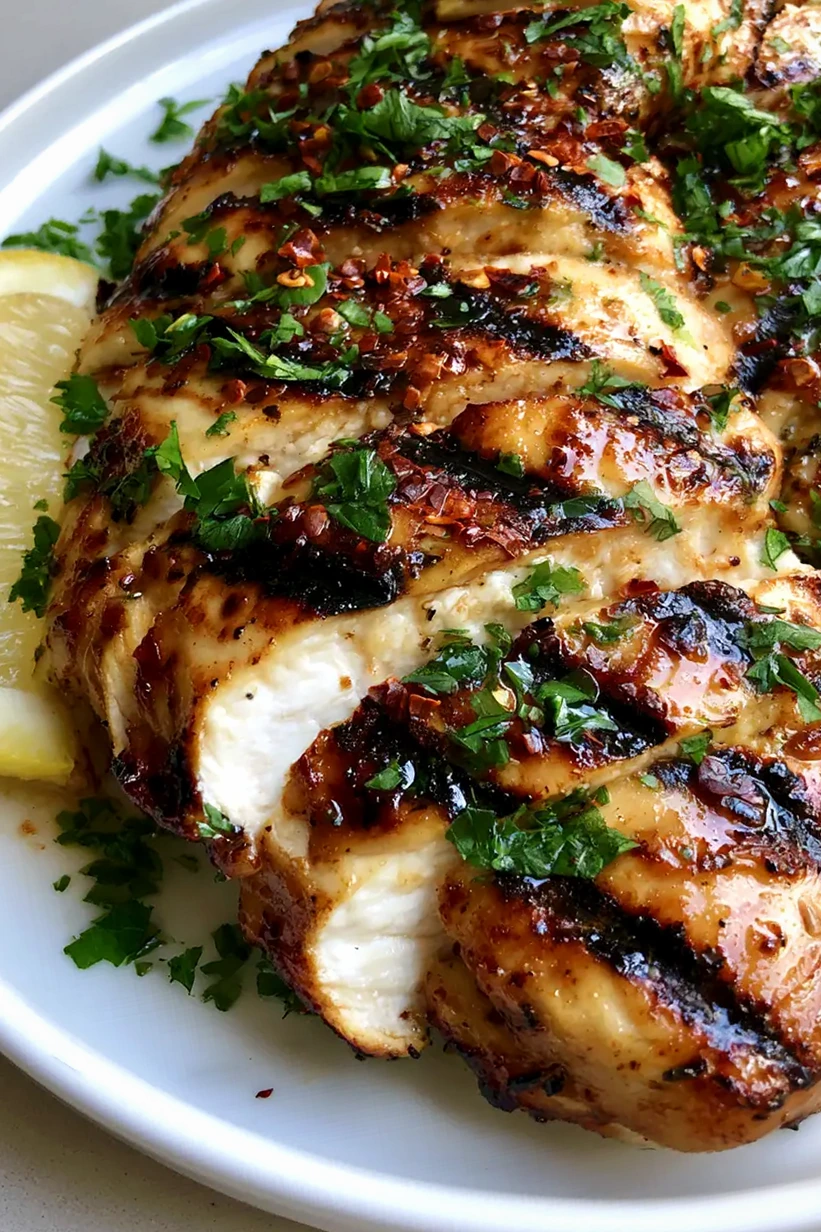
Transform standard poultry into a high-quality main dish with this simple, flavorful marinade. By balancing acidity, natural sugars, and aromatic herbs, you can achieve a professional sear and a consistently succulent texture every time you fire up the grill.
List of ingredients
- 2 lbs (900g) Boneless Skinless Chicken Breasts (Pounded to even thickness)
- 1/2 cup (120ml) Extra Virgin Olive Oil
- 1/4 cup (60ml) Fresh Lemon Juice
- 2 tbsp (30ml) Balsamic Vinegar
- 1 tbsp (15ml) Honey
- 4 cloves Garlic (Minced)
- 1/2 tsp (1g) Red Chili Flakes
- 1/4 cup (15g) Fresh Parsley (Finely chopped for garnish)
step-by-step instructions
- Step: In a medium glass bowl, whisk together the olive oil, lemon juice, balsamic vinegar, honey, minced garlic, and red chili flakes until fully emulsified.
- Step: Place the chicken breasts in a large freezer bag, pour in the marinade, and massage the bag to ensure the chicken is evenly coated.
- Step: Refrigerate for 30 minutes to 4 hours to allow the flavors to penetrate the meat.
- Step: Preheat your grill to medium-high heat (400°F/200°C) and lightly oil the grates.
- Step: Place the chicken on the grill at a 45-degree angle. Cook for 5-7 minutes per side without moving it until dark char marks appear and the internal temperature reaches 165°F (74°C).
- Step: Remove the chicken to a plate, tent loosely with foil, and let it rest for 5-8 minutes before slicing against the grain to serve.
Keys to Professional Grilling Results
Achieving Even Thickness
Using a kitchen mallet or the bottom of a heavy skillet to pound your chicken breasts to a uniform thickness is the most effective way to ensure even cooking. When the chicken is thick in some spots and thin in others, the thinner parts dry out before the thickest section reaches the safe internal temperature. Aim for a consistent thickness of about three-quarters of an inch for the best results.
The Role of Sugar in Caramelization
The combination of honey and balsamic vinegar is not just for flavor; it is the primary driver for those deep, dark grill marks that characterize restaurant-quality chicken. These sugars react to the high heat of the grill through the Maillard reaction, creating a complex, caramelized crust. Be careful not to exceed the recommended heat, as excess sugar can cause the surface to burn before the interior is fully cooked through.
Why Surface Moisture Matters
Before placing your marinated chicken on the grill, you can lightly pat the surface with a paper towel if the marinade is too wet. While the marinade provides excellent flavor, removing excessive liquid from the very surface of the meat helps the grill heat interact directly with the proteins. This prevents the chicken from steaming instead of searing, which is critical for that signature glossy appearance.
Refining Your Marinade and Serving Strategy
Choosing the Right Acid Balance
The acidity from the lemon juice is vital for breaking down the proteins in the breast meat, but too much acid over a long period can actually make the texture mealy. Stick to the suggested 30-minute to 4-hour window to keep the structure of the meat intact. If you find you need to marinate for a longer duration, reduce the lemon juice by half to prevent the citrus from over-processing the chicken fibers.
Selecting Complementary Sides
Because this chicken features a bright, Mediterranean-inspired flavor profile, it pairs exceptionally well with cooling and crunchy sides. Consider serving it alongside a classic cucumber and tomato salad, or perhaps a bowl of chilled pearl couscous mixed with diced herbs. The goal is to provide a refreshing contrast to the charred, caramelized exterior of the chicken.
Proper Thermometer Usage
Relying on color or texture alone is a common mistake that often leads to dry, overcooked poultry. Insert your digital meat thermometer into the thickest part of the breast to confirm the internal temperature is exactly 165°F (74°C). Pulling the meat off the heat immediately at this temperature ensures the carry-over cooking does not push the chicken into a dry, chalky state.
Management of Leftovers and Preparation
Maximizing Flavor Through Storage
If you have extra chicken, store it in an airtight container within the refrigerator for up to 4 days. When reheating, avoid the microwave if possible, as it tends to make the meat rubbery by steaming it too aggressively. Instead, place the chicken in a cold skillet with a tiny splash of water or broth, cover it with a lid, and warm it gently over low heat until just heated through.
Strategic Freezer Usage
This recipe is an excellent candidate for freezer-friendly meal prep. You can place the raw chicken breasts directly into a freezer bag with the marinade, squeeze out all the air, and store it for up to 3 months. When you are ready to cook, let the bag thaw completely in the refrigerator overnight, which acts as an extended marination process, resulting in a very tender outcome upon grilling.
Addressing Common Preparation Errors
If your chicken pieces are sticking to the grill, it is often a sign that you have flipped them too soon. If the meat offers resistance when you try to lift it, the proteins have not yet formed a proper sear; wait another 60 seconds and try again. Additionally, ensure your grill grates are brushed clean of any charred debris from previous cooking sessions, as carbon buildup creates a rough surface that invites tearing.
Addressing Frequently Asked Questions
Can I use other cuts of poultry with this marinade?
While this recipe was developed specifically for boneless skinless breasts, it works excellently with chicken thighs. Because thighs have a higher fat content, they are more forgiving and remain juicy even if they stay on the heat a few minutes longer. Increase your grilling time by approximately 3 minutes per side when using dark meat to account for the denser composition of the thighs.
Is it necessary to remove the garlic pieces before grilling?
While you do not need to scrub the garlic off, try to ensure the large chunks are not clumped heavily on one side of the meat before it hits the grill. Minced garlic can burn and become bitter if left on the surface in large amounts over high heat. Simply spreading the marinade evenly across the meat surface prevents localized burning while allowing the flavor to infuse.
How do I know if the balsamic vinegar is high quality?
A good balsamic vinegar for this marinade should have a slight viscosity rather than being as thin as water. If you only have access to a very thin, inexpensive vinegar, you can simulate a higher-quality reduction by simmering the two tablespoons of vinegar in a small saucepan for 3 minutes before adding it to your oil and lemon mixture. This concentrates the natural sugars and creates a more robust, syrupy glaze.
Print
Grilled Chicken Marinade: The Secret to Juicy, Caramelized Perfection
- Total Time: PT25M
- Yield: 4 servings 1x
- Diet: High Protein
Description
This Grilled Chicken Marinade creates juicy chicken with dark caramelized grill marks and a glossy herb finish. Perfectly balanced with lemon, honey, and garlic for the ultimate summer grilling experience.
Ingredients
- 2 lbs (900g) Boneless Skinless Chicken Breasts (Pounded to even thickness)
- 1/2 cup (120ml) Extra Virgin Olive Oil
- 1/4 cup (60ml) Fresh Lemon Juice
- 2 tbsp (30ml) Balsamic Vinegar
- 1 tbsp (15ml) Honey
- 4 cloves Garlic (Minced)
- 1/2 tsp (1g) Red Chili Flakes
- 1/4 cup (15g) Fresh Parsley (Finely chopped for garnish)
Instructions
- Step: In a medium glass bowl, whisk together the olive oil, lemon juice, balsamic vinegar, honey, minced garlic, and red chili flakes until fully emulsified.
- Step: Place the chicken breasts in a large freezer bag, pour in the marinade, and massage the bag to ensure the chicken is evenly coated.
- Step: Refrigerate for 30 minutes to 4 hours to allow the flavors to penetrate the meat.
- Step: Preheat your grill to medium-high heat (400°F/200°C) and lightly oil the grates.
- Step: Place the chicken on the grill at a 45-degree angle. Cook for 5-7 minutes per side without moving it until dark char marks appear and the internal temperature reaches 165°F (74°C).
- Step: Remove the chicken to a plate, tent loosely with foil, and let it rest for 5-8 minutes before slicing against the grain to serve.
Notes
For the best char marks, do not move the chicken once placed on the grill until it is time to flip. Always rest your chicken to keep the interior bright white and moist.
- Prep Time: PT10M
- Cook Time: PT15M
- Category: Dinner
- Method: Grilling
- Cuisine: American, Mediterranean
Nutrition
- Serving Size: 1 breast
- Calories: 285 kcal
- Sugar: 4 g
- Sodium: 180 mg
- Fat: 15 g
- Saturated Fat: 2 g
- Unsaturated Fat: 11 g
- Trans Fat: 0 g
- Carbohydrates: 6 g
- Fiber: 1 g
- Protein: 32 g
- Cholesterol: 95 mg