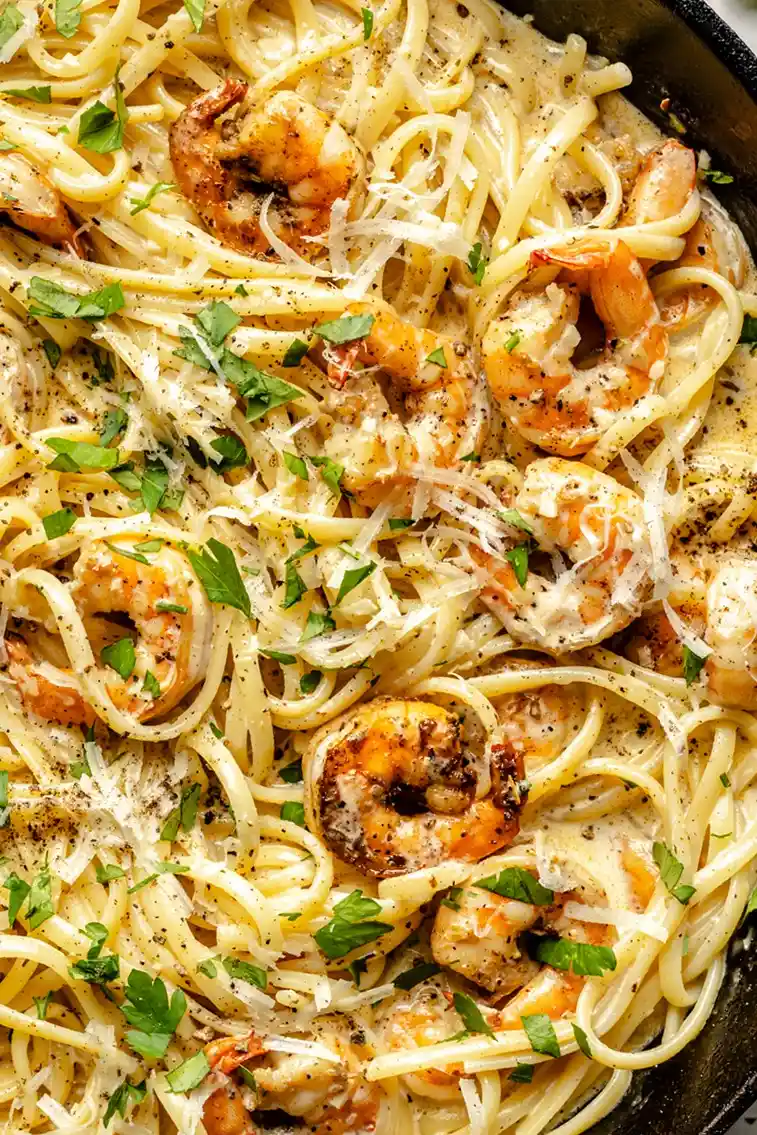
This garlic shrimp pasta delivers a restaurant-quality dining experience in under thirty minutes. By pairing succulent, pan-seared shrimp with a rich parmesan cream sauce and perfectly cooked linguine, you create a balanced meal that satisfies everyone at the table. It is the ideal solution for busy weeknights when you want something sophisticated yet simple to prepare.
List of ingredients
- 8 ounces linguine pasta
- 1 pound large raw shrimp, peeled and deveined
- 1 tablespoon olive oil
- 1 teaspoon cajun or old bay seasoning
- ½ teaspoon garlic powder
- ½ teaspoon Italian seasoning
- ½ teaspoon salt
- ½ teaspoon black pepper
- 2 tablespoons butter
- 4-5 cloves garlic, minced
- 1 cup heavy cream
- ½ cup parmesan cheese, grated
step-by-step instructions
- Step: Bring a large pot of water to a boil and season with salt. Cook pasta according to package directions until al dente (about 10 minutes). Reserve ½ cup of the pasta water then drain pasta.
- Step: While the pasta is cooking, combine the shrimp, olive oil, and seasoning in a medium bowl. Stir to combine.
- Step: Melt 1 tablespoon butter in a large skillet over medium-high heat and add the shrimp to the skillet. Cook the shrimp for 1 minute per side or until the shrimp is charred. Remove shrimp from the skillet and add the remaining tablespoon of butter to the skillet. Add the garlic and cook the garlic for 30 seconds or until fragrant.
- Step: Pour in the heavy cream, parmesan cheese, and reserved pasta water. Stir until parmesan has melted through and sauce has loosened. Taste and adjust salt if needed.
- Step: Toss in the cooked pasta until fully coated with the sauce. Top with the shrimp and gently toss to combine. Garnish with fresh chopped parsley, more parmesan, or red pepper flakes. Serve immediately!
Refining Your Cooking Technique
Selecting High-Quality Shrimp
For the best results, look for wild-caught or responsibly farmed shrimp that are firm to the touch. If you are using frozen shrimp, place them in a colander under cold running water for five to ten minutes to ensure they are fully thawed and patted dry with paper towels before seasoning. Dry shrimp sear much better than wet shrimp, which tends to steam rather than develop a golden crust.
Mastering the Starchy Pasta Water
The secret to any professional-grade cream sauce is the reserved pasta water. It is packed with starch, which acts as a natural emulsifier, helping the heavy cream and parmesan bind perfectly to the noodles. Without this liquid gold, your sauce might separate or fail to coat the pasta evenly, so always remember to save that half-cup before draining the pot.
Managing Heat Levels
When cooking garlic, keep the heat at a medium or medium-low setting to prevent burning. Burnt garlic will turn bitter and ruin the entire flavor profile of your creamy sauce. If the pan feels too hot after searing the shrimp, move it off the burner for a few seconds to let the butter and garlic cool down slightly before adding the cream.
Substitutions and Variations
Alternative Pasta Shapes
While linguine is the traditional choice for its surface area, you can easily swap it for other shapes. Fettuccine works wonderfully as a direct replacement, as its wider surface captures the creamy parmesan sauce effectively. If you prefer smaller shapes, penne or farfalle are excellent choices because the sauce gets trapped inside the crevices of the pasta, ensuring a flavorful bite every time.
Adjusting the Creaminess
If you want to reduce the total fat content without sacrificing the essence of the dish, you can substitute the heavy cream for half-and-half or a blend of milk and a small amount of Greek yogurt. Keep in mind that lower-fat dairy products can sometimes break or curdle if exposed to high heat for too long, so keep the sauce at a gentle simmer rather than a rolling boil if using these alternatives.
Boosting Vegetable Content
To turn this into a more nutrient-dense meal, consider folding in some fresh greens or vegetables. Baby spinach wilts perfectly when added during the final step of tossing the pasta in the sauce. Alternatively, roasted cherry tomatoes or sautéed asparagus pieces added at the end provide a bright contrast to the richness of the cream sauce.
Preparation and Storage Considerations
Maximizing Freshness with Leftovers
This dish is best enjoyed immediately after it is prepared while the sauce is at its creamiest state. However, if you have leftovers, allow them to cool down completely before transferring them to an airtight glass container. Keep the dish in the refrigerator for no more than four days, as the texture of the shrimp will begin to degrade over time.
Reheating for Optimal Texture
When reheating, moisture is your best friend. Since the sauce tends to absorb into the pasta as it cools, the meal may seem dry upon warming. Add one or two tablespoons of vegetable broth or water to the container before heating in the microwave at 30-second intervals, stirring in between to redistribute the moisture and bring the sauce back to its original silky consistency.
Strategic Meal Preparation
You can streamline the process significantly by preparing elements ahead of time. Peel and devein your shrimp the night before, keeping them in a sealed container in the coldest part of your refrigerator. You can also grate your parmesan cheese and mince your garlic in advance, placing them in small jars. This makes the active cooking time on the day of service feel almost instantaneous.
Common Queries Addressed
Can I use pre-grated parmesan?
It is highly recommended to use a block of parmesan and grate it yourself. Pre-grated cheese is often coated in cellulose or anti-caking agents that prevent it from melting smoothly, which can result in a grainy sauce rather than a smooth, velvety emulsion. Freshly grated cheese melts perfectly into the hot cream and pasta water.
Is it necessary to remove shrimp tails?
Leaving the tails on is largely a personal preference. While they offer an elegant presentation, they can be cumbersome to deal with once the shrimp is tossed in a sauce-heavy pasta dish. If you are serving this to family, removing the tails entirely makes for a much more comfortable eating experience.
How do I know when the shrimp is perfectly cooked?
Shrimp cook incredibly fast, often in under two minutes total. You are looking for a shift in color from translucent gray to an opaque pink with a slight white hue. The shape should resemble a soft ‘C’; if the shrimp has curled into a tight ‘O’ shape, it has likely been overcooked and may become rubbery or tough.
Can this recipe be made without heavy cream?
While heavy cream is the traditional base for this style of dish, you can use high-fat coconut milk for a dairy-free alternative that still provides a creamy texture. Note that the flavor profile will shift slightly toward a subtle tropical note, which pairs surprisingly well with the garlic and cajun seasoning, though it will not taste like a classic parmesan-cream sauce.
What is the best way to prevent the sauce from breaking?
A broken sauce usually occurs when the heat is too high or the cheese is added too quickly. Always turn the heat down to low once you add the parmesan cheese and whisk it gently but continuously. This controlled temperature allows the proteins in the cheese to soften and incorporate into the fat of the cream and butter without separating.
Print
Creamy Garlic Shrimp Pasta
- Total Time: 30 minutes
- Yield: 4 servings 1x
- Diet: Pescatarian
Description
Creamy Garlic Shrimp Pasta is easy to make with just a handful of ingredients, and can be on the dinner table in less than 30 minutes! A simple parmesan cheese cream sauce is stirred together, and then tossed with seasoned pan-fried shrimp and linguine noodles.
Ingredients
- 8 ounces linguine pasta
- 1 pound large raw shrimp, peeled and deveined
- 1 tablespoon olive oil
- 1 teaspoon cajun or old bay seasoning
- ½ teaspoon garlic powder
- ½ teaspoon Italian seasoning
- ½ teaspoon salt
- ½ teaspoon black pepper
- 2 tablespoons butter
- 4–5 cloves garlic, minced
- 1 cup heavy cream
- ½ cup parmesan cheese, grated
Instructions
- Step: Bring a large pot of water to a boil and season with salt. Cook pasta according to package directions until al dente (about 10 minutes). Reserve ½ cup of the pasta water then drain pasta.
- Step: While the pasta is cooking, combine the shrimp, olive oil, and seasoning in a medium bowl. Stir to combine.
- Step: Melt 1 tablespoon butter in a large skillet over medium-high heat and add the shrimp to the skillet. Cook the shrimp for 1 minute per side or until the shrimp is charred. Remove shrimp from the skillet and add the remaining tablespoon of butter to the skillet. Add the garlic and cook the garlic for 30 seconds or until fragrant.
- Step: Pour in the heavy cream, parmesan cheese, and reserved pasta water. Stir until parmesan has melted through and sauce has loosened. Taste and adjust salt if needed.
- Step: Toss in the cooked pasta until fully coated with the sauce. Top with the shrimp and gently toss to combine. Garnish with fresh chopped parsley, more parmesan, or red pepper flakes. Serve immediately!
Notes
Store leftovers in an airtight container in the refrigerator for up to 4 days. Rewarm in 30-second intervals in the microwave, adding a splash of water or broth to loosen the sauce if needed.
- Prep Time: 15 minutes
- Cook Time: 15 minutes
- Category: Dinner
- Method: Stovetop
- Cuisine: American
Nutrition
- Serving Size: 1 serving
- Calories: 549 kcal
- Sugar: 3 g
- Sodium: 266 mg
- Fat: 35 g
- Saturated Fat: 20 g
- Unsaturated Fat: 12 g
- Trans Fat: 0 g
- Carbohydrates: 46 g
- Fiber: 2 g
- Protein: 14 g
- Cholesterol: 91 mg