These savory protein bowls combine the deep, umami richness of gochujang-glazed lean ground beef with the natural sweetness of perfectly roasted cubed sweet potatoes. This dish is designed for efficient meal prep, offering a balanced combination of flavor, macronutrients, and satisfying texture. It is a reliable staple for busy schedules when you need a nutritious meal ready in under an hour.
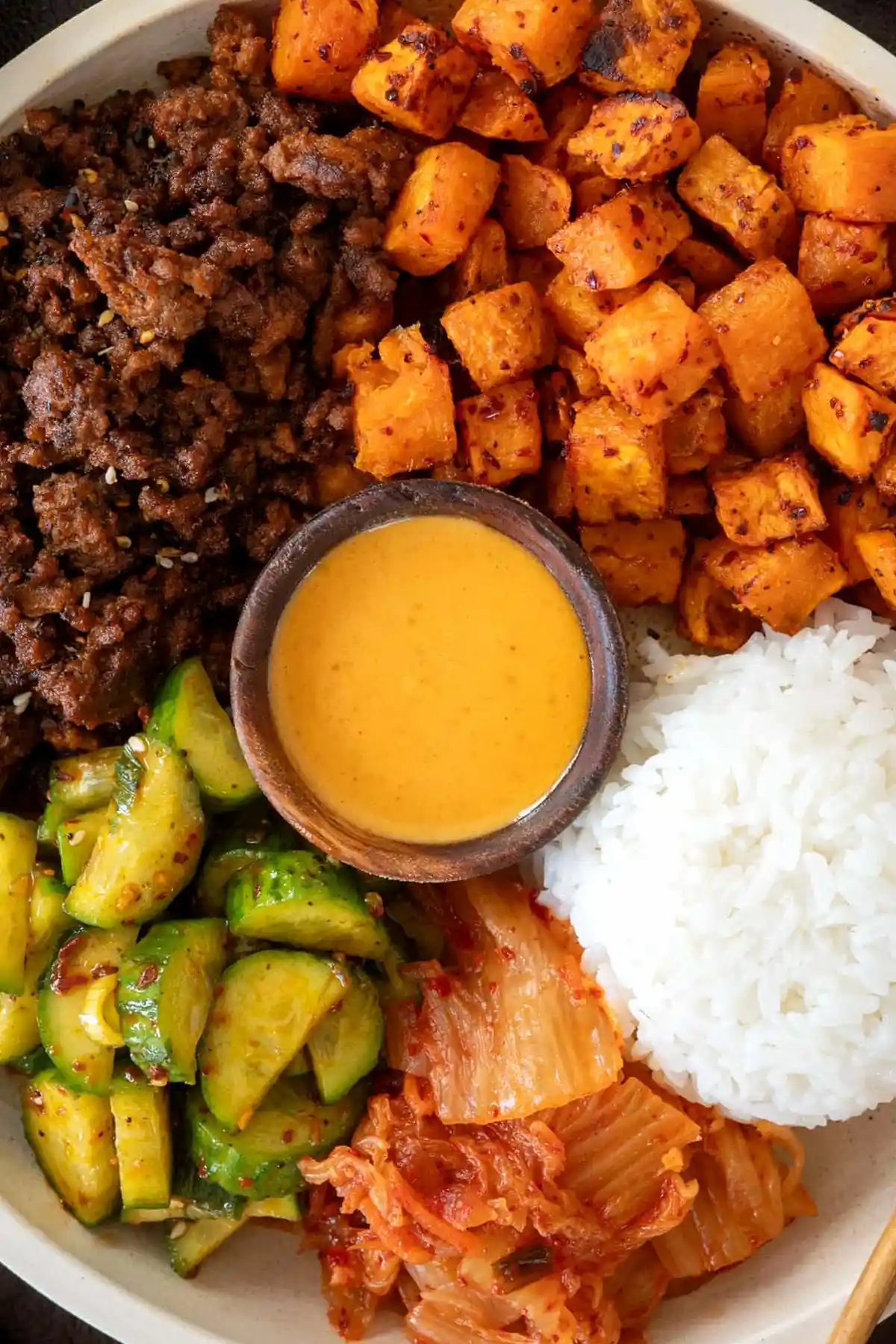
List of ingredients
- 2 pounds Lean Ground Beef (93/7)
- 1 teaspoon Olive Oil
- 1/3 cup (95g) Gochujang
- 1/4 cup Coconut Aminos (or low sodium soy sauce)
- 1/4 cup Rice Vinegar
- 1 teaspoon Black Pepper
- 2 teaspoons Toasted Sesame Oil
- 1/2 cup Water or Beef Broth
- 2 pounds Sweet Potatoes, peeled and medium diced
- 2 Tablespoons Olive Oil
- 1 Tablespoon Korean Chile Flakes (Gochugaru or red chile flakes)
- 1/2 teaspoon Garlic Powder
- 1/2 teaspoon Black Pepper
- 1/2 teaspoon Kosher Salt
step-by-step instructions
- Step: Preheat your oven to 450ºF and line a half sheet pan with parchment paper.
- Step: Toss the diced sweet potatoes in the olive oil and seasoning blend. Transfer to the sheet pan in an even layer and bake for 25-30 minutes or until the potatoes are fork tender and slightly browning around the edges.
- Step: While the potatoes are in the oven, mix the gochujang, coconut aminos, rice vinegar, toasted sesame oil, black pepper, and water together. Set aside.
- Step: Heat a large skillet over medium-high heat with 1 teaspoon of olive oil. Once hot, add the ground beef and leave it untouched for 3-4 minutes to brown one side. Once a nice crust has formed, break the beef apart and fully cook.
- Step: Once the ground beef is cooked, add the sauce and cook for 2-3 minutes until the sauce coats the beef. Reduce the heat to low and simmer until the sweet potatoes are ready. Add a teaspoon or two of water if needed as the beef simmers.
- Step: Salt to taste before serving the ground beef and sweet potatoes.
Refining the Roasting Process
Achieving Maximum Caramelization
To get the best texture from your sweet potatoes, ensure they are cut into uniform half-inch cubes. If the pieces vary too much in size, the smaller ones will burn before the larger ones soften. Maintaining a single layer on the pan allows heat to circulate freely, which is the secret to getting a crisp exterior rather than a mushy center.
Preventing Steam During Roasting
When you place the potatoes on the sheet pan, avoid crowding them. If the pan is overloaded, the moisture released by the potatoes will create steam, resulting in soft or soggy edges rather than the desired golden-brown finish. If you have a large amount of potatoes, use two pans instead of one to ensure they have enough space.
Effective Meal Prep Strategies
Managing Components for Long-Term Storage
These bowls maintain their texture exceptionally well for three to four days when stored correctly in airtight containers. If you plan to assemble these for your weekly meal prep, store the beef and the roasted sweet potatoes in the same container, but keep any fresh sides like cucumber salad or pickled vegetables in a separate container. This keeps the vegetables crunchy and prevents them from absorbing too much moisture from the warm proteins.
Choosing Appropriate Containers
Glass meal prep containers are ideal for this recipe as they do not retain odors from the fermented gochujang and are safe for both microwave and oven reheating. Ensure your containers have high-quality lids that seal tightly to keep the beef from drying out in the refrigerator. If you use plastic, look for BPA-free options that are rated for high-heat use.
Modifications and Substitutions
Using Alternative Root Vegetables
If you find yourself short on sweet potatoes, butternut squash is an excellent, lower-calorie substitute that roasts with a similar texture and sweetness. Simply peel the squash, remove the seeds, and dice it to the same size as the potatoes. You can use the exact same seasoning blend and roasting temperature, though you may find that the squash finishes in about 20 to 25 minutes due to its higher water content.
Adjusting the Heat Profile
The gochugaru flakes provide a characteristic mild, fruity heat that is central to this dish, but if you cannot find them, you can substitute a tiny amount of crushed red pepper flakes. Be aware that crushed red pepper is significantly hotter than gochugaru, so start with only 1/4 teaspoon and taste the mixture before adding more. You can also mix in a little sweet paprika to mimic the vibrant red color of the original flakes.
Flavor Balancing and Service
Serving with Acidic Sides
The richness of the ground beef glaze pairs beautifully with bright, acidic sides that cut through the fat. Traditional kimchi is a perfect accompaniment, providing a fermented tang and extra crunch. If you prefer something milder, a quick salad of sliced cucumber dressed with rice vinegar and a sprinkle of sesame seeds acts as a cooling counterpoint to the savory beef.
Enhancing the Umami Profile
If you prefer a deeper, more savory flavor profile, consider adding a tablespoon of finely grated fresh ginger to the sauce mixture before cooking. The ginger pairs naturally with the coconut aminos and gochujang, creating a more complex background note that complements the beef perfectly. You can also stir in some finely minced green onions at the very end to add a fresh, crisp texture.
Reheating and Serving Tips
Optimizing the Reheat
When reheating your meal prep bowls in the microwave, add a tiny teaspoon of water to the container before heating. This small amount of moisture creates a bit of steam that helps refresh the glaze and prevents the ground beef from becoming tough or overly dry. Heat the meal in 30-second increments, stirring the beef and potatoes gently to ensure even temperature throughout.
Improving Presentation
To make your meals feel more like a restaurant-quality bowl, top your dish with a garnish of toasted sesame seeds and thinly sliced green onion right before eating. These small additions provide a fresh crunch that elevates the entire dish. If you are serving this for dinner, placing the beef and potatoes on a bed of warm jasmine rice or a blend of cauliflower rice adds volume and extra satisfaction.
Answers to Frequent Inquiries
Can I use a different type of meat for this recipe?
Yes, you can substitute the lean ground beef with ground turkey or chicken if you prefer. Because these meats are naturally leaner, you may need to add an extra half-teaspoon of oil to the skillet to prevent them from drying out during the browning process. The cooking time remains largely the same, but ensure that the poultry is cooked until it reaches an internal temperature of 165ºF.
Is there a way to make this dish less spicy?
The spiciness is primarily derived from the amount of gochujang and the specific flakes you choose. To reduce the heat, start by using only two tablespoons of gochujang instead of the full third of a cup, and increase the amount of coconut aminos to balance the saltiness. If the dish is still too spicy, you can stir in a small spoonful of honey or maple syrup to mellow out the intensity of the chili paste.
Why did my sauce become watery?
If your sauce appears too watery, it likely means it was not simmered long enough to reduce. You can fix this by simply simmering the beef and sauce mixture on low heat for an additional few minutes without a lid. This allows excess water to evaporate and concentrates the flavors into a thick, syrupy glaze that clings to the beef.
How can I tell when the sweet potatoes are perfectly done?
The sweet potatoes are ready when a fork slides into the thickest piece with zero resistance. You should also look for a slight browning or darkening at the edges, which indicates that the natural sugars have caramelized. If you prefer them even crispier, you can increase the oven temperature to 475ºF for the final five minutes of cooking, but watch them closely to avoid burning.
Print
Savory Gochujang Beef and Roasted Sweet Potato Bowls
- Total Time: 45 minutes
- Yield: 6 servings 1x
- Diet: High Protein
Description
Lean ground beef cooked in a sweet and spicy gochujang sauce paired with perfectly roasted, seasoning-dusted sweet potatoes.
Ingredients
- 2 pounds Lean Ground Beef (93/7)
- 1 teaspoon Olive Oil
- 1/3 cup (95g) Gochujang
- 1/4 cup Coconut Aminos (or low sodium soy sauce)
- 1/4 cup Rice Vinegar
- 1 teaspoon Black Pepper
- 2 teaspoons Toasted Sesame Oil
- 1/2 cup Water or Beef Broth
- 2 pounds Sweet Potatoes, peeled and medium diced
- 2 Tablespoons Olive Oil
- 1 Tablespoon Korean Chile Flakes (Gochugaru or red chile flakes)
- 1/2 teaspoon Garlic Powder
- 1/2 teaspoon Black Pepper
- 1/2 teaspoon Kosher Salt
Instructions
- Step: Preheat your oven to 450ºF and line a half sheet pan with parchment paper.
- Step: Toss the diced sweet potatoes in the olive oil and seasoning blend. Transfer to the sheet pan in an even layer and bake for 25-30 minutes or until the potatoes are fork tender and slightly browning around the edges.
- Step: While the potatoes are in the oven, mix the gochujang, coconut aminos, rice vinegar, toasted sesame oil, black pepper, and water together. Set aside.
- Step: Heat a large skillet over medium-high heat with 1 teaspoon of olive oil. Once hot, add the ground beef and leave it untouched for 3-4 minutes to brown one side. Once a nice crust has formed, break the beef apart and fully cook.
- Step: Once the ground beef is cooked, add the sauce and cook for 2-3 minutes until the sauce coats the beef. Reduce the heat to low and simmer until the sweet potatoes are ready. Add a teaspoon or two of water if needed as the beef simmers.
- Step: Salt to taste before serving the ground beef and sweet potatoes.
Notes
Nutrition facts are estimated per serving. You can substitute sweet potatoes with butternut squash to lower the calorie density if preferred for meal prep.
- Prep Time: 15 minutes
- Cook Time: 30 minutes
- Category: Main Course
- Method: Roasting and Sautéing
- Cuisine: American
Nutrition
- Serving Size: 1 bowl
- Calories: 490 kcal
- Sugar: 8 g
- Sodium: 650 mg
- Fat: 24 g
- Saturated Fat: 9 g
- Unsaturated Fat: 14 g
- Trans Fat: 0 g
- Carbohydrates: 35 g
- Fiber: 5 g
- Protein: 34 g
- Cholesterol: 95 mg