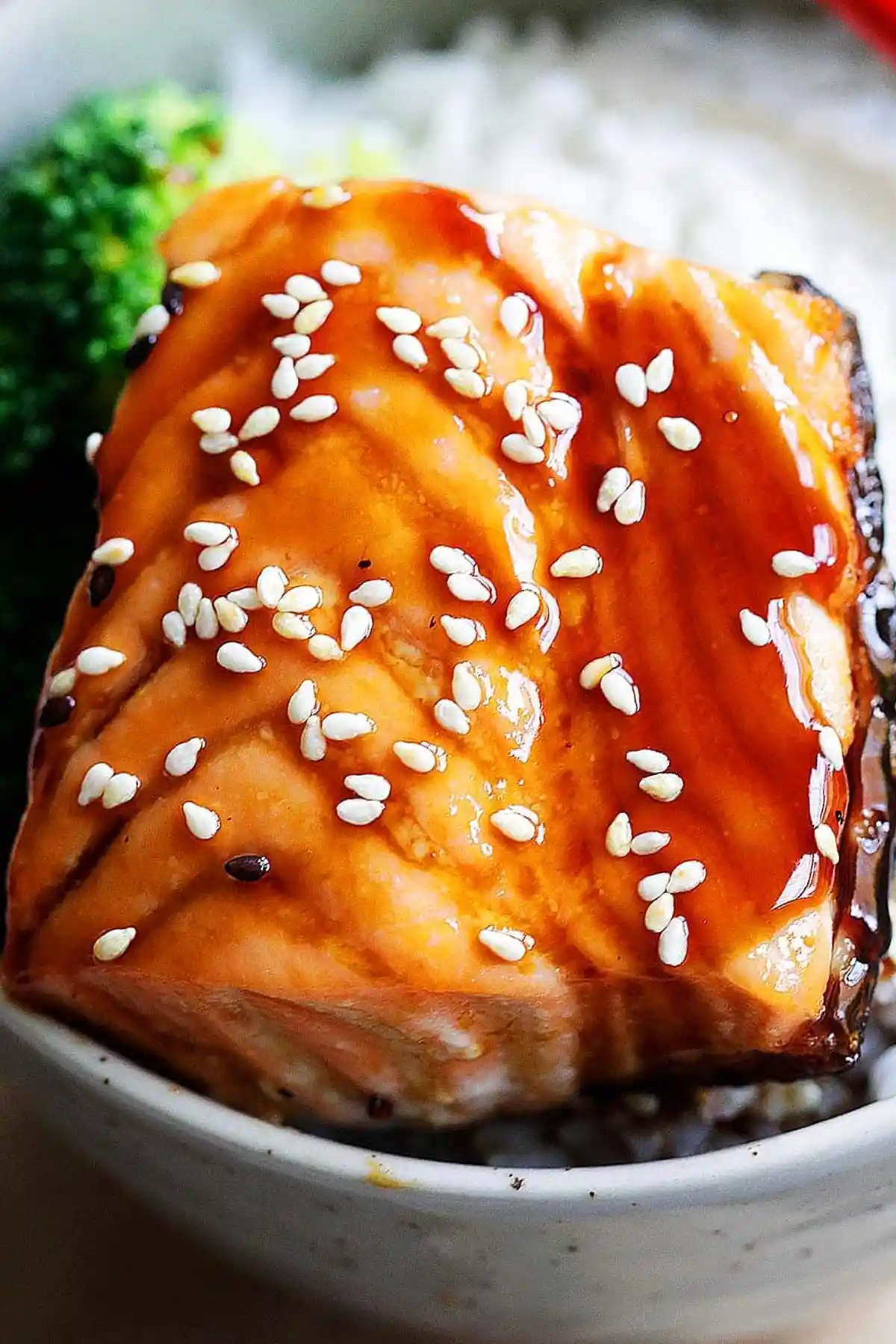
This easy teriyaki salmon is pan-seared until perfectly crisp and finished with a rich, glossy, sweet and savory homemade glaze. Prepared with simple pantry staples, this restaurant-quality seafood dish comes together in less than twenty minutes, making it an excellent choice for a busy weeknight. The combination of tender, flaky fish and the caramelized sauce provides a satisfying, balanced meal that pairs beautifully with steamed grains and crisp vegetables.
List of ingredients
- 1 lb. salmon fillet
- 1 tablespoon oil
- white and black sesame seeds
- 3 tablespoons soy sauce (or Tamari)
- ½ cup alcohol-free mirin
- 2 tablespoons sugar
step-by-step instructions
- Step: Add all the ingredients for the Teriyaki Sauce to a saucepan and simmer over low heat. Once the sauce thickens, remove it from the heat and let it cool.
- Step: Heat a pan or skillet over low to medium heat. Add a bit of oil and pan-sear the salmon, skin-side down, until the bottom is crispy. Flip and cook the salmon, or cover the pan to ensure the salmon cooks through.
- Step: Remove the salmon from the heat, drizzle with teriyaki sauce, and garnish with sesame seeds. Serve immediately with steamed rice.
Techniques for achieving the perfect sear
Managing heat for crispy skin
Achieving a crisp texture on the salmon skin requires patient heat management. Start with a cold or room-temperature pan to allow the fat to render slowly from the skin, which prevents the exterior from burning before the flesh is cooked. Maintain a moderate temperature rather than high heat to avoid smoking the oil and to keep the delicate proteins of the salmon from becoming overly toughened.
Preventing the appearance of white protein
If you notice a white, semi-solid substance forming on the surface of your salmon while it cooks, this is simply albumin, a naturally occurring protein that coagulates when heated. To minimize this, ensure you do not cook the fish at an excessively high temperature. Pulling the salmon off the heat just before it appears completely done allows the residual heat to finish the cooking process gently, resulting in a cleaner presentation.
Understanding the ingredient roles
Importance of quality base liquids
The success of this dish relies on the quality of your soy sauce and the sweet rice-based seasoning. Using a high-quality brewed soy sauce provides a deep umami profile that balances the sweetness of the sugar and the rice seasoning. Avoid using heavy-duty industrial soy sauces that contain high levels of artificial colorings or excessive sodium, as these can overpower the delicate flavor of the fresh salmon.
Balancing sweetness and viscosity
The ratio of sugar to liquid is the primary driver of how the sauce adheres to the fish. The sugar does not just add sweetness; it facilitates the Maillard reaction, which creates the deep, mahogany color associated with traditional teriyaki. If you prefer a thinner consistency, simply reduce the simmering time, but do not omit the sugar entirely as it is necessary for achieving the authentic, mouth-coating texture that defines this style of cooking.
Storage and reheating advice
Maintaining freshness in the refrigerator
Leftover salmon should be stored in an airtight container to prevent it from absorbing other refrigerator odors and to keep the fish from drying out. Ideally, keep any remaining glaze in a separate small container. Storing the salmon without the sauce covering it helps prevent the exterior from becoming excessively soggy or soft over time, maintaining a better texture for your next meal.
Optimal reheating methods
To reheat, avoid the microwave, as it often causes the fish to become rubbery and releases excessive moisture. Instead, use a skillet over low heat with a very small splash of water to create a steam-reheating environment. Alternatively, a toaster oven or standard oven set to 300°F (150°C) is effective at warming the fish through without scorching the glaze, keeping the salmon succulent even after initial cooling.
Frequently Asked Questions
Can I use this glaze on other proteins?
This teriyaki glaze is highly versatile and works exceptionally well with chicken thighs, firm tofu, or even thin-sliced beef. When using this sauce with different ingredients, adjust the cooking time accordingly to ensure that the protein is cooked through properly while the glaze has enough time to caramelize slightly.
How do I make the sauce thicker without cornstarch?
The natural sugar content in the sweet rice seasoning and added granulated sugar will thicken significantly as the water content evaporates during the simmering process. Be patient during the reduction stage, and keep the heat low to ensure the sugars do not burn. If the sauce becomes too thick, whisk in a few drops of water or additional soy sauce to adjust the consistency to your preference.
Can I freeze the cooked salmon?
While fresh is always preferred for this dish due to the delicate texture of the salmon, you can freeze leftovers for up to one month. Ensure the fish is tightly wrapped in plastic wrap and then placed in a freezer-safe bag to prevent freezer burn. Thaw the fish overnight in the refrigerator before reheating it gently on the stovetop or in an oven as instructed.
Serving suggestions for a balanced plate
Pairing with grains
Steamed white rice is the traditional accompaniment because its neutral profile acts as a perfect canvas for the savory, sweet glaze. For those seeking more fiber, jasmine brown rice, short-grain sushi rice, or even a side of nutty quinoa can provide a hearty base that soaks up the excess sauce. A small bowl of short-grain rice with a sprinkle of toasted seaweed or chopped green onions elevates the meal with minimal effort.
Adding vegetable side dishes
To create a complete dinner, serve the salmon alongside quick-cooking vegetables like steamed broccoli florets, flash-seared snap peas, or a simple cucumber salad with a light vinegar dressing. The crispness of the vegetables provides a refreshing contrast to the richness of the glazed fish, making each bite feel light yet substantial. Avoid vegetables with high water content, like raw tomatoes, which might interfere with the integrity of the teriyaki glaze.
Print
Teriyaki Salmon
- Total Time: 15 minutes
- Yield: 2 servings 1x
- Diet: General
Description
This easy teriyaki salmon is pan-seared until crisp, then glazed in a sweet and savory homemade teriyaki sauce. Made with soy sauce, alcohol-free mirin, and sugar, it’s glossy and ready in under 20 minutes.
Ingredients
- 1 lb. salmon fillet
- 1 tablespoon oil
- white and black sesame seeds
- 3 tablespoons soy sauce (or Tamari)
- ½ cup alcohol-free mirin
- 2 tablespoons sugar
Instructions
- Step: Add all the ingredients for the Teriyaki Sauce to a saucepan and simmer over low heat. Once the sauce thickens, remove it from the heat and let it cool.
- Step: Heat a pan or skillet over low to medium heat. Add a bit of oil and pan-sear the salmon, skin-side down, until the bottom is crispy. Flip and cook the salmon, or cover the pan to ensure the salmon cooks through.
- Step: Remove the salmon from the heat, drizzle with teriyaki sauce, and garnish with sesame seeds. Serve immediately with steamed rice.
Notes
Keep the skin on to protect the fish from overcooking and for a crispier texture. For a gluten-free version, substitute soy sauce with Tamari.
- Prep Time: 5 minutes
- Cook Time: 10 minutes
- Category: Salmon
- Method: Pan-seared
- Cuisine: Japanese
Nutrition
- Serving Size: 1 fillet
- Calories: 532 kcal
- Sugar: 26 g
- Sodium: 2059 mg
- Fat: 21 g
- Saturated Fat: 8 g
- Unsaturated Fat: 13 g
- Trans Fat: 0 g
- Carbohydrates: 38 g
- Fiber: 1 g
- Protein: 48 g
- Cholesterol: 125 mg