This one-pan meal combines ground beef, fresh vegetables, and melted cheese for a quick dinner. It is designed to be completed in about 35 minutes using a single skillet to minimize cleanup.
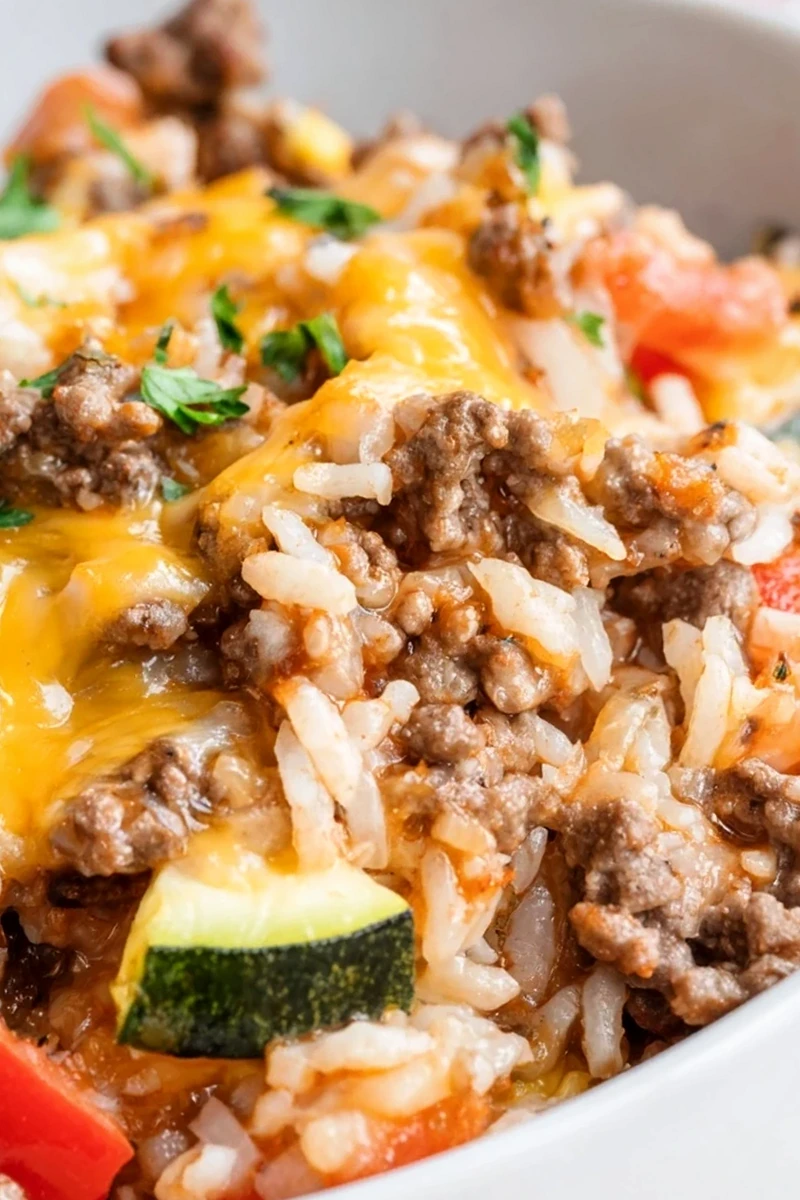
List of ingredients
- 1 lb ground beef (85% lean) – provides the protein base.
- 1 medium onion, diced – adds foundational sweetness.
- 1 red bell pepper, diced – adds color and mild flavor.
- 1 zucchini, diced – adds texture and nutrients.
- 1 cup frozen corn kernels – adds sweetness and pop.
- 2 cloves garlic, minced – provides aromatic depth.
- 1 can (14.5 oz) diced tomatoes, undrained – creates the sauce base.
- 1/2 cup beef broth – keeps the dish moist during simmering.
- 1 cup cooked rice (white or brown) – adds heartiness and absorbs flavors.
- 1 tsp paprika – adds a warm, smoky note.
- 1/2 tsp ground cumin – provides earthy undertones.
- 1/2 tsp dried oregano – adds a subtle herbal taste.
- 1/4 tsp black pepper – provides a slight spice.
- 3/4 tsp salt, or to taste – enhances all other flavors.
- 1 cup shredded cheddar cheese – creates a creamy, melty topping.
- 2 tbsp fresh parsley or cilantro, chopped (optional) – for a fresh garnish.
step-by-step instructions
- Brown the beef: Heat a large skillet over medium-high heat. Add ground beef and cook, breaking it up with a spoon, until browned and cooked through (about 5 to 6 minutes), then drain excess fat.
- Sauté the vegetables: Add diced onion, red bell pepper, and zucchini to the skillet. Cook for 3 to 4 minutes until vegetables begin to soften.
- Add aromatics: Stir in minced garlic and cook for 30 seconds until fragrant.
- Combine main ingredients: Add frozen corn, diced tomatoes with juice, beef broth, cooked rice, paprika, cumin, oregano, black pepper, and salt. Stir thoroughly to combine.
- Simmer the mixture: Reduce heat to medium, cover, and simmer for 10 minutes, stirring occasionally, until vegetables are tender and flavors have melded.
- Melt the cheese: Remove the lid and evenly sprinkle shredded cheddar cheese over the skillet. Cover again and let the cheese melt for 2 to 3 minutes.
- Final touch: Remove from heat, sprinkle with chopped parsley or cilantro if desired, and serve immediately.
Cooking Success Tips
Use a Wide Skillet for Better Browning
A skillet at least 12 inches in diameter allows the ground beef to spread out. This ensures the meat browns effectively rather than steaming in its own juices. It also provides ample room to stir in vegetables without spilling.
Drain Fat Thoroughly After Browning
Using 85% lean beef still leaves some rendered fat in the pan. Draining this excess oil prevents the final dish from feeling greasy. It ensures the sauce from the tomatoes and broth clings to the ingredients.
Ensure Rice is Fully Cooked Before Adding
This recipe requires pre-cooked rice because the 10-minute simmer is not long enough to cook raw grains. Using raw rice would result in hard grains and mushy vegetables. Leftover chilled rice works exceptionally well here.
Season the Dish in Layers
Taste the beef after browning and the vegetables after sautéing. Adjusting the salt and pepper at these stages ensures a balanced flavor. This prevents the final dish from being over-salted or bland.
Allow the Cheese to Set Briefly
After removing the skillet from the heat, let it sit for two minutes before serving. This allows the melted cheddar to stabilize. It prevents the cheese from sliding off the beef and rice when scooped.
Ingredient Substitutions
Swap Beef for Lean Turkey or Chicken
Ground turkey or ground chicken can be used for a lighter protein option. Since these meats are leaner, you may need to add a tablespoon of olive oil to the pan for browning. The spice profile remains the same.
Substitute Zucchini with Other Squash
Yellow squash or diced eggplant can replace the zucchini. These vegetables have similar moisture content and cooking times. Ensure they are diced to the same size as the other vegetables for even cooking.
Alternative Cheese Varieties
While cheddar is standard, Monterey Jack or Pepper Jack can be used. Monterey Jack offers a milder, creamier melt. Pepper Jack adds an extra layer of heat to the overall dish.
Use Quinoa Instead of Rice
Cooked quinoa is a nutritious alternative to white or brown rice. It provides more protein and a slightly nuttier flavor. Use a 1:1 ratio of cooked quinoa to cooked rice.
Flavor Variations
Incorporate Fresh Jalapeños for Heat
Adding one finely diced jalapeño during the vegetable sauté stage increases the spice level. Remove the seeds for mild heat or keep them for a stronger kick. This pairs well with the cumin and paprika.
Add Spinach for Extra Greens
Stir in two cups of fresh baby spinach during the last two minutes of simmering. The residual heat will wilt the spinach without overcooking it. This adds a pop of color and additional nutrients.
Use Smoked Paprika for Deeper Flavor
Replacing standard paprika with smoked paprika adds a woody, charred depth to the beef. This gives the skillet a flavor profile similar to grilled meats. It complements the earthiness of the cumin.
Experiment with Fresh Herb Garnishes
While parsley is traditional, fresh basil or chopped chives offer different profiles. Basil adds a sweet, peppery note. Chives provide a mild onion-like finish that enhances the melted cheese.
Serving and Pairing Ideas
Pair with a Lime-Dressed Side Salad
A simple green salad with a lime and olive oil dressing cuts through the richness of the beef and cheese. The acidity of the lime refreshes the palate. Use arugula or romaine for a crisp texture.
Serve with Warm Corn Tortillas
Warm tortillas allow this skillet to be eaten like a taco filling. This makes the meal more interactive for families. Add a side of sliced avocado for extra creaminess.
Top with Fresh Salsa or Sour Cream
A dollop of sour cream or a spoonful of chunky salsa adds moisture and tang. This complements the savory spices in the beef. It is especially useful if the rice has absorbed most of the liquid.
Side of Garlic Toast or Cornbread
Serving the skillet with toasted garlic bread or honey cornbread adds a satisfying crunch. These sides help soak up any remaining sauce in the pan. They make the meal feel more substantial for larger appetites.
Storage and Preservation
Refrigerate in Airtight Containers
Store leftovers in a sealed container in the refrigerator for up to four days. Ensure the dish is cooled slightly before sealing to avoid excessive condensation. This keeps the vegetables from becoming too soft.
Freeze for Long-Term Storage
Portion the skillet into freezer-safe bags or containers for up to three months. Thaw the portions overnight in the refrigerator before reheating. This prevents the rice from becoming grainy during the thaw process.
Maintain Moisture During Storage
Rice continues to absorb liquid even after the dish is cooled. When storing, you may notice the mixture becomes thicker. Adding a tablespoon of water or broth before reheating restores the original consistency.
Reheating Methods
Stovetop Reheating for Best Texture
Place the leftovers in a skillet over medium heat. Add a splash of beef broth to loosen the mixture. Stir occasionally until heated through to maintain the texture of the vegetables.
Microwave Instructions for Speed
Place the food in a microwave-safe bowl and cover with a damp paper towel. Heat in 1-minute intervals, stirring in between. The damp towel creates steam, which prevents the rice from drying out.
Oven Reheating for Melted Cheese
Transfer the leftovers to an oven-safe dish and cover with foil. Heat at 350 degrees Fahrenheit until hot. Remove the foil for the last two minutes to crisp the cheese on top.
Make-Ahead Advice
Pre-Dice Vegetables in Advance
Onion, bell pepper, and zucchini can be chopped 24 hours in advance. Store them in a single container or separate bags in the fridge. This reduces the active prep time on the night of cooking.
Prepare Rice a Day Early
Cooking the rice the day before is a great way to save time. Chilled rice often holds its shape better when added to a skillet. It prevents the grains from breaking and becoming mushy.
Portioning for Meal Prep
Divide the finished skillet into four equal containers immediately after cooking. This ensures consistent portions for the week. Let the portions cool completely before closing the lids.
Troubleshooting Common Issues
Preventing Mushy Zucchini
If the zucchini is too soft, reduce the simmering time by two minutes. Alternatively, add the zucchini slightly later in the sauté process. Ensure the zucchini is diced into uniform, half-inch pieces.
Fixing a Too-Dry Skillet
If the mixture looks dry before adding the cheese, stir in an extra two tablespoons of beef broth. This adds moisture back into the rice. Avoid adding too much water, as it can dilute the spice flavors.
Avoiding Bitter Burnt Garlic
Garlic burns quickly on medium-high heat. Ensure you stir it constantly for exactly 30 seconds. Immediately follow the garlic with the diced tomatoes to drop the pan temperature.
Frequently Asked Questions
What cooking method is used for this beef skillet?
The dish uses a one-pan method involving browning the meat, sautéing vegetables, and then simmering everything together. This allows the flavors to meld in a single vessel.
Can I substitute the ground beef with another protein?
Yes, ground turkey or chicken are suitable alternatives. They provide a leaner profile while maintaining the overall structure and flavor of the meal.
What vegetables are included in the skillet?
The recipe includes diced onion, red bell pepper, zucchini, and frozen corn. These provide a variety of textures and nutritional value.
How is the cheese incorporated into the dish?
Shredded cheddar is sprinkled over the top of the completed mixture. It is then melted under a lid for a few minutes until gooey.
Is this dish suitable for gluten-free diets?
It is naturally gluten-free as long as you use certified gluten-free beef broth and spices. Check all labels for hidden gluten additives.
What spices enhance the flavor of this skillet?
The primary spices are paprika, ground cumin, and dried oregano. These create a savory, warm profile that complements the beef and vegetables.
Print
One-Pan Cheesy Beef and Vegetable Skillet
- Total Time: 35 minutes
- Yield: 4 portions 1x
- Diet: General
Description
One-pan dish featuring ground beef, bright vegetables, and spices for a quick satisfying meal.
Ingredients
- 1 lb ground beef (85% lean)
- 1 medium onion, diced
- 1 red bell pepper, diced
- 1 zucchini, diced
- 1 cup frozen corn kernels
- 2 cloves garlic, minced
- 1 can (14.5 oz) diced tomatoes, undrained
- 1/2 cup beef broth
- 1 cup cooked rice (white or brown)
- 1 tsp paprika
- 1/2 tsp ground cumin
- 1/2 tsp dried oregano
- 1/4 tsp black pepper
- 3/4 tsp salt, or to taste
- 1 cup shredded cheddar cheese
- 2 tbsp fresh parsley or cilantro, chopped (optional)
Instructions
- Brown beef: Heat a large skillet over medium-high heat. Add ground beef and cook, breaking it up with a spoon, until browned and cooked through, about 5 to 6 minutes. Drain excess fat as needed.
- Soften vegetables: Add diced onion, red bell pepper, and zucchini to the skillet. Cook for 3 to 4 minutes until vegetables begin to soften.
- Sauté garlic: Stir in minced garlic and cook for 30 seconds until fragrant.
- Combine: Add frozen corn, diced tomatoes with juice, beef broth, cooked rice, paprika, cumin, oregano, black pepper, and salt. Stir thoroughly to combine.
- Simmer: Reduce heat to medium, cover, and simmer for 10 minutes, stirring occasionally, until vegetables are tender and flavors have melded.
- Melt cheese: Remove the lid and evenly sprinkle shredded cheddar cheese over the skillet. Cover again and let the cheese melt for 2 to 3 minutes.
- Finish: Remove from heat, sprinkle with chopped parsley or cilantro if desired, and serve immediately.
Notes
Use pre-cooked rice for best results. For a wider pan, use at least 12 inches to ensure even cooking. Leftovers can be stored in an airtight container in the fridge for up to four days.
- Prep Time: 10 minutes
- Cook Time: 25 minutes
- Category: Cozy Dinners
- Method: Skillet
- Cuisine: American
Nutrition
- Serving Size: 1 portion
- Calories: 525 kcal
- Sugar: 8 g
- Sodium: 840 mg
- Fat: 30 g
- Saturated Fat: 14 g
- Unsaturated Fat: 16 g
- Trans Fat: 0 g
- Carbohydrates: 28 g
- Fiber: 5 g
- Protein: 32 g
- Cholesterol: 110 mg