These high-protein meal prep bowls feature savory ground beef glazed in a spicy Korean sauce paired with seasoned roasted sweet potatoes. It is a balanced meal that combines lean protein with complex carbohydrates and bold umami flavors.
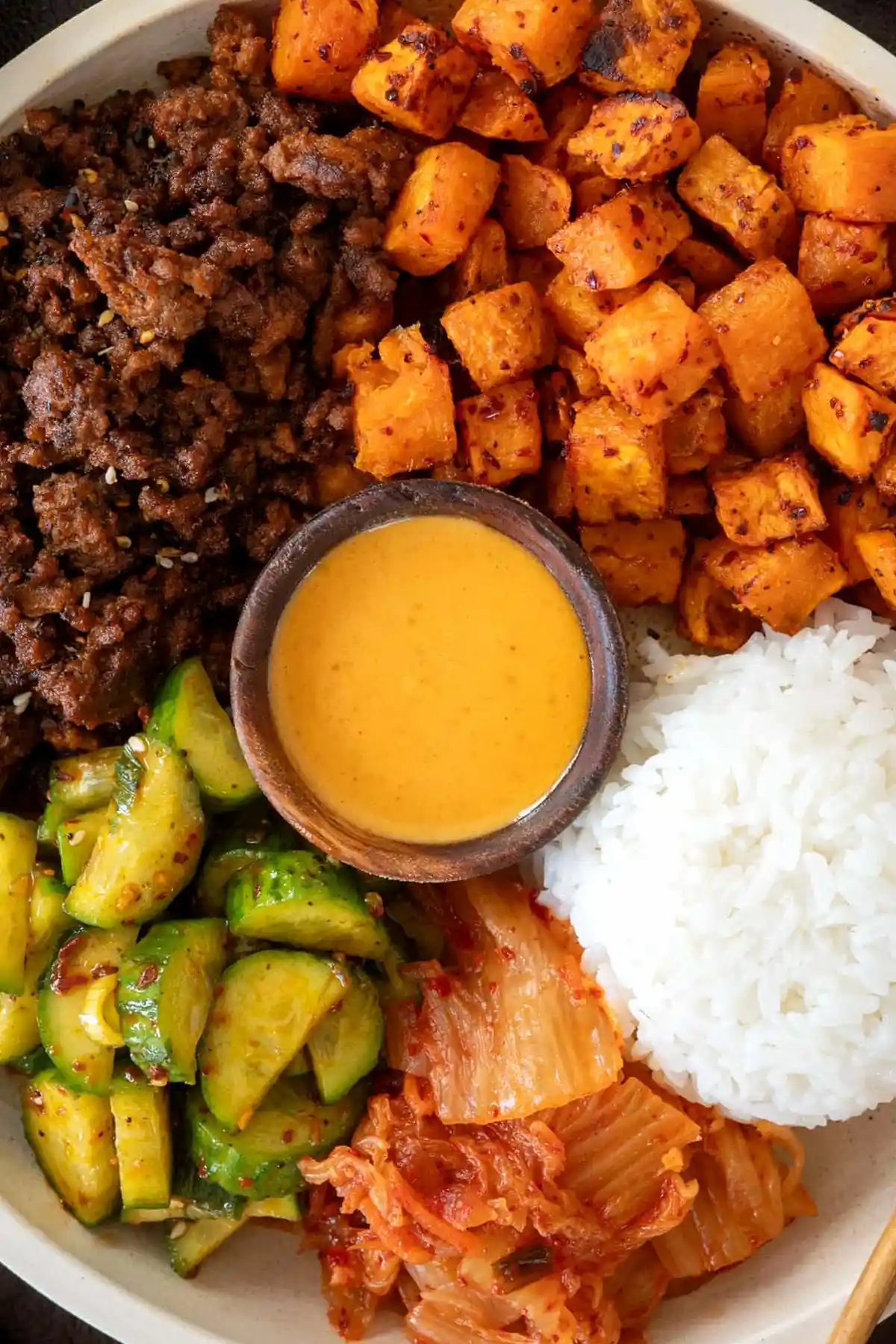
List of ingredients
- 2 pounds Lean Ground Beef (93/7) – provides a high protein base.
- 1 teaspoon Olive Oil – for searing the beef.
- ⅓ cup (95g) Gochujang – a savory, spicy Korean chili paste.
- ¼ cup Coconut Aminos (or low sodium soy sauce) – adds salty depth.
- ¼ cup Rice Vinegar – provides a necessary acidic balance.
- 1 teaspoon Black Pepper – for basic seasoning.
- 2 teaspoons Toasted Sesame Oil – adds a nutty aroma.
- ½ cup Water or Beef Broth – to thin the sauce for simmering.
- 2 pounds Sweet Potatoes (peeled and medium diced) – the main carbohydrate source.
- 2 Tablespoons Olive Oil – for roasting the potatoes.
- 1 Tablespoon Korean Chile Flakes (Gochugaru, or choice of chile flakes) – for heat and color.
- ½ teaspoon Garlic Powder – for savory flavor.
- ½ teaspoon Black Pepper – for seasoning the potatoes.
- ½ teaspoon Kosher Salt – to enhance the natural sweetness of the potatoes.
step-by-step instructions
- Prepare the Oven: Preheat your oven to 450ºF and line a half sheet pan with parchment paper to prevent sticking.
- Roast the Potatoes: Toss the diced sweet potatoes in the olive oil and seasoning blend. Spread them in an even layer on the sheet pan and bake for 25-30 minutes until fork tender and slightly browned.
- Mix the Sauce: While the potatoes bake, whisk together the gochujang, coconut aminos, rice vinegar, toasted sesame oil, black pepper, and water in a bowl.
- Sear the Beef: Heat a large skillet over medium-high heat with 1 teaspoon of olive oil. Add the ground beef and leave it untouched for 3-4 minutes to create a browned crust.
- Cook and Glaze: Break the beef apart and cook fully. Pour in the prepared sauce and cook for 2-3 minutes until the beef is well-coated.
- Simmer: Reduce heat to low and simmer until the potatoes are finished. Add a small amount of water if the sauce becomes too thick.
- Final Seasoning: Salt to taste before serving the beef and potatoes together with sides like kimchi or cucumber salad.
Optimal Serving Combinations
Fresh Cucumber Crunch Salad
Pair these bowls with a salad made of seedless cucumbers, rice vinegar, and toasted sesame oil. Add salt and chili crisp for extra depth and a cooling contrast to the spicy beef. You can include thinly sliced scallions or cilantro to enhance the freshness.
Fermented Kimchi and Pickled Vegetables
Adding fermented kimchi provides a probiotic element and a sharp tang that cuts through the richness of the beef. Pickled carrots or cauliflower also work well to add a crisp texture. These additions balance the sweetness of the roasted potatoes.
Low-Calorie Rice Options
For added volume without excessive calories, use a mixture of jasmine rice cooked in bone broth and cauliflower rice. This creates a ‘half-calorie’ rice that maintains a traditional texture while increasing the vegetable content. It serves as an excellent base for the beef and potato topping.
Ingredient Swaps and Modifications
Using Butternut Squash for Lower Calories
Replace the sweet potatoes with cubed butternut squash to reduce the overall calorie count by approximately 50%. Use the same seasoning blend and roasting temperature as the potatoes. The squash provides a similar texture and sweetness with a lighter nutritional profile.
Adjusting the Ground Meat Choice
While 93/7 lean beef is recommended, you can use 96/4 extra lean beef for an even lower fat content. If using a fattier blend, be sure to drain the rendered fat after browning the meat and before adding the sauce. This prevents the final glaze from becoming oily.
Managing Sodium Levels
Substitute low-sodium soy sauce or coconut aminos to control the salt intake. If you find the gochujang provides enough salt, you can further reduce the amount of added kosher salt. Always taste the beef before adding final seasoning to avoid over-salting.
Professional Cooking Techniques
Searing the Beef for Maximum Flavor
The key to deep flavor is leaving the beef untouched in the hot skillet for the first few minutes. This creates a Maillard reaction, forming a brown crust that adds complexity to the dish. Stirring too early will cause the meat to steam in its own juices rather than sear.
Perfecting the Sweet Potato Roast
Ensure the sweet potato cubes are diced uniformly to guarantee they cook at the same rate. Use a parchment-lined pan to allow for high-heat roasting without the vegetables sticking. Avoid overcrowding the pan, as this traps steam and prevents the edges from browning.
Controlling Sauce Consistency
If the sauce reduces too quickly during the simmering phase, add water one teaspoon at a time. The goal is a thick glaze that clings to the meat rather than a thin liquid. Simmering on low heat allows the flavors to penetrate the beef without burning the sugars in the gochujang.
Storage and Prep Guidance
Refrigeration and Shelf Life
Store the cooked beef and roasted potatoes in airtight containers in the refrigerator for up to four days. Keep the fresh components, such as cucumber salad or fresh greens, in separate containers. This prevents the fresh vegetables from wilting or becoming soggy during storage.
Best Reheating Methods
Reheat the beef and potatoes in a microwave or a skillet over medium heat. Add a splash of water or beef broth to the beef to loosen the sauce and restore its glossy texture. Avoid overheating the beef to prevent it from becoming dry or tough.
Freezing Instructions
The beef and roasted potatoes can be frozen for up to three months in vacuum-sealed bags or freezer-safe containers. Thaw them in the refrigerator overnight before reheating. Note that the texture of the sweet potatoes may change slightly after freezing.
Common Troubleshooting
Preventing Beef from Steaming
If the beef releases too much liquid, the pan temperature may be too low or the pan may be overcrowded. Use a large skillet to ensure there is enough surface area for moisture to evaporate. Increase the heat to medium-high to maintain a proper sear.
Fixing Over-Reduced Sauce
If the sauce becomes too thick or sticky, it is likely due to the high sugar content in the gochujang. Stir in a small amount of beef broth or water while simmering on low heat. This will emulsify the sauce and create a smooth coating on the meat.
Avoiding Burnt Chile Flakes
Gochugaru can burn if exposed to direct high heat for too long. Tossing the potatoes in oil first helps protect the flakes from scorching in the oven. If using a skillet for potatoes, keep the heat moderate to ensure the spices toast rather than burn.
Frequently Asked Questions
Is Gochujang too spicy for some people?
Gochujang has a moderate heat level, but it varies by brand. You can reduce the amount of paste and add a teaspoon of honey or maple syrup to mellow the spice. If you prefer no heat, use a mild miso paste as a substitute, though the flavor profile will change.
Can I use an air fryer for the potatoes?
Yes, you can air fry the seasoned sweet potatoes at 400ºF for about 12-15 minutes. Shake the basket halfway through the cooking process to ensure an even roast. This method is often faster than using a traditional oven.
What is the best substitute for coconut aminos?
Low-sodium soy sauce is the most direct substitute for coconut aminos. If you require a soy-free option, you can use a mixture of beef broth and a small amount of salt. Tamarind paste can also add a similar tangy, salty depth.
How do I keep the cucumber salad crunchy?
Do not dress the cucumber salad until shortly before serving. Salt the cucumbers first and let them sit for ten minutes, then drain the excess water before adding the vinegar and oil. This prevents the salad from becoming watery over time.
Can I add other vegetables to the roast?
Bell peppers, red onions, or broccoli florets can be added to the sheet pan with the sweet potatoes. Add these vegetables during the last 10-15 minutes of roasting since they cook faster than potatoes. This increases the nutritional value and color of the bowl.
Print
Korean-Style Ground Beef and Roasted Sweet Potato Bowls
- Total Time: 45 minutes
- Yield: 6 servings 1x
- Diet: Dairy-Free
Description
Lean ground beef cooked in a sweet and spicy gochujang sauce with gochugaru roasted sweet potatoes.
Ingredients
- 2 pounds Lean Ground Beef (93/7)
- 1 teaspoon Olive Oil
- ⅓ cup (95g) Gochujang
- ¼ cup Coconut Aminos
- ¼ cup Rice Vinegar
- 1 teaspoon Black Pepper
- 2 teaspoons Toasted Sesame Oil
- ½ cup Water or Beef Broth
- 2 pounds Sweet Potatoes (peeled and medium diced)
- 2 Tablespoons Olive Oil
- 1 Tablespoon Korean Chile Flakes (Gochugaru)
- ½ teaspoon Garlic Powder
- ½ teaspoon Black Pepper
- ½ teaspoon Kosher Salt
Instructions
- Step 1: Preheat your oven to 450ºF and line a half sheet pan with parchment paper.
- Step 2: Toss the diced sweet potatoes in the olive oil and seasoning blend. Transfer to the sheet pan in an even layer and bake for 25-30 minutes or until the potatoes are fork tender and slightly browning around the edges.
- Step 3: While the potatoes are in the oven, mix the gochujang, coconut aminos, rice vinegar, toasted sesame oil, black pepper, and water together. Set aside.
- Step 4: Heat a large skillet over medium-high heat with 1 teaspoon of olive oil. Once hot, add the ground beef and leave it untouched for 3-4 minutes to brown one side. Once a nice crust has formed, break the beef apart and fully cook.
- Step 5: Once the ground beef is cooked, add the sauce and cook for 2-3 minutes until the sauce coats the beef. Reduce the heat to low and simmer until the sweet potatoes are ready. Add a teaspoon or two of water if needed as the beef simmers.
- Step 6: Salt to taste before serving the ground beef and sweet potatoes with kimchi, cucumber salad, and other sides, if desired.
Notes
For a lower calorie option, butternut squash can be substituted for sweet potatoes. Store side garnishes like cucumber salad separately for meal prep.
- Prep Time: 15 minutes
- Cook Time: 30 minutes
- Category: Ground Beef Recipes
- Method: Roasting and Sautéing
- Cuisine: American
Nutrition
- Serving Size: 1 serving
- Calories: 490 kcal
- Sugar: 12 g
- Sodium: 820 mg
- Fat: 24 g
- Saturated Fat: 8 g
- Unsaturated Fat: 16 g
- Trans Fat: 0 g
- Carbohydrates: 35 g
- Fiber: 6 g
- Protein: 34 g
- Cholesterol: 85 mg