This elegant pasta dish combines tender tagliatelle with fresh salmon and zucchini in a rich, creamy tomato sauce. It is a balanced meal that brings together bright citrus notes and hearty textures for a satisfying dinner.
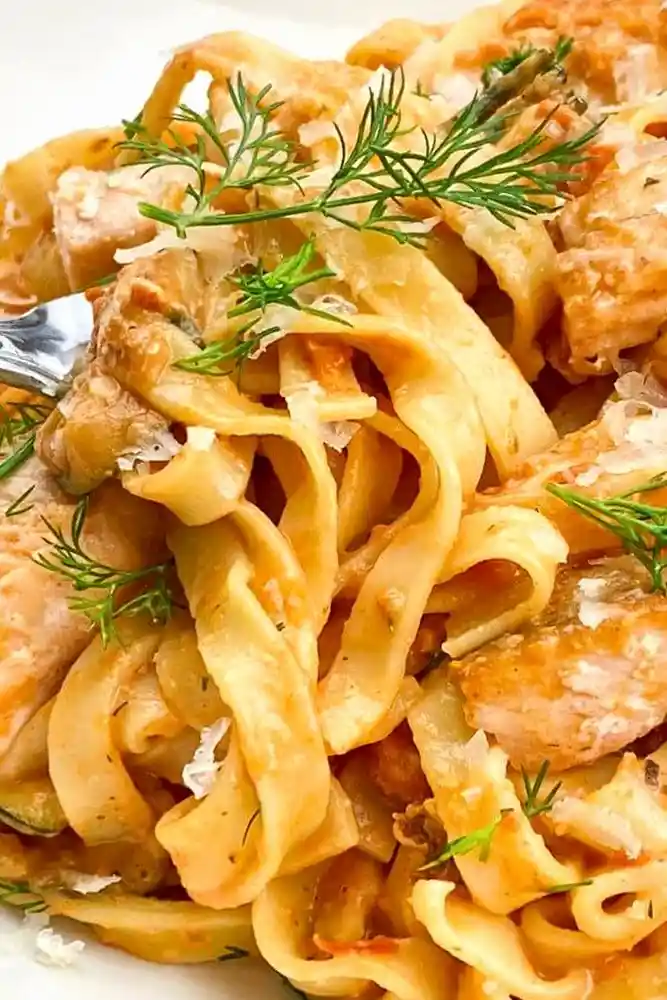
List of ingredients
- 500 g Tagliatelle – use high-quality egg pasta for better sauce adhesion.
- 250 g Salmon – fresh fillets cut into uniform cubes.
- 2 EL Olive oil – for searing the fish and sautéing vegetables.
- 1 Onion – finely diced for a subtle flavor base.
- 2 Garlic cloves – minced to add aromatic depth.
- 1 Zucchini – sliced into thin, consistent rounds or half-moons.
- 200 ml vegetable broth – used as a non-alcoholic replacement for white wine.
- 200 ml vegetable broth – for building the sauce consistency.
- 400 g stückige Tomaten – canned diced tomatoes for the sauce body.
- 2 TL Tomato paste – to intensify the tomato flavor.
- Salt and pepper – for seasoning throughout the process.
- Prise Zucker – a pinch of sugar to balance the tomato acidity.
- Saft einer halben Zitrone – fresh lemon juice for brightness.
- 200 ml Sahne – heavy cream for a velvety texture.
- 1 TL Dill or parsley – freshly chopped for a herbal finish.
- 2 EL Parmesan – grated for a salty, nutty topping.
step-by-step instructions
- Prepare the pasta and salmon: Cook the tagliatelle according to the package instructions until al dente. Cut the salmon into cubes and sear them in a pan with olive oil over medium-high heat until browned on all sides, then remove the fish from the pan and set it aside.
- Sauté vegetables and reduce: In the same pan, sauté the diced onion and garlic until translucent. Add the sliced zucchini and cook briefly. Deglaze the pan with the first 200 ml of vegetable broth and let it reduce by half, then add the remaining 200 ml of vegetable broth and simmer for approximately 5 minutes.
- Build the creamy sauce: Stir in the diced tomatoes and tomato paste. Season the mixture with salt, pepper, sugar, and lemon juice. After a few minutes of simmering, pour in the cream, return the seared salmon cubes to the pan, and bring the sauce to a quick boil.
- Combine and serve: Toss the cooked tagliatelle into the sauce and let it simmer for a minute to allow the pasta to absorb the flavors. Garnish with fresh dill or parsley and a generous amount of grated Parmesan before serving.
Professional Cooking Tips
Selecting the Highest Quality Salmon
Choose fresh, center-cut salmon fillets to ensure consistent cooking times for the cubes. Look for fish with a vibrant color and firm flesh that springs back when touched. Avoid pieces with gaps or bruising to maintain the best texture in the final dish.
Achieving the Perfect Al Dente Texture
Cook your tagliatelle for one minute less than the package directions suggest. Since the pasta finishes cooking in the simmering sauce, undercooking it slightly prevents the noodles from becoming mushy. This ensures each strand maintains a pleasant bite.
Searing Salmon Without Overcooking
Use a medium-high heat to get a quick brown sear on the salmon cubes without cooking the center completely. Searing only for 1-2 minutes per side locks in moisture. The fish will finish cooking gently when it is returned to the cream sauce at the end.
Uniform Zucchini Slicing for Even Cooking
Slice the zucchini into thin, consistent pieces to ensure they soften at the same rate. Using a mandoline or a sharp chef’s knife to create 3mm slices prevents some pieces from being raw while others are overcooked. This creates a uniform mouthfeel throughout the pasta.
Ingredient Substitutions
Alternative Pasta Shapes
If tagliatelle is unavailable, fettuccine or linguine serve as excellent alternatives due to their similar width. For a heartier version, use pappardelle, which provides more surface area for the creamy sauce. Avoid very small pasta shapes that cannot support the salmon cubes.
Dairy-Free Cream Alternatives
For a dairy-free version, replace the heavy cream with full-fat coconut milk or a cashew-based cream. These provide the same thickness and richness without the lactose. Adjust the salt levels slightly, as plant-based creams can have different flavor profiles.
Swapping the Fresh Herbs
While dill provides a classic pairing for salmon, fresh basil or chives are great alternatives. Basil adds a sweet, peppery note that complements the tomato base. Chives offer a mild onion flavor that enhances the savoriness of the parmesan.
Different Fish Options
If you prefer a milder flavor, substitute the salmon with trout or Arctic char. These fish have similar fat contents and textures, making them compatible with the creamy sauce. Ensure the cubes are cut to the same size as the original salmon specifications.
Serving and Pairing Ideas
Fresh Green Side Salads
Serve this rich pasta with a side of arugula or mixed baby greens. A simple dressing of lemon juice and extra virgin olive oil cuts through the richness of the cream sauce. This adds a refreshing contrast to the palate.
Roasted Vegetable Accompaniments
Roasted asparagus or charred cherry tomatoes make an excellent side dish for this meal. The earthy tones of roasted vegetables complement the acidity of the tomato-based sauce. Lightly season them with salt and pepper to keep the focus on the pasta.
Garlic Bread Pairings
Toasted baguette slices rubbed with a garlic clove and brushed with olive oil are ideal. The crunchy texture of the bread provides a contrast to the soft pasta. Use the bread to soak up any remaining creamy sauce from the plate.
Non-Alcoholic Beverage Pairings
Pair this dish with a chilled sparkling water infused with lime or a crisp iced herbal tea. These drinks cleanse the palate between bites of the creamy salmon. A white grape juice diluted with soda water also mimics the acidity of a traditional pairing.
Storage and Reheating Advice
Proper Refrigerator Storage
Store leftovers in an airtight glass container to prevent the pasta from absorbing odors from other foods. The dish will remain fresh and safe to eat for 2 to 3 days in the fridge. Ensure the container is completely sealed to keep the sauce from drying out.
Freezing the Finished Dish
While creamy sauces can separate during freezing, you can freeze the pasta for up to 2 months. Use freezer-safe bags and squeeze out as much air as possible. Thaw the meal slowly in the refrigerator overnight before reheating.
Best Reheating Methods
Reheat the pasta on a stovetop over low heat, adding a tablespoon of water or milk to loosen the sauce. Avoid high heat, which can cause the cream to split or the salmon to become rubbery. Stir gently to avoid breaking the pasta strands.
Preventing Sauce Separation
If the sauce looks broken or oily upon reheating, whisk in a small amount of warm water or a splash of cream. Slowly heating the dish helps the fats re-emulsify with the liquids. Stirring constantly on low heat is the most effective way to restore the texture.
Make-Ahead Strategies
Prepping Vegetables in Advance
You can dice the onions, mince the garlic, and slice the zucchini up to 24 hours before cooking. Store them in separate containers or a divided prep box in the refrigerator. This significantly reduces the active cooking time on the day of the meal.
Preparing the Sauce Base
The tomato and broth base can be simmered and cooled a day in advance. Store the sauce in the fridge and simply heat it up before adding the cream and salmon. This allows the flavors of the tomato and garlic to develop more deeply.
Managing Pasta Portions
Cook the tagliatelle al dente and toss them with a small amount of olive oil to prevent sticking. Store the cooked pasta in the fridge and add it to the sauce during the final step. This is particularly useful for meal prepping for the work week.
Troubleshooting Common Issues
Fixing a Sauce That is Too Thick
If the sauce becomes too thick, stir in a few tablespoons of the reserved pasta cooking water. The starch in the water helps the sauce stay smooth while thinning the consistency. Add the liquid gradually until the desired creaminess is achieved.
Adjusting Overly Acidic Flavors
If the canned tomatoes make the sauce too tart, add another small pinch of sugar. A small amount of butter can also mellow out the acidity of the lemon and tomatoes. Taste the sauce after each adjustment to ensure a balanced flavor.
Preventing Rubbery Salmon
Avoid boiling the salmon for too long once it is returned to the sauce. The residual heat of the sauce is often enough to finish the cooking process. Fold the fish in gently and remove the pan from the heat as soon as it reaches a simmer.
Stopping Pasta from Sticking Together
Immediately toss the drained pasta with a bit of the sauce or a drizzle of olive oil. This creates a barrier that prevents the strands from clumping. Stirring frequently during the final integration step also keeps the tagliatelle separate.
Frequently Asked Questions
Can I use smoked salmon instead of fresh?
Yes, but you must change the method. Do not sear smoked salmon; instead, fold it into the sauce at the very end after the heat is turned off. Smoked salmon is already cured and will become too salty and tough if cooked.
Is this dish suitable for toddlers?
Yes, the dish is generally child-friendly due to its mild flavors and soft textures. To make it safer for toddlers, cut the salmon and zucchini into smaller, bite-sized pieces. You can also reduce the amount of salt used in the broth.
How do I prevent the cream from curdling?
Ensure the cream is at room temperature or slightly warmed before adding it to the hot sauce. Avoid bringing the sauce to a violent boil after the cream is added. Keeping the heat at a gentle simmer maintains the emulsion.
Which type of Parmesan is best for this?
Use a high-quality Parmigiano-Reggiano for the most authentic and nutty flavor. Grate it freshly using a fine grater to ensure it melts evenly into the pasta. Pre-grated cheeses often contain anti-caking agents that prevent smooth melting.
Print
Creamy Salmon Tagliatelle with Zucchini
- Total Time: 25 minutes
- Yield: 4 servings 1x
- Diet: General
Description
A delicious dish featuring tender tagliatelle pasta and juicy salmon in a rich, creamy sauce. The delicate fish harmonizes perfectly with al dente noodles and a savory sauce for a true gourmet experience.
Ingredients
- 500 g tagliatelle
- 250 g salmon
- 2 tbsp olive oil
- 1 onion
- 2 garlic cloves
- 1 zucchini
- 200 ml vegetable broth (substitute for white wine)
- 200 ml vegetable broth
- 400 g chopped tomatoes
- 2 tsp tomato paste
- salt and pepper
- pinch of sugar
- juice of half a lemon
- 200 ml cream
- 1 tsp dill or parsley
- 2 tbsp parmesan
Instructions
- Cook pasta and sear salmon: Cook the noodles according to package instructions. Cut the salmon into cubes and sear briefly in a pan with olive oil on all sides, then remove and set aside.
- Sauté vegetables and deglaze: In the same pan, sauté diced onion and garlic until translucent, add thinly sliced zucchini, and sauté briefly. Deglaze with vegetable broth and reduce the sauce by half. Then add the remaining vegetable broth and simmer for about 5 minutes.
- Prepare the sauce: Add the chopped tomatoes and tomato paste, and season with salt, pepper, sugar, and lemon juice. After a few minutes, pour the cream over the sauce, put the salmon back in, and bring to a boil.
- Serve tagliatelle: Add the tagliatelle to the sauce and let it simmer briefly. Top with fresh dill or parsley and a generous portion of parmesan and serve.
Notes
Use fresh salmon for a more intense flavor and tender texture. Ensure the tagliatelle are cooked al dente so they don’t become too soft when simmering in the sauce.
- Prep Time: 10 minutes
- Cook Time: 15 minutes
- Category: Main Course
- Method: Stovetop
- Cuisine: Italian
Nutrition
- Serving Size: 1 serving
- Calories: 620 kcal
- Sugar: 6 g
- Sodium: 1150 mg
- Fat: 22 g
- Saturated Fat: 11 g
- Unsaturated Fat: 11 g
- Trans Fat: 0 g
- Carbohydrates: 74 g
- Fiber: 5 g
- Protein: 26 g
- Cholesterol: 85 mg