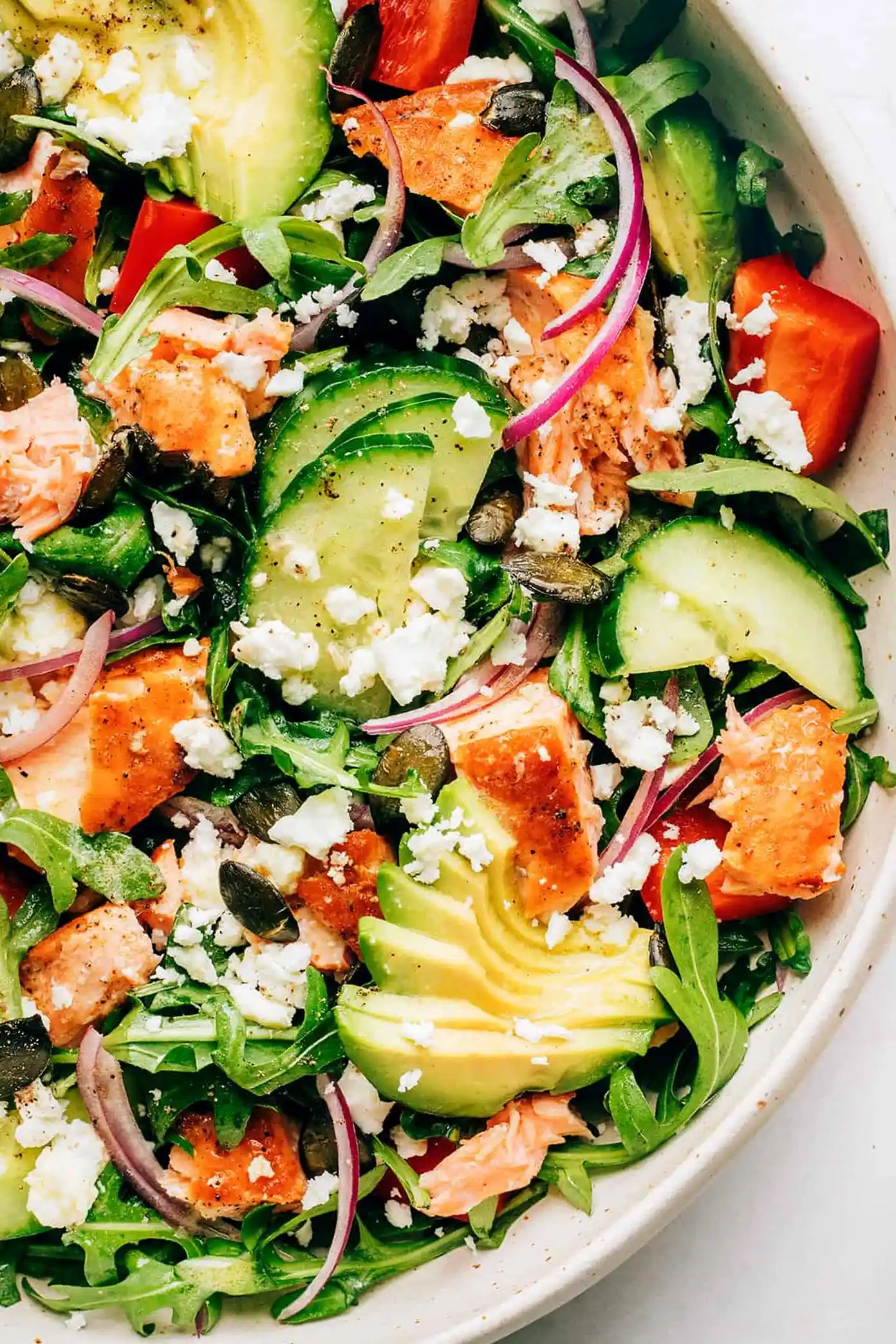
These nutritious salmon salad bowls combine pan-seared fish with crisp vegetables and a tangy red wine vinaigrette. They provide a balanced meal ready in under 30 minutes, making them ideal for healthy lunches or light dinners.
List of ingredients
- 1 pound salmon filets – skin-on or skinless, based on preference.
- Fine sea salt and freshly-cracked black pepper – used for seasoning the fish.
- 1 tablespoon olive oil – for pan-searing the salmon.
- 2 ounces fresh arugula – adds a peppery base to the salad.
- 1 large red bell pepper – chopped into bite-sized pieces for crunch.
- Half of an English cucumber – sliced into bite-sized pieces for freshness.
- Half of a small red onion – thinly sliced.
- 2/3 cup roasted pepitas – provides a nutty crunch.
- 1/2 cup crumbled feta cheese – adds a salty, tangy flavor.
- 1 batch Everyday Dressing – mixed with 1/2 teaspoon dried oregano.
- 1 avocado – sliced or diced for creaminess.
step-by-step instructions
- Cook the salmon: Season the salmon filets generously with salt and pepper. Heat olive oil in a large non-stick sauté pan over medium-high heat. Place the filets flesh-side down and cook undisturbed for 3-4 minutes until golden. Flip the fish and cook the other side for 2-4 minutes until the salmon flakes easily with a fork. Transfer the cooked salmon to a clean plate and let it rest.
- Toss the salad: In a large mixing bowl, combine the fresh arugula, chopped red bell pepper, sliced cucumber, red onion, roasted pepitas, and crumbled feta. Add the cooked salmon to the bowl. Drizzle the Everyday Dressing evenly over the ingredients and gently toss to ensure everything is coated.
- Serve: Divide the salad into bowls immediately. Top each serving with sliced or diced avocado and an extra sprinkle of feta and pepitas for garnish.
Mastering the Salmon Sear
Selecting the Right Pan
A heavy-bottomed non-stick skillet is ideal for this recipe to prevent the delicate fish from sticking. Alternatively, a cast-iron skillet provides superior heat retention, which helps in achieving a deeper golden-brown crust. Ensure the pan is preheated before adding the oil to prevent sticking.
Achieving a Golden Crust
Avoid moving the salmon filets once they hit the pan. Let them sear undisturbed for several minutes to allow the proteins to caramelize. This process, known as the Maillard reaction, creates the flavorful brown crust that contrasts with the tender interior.
Determining Doneness
The best way to check if the salmon is cooked is by using a fork to gently press the thickest part of the filet. If the fish flakes easily along the natural lines, it is ready. For those using a meat thermometer, aim for an internal temperature of 145°F (63°C).
Customizing Your Salad Components
Swapping Arugula for Other Greens
While arugula offers a distinct peppery taste, you can use baby spinach for a milder flavor. Mixed spring greens or chopped kale are also excellent alternatives. If using kale, massage the leaves with a small amount of dressing first to soften the texture.
Choosing Different Cheese Options
Feta is the traditional choice for Greek flavors, but goat cheese provides a creamier, more tart profile. For a richer experience, use small pearls of burrata or microbial-rennet mozzarella. Ensure the cheese is crumbled or cubed to distribute evenly throughout the bowl.
Alternative Nut and Seed Options
Roasted pepitas provide a great crunch, but toasted walnuts or slivered almonds work equally well. Sunflower seeds are a good seed-based alternative if pepitas are unavailable. Toasting any nut or seed in a dry pan for two minutes enhances their natural oils and flavor.
Adding Extra Vegetables
To increase the volume of the salad, add halved cherry tomatoes or sliced Kalamata olives. Shredded carrots or thinly sliced radishes can add more color and texture. Ensure all added vegetables are patted dry to prevent the dressing from becoming watered down.
Perfecting the Red Wine Vinaigrette
Balancing Acid and Oil
A standard vinaigrette usually follows a ratio of three parts oil to one part acid. For this Greek salad, red wine vinegar provides the necessary sharpness to cut through the richness of the salmon and avocado. Adjust the vinegar slightly if you prefer a more pungent taste.
Incorporating Dried Herbs
Adding 1/2 teaspoon of dried oregano is essential for achieving an authentic Mediterranean profile. For more complexity, you can add a pinch of dried thyme or basil. Allow the herbs to sit in the dressing for a few minutes before using to let the flavors infuse.
Adding Natural Sweeteners
If the dressing feels too acidic, stir in a small amount of honey or maple syrup. This doesn’t make the salad sweet but helps balance the sharpness of the vinegar. A tiny amount of Dijon mustard can also act as an emulsifier, keeping the oil and vinegar blended.
Meal Prep and Storage Strategies
Preparing Components in Advance
You can chop the bell peppers, cucumbers, and onions up to two days in advance. Store these vegetables in airtight containers in the refrigerator. Keep the arugula in a separate container with a paper towel to absorb excess moisture.
Preventing Arugula Wilt
Do not toss the dressing with the arugula until you are ready to serve the meal. The acid in the vinaigrette breaks down the cell walls of the leaves, causing them to wilt and lose their crunch. Store the dressing in a small jar and drizzle it on just before eating.
Maintaining Avocado Freshness
Avocados oxidize and turn brown quickly once sliced. To prevent this, toss the avocado pieces in a small amount of lemon or lime juice. Store sliced avocado in an airtight container with a piece of plastic wrap pressed directly against the surface of the fruit.
Storage and Reheating Guidelines
Refrigeration Limits
The assembled salad (without the avocado) can be stored in the fridge for up to two days. However, it is best to store the cooked salmon separately from the greens. This prevents the fish from absorbing too much moisture from the vegetables.
Reheating Pan-Seared Salmon
If you prefer warm salmon on a cold salad, reheat the fish in a skillet over low heat for 2-3 minutes. Avoid the microwave, as it can make the salmon rubbery and dry. Gently warm the filets just until they reach the desired temperature.
Handling Leftover Dressing
Store any remaining Everyday Dressing in a glass jar in the refrigerator for up to one week. Because the oil can solidify in cold temperatures, let the jar sit at room temperature for 10 minutes before shaking it vigorously to re-emulsify.
Troubleshooting Common Issues
Fixing Pungent Red Onions
If you find raw red onions too sharp, rinse the slices under cold running water for 30 seconds. This process removes some of the sulfur compounds that cause the biting flavor. Pat the onions dry with a paper towel before adding them to the salad.
Preventing Salmon from Sticking
Ensure the salmon is patted dry with paper towels before seasoning. Moisture on the surface of the fish creates steam, which prevents the sear and causes the fish to stick to the pan. Use a high-smoke point oil like olive oil or avocado oil.
Solving Dressing Separation
Vinaigrettes naturally separate over time. To fix this, shake the dressing in a sealed jar or whisk it vigorously immediately before pouring. Adding a small amount of mustard or honey helps the oil and vinegar stay bonded longer.
Frequently Asked Questions
Can I use frozen salmon?
Yes, you can use frozen salmon filets. However, they must be fully thawed in the refrigerator overnight and patted completely dry before cooking to ensure a proper sear.
Which salmon cut is best for this recipe?
Center-cut filets are ideal because they provide a uniform thickness, ensuring the fish cooks evenly. Avoid very thin tails, as they can overcook quickly in the pan.
How long does the prepared salad last?
The prepped vegetables and cooked salmon last about 3 days in the fridge. The assembled salad with dressing should be consumed within a few hours to maintain the texture of the arugula.
Can I make this without a non-stick pan?
Yes, you can use stainless steel or cast iron. Just be sure to use slightly more oil and wait for the pan to be hot enough that the fish releases naturally from the surface.
What is the best type of feta for this?
A block of feta stored in brine is usually more flavorful and creamier than pre-crumbled feta. Simply crumble it by hand into the salad for the best texture.
Print
Zesty Greek Salmon Salad Bowls
- Total Time: 25 minutes
- Yield: 2 large servings 1x
- Diet: Pescatarian
Description
These Greek Salmon Salad Bowls are loaded with fresh and healthy ingredients and easy to make in less than 30 minutes.
Ingredients
- 1 pound salmon filets
- fine sea salt and freshly-cracked black pepper
- 1 tablespoon olive oil
- 2 ounces fresh arugula
- 1 large red bell pepper, chopped into bite-sized pieces
- half of an English cucumber, sliced into bite-sized pieces
- half of a small red onion, thinly sliced
- 2/3 cup roasted pepitas
- 1/2 cup crumbled feta cheese
- 1 batch Everyday Dressing
- 1 avocado, sliced or diced
Instructions
- Cook the salmon: Season the salmon with a few generous pinches of salt and pepper. Heat the olive oil in a large non-stick sauté pan. Place the salmon filets flesh-side down and cook undisturbed for about 3-4 minutes, or until golden. Flip and cook the other side for about 2-4 more minutes, until the salmon reaches your desired level of doneness and flakes easily with a fork. Transfer salmon to a clean plate and set aside.
- Toss: Combine the arugula, bell pepper, cucumber, red onion, pepitas, feta and cooked salmon in a large mixing bowl. Drizzle evenly with the dressing, then gently toss to combine.
- Serve: Serve immediately, topped with the avocado plus extra feta and/or pepitas, for garnish.
Notes
I recommend mixing an extra 1/2 teaspoon dried oregano into the dressing for this recipe.
- Prep Time: 15 minutes
- Cook Time: 10 minutes
- Category: Salad
- Method: Pan-searing
- Cuisine: Greek
Nutrition
- Serving Size: 1 large serving
- Calories: 850 kcal
- Sugar: 7 g
- Sodium: 920 mg
- Fat: 62 g
- Saturated Fat: 14 g
- Unsaturated Fat: 48 g
- Trans Fat: 0 g
- Carbohydrates: 24 g
- Fiber: 10 g
- Protein: 52 g
- Cholesterol: 115 mg