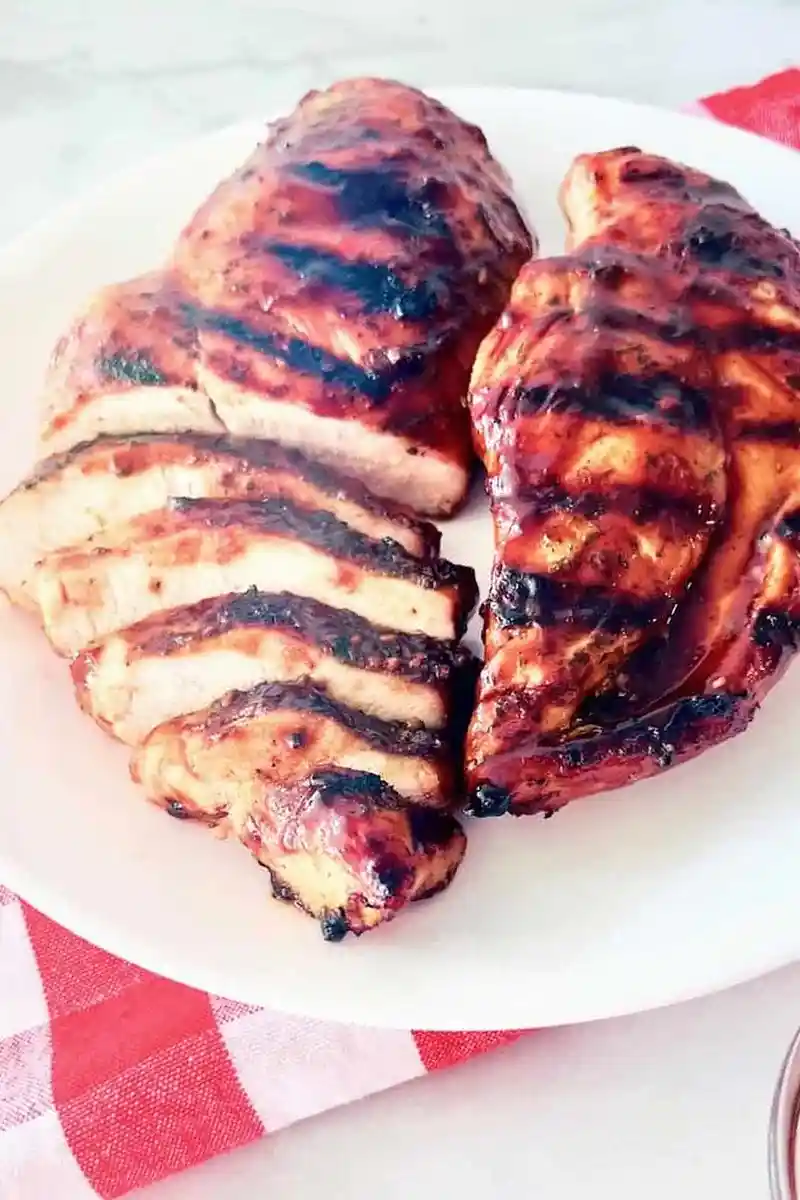
This method produces succulent chicken breasts with a caramelized BBQ glaze and a tender interior. It uses a dual-zone grilling technique to ensure the meat stays moist while achieving professional grill marks.
List of ingredients
- 1 pound boneless skinless chicken breasts (typically 2-3 breasts) – choose thick cuts for optimal juiciness.
- Kinder’s Buttery Poultry Blend – or any preferred savory dry rub.
- Kinder’s BBQ Sauce – or any preferred sweet and spicy barbecue sauce.
step-by-step instructions
- Prepare the Grill: Preheat your grill to 350°F. Arrange the heat so one side is direct and the other is indirect (turn off one side of the burners or push coals to one side).
- Season the Meat: Pat the chicken breasts dry with paper towels to remove surface moisture. Liberally apply the dry rub to all sides of the meat.
- Sear the Chicken: Place the seasoned chicken directly over the heat source. Keep the grill lid open and cook for 4 minutes per side. Flip only when the meat releases easily from the grates and shows dark grill marks.
- Indirect Cooking: Move the seared breasts to the indirect heat zone. Close the grill lid to create an oven-like environment, allowing the chicken to cook through evenly. Do not apply BBQ sauce yet to avoid burning the sugars.
- Baste with Sauce: Use an instant-read thermometer to monitor the internal temperature. Once the chicken reaches 160°F, baste all sides generously with BBQ sauce.
- Final Cook: Continue grilling until the internal temperature reaches exactly 165°F.
- Rest the Meat: Remove the chicken from the grill and place it on a cutting board or plate. Let it rest for 5 minutes to allow juices to redistribute.
- Slice and Serve: Use a sharp chef’s knife to slice the breasts against the grain. Serve with extra BBQ sauce on the side.
Advanced Grilling Techniques for Juiciness
Utilizing Direct and Indirect Heat Zones
Direct heat is essential for the Maillard reaction, which creates the brown, flavorful crust on the outside of the chicken. Indirect heat allows the center of the thick breast to reach a safe temperature without overcooking the exterior. By switching zones, you prevent the outside from becoming rubbery while the inside remains raw.
Managing the Grill Lid for Temperature Control
Keeping the lid open during the searing phase prevents the heat from trapping around the chicken, focusing the energy solely on the bottom surface. Closing the lid during the indirect phase transforms the grill into a convection oven. This ensures the heat penetrates the thickest part of the breast evenly.
The Importance of an Instant-Read Thermometer
Visual cues like color or firmness are unreliable for boneless chicken. An instant-read thermometer is the only way to ensure the chicken hits 165°F without exceeding it. Overcooking by even five degrees can lead to dry, stringy meat.
Customizing Flavors and Substitutions
Choosing Alternative Dry Rubs
While a buttery poultry blend works well, you can substitute it with a paprika-based rub for a smokier profile. Ensure your rub contains salt, as this helps draw moisture to the surface for better searing. Avoid rubs with too much sugar during the searing phase, as they can burn before the meat is cooked.
Selecting the Best BBQ Sauce Types
For a traditional taste, use a tomato and molasses-based sauce which caramelizes well under heat. If you prefer a tangier profile, a vinegar-based Carolina style sauce provides a sharp contrast to the savory rub. Always apply sugar-heavy sauces at the end of the cooking process to prevent charring.
Adding a Spicy Element
To increase the heat, mix a small amount of cayenne pepper or chipotle powder into your dry rub. Alternatively, use a habanero-infused BBQ sauce during the basting stage. This adds a layer of complexity to the sweetness of the glaze.
Recommended Side Dish Pairings
Roasted Root Vegetables
Pair these savory breasts with roasted carrots or parsnips seasoned with thyme and olive oil. The earthiness of the root vegetables balances the sweetness of the BBQ sauce. Roast them in the oven at 400°F until tender and caramelized.
Fresh Summer Salads
A crisp arugula salad with a lemon vinaigrette provides a refreshing acidic contrast to the rich BBQ glaze. Mix in sliced cucumbers and cherry tomatoes for added texture. The bitterness of arugula helps cut through the sweetness of the sauce.
Classic Grilled Corn on the Cob
Since the grill is already hot, add corn on the cob during the indirect cooking phase. Brush the corn with melted butter and salt. Grill until the kernels are tender and slightly charred.
Storage and Meal Prep Guide
Refrigeration Best Practices
Store leftover chicken in an airtight container in the refrigerator for up to 5 days. To prevent the meat from drying out, store it with a small amount of extra BBQ sauce in the container. This keeps the surface moist during storage.
Freezing for Long Term Use
Wrap grilled chicken breasts tightly in plastic wrap before placing them in a heavy-duty freezer bag. Squeeze out as much air as possible to prevent freezer burn. These can be stored for up to one month while maintaining their quality.
Safe Thawing Methods
Thaw frozen grilled chicken in the refrigerator overnight for the safest results. Avoid thawing on the counter to prevent bacterial growth. If you are short on time, use the defrost setting on a microwave, but reheat immediately after.
Optimal Reheating Methods
Oven Reheating for Texture
Place the chicken in a baking dish and add a tablespoon of water or broth to the bottom. Cover the dish with foil to trap steam and heat at 325°F for 10-15 minutes. This method prevents the chicken from becoming tough or dry.
Microwave Reheating Tips
Slice the chicken before microwaving to ensure even heating. Use a microwave-safe cover to retain moisture and heat in 30-second intervals. Adding a small piece of butter on top can help restore the richness of the meat.
Using the Grill for Reheating
Place the chicken over indirect heat on a medium-low grill. Baste with fresh BBQ sauce to replenish the glaze. Heat until the internal temperature reaches 165°F, which usually takes about 5-7 minutes.
Troubleshooting Common Grilling Issues
Preventing Meat from Sticking to Grates
Ensure the grill grates are fully preheated and clean before adding the meat. The chicken will naturally release from the grill once a proper sear has formed. If it sticks, avoid forcing it; give it another minute to develop the crust.
Managing Grease Flare-ups
Flare-ups occur when fat drips onto the heat source, creating large flames that can char the meat. To manage this, move the chicken to the indirect zone immediately. Keep a spray bottle of water nearby for charcoal grills to dampen excessive flames.
Handling Uneven Chicken Thickness
If one end of the breast is significantly thicker than the other, use a meat mallet to gently pound the thickest part. This creates a more uniform thickness, ensuring the thin end doesn’t overcook while the thick end reaches safety.
Frequently Asked Questions
Do I need to tenderize the chicken first?
Tenderizing with a mallet is not required for this specific method because the indirect heat approach preserves moisture. However, pounding the meat to an even thickness can help with more consistent cooking times.
Can I use chicken thighs instead of breasts?
Yes, but be aware that thighs have a higher fat content and different cooking times. Thighs are more forgiving and less likely to dry out, but they may require a longer sear to render the fat properly.
Can I grill chicken breasts from frozen?
It is not recommended to grill frozen chicken. The exterior will overcook and dry out before the center reaches a safe temperature. Always thaw chicken completely in the refrigerator before grilling.
How do I know when to flip the chicken?
The best indicator is when the chicken releases easily from the grill grates. If you feel resistance when lifting the meat, the sear is not yet complete, and flipping too early may tear the surface.
What is the best way to slice the chicken?
Always slice against the grain, which means cutting perpendicular to the muscle fibers. This shortens the fibers, resulting in a much more tender bite and a more professional presentation.
Print
Grilled BBQ Chicken Breasts
- Total Time: 30 minutes
- Yield: 4 servings 1x
- Diet: Gluten-free, Keto, Low carb
Description
For juicy, sauced, & seasoned grilled bbq chicken breasts, this summer easy recipe is the best. The crispy crust & tender meat is ready in 30 minutes. Only 3 ingredients for a sweet, spicy, & bold cookout chicken recipe.
Ingredients
- 1 pound boneless skinless chicken breasts
- Kinder’s Buttery Poultry Blend or favorite dry rub
- Kinder’s BBQ Sauce or favorite bbq sauce
Instructions
- Step 1: Preheat the grill to 350° and set up for both indirect and direct cooking.
- Step 2: Place seasoned chicken over direct heat.
- Step 3: Cook for 4 minutes on each side with the lid open until they release easily.
- Step 4: Move chicken breasts to the indirect heat side and close the lid.
- Step 5: Check temperature; when chicken reaches 160°, baste all sides with BBQ sauce.
- Step 6: Continue cooking until internal temperature reaches 165°.
- Step 7: Let the chicken breasts rest for 5 minutes.
- Step 8: Slice with a sharp chef’s knife and serve.
Notes
The nutritional information for this recipe may vary based on how much rub and sauce is used or the specific brands chosen.
- Prep Time: 5 minutes
- Cook Time: 25 minutes
- Category: Main Course
- Method: Grilling
- Cuisine: American
Nutrition
- Serving Size: 1 breast
- Calories: 188 kcal
- Sugar: 8 g
- Sodium: 132 mg
- Fat: 4 g
- Saturated Fat: 2 g
- Unsaturated Fat: 1.5 g
- Trans Fat: 0.01 g
- Carbohydrates: 10 g
- Fiber: 1 g
- Protein: 24 g
- Cholesterol: 73 mg