This versatile Greek-style marinade adds deep flavor and tenderness to various proteins using simple pantry staples. It is quick to prepare and creates a restaurant-quality result for home-cooked meals.
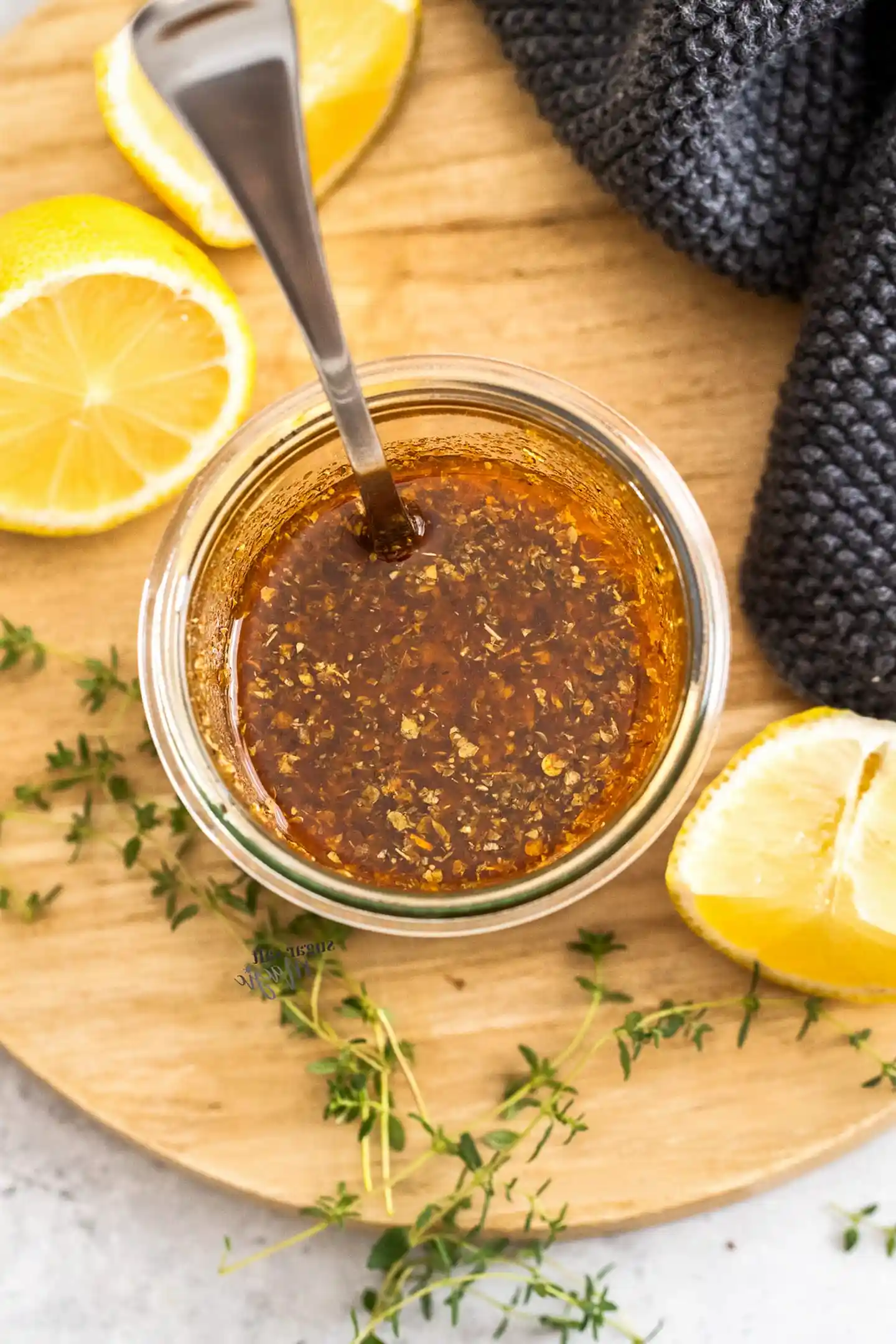
List of ingredients
- 1 medium lemon – provides essential acidity and brightness.
- 4 cloves garlic, minced – adds a pungent, aromatic base.
- 8 sprigs fresh thyme, leaves stripped, discard stalks (roughly 2 teaspoons of leaves) – adds earthy, floral notes.
- 1 ½ tablespoons extra virgin olive oil – binds ingredients and adds moisture.
- 2 teaspoons salt – enhances overall flavor and tenderizes meat.
- 2 teaspoons dried oregano – provides the classic Mediterranean herb profile.
- 1 ½ teaspoons sweet paprika – adds a mild, earthy sweetness and color.
- ¼ teaspoon dried chilli flakes (red pepper flakes), optional – adds a subtle hint of heat.
step-by-step instructions
- Prepare the citrus base: Zest then juice the lemon. Add 2 teaspoons of lemon zest and 2 tablespoons of lemon juice to a large bowl. If the lemon does not provide enough juice, supplement the remaining amount with white wine vinegar or red wine vinegar.
- Combine the seasonings: Add the minced garlic, stripped thyme leaves, olive oil, salt, dried oregano, sweet paprika, and optional chilli flakes to the bowl. Mix all ingredients thoroughly until well combined.
- Marinate the protein: Add your chosen meat to the bowl and toss until every piece is evenly coated. Cover the container and place it in the refrigerator to chill for up to 24 hours.
- Cook the meat: When you are ready to cook, simply lift the meat out of the marinade. There is no need to blot or drain the excess marinade before cooking.
Protein Specific Marinating Times
Timing for Chicken and Turkey
Poultry benefits from a moderate marinating period. For the best results, marinate chicken thighs or breasts for up to 6 hours. This allows the lemon and garlic to penetrate the meat without breaking down the texture too much.
Timing for Beef and Lamb
Red meats have denser muscle fibers that can withstand longer exposure to acid. You can marinate beef or lamb for up to 24 hours. Marinating these meats overnight often results in the most tender and flavorful outcome.
Timing for Shrimp and Fish
Seafood is highly delicate and can be easily over-marinated. For fish and shrimp, limit the marinating time to between 20 and 60 minutes. Exceeding this window can cause the acid to “cook” the protein, leading to a rubbery texture.
Customization and Substitutions
Incorporating Greek Yogurt
For an even more tender result, whisk in two tablespoons of full-fat Greek yogurt. The lactic acid in yogurt is gentler than the citric acid in lemon, which helps further soften the meat. It also creates a thicker coating that produces a beautiful charred crust when grilling.
Using Dried Thyme Instead of Fresh
If fresh thyme is unavailable, you can use dried thyme as a substitute. Because dried herbs are more concentrated in flavor, use half the amount requested in the recipe. One teaspoon of dried thyme replaces the two teaspoons of fresh leaves.
Alternative Oil Options
While extra virgin olive oil is traditional, you can use other neutral oils. Rice bran oil or avocado oil are excellent alternatives if you prefer a milder flavor. These oils also have higher smoke points, which is beneficial for high-heat searing.
Adjusting the Acidic Component
If your lemons are not particularly juicy, vinegar is a reliable replacement. Red wine vinegar offers a slightly fruitier profile, while white wine vinegar is more neutral. Ensure the total volume of acid remains around 2 tablespoons to maintain the balance.
Storage and Meal Prep Advice
Preparing the Marinade in Advance
You can make the marinade without the meat and store it for later use. Combine all ingredients in a clean mason jar and shake well. This prepared mixture will keep perfectly in the refrigerator for up to 6 days.
Optimal Storage Containers
Use airtight glass containers or heavy-duty zip-lock bags to store your marinating meat. Glass is preferable as it does not react with the acidic lemon juice. Zip-lock bags are useful for ensuring the marinade is pressed firmly against all surfaces of the meat.
Refrigeration Safety
Always keep meat in the marinade refrigerated; never marinate at room temperature. This prevents the growth of harmful bacteria and ensures the protein remains safe for consumption. Remove the meat from the fridge only when you are ready to start the cooking process.
Serving and Pairing Ideas
Creating Traditional Souvlaki
To make authentic Greek skewers, cut marinated chicken or lamb into bite-sized cubes. Thread them onto skewers alternating with pieces of red onion and capsicum (bell pepper). Grill over medium-high heat until charred and cooked through.
Suggested Side Dishes
Pair your marinated meats with a fresh Greek salad consisting of diced tomatoes, cucumbers, and kalamata olives. A side of lemon-oregano roasted potatoes also complements the flavors of the marinade. Serve with warm pita bread for a complete meal.
Condiment Pairings
Tzatziki sauce is the ideal accompaniment for this recipe. The cool cucumber and garlic yogurt contrast the tangy, spiced notes of the marinated meat. A dollop of hummus or a drizzle of extra virgin olive oil can also enhance the plate.
Using Marinade for Vegetables
This mixture is not limited to proteins and works well on root vegetables. Toss sliced potatoes, carrots, or cauliflower in the marinade before roasting in the oven. The paprika and lemon create a savory glaze that caramelizes beautifully.
Cooking Techniques and Troubleshooting
Preventing Mushy Meat Texture
Do not marinate meat for longer than 24 hours. The acids in the lemon juice break down muscle fibers over time; if left too long, the meat can lose its structure. This results in a mushy or mealy texture that is unpleasant to eat.
Achieving Perfect Caramelization
The natural sugars in the lemon juice help the meat brown during cooking. To maximize this, use a hot grill or a cast-iron skillet. Ensure the pan is shimmering hot before adding the meat to create a deep, golden-brown crust.
Managing Salt Levels
If you are using pre-salted or brined meat, reduce the amount of salt in the marinade. Excessive salt can draw too much moisture out of the meat, potentially making it dry. Taste a small piece of the marinade to ensure it is not overly salty.
Handling Excess Marinade
Because this is a “stick-to-the-meat” marinade, there is usually very little runoff. However, you should never use the leftover marinade that has touched raw meat as a sauce. If you want a dipping sauce, set aside a portion of the marinade before adding the protein.
Frequently Asked Questions
Can I freeze this marinade?
Yes, you can freeze the marinade without meat in an airtight container for up to 3 months. Thaw it in the refrigerator overnight before using it. Do not freeze meat that has already been marinating, as the texture may change during the freezing and thawing process.
Do I need to pat the meat dry before cooking?
No, you do not need to blot or drain the meat. The olive oil and seasonings are intended to stay on the protein to provide moisture and flavor during the cooking process. Blotting would remove the aromatic herbs and the oil needed for searing.
How much meat does one batch cover?
One batch of this recipe is ideal for 500g (approximately 1lb) of meat. It can be stretched to cover up to 1kg (2lb) of meat if the pieces are small. For larger quantities, it is recommended to double the recipe to ensure full flavor coverage.
Can I use this for seafood?
Yes, it is excellent for shrimp and white fish. However, remember to keep the marinating time short, typically between 20 and 30 minutes. Over-marinating seafood can cause the flesh to become too soft or rubbery.
What is the best way to cook the marinated chicken?
Grilling or pan-searing are the best methods. Use a medium-high heat to ensure the outside is caramelized while the inside remains juicy. For thicker cuts, you can sear them in a pan and finish them in the oven.
Print
Mediterranean Herb and Lemon Marinade
- Total Time: 10 minutes
- Yield: 8 servings 1x
- Diet: Mediterranean
Description
A simple and delicious Greek marinade perfect for lamb, chicken, and beef. With flavour from lemon, garlic, herbs and spices, it’s a game-changer for perfect tender meat.
Ingredients
- 1 medium lemon
- 4 cloves garlic, minced
- 8 sprigs fresh thyme, leaves stripped, discard stalks (roughly 2 teaspoons of leaves)
- 1 ½ tablespoons extra virgin olive oil
- 2 teaspoons salt
- 2 teaspoons dried oregano
- 1 ½ teaspoons sweet paprika
- ¼ teaspoon dried chilli flakes (red pepper flakes), optional
Instructions
- Zest and Juice: Zest then juice the lemon. Add 2 teaspoons of lemon zest and 2 tablespoons of lemon juice to a large bowl (if there isn’t enough juice in your lemon, you can make up the difference with a little white wine vinegar or red wine vinegar).
- Combine: Add the remaining marinade ingredients – garlic, thyme leaves, olive oil, salt, oregano, paprika and dried chilli flakes. Mix well.
- Marinate: Add the meat and toss to coat well. Cover and chill in the refrigerator for up to 24 hours.
- Cook: When ready to cook, simply lift out the meat and cook – no need to blot or drain.
Notes
This recipe is perfect for up to 500g (~1lb) of meat but will cover up to 1kg (~2lb). Feel free to double the recipe for the latter.
- Prep Time: 10 minutes
- Cook Time: 0 minutes
- Category: Condiments
- Method: Mixing
- Cuisine: Greek
Nutrition
- Serving Size: 1 serving
- Calories: 34 kcal
- Sugar: 0.3 g
- Sodium: 583 mg
- Fat: 3 g
- Saturated Fat: 0.4 g
- Unsaturated Fat: 2.6 g
- Trans Fat: 0 g
- Carbohydrates: 2 g
- Fiber: 1 g
- Protein: 0.3 g
- Cholesterol: 0 mg