These oven-baked chicken thighs are infused with a sweet and savory glaze that ensures a juicy result every time. This straightforward one-pan method is ideal for healthy meal planning and consistent family dinners.

List of ingredients
- 6 to 8 bone-in, skinless chicken thighs (1.5 to 2 pounds total)
- Salt and freshly ground black pepper – to taste
- ½ teaspoon smoked or sweet paprika – for color and warmth
- ½ teaspoon dried thyme – for earthy flavor
- ½ teaspoon dried basil – for aromatic sweetness
- ½ teaspoon dried rosemary – for woody notes
- ¼ cup low sodium soy sauce – provides salt and umami
- 3 tablespoons sugar free maple syrup – adds a hint of sweetness
- 1 tablespoon Worcestershire sauce – enhances depth of flavor
- 2 tablespoons olive oil – helps with moisture and heat transfer
- 1 tablespoon apple cider vinegar – tenderizes the meat
- 4 cloves garlic (minced) – for sharp, pungent flavor
- sliced green onions – for fresh garnish
step-by-step instructions
- Prepare the seasoning mix: Combine the paprika, thyme, basil, and rosemary in a small mixing bowl until well blended.
- Prep the chicken: Season each chicken thigh with salt and pepper, then rub the herb seasoning mix evenly over all sides. Transfer the pieces to a 9×13 inch baking dish.
- Make the marinade: In a separate small bowl, whisk together the soy sauce, maple syrup, Worcestershire sauce, olive oil, apple cider vinegar, and minced garlic until the mixture is smooth.
- Marinate: Pour the marinade over the chicken in the baking dish. Cover tightly and refrigerate for at least 1 hour, though up to 8 hours is recommended for deeper flavor.
- Prep to bake: Preheat your oven to 425°F. Remove the chicken from the refrigerator and let it sit on the counter for a few minutes to take the chill off while the oven reaches temperature.
- Bake: Remove the cover and bake for 35 minutes. Baste the chicken with the pan liquid halfway through the cooking process to maintain moisture. Ensure the internal temperature reaches 165°F.
- Broil: Switch the oven to the broiler setting. Bake for an additional 3 to 4 minutes until the tops are golden brown and caramelized.
- Rest and serve: Remove the dish from the oven and let the chicken rest for 5 minutes. Spoon the pan sauce over the thighs and garnish with sliced green onions.
Advanced Marination Techniques
Optimal Marinating Windows
Marinating for 1 to 8 hours allows the salt and soy sauce to penetrate the meat fibers effectively. This process seasons the chicken deeply rather than just on the surface. Avoid exceeding 24 hours to prevent the meat from becoming overly salty.
Role of Acid in Tenderizing
The apple cider vinegar acts as a chemical tenderizer by breaking down tough connective tissues. This ensures the bone-in thighs remain tender even at high roasting temperatures. Using too much acid, however, can make the exterior mushy.
Salt Penetration and Flavor
The combination of salt and soy sauce creates a brine-like effect. This increases the water-holding capacity of the chicken, which prevents the meat from drying out during the 425°F bake. It also enhances the natural flavor of the poultry.
Preventing Texture Degradation
Avoid marinating for more than a full day because the acid and enzymes can over-process the proteins. Over-marinated chicken often loses its structural integrity and can feel grainy. Sticking to the 8-hour window provides the best balance of flavor and texture.
Precision Cooking Guide
Managing Oven Hot Spots
Every oven has areas that heat more quickly than others. Rotate your baking dish 180 degrees halfway through the baking time to ensure all thighs brown evenly. This prevents one side from overcooking while others remain pale.
Calibrating Meat Thermometers
Use a digital instant-read thermometer to verify the internal temperature reaches 165°F. Insert the probe into the thickest part of the thigh, avoiding the bone, which can give a false high reading. This is the only way to ensure safety without overcooking.
The Physics of Basting
Basting redistributes the fats and sugars from the marinade back onto the surface of the meat. This creates a protective layer that locks in moisture and builds a thicker glaze. Do this once halfway through the cooking process.
Achieving the Perfect Broil
The broiler uses direct infrared heat to trigger the Maillard reaction quickly. Keep a close eye on the chicken during these final 3 to 4 minutes to prevent the sugars in the maple syrup from burning. Remove the dish as soon as the tops are golden.
The Science of Meat Resting
Resting the chicken for 5 minutes allows the muscle fibers to relax and redistribute juices. If you cut into the meat immediately, the liquid will rush out, leaving the meat drier. Resting ensures every bite remains moist.
Ingredient Alternatives and Swaps
Replacing Maple Syrup
If maple syrup is unavailable, honey or agave nectar are excellent substitutes. Brown sugar also works well, though it should be dissolved in the liquid first. These alternatives provide the necessary sugar for caramelization during the broiling phase.
Soy Sauce Alternatives
For a gluten-free version, replace the soy sauce with tamari or coconut aminos. Tamari offers a similar salt profile, while coconut aminos are slightly sweeter and lower in sodium. Adjust the salt amount accordingly based on the substitute used.
Vinegar Variations
Rice vinegar can be used for a milder, slightly sweeter acidity than apple cider vinegar. White wine vinegar is another option that provides a sharp, clean tang. Avoid using balsamic vinegar as it may change the color and flavor profile too significantly.
Fresh vs Dried Herbs
If you prefer fresh herbs, use a ratio of three times the amount of dried herbs. For example, use 1.5 teaspoons of fresh rosemary for every 0.5 teaspoon of dried. Fresh herbs provide a brighter, more aromatic flavor but may brown faster.
Garlic Substitutions
Garlic powder can be used if fresh cloves are unavailable, using approximately 1/8 teaspoon per clove. For a different aromatic profile, a small amount of grated ginger can be added alongside the garlic. This adds a zesty, warm note to the marinade.
Creative Flavor Profiles
Increasing the Heat Level
To add a spicy kick, stir in a teaspoon of sriracha or red pepper flakes into the marinade. You can also add a pinch of cayenne pepper to the dry rub for a slow-building heat. This balances the sweetness of the maple syrup.
Introducing Citrus Notes
Adding a tablespoon of fresh lemon or lime zest to the marinade adds a bright, citrusy top note. A teaspoon of lemon juice can also replace part of the vinegar for a different acidity. This is especially effective when serving with summer vegetables.
Enhancing the Smokiness
While smoked paprika is already included, adding a drop of liquid smoke can intensify the outdoor-grilled taste. Alternatively, use a larger proportion of smoked paprika compared to sweet paprika. This complements the savory soy sauce base.
Adding Umami Depth
A teaspoon of tomato paste or a small amount of fish sauce can deepen the umami profile. These ingredients work with the Worcestershire sauce to create a more complex, savory crust. Use these sparingly to avoid overpowering the other herbs.
Recommended Side Dish Pairings
Starch and Root Vegetables
Creamy mashed potatoes or roasted root vegetables like carrots and parsnips pair well with the rich pan sauce. The starch helps absorb the savory glaze, making the meal more filling. Hassleback potatoes are a particularly good textural contrast.
Green Vegetable Accompaniments
Steamed asparagus or sautéed spinach provides a fresh, bitter contrast to the sweet marinade. Roasted broccoli with lemon also works well to cut through the richness of the chicken thighs. These options add essential nutrients to the plate.
Light Salad Pairings
A simple arugula salad with a light vinaigrette cleanses the palate between bites. Mixed greens with sliced cucumbers and a lemon-olive oil dressing keep the meal balanced. Avoid heavy creamy dressings that might clash with the soy glaze.
Grain and Rice Options
White or brown rice is a classic pairing that complements the Asian-inspired notes of the soy and garlic. Quinoa or farro provide a nuttier flavor and more protein. These grains are excellent for soaking up the leftover pan sauce.
Storage and Long-Term Preservation
Cooling and Refrigeration
Allow the chicken to cool to room temperature before transferring it to an airtight container. This prevents excess steam from creating moisture, which can make the meat soggy. Store in the refrigerator for up to 4 days.
Freezer Storage Methods
Cooked chicken thighs can be frozen for up to 3 months. Wrap them tightly in foil and then place them in a heavy-duty freezer bag to prevent freezer burn. Include the pan sauce in a separate small container if desired.
Safe Thawing Procedures
Thaw frozen chicken thighs slowly in the refrigerator overnight. This maintains the texture of the meat and is the safest method for preventing bacterial growth. Avoid thawing on the counter at room temperature.
Effective Reheating Strategies
Oven Reheating for Texture
To maintain the best texture, reheat the chicken in the oven at 325°F. Place the thighs in a baking dish with a tablespoon of water or chicken broth to prevent drying. Cover with foil and heat until the internal temperature reaches 165°F.
Microwave Reheating for Speed
For a quick reheat, use a microwave-safe dish and cover the chicken with a damp paper towel. Heat in 45-second intervals, stirring the sauce between sessions. Be careful not to overcook, as this can make the chicken rubbery.
Air Fryer Reheating for Crispness
An air fryer is excellent for restoring a slight crispness to the exterior. Heat at 350°F for 3 to 5 minutes. This method quickly caramelizes the remaining sugars in the glaze without overcooking the center.
Cooking Troubleshooting
Handling Dry Meat
If the chicken comes out dry, it was likely overcooked or not basted. Ensure you are using a thermometer and not relying solely on time. Next time, increase the marinating time to better hydrate the muscle fibers.
Fixing a Thin Sauce
If the pan sauce is too thin, you can simmer it in a small saucepan over medium heat after removing the chicken. This reduces the liquid and concentrates the flavors. Avoid adding flour, as it can make the glaze cloudy.
Managing Burnt Glazes
If the sugars in the syrup burn during broiling, reduce the broiler time or move the oven rack down one level. You can also blot away any burnt bits with a paper towel before serving. Lowering the oven temperature slightly can also help.
Solving Underdone Centers
If the chicken is brown on the outside but raw near the bone, lower the oven temperature to 375°F and cook for longer. This allows the heat to penetrate the center without burning the surface. Always check the thickest part of the meat.
Frequently Asked Questions
Can I use skin-on chicken thighs?
Yes, skin-on thighs are compatible with this recipe and often result in a juicier piece of meat. The skin will crisp up beautifully during the broiling phase. Be aware that this will increase the total calorie and fat content.
Is it possible to use chicken breasts?
Chicken breasts can be used, but they cook much faster than thighs and dry out easily. Reduce the baking time to 20-25 minutes and check the internal temperature frequently. Basting becomes even more critical for breasts.
How do I store leftover marinade?
Discard any marinade that has come into direct contact with raw chicken to avoid cross-contamination. If you want to save some for another use, set aside a portion before adding the meat. Store it in the fridge for up to 3 days.
What if I don’t have a broiler?
If your oven lacks a broiler, simply increase the baking temperature to 450°F for the final 5 minutes. This will help brown the top of the chicken. Alternatively, use a kitchen torch to caramelize the glaze manually.
Print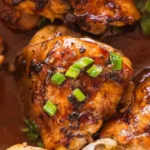
Savory Oven-Baked Marinated Chicken Thighs
- Total Time: 1 hour 50 minutes
- Yield: 6 servings 1x
- Diet: General
Description
Baked chicken thighs marinated in a savory blend of soy sauce, maple syrup, Worcestershire, olive oil, vinegar, and garlic. Simple to prepare and bursting with flavor, this dish is perfect for a family meal or a special occasion.
Ingredients
- 6 to 8 bone-in, skinless chicken thighs (1.5 to 2 pounds, total)
- salt and freshly ground black pepper, to taste
- ½ teaspoon smoked or sweet paprika
- ½ teaspoon dried thyme
- ½ teaspoon dried basil
- ½ teaspoon dried rosemary
- ¼ cup low sodium soy sauce
- 3 tablespoons sugar free maple syrup
- 1 tablespoon Worcestershire sauce
- 2 tablespoons olive oil
- 1 tablespoon apple cider vinegar
- 4 cloves garlic, minced
- sliced green onions, for garnish
Instructions
- Step: Combine paprika, thyme, basil, and rosemary in a small mixing bowl.
- Step: Season the chicken thighs with salt and pepper, then rub the seasoning mix over each piece. Transfer the chicken thighs to a 9×13 baking dish. Set aside.
- Step: In a small mixing bowl, whisk together the soy sauce, maple syrup, Worcestershire sauce, olive oil, vinegar, and garlic until thoroughly incorporated.
- Step: Pour the marinade over the chicken thighs. Cover the chicken thighs and refrigerate for 1 hour or up to 8 hours.
- Step: Preheat oven to 425˚F. Remove the chicken from the fridge and set them on the counter while the oven preheats.
- Step: Remove the cover and bake the chicken for 35 minutes, or until the internal temperature reaches 165˚F. Halfway through cooking, baste the chicken with the liquid.
- Step: Turn on the broiler and continue baking for 3 to 4 more minutes, or until golden brown on top.
- Step: Remove the chicken thighs from the oven and let them rest 5 minutes on the counter. Serve the chicken with the pan sauce and garnish with green onions.
Notes
Marinate for 1 to 8 hours; avoid exceeding 24 hours to prevent the meat from becoming mushy. Ensure internal temperature reaches 165˚F. Let meat rest for 5 minutes before serving. Store leftovers in an airtight container in the fridge for up to 4 days or in the freezer for up to 3 months.
- Prep Time: 10 minutes
- Cook Time: 40 minutes
- Category: Dinner
- Method: Baking
- Cuisine: American, Asian
Nutrition
- Serving Size: 1 thigh + sauce
- Calories: 147 kcal
- Sugar: 3 g
- Sodium: 456 mg
- Fat: 7 g
- Saturated Fat: 1 g
- Unsaturated Fat: 6 g
- Trans Fat: 0 g
- Carbohydrates: 5 g
- Fiber: 0 g
- Protein: 13 g
- Cholesterol: 64 mg