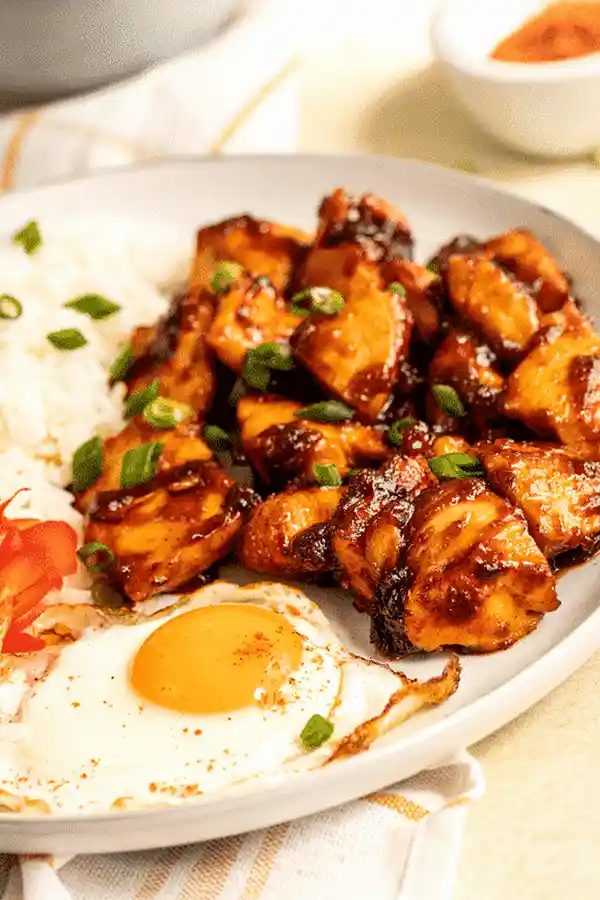
This Filipino-style chicken tocino is a sweet and savory dish perfect for breakfast or dinner. It utilizes a specific marination process to ensure the meat is tender and beautifully caramelized.
List of ingredients
- 1 pound (450g) chicken breast or thigh cut into cubes – thigh meat provides more moisture.
- 1/3 cup (80ml) pineapple juice – contains enzymes that tenderize the meat.
- 3 tbsp (40g) of ketchup – adds color and a tangy base.
- 3 tbsp (40g) of brown sugar – essential for the characteristic sweetness and glaze.
- 2 tbsp of chili sauce – provides a mild heat and depth of flavor.
- 1 tbsp of garlic powder – distributes garlic flavor evenly throughout the marinade.
- 1/2 tbsp salt – enhances all the other savory notes.
- 1/2 tbsp black pepper – adds a subtle woody spice.
- 1/3 cup (80ml) of water – used during the simmering process to cook the meat through.
- 1 tbsp oil – used for the final searing and caramelization.
step-by-step instructions
- Prepare the Marinade: In a bowl, combine pineapple juice, ketchup, brown sugar, chili sauce, garlic powder, salt, and pepper. Stir well until the sugar is completely dissolved.
- Marinate the Meat: Add the cubed chicken into the mixture and marinate overnight or for at least 4 hours in the refrigerator. Ensure the chicken is fully submerged for consistent flavor.
- Simmer the Chicken: Put the chicken and the remaining marinade liquid into a saucepan and bring it to a boil. Add 1/3 cup of water and continue boiling until the liquid evaporates and the meat is tender.
- Sauté and Caramelize: Add oil to a pan over medium-heat. Sauté the chicken until it is golden brown and the sauce has caramelized into a sticky glaze.
- Plate and Serve: Transfer the chicken to a plate. Serve immediately with steamed rice, a fried egg, and sliced fresh peppers.
Technical Tips for Optimal Results
Selecting the Best Meat Cut
While chicken breast is a leaner option, chicken thighs are highly recommended for this recipe. The higher fat content in thighs prevents the meat from drying out during the two-stage cooking process of boiling and frying.
Understanding Marination Timing
The pineapple juice contains bromelain, an enzyme that breaks down protein fibers. Marinating for 4 to 24 hours is ideal, but exceeding 24 hours may result in a mushy texture as the enzymes over-process the meat.
Managing the Pan Temperature
Use medium heat during the final sautéing phase. Because of the high sugar content from the brown sugar and ketchup, the glaze can burn quickly if the heat is too high, turning bitter instead of sweet.
Controlling the Searing Process
Avoid stirring the chicken too frequently once it hits the hot oil. Let the meat sit for a minute or two to develop a deep golden crust before flipping to ensure a proper caramelized exterior.
Customizing the Flavor Profile
Adjusting the Sweetness Level
If you prefer a more savory dish, reduce the brown sugar to 2 tablespoons. For those who enjoy a dessert-like breakfast, you can increase it slightly or add a teaspoon of honey for a different kind of gloss.
Increasing the Spicy Kick
The chili sauce provides a mild heat, but you can intensify it by adding crushed red pepper flakes or a diced bird’s eye chili to the marinade. This creates a sharper contrast against the sweetness of the pineapple.
Enhancing the Tangy Notes
To increase the acidity and cut through the sugar, add one tablespoon of apple cider vinegar or white vinegar to the marinade. This mimics the traditional cured flavor of classic tocino.
Adding Fresh Garlic Aromatics
While garlic powder is used for consistency, adding three cloves of minced fresh garlic during the final sautéing step adds a pungent, aromatic layer to the finished dish.
Serving Suggestions and Pairings
Preparing Traditional Garlic Fried Rice
Combine day-old chilled rice with minced garlic and oil in a pan. Stir-fry until the garlic is golden and the rice is heated through to create the classic ‘Sinangag’ pairing for tocino.
Cooking the Perfect Side Egg
Fry an egg sunny-side up or over-easy in the same pan used for the chicken. The runny yolk acts as a natural sauce that complements the sweet and salty glaze of the meat.
Adding Fresh Vegetable Balance
Serve with sliced cucumbers, fresh tomatoes, or pickled papaya (atchara). The acidity and crunch of these vegetables balance the richness of the caramelized chicken.
Using Alternative Grains
If avoiding white rice, this dish pairs well with quinoa or brown rice. The nuttiness of whole grains provides a grounded contrast to the intense sweetness of the tocino.
Storage and Preservation
Short-Term Refrigeration
Place cooked chicken tocino in an airtight glass container once cooled. It will remain safe and flavorful in the refrigerator for up to 5 days.
Long-Term Freezer Storage
Transfer the meat to a heavy-duty freezer bag, removing as much air as possible to prevent freezer burn. The chicken can be stored in the freezer for up to 4 months.
Safe Thawing Procedures
Thaw frozen tocino slowly in the refrigerator overnight. Avoid thawing at room temperature to prevent bacterial growth and maintain the integrity of the meat’s texture.
Maintaining Glaze Quality
When storing, keep the remaining pan sauce with the meat. This prevents the chicken from drying out and ensures that the glaze re-incorporates during the reheating process.
Effective Reheating Methods
Oven Reheating for Texture
Place the chicken in an oven-safe dish and add a small splash of water. Cover with tin foil and bake at 250°F (120°C) until warmed through to keep the meat juicy.
Stovetop Reheating Techniques
Heat a small pan over medium-low heat with a teaspoon of water or oil. Add the chicken and stir frequently for 3-5 minutes until the glaze becomes liquid and sticky again.
Microwave Quick Heating
Place the chicken on a microwave-safe plate and cover with a damp paper towel. Heat in 30-second intervals to avoid overcooking and toughening the protein fibers.
Preventing Overheating
Stop heating as soon as the center of the meat is warm. Overheating caramelized meats can cause the sugars to harden, making the chicken feel chewy rather than tender.
Troubleshooting Common Issues
Dealing with Burnt Glaze
If the sauce burns during the sauté phase, remove the meat immediately and wipe the pan clean. You can add a tiny bit of water or butter to the pan to deglaze and create a fresh base for the remaining meat.
Solving Mushy Meat Texture
If the chicken feels too soft, it was likely marinated too long in the pineapple juice. To fix this, sear the meat at a slightly higher temperature for a shorter time to create a firmer outer crust.
Fixing a Lack of Color
If the meat looks pale, it may be due to too much water in the pan during the boiling stage. Ensure the liquid has completely evaporated before adding oil to the pan for the final fry.
Correcting Overly Salty Results
If the dish tastes too salty, serve it with a large portion of unsalted steamed rice. You can also add a squeeze of fresh lime juice over the meat to balance the sodium levels.
Frequently Asked Questions
Can I use an air fryer for this recipe?
Yes, after the boiling step, you can air fry the chicken at 375°F (190°C) for 5-8 minutes. Shake the basket halfway through to ensure all sides are caramelized and golden.
Is pineapple juice essential for the recipe?
Yes, it is critical because the bromelain enzyme tenderizes the chicken. Without it, the chicken may remain tough, and you would lose the signature fruity undertone of authentic tocino.
Can I use honey instead of brown sugar?
Honey can be used as a substitute, but it is sweeter and more liquid than brown sugar. Reduce the amount slightly and be mindful that honey burns faster than sugar during the frying process.
Which cooking oil is best for searing?
Use a neutral oil with a high smoke point, such as canola, vegetable, or grapeseed oil. Avoid extra virgin olive oil as it may smoke and impart an unwanted flavor at the temperatures needed for caramelization.
Can this recipe be made in a slow cooker?
You can slow cook the marinated chicken on low for 4-6 hours, but the final sautéing step is still required. The slow cooker replaces the boiling step, but the pan-fry is necessary for the caramelized crust.
Print
Easy Homemade Chicken Tocino
- Total Time: 20 minutes
- Yield: 4 servings 1x
- Diet: General
Description
A tangy and savory chicken tocino with the perfect balance of sweetness and a hint of spiciness, effortlessly prepared with simple ingredients.
Ingredients
- 1 pound (450g) chicken breast or thigh, cubed
- 1/3 cup (80ml) pineapple juice
- 3 tbsp (40g) ketchup
- 3 tbsp (40g) brown sugar
- 2 tbsp chili sauce
- 1 tbsp garlic powder
- 1/2 tbsp salt
- 1/2 tbsp black pepper
- 1/3 cup (80ml) water
- 1 tbsp oil
Instructions
- Step 1: In a bowl, combine pineapple juice, ketchup, brown sugar, chili sauce, garlic powder, salt, and pepper; stir well.
- Step 2: Add chicken into the mixture and marinate overnight or for at least 4 hours in the refrigerator.
- Step 3: Put the chicken and marinade liquid into a saucepan and bring to a boil, then add water and continue boiling until the liquid evaporates and the meat is tender.
- Step 4: Add oil to a pan over medium-heat and sauté chicken until golden brown and caramelized.
- Step 5: Transfer to a plate and serve with rice, fried egg, and sliced pepper.
Notes
Use chicken thighs for more flavor and tenderness. Avoid marinating longer than overnight, as the pineapple acidity can negatively affect the texture of the meat.
- Prep Time: 10 minutes
- Cook Time: 10 minutes
- Category: Chicken Recipes
- Method: Sautéing
- Cuisine: Filipino
Nutrition
- Serving Size: 1 serving
- Calories: 214 kcal
- Sugar: 14 g
- Sodium: 850 mg
- Fat: 4 g
- Saturated Fat: 1 g
- Unsaturated Fat: 3 g
- Trans Fat: 0 g
- Carbohydrates: 17 g
- Fiber: 0 g
- Protein: 34 g
- Cholesterol: 70 mg