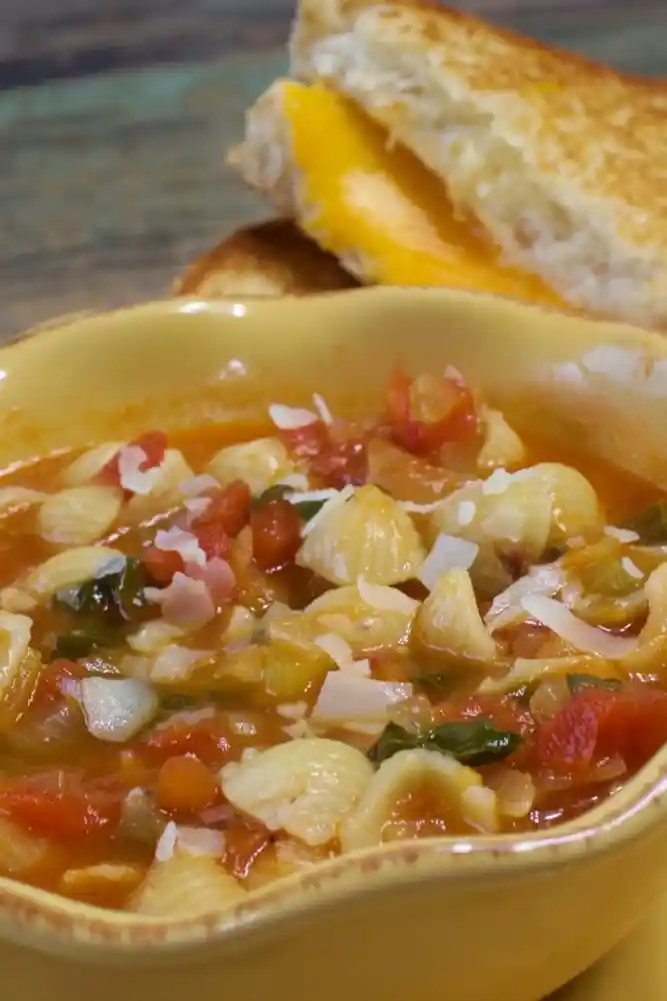
This Tomato Florentine Soup combines a savory tomato base with fresh spinach and pasta for a filling meal. It is a quick-cooking dish that works well for lunch or a light dinner.
List of ingredients
- 2 tablespoons butter (or canola oil) – used for sautéing the aromatics.
- 2 cups finely diced onion – provides a sweet, savory base.
- 2/3 cup diced celery – adds an earthy depth of flavor.
- 1 tablespoon minced garlic (from a jar) – adds pungent aromatic notes.
- 3/4 teaspoon sugar – balances the acidity of the tomatoes.
- 1 cup of water – helps adjust the broth consistency.
- 32 ounces vegetable broth (or chicken broth) – the main liquid base.
- 14 ounces diced tomatoes (one can) – adds texture and tang.
- 8 ounces tomato sauce (one can) – thickens and smooths the broth.
- Salt and pepper – added to taste for seasoning.
- 3/4 cup tiny pasta shells – adds heartiness and substance.
- 2 cups fresh spinach, chopped and measured – provides color and nutrition.
- Freshly grated or shaved parmesan cheese – used for topping and saltiness.
step-by-step instructions
- Sauté the Vegetables: Melt the butter in a large soup pot or dutch oven over medium heat. Add the onion and celery and sauté for approximately 6-7 minutes, stirring frequently, until the onions are tender. Add the garlic and sauté for about 1 more minute.
- Simmer the Base: Stir in the sugar, water, broth, diced tomatoes, tomato sauce, salt, and pepper. Bring the mixture to a simmer over medium-low heat and cook for about 20 minutes.
- Cook the Pasta: Add the tiny pasta shells to the simmering liquid and cook for 8 minutes or until the pasta is tender.
- Wilt the Spinach: Stir in the chopped spinach and cook for about 2 minutes until the leaves are wilted.
- Serve: Ladle the hot soup into bowls and sprinkle with freshly grated or shaved parmesan cheese before serving.
Pro Cooking Techniques for Better Flavor
Sautéing the Aromatics Properly
Ensure the onions and celery are sautéed until translucent rather than browned. This creates a sweet, mellow foundation for the soup without introducing bitter burnt notes. Stirring frequently prevents the garlic from scorching during its final minute of cooking.
Balancing Tomato Acidity
The addition of a small amount of sugar is a culinary technique used to neutralize the sharp acidity of canned tomatoes. This doesn’t make the soup sweet but instead rounds out the flavor profile. If you prefer a more tart soup, you can reduce the sugar slightly.
Controlling the Simmer
Keep the heat on medium-low once the liquid is added to avoid a rolling boil. A gentle simmer allows the flavors of the celery and onion to meld with the tomato sauce without evaporating the broth too quickly. This preserves the desired thin, brothy consistency.
Ingredient Substitutions and Swaps
Using Different Pasta Shapes
While tiny shells are recommended, you can use ditalini, orzo, or acini di pepe. Ensure the pasta size is small to maintain a balanced ratio of broth to solids. Adjust the cooking time based on the specific pasta package instructions.
Alternative Leafy Greens
If fresh spinach is unavailable, baby kale or Swiss chard are excellent alternatives. Kale requires a slightly longer cooking time than spinach to soften. Remove any tough stems from the chard before adding them to the pot.
Choosing the Right Broth
Vegetable broth offers a clean, light taste, while chicken broth provides a richer, saltier profile. Low-sodium versions of either are preferred to allow for better control over the final seasoning. You can also use a homemade stock for deeper flavor.
Tomato Product Variations
Fire-roasted diced tomatoes can be used to add a subtle smoky flavor to the dish. For a smoother texture, replace the diced tomatoes with crushed tomatoes. The tomato sauce should remain consistent to provide the necessary body to the broth.
Creative Recipe Variations
Adding Lean Proteins
Stir in shredded cooked chicken or chickpeas to turn this soup into a high-protein meal. Add these ingredients during the last 5 minutes of simmering to heat them through. This makes the dish more filling for a main course.
Increasing the Spice Level
Add a pinch of crushed red pepper flakes during the sautéing phase for a subtle heat. A teaspoon of smoked paprika can also be added to enhance the depth of the tomato base. For a bolder kick, stir in a dash of hot sauce at the end.
Making the Soup Creamier
For a richer texture, stir in a tablespoon of heavy cream or a splash of coconut milk after the spinach has wilted. This transforms the broth into a creamy tomato bisque style. Alternatively, stir in a dollop of Greek yogurt when serving.
Serving and Pairing Recommendations
Best Bread Pairings
Serve this soup with a side of toasted sourdough or a crusty French baguette. Garlic bread is also a traditional pairing that complements the parmesan topping. Toast the bread with a bit of butter and garlic powder for extra flavor.
Complementary Side Dishes
A light arugula salad with a lemon vinaigrette provides a fresh contrast to the rich tomato broth. Roasted carrots or steamed broccoli are also healthy additions that complete the meal. Keep the sides simple to let the soup be the star.
Garnish Options
Beyond parmesan, fresh basil leaves or chopped parsley add a bright, herbaceous note. A drizzle of high-quality extra virgin olive oil on top of each bowl enhances the mouthfeel. Freshly cracked black pepper adds a final layer of sharp flavor.
Storage and Preservation Methods
Refrigeration Guidelines
Store leftovers in airtight containers in the refrigerator for up to four days. Ensure the soup has cooled slightly before sealing the container to prevent excessive condensation. This helps maintain the flavor of the spinach.
Freezing for Long Term Storage
This soup freezes well for up to three months if stored in freezer-safe containers. It is recommended to freeze the soup without the pasta to prevent the noodles from becoming mushy. Add fresh pasta when reheating the soup.
Thawing and Reheating Properly
Thaw frozen soup overnight in the refrigerator before heating. Reheat gently on the stovetop over medium heat, adding a small amount of water or broth if the liquid has thickened. Avoid microwaving on high heat to prevent the spinach from overcooking.
Meal Prep and Make-Ahead Strategies
Prepping Vegetables in Advance
Dice the onions and celery and mince the garlic up to two days before you plan to cook. Store them in separate containers or a combined aromatic mix in the fridge. This significantly reduces the active prep time on the day of cooking.
Handling Pasta for Meal Prep
If you are preparing the soup for the week, boil the pasta separately and store it in a container with a bit of oil. Add a portion of cooked pasta to each bowl before pouring in the hot soup. This prevents the pasta from absorbing all the broth during storage.
Batch Cooking for the Week
Double the recipe and divide it into individual glass jars for easy grab-and-go lunches. Keep the parmesan cheese in a separate small container to be added just before eating. This ensures the cheese stays fresh and doesn’t clump.
Common Troubleshooting Solutions
Fixing a Soup That Is Too Thick
If the pasta absorbs too much liquid, the soup may become overly thick. Simply stir in an additional half-cup of vegetable broth or water while reheating. Bring it back to a simmer to integrate the new liquid.
Correcting Overcooked Pasta
If the pasta is too soft, it is likely due to overcooking or sitting in the hot liquid for too long. To avoid this in the future, cook the pasta until it is just under al dente. It will finish cooking as it sits in the hot bowl.
Reducing Excessive Saltiness
If the broth tastes too salty, add a splash of water or a bit more unsalted tomato sauce. Adding a small amount of extra sugar or a squeeze of lemon juice can also help mask the saltiness. Always taste the broth before adding the final salt.
Frequently Asked Questions
Can I use frozen spinach?
Yes, you can use frozen spinach, but make sure to thaw it and squeeze out the excess water first. Add it at the same time as the fresh spinach, though it may only need one minute to heat through.
Which parmesan cheese is best?
Parmigiano-Reggiano is the gold standard for flavor and saltiness. However, any high-quality aged parmesan or pecorino romano will work well as a salty topper for this recipe.
How do I stop the pasta from absorbing all the broth?
The best way is to cook the pasta separately and add it to the bowl just before serving. If cooking in the pot, ensure you serve the soup immediately after the pasta reaches the desired tenderness.
Print
Hearty Tomato Florentine Soup
- Total Time: 45 minutes
- Yield: 4 servings 1x
- Diet: Vegetarian
Description
This Tomato Florentine Soup has a rich flavorful thin brothy soup and it’s made with lots of pasta, tomatoes, spinach, and other flavorful vegetables, and it’s super comforting and satisfying!
Ingredients
- 2 tablespoons butter
- 2 cups finely diced onion
- 2/3 cup diced celery
- 1 tablespoon minced garlic
- 3/4 teaspoon sugar
- 1 cup water
- 32 ounces vegetable broth
- 14 ounces diced tomatoes
- 8 ounces tomato sauce
- Salt to taste
- Pepper to taste
- 3/4 cup tiny pasta shells
- 2 cups fresh spinach, chopped
- Parmesan cheese for topping
Instructions
- Step: Melt the butter in a large soup pot or dutch oven over medium heat. Add the onion and celery and saute for approximately 6-7 minutes, stirring frequently, until the onions are tender. Add the garlic and saute for about 1 more minute.
- Step: Add the sugar, water, vegetable broth, tomatoes, tomato sauce, salt, and pepper and simmer over medium-low heat for about 20 minutes.
- Step: Add the pasta and cook for 8 minutes.
- Step: Add the spinach and cook for about 2 minutes until the spinach is wilted.
- Step: Serve hot with fresh grated or shaved parmesan sprinkled on top.
Notes
You can use regular diced tomatoes or Basil Garlic tomatoes. Regular tomato sauce or basil, garlic & oregano tomato sauce also work well. The small amount of sugar helps offset the acidity of the tomatoes.
- Prep Time: 15 minutes
- Cook Time: 30 minutes
- Category: Soup
- Method: Stovetop
- Cuisine: American
Nutrition
- Serving Size: 1 serving
- Calories: 260 kcal
- Sugar: 9 g
- Sodium: 920 mg
- Fat: 8 g
- Saturated Fat: 5 g
- Unsaturated Fat: 3 g
- Trans Fat: 0 g
- Carbohydrates: 34 g
- Fiber: 5 g
- Protein: 11 g
- Cholesterol: 30 mg