This spicy Thai shrimp salad is a fast and nutritious option for a light lunch or appetizer. It combines blanched shrimp with a zesty dressing and aromatic fresh herbs for a sharp, savory taste.
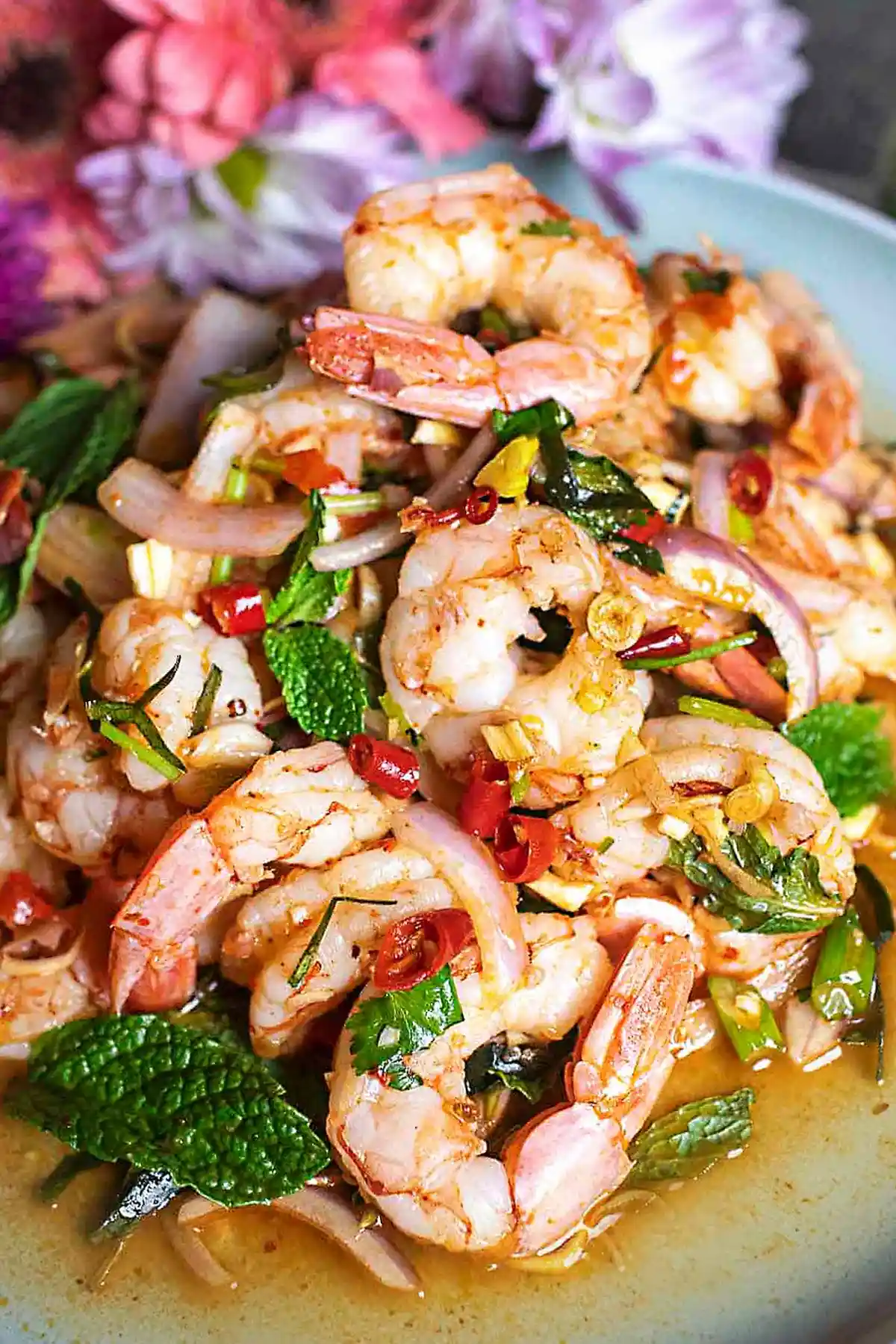
List of ingredients
- 1 1/2 pound large jumbo shrimp – peeled, deveined, and heads removed with tails left on.
- 1 1/2 tablespoons Thai Nam Prik Pao – Thai chili jam for deep savory flavor.
- 1/2 tablespoon Nam Prik Pao oil – the oil from the top of the jam jar for added richness.
- 1/3 cup shallot – sliced long and thin.
- 2 stalks green onion – finely chopped.
- 1/3 cup mint leaves – roughly chopped.
- 2 tablespoons cilantro – chopped into 2/3 inch pieces.
- 1 stalk lemongrass – minced very fine, using only the bottom 4-5 inches.
- 3 Kaffir lime leaves – julienned into thin strips.
- 1-10 Thai bird’s eye chilis – adjusted based on your heat tolerance.
- 1 tablespoon fish sauce – such as Squid or Mega Chef brand.
- 2 1/2 tablespoons lime juice – more can be added for extra tanginess.
- 1 teaspoon sugar – white, brown, or palm sugar.
- 4 cloves of garlic – minced.
step-by-step instructions
- Prepare the shrimp: Peel the shells, devein the shrimp, and remove the heads. Rinse them under cold water, pat them dry with a paper towel, and set them aside.
- Blanch the shrimp: Bring a medium pot of water to a boil using enough water to cover the shrimp. Add the shrimp and cook for 2 to 4 minutes depending on preferred doneness, ensuring they are not overcooked. Remove with a slotted spoon and let them cool.
- Mix the dressing: In a medium mixing bowl, combine the Nam Prik Pao, minced garlic, chopped chilis, sugar, and fish sauce. Stir the mixture well until the sugar has mostly dissolved.
- Combine shrimp and sauce: Add the cooled shrimp to the dressing bowl. Stir well to ensure every shrimp is coated in the savory paste.
- Add aromatics: Fold in the sliced shallots, chopped green onions, mint, cilantro, minced lemongrass, and julienned kaffir lime leaves. Toss gently and adjust the final taste with additional lime juice, fish sauce, or sugar.
Essential Shrimp Preparation Techniques
Removing the Vein Properly
Use a small paring knife to make a shallow slit along the back of the shrimp. Gently lift out the dark vein to ensure a clean taste and a better texture in the final salad.
Achieving the Right Blanching Texture
Cook shrimp only until they form a loose ‘C’ shape. If they curl into a tight ‘O’, they are overcooked and will become rubbery and tough.
Rapidly Cooling the Shrimp
Immediately remove shrimp from boiling water using a slotted spoon. Spreading them on a plate or using a quick cold rinse stops the internal cooking process and preserves tenderness.
Drying Shrimp Before Cooking
Pat the shrimp dry with paper towels after rinsing. Removing excess surface moisture allows the shrimp to heat through more evenly and prevents the boiling water from diluting too quickly.
Guide to Thai Aromatics and Herbs
Processing Lemongrass for Salads
Use only the bottom 4-5 inches of the lemongrass stalk where the stem is pale. Mince it extremely fine to avoid woody chunks that can be unpleasant to chew.
Julienning Kaffir Lime Leaves
Remove the center rib from the leaf before slicing. Stack the leaves and cut them into hair-thin strips to release the citrus aroma without adding toughness.
Managing Fresh Mint and Cilantro
Roughly chop the mint and cilantro just before mixing. This prevents the leaves from bruising or oxidizing, which keeps the salad looking vibrant and tasting fresh.
Selecting Quality Shallots
Choose firm shallots and slice them into very thin longitudinal strips. This ensures the sharp onion flavor is distributed evenly throughout the dish without overpowering the shrimp.
Customizing the Dressing Profile
Controlling the Heat Level
Adjust the number of bird’s eye chilis from 1 to 10 based on preference. For a milder version, remove the seeds from the chilis or substitute them with mild red pepper flakes.
Balancing the Acidity
Use fresh lime juice for the best flavor profile. If the dressing feels too sharp, add a small amount of extra sugar to balance the acidity of the lime.
Utilizing Nam Prik Pao Oil
Include the oil that floats at the top of the Nam Prik Pao jar. This oil contains concentrated chili and garlic flavors that help the dressing cling to the shrimp.
Optimizing Saltiness with Fish Sauce
Add fish sauce gradually and taste frequently. Different brands have varying salt levels, so adjusting manually prevents the salad from becoming overly salty.
Ingredient Alternatives and Substitutions
Using Different Types of Sugar
Palm sugar is traditional and provides a caramel-like depth. However, granulated white sugar or brown sugar works well for a clean sweetness, and monk fruit sugar is a viable low-calorie option.
Replacing the Shallots
If shallots are unavailable, red onion or sweet onion can be used. Slice them as thinly as possible to mimic the delicate texture of shallots.
Substituting the Chili Paste
Store-bought Thai chili jam is a convenient substitute if homemade Nam Prik Pao is not available. Ensure the paste contains shrimp paste and garlic for authenticity.
Adjusting the Protein Base
While this is a shrimp salad, other seafood like scallops or squid can be used. Be aware that these proteins require different blanching times to avoid becoming tough.
Serving and Presentation Ideas
Creating a Fresh Vegetable Bed
Serve the salad on a bed of chopped lettuce, shredded cabbage, or sliced cucumbers. This adds a cooling element that contrasts with the spicy dressing.
Pairing with Traditional Grains
Serve the salad alongside steamed jasmine rice or sticky rice. The neutral flavor of the rice helps balance the intense sour and spicy notes of the salad.
Arranging as an Appetizer
Portion the salad into small individual bowls or on cucumber slices. This makes it an easy-to-eat finger food for guests at a party or gathering.
Adding Extra Texture
Garnish the top with a few whole mint leaves and sliced red chilis. This provides a visual contrast and adds a final burst of fresh aroma.
Storage and Freshness Guidelines
Refrigeration Limits
Store leftovers in an airtight container in the refrigerator for no more than 24 hours. After one day, the herbs begin to wilt and the flavors lose their brightness.
Managing Herb Sogginess
The lime juice and fish sauce will break down the cell walls of the fresh herbs over time. For the best texture, keep the dressing and herbs separate until shortly before serving.
Avoid Reheating the Salad
This is intended to be a cold or room-temperature dish. Reheating the salad will cause the shrimp to overcook and the fresh herbs to turn brown and limp.
Troubleshooting Common Issues
Fixing Overly Sour Dressing
If the lime juice dominates the flavor, whisk in an extra pinch of sugar. The sweetness neutralizes the sharp citric acid without changing the overall volume of the sauce.
Correcting Rubbery Shrimp
If the shrimp are too tough, they were likely boiled for too long. In the future, use a timer and remove them the moment they turn opaque and curl into a ‘C’ shape.
Reducing Bitterness in Herbs
Avoid using the thick stems of the cilantro and mint. Stick to the tender leaves to ensure the herbal notes remain sweet and aromatic rather than bitter.
Addressing Too Much Heat
If the salad is too spicy, increase the amount of sliced cucumbers or lettuce served on the side. Adding a bit more sugar or a splash of coconut milk can also mellow the heat.
Frequently Asked Questions
What does goong mean in Thai?
In the Thai language, the word ‘goong’ refers specifically to shrimp or prawns.
What is the difference between shrimp and prawns?
The primary differences are anatomical, involving the gill structure and leg placement. In many culinary contexts, the terms are used interchangeably, though prawns are often larger.
Can I use pre-cooked shrimp for this salad?
Yes, pre-cooked or cocktail shrimp can be used. Simply rinse them and toss them directly into the dressing since they do not require blanching.
Can I use other seafood for this recipe?
You can use other seafood like calamari or scallops. Note that the dish would no longer be called Pla Goong, as that name specifically denotes a shrimp salad.
How do I store the leftovers safely?
Keep the salad in a sealed glass container in the coldest part of your fridge. Consume it within one day to ensure the herbs remain safe and flavorful.
Print
Authentic Spicy Thai Shrimp Salad (Pla Goong)
- Total Time: 15 minutes
- Yield: 4 servings 1x
- Diet: Low Calorie
Description
Need a tasty idea for a quick lunch? Try Pla Goong, a spicy Thai shrimp salad full of flavor. It has fresh herbs, big juicy shrimp, and spicy Thai chili peppers. The dressing is tangy and spicy too.
Ingredients
- 1 1/2 pound large jumbo shrimp, tail on but shell peeled, deveined, and heads off
- 1 1/2 tablespoons Thai Nam Prik Pao plus 1/2 tablespoon of the oil from the top
- 1/3 cup shallot, sliced long and thin
- 2 stalks green onion, chopped small
- 1/3 cup mint leaves, roughly chopped
- 2 tablespoons cilantro, chopped into 2/3 inch pieces
- 1 stalk lemongrass, minced very fine (bottom 4–5 inches only)
- 3 Kaffir lime leaves, julienned
- 1–10 Thai bird’s eye chilis, adjusted to taste
- 1 tablespoon fish sauce
- 2 1/2 tablespoons lime juice, more as needed
- 1 teaspoon sugar
- 4 cloves of garlic, minced
Instructions
- Step: Prepare shrimp by peeling, deveining, and removing heads. Rinse with cold water, towel dry, and set aside until the water is ready.
- Step: Bring a medium pot of water to a boil. Add the shrimp and cook for 2-4 minutes, depending on how rare you like your shrimp. Remove the shrimp with a slotted spoon and let cool.
- Step: While the shrimp are cooling, make the salad dressing in a medium bowl by combining Nam Prik Pao (Thai chili paste), garlic, chilis, sugar, and fish sauce. Mix well until sugar mostly dissolves.
- Step: Add the shrimp to the salad dressing in the mixing bowl and stir.
- Step: Add the shallot, green onion, mint, cilantro, lemongrass, and kaffir lime leaves. Toss and adjust the seasoning with lime juice, fish sauce, or sugar.
Notes
You can omit the herbs if preferred. Double the dressing to drizzle over hot rice or fresh vegetables. Adjust the spice level by controlling the amount of Thai bird’s eye chilis or using sweet pepper. Use monk fruit sugar for a healthier option.
- Prep Time: 10 minutes
- Cook Time: 5 minutes
- Category: Thai salads
- Method: stovetop
- Cuisine: Thai
Nutrition
- Serving Size: 1 serving
- Calories: 210 kcal
- Sugar: 6 g
- Sodium: 780 mg
- Fat: 8 g
- Saturated Fat: 2 g
- Unsaturated Fat: 6 g
- Trans Fat: 0 g
- Carbohydrates: 11 g
- Fiber: 2 g
- Protein: 26 g
- Cholesterol: 175 mg