These spicy shrimp sushi stacks are a visually stunning appetizer that avoids the complexity of rolling traditional sushi. They combine seasoned rice, zesty shrimp, and fresh vegetables for a restaurant-quality look at home.
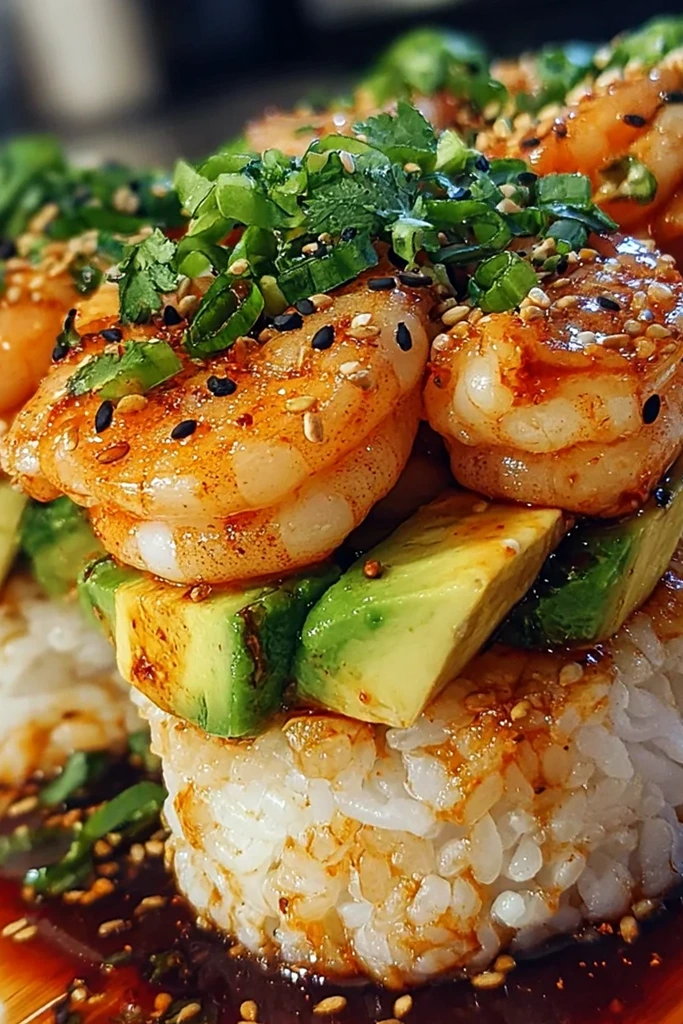
List of ingredients
- 1 lb large shrimp, peeled and deveined – provide a meaty texture.
- 2 tablespoons olive oil – used for sautéing.
- 2 tablespoons soy sauce – adds savory umami flavor.
- 1 tablespoon rice vinegar – provides a tangy brightness to the shrimp.
- 2 teaspoons sugar – balances the acidity and heat.
- 1 tablespoon sesame oil – adds a toasted, nutty aroma.
- 2 tablespoons sriracha sauce – brings the spicy kick.
- ½ cup mayonnaise – used for added creaminess.
- 1 cup sushi rice – short-grain rice for a sticky consistency.
- 1 ½ cups water – for cooking the rice.
- 1 tablespoon rice vinegar (for rice) – seasons the base.
- ½ teaspoon salt – enhances all flavors.
- 1 avocado, sliced – adds creaminess and color.
- 1 small cucumber, julienned – provides a refreshing crunch.
- 1 tablespoon sesame seeds (optional, for garnish) – adds visual appeal.
- Fresh cilantro or green onions (optional, for garnish) – adds a fresh finish.
step-by-step instructions
- Rinse the Rice: Wash the sushi rice under cold water until the water runs clear. This removes excess surface starch and prevents the rice from becoming too gummy.
- Cook the Rice: In a medium pot, combine the rice and water. Bring it to a boil, reduce the heat, cover, and simmer for 15 minutes until tender.
- Season the Rice: Remove the rice from the heat and stir in rice vinegar and salt. Cover and let it sit for 10 minutes to allow the grains to absorb the flavors.
- Cook the Shrimp: Heat olive oil in a large skillet over medium-high heat. Add the shrimp and cook for 2-3 minutes per side, or until fully cooked and opaque.
- Season the Shrimp: In a small bowl, combine soy sauce, rice vinegar, sesame oil, sugar, and sriracha. Drizzle this mixture over the cooked shrimp, toss to coat, and cook for an additional minute to let the flavors absorb.
- Layer the Rice: Using a round mold or the inside of a clean can, layer a portion of the seasoned sushi rice into individual serving glasses or bowls, pressing down gently to compact it.
- Add Shrimp: Top the rice with the spicy shrimp mixture, pressing it down slightly to make it stick to the base.
- Add Avocado and Cucumber: Layer the sliced avocado and julienned cucumber on top of the shrimp for a fresh, crisp texture.
- Garnish: Sprinkle with sesame seeds and cilantro or green onions for extra flavor and color.
Professional Preparation Tips
Rinsing Rice for Better Texture
Rinsing the sushi rice is a critical step for achieving the right consistency. By washing the grains until the water runs clear, you eliminate excess starch that can make the rice mushy. This ensures each grain remains distinct while still being sticky enough to hold the stack together.
Mastering the Rice Simmer
Keep the pot covered during the 15-minute simmer to trap the steam inside. Opening the lid prematurely releases heat and moisture, which can lead to unevenly cooked grains. Once cooked, let the rice rest before seasoning to ensure the moisture redistributes evenly.
Preventing Overcooked Shrimp
Shrimp cook very quickly and can become rubbery if left on the heat too long. Cook them only until they turn opaque and form a ‘C’ shape. Avoid cooking them into a tight ‘O’ shape, as this is a sign they are overdone.
Using Alternative Molds
If you do not have a professional sushi mold, a clean tin can or a wide-mouthed drinking glass works well. Simply wrap the inside with plastic wrap to make removing the stack easier. Press the rice firmly with the back of a spoon to create a stable foundation.
Precision Cutting for Vegetables
Julienne the cucumber into thin, uniform matchsticks to ensure a consistent crunch in every bite. For the avocado, slice it into thin crescents that can be layered neatly. This precision not only looks better but ensures a balanced ratio of ingredients.
Ingredient Substitutions
Using Tamari for Gluten-Free Needs
To make this recipe gluten-free, replace the soy sauce with tamari. Tamari is typically brewed without wheat and offers a similar deep, salty flavor. Ensure you check the label on your sriracha as well, as some brands may contain gluten additives.
Substituting Brown Rice
You can use short-grain brown rice for a nuttier flavor and more fiber. Note that brown rice requires more water and a longer simmering time than white sushi rice. Adjust your cooking time and water ratio according to the package instructions.
Protein Alternatives to Shrimp
If you prefer a different protein, cooked diced chicken or imitation crab are excellent choices. For a vegetarian version, use firm tofu that has been pressed and sautéed. Use the same spicy seasoning mixture to maintain the flavor profile.
Adjusting the Heat Level
If sriracha is too spicy, you can substitute it with a mild chili sauce or a small amount of gochujang. For those who prefer no heat at all, omit the sriracha and add a touch more sugar or honey for a sweet-and-savory glaze.
Alternative Acidic Seasonings
If rice vinegar is unavailable, a mixture of white vinegar and a pinch of sugar can work. Apple cider vinegar is another option, though it will add a slightly fruitier note to the rice and shrimp.
Creative Flavor Variations
Adding Tropical Mango Slices
Adding a layer of thinly sliced fresh mango between the shrimp and the avocado introduces a sweet, tropical contrast. This pairs exceptionally well with the spiciness of the sriracha. Mango adds a bright yellow color that enhances the visual appeal.
Incorporating Creamy Spicy Mayo
For a richer experience, whisk together mayonnaise and sriracha to create a spicy mayo. Drizzle this sauce over the shrimp layer or use it as a final topping. This adds a velvety texture that complements the crisp cucumber.
Swapping Greens for Fresh Mint
While cilantro is traditional, fresh mint leaves provide a cooling effect that balances the heat of the shrimp. Mint works particularly well if you are adding mango to the stack. Use small, whole leaves for a refined look.
Using Quinoa as a Base
For a protein-rich alternative to rice, use cooked quinoa. Since quinoa is not naturally sticky, you may need to press it more firmly into the mold. Mix in a small amount of mashed avocado or a touch of honey to help the grains adhere better.
Integrating Pickled Radish
Add a layer of thinly sliced pickled daikon radish for an authentic Japanese touch. The acidity of the pickle cuts through the richness of the avocado and mayonnaise. It also adds a vibrant white or pink color to the layers.
Serving and Plating Ideas
Arranging on a Shared Platter
Place the individual stacks on a large slate or ceramic platter for a professional presentation. Leave space between each stack to prevent them from leaning into each other. Garnish the empty spaces with extra cucumber slices or sesame seeds.
Pairing with Refreshing Side Salads
Serve these stacks alongside a chilled seaweed salad or a sunomono (Japanese cucumber salad). These sides provide a light, acidic balance to the richness of the shrimp and avocado. A simple ginger-dressed cabbage slaw is another great pairing.
Choosing the Right Glassware
If you are not using molds, assemble the stacks directly in small, clear glass tumblers or appetizer cups. This allows the guests to see the colorful layers from the side. Use narrow glasses to keep the stacks tall and elegant.
Enhancing the Garnish
Toast your sesame seeds in a dry pan for a few minutes before sprinkling them on top. This releases the oils and intensifies the nutty flavor. Combine black and white sesame seeds for a more striking visual contrast.
Storage and Preservation
Storing Components Separately
To maintain the best quality, store the cooked rice, seasoned shrimp, and chopped vegetables in separate airtight containers. Mixing them too early can lead to the rice absorbing too much moisture from the vegetables. This method keeps the textures distinct.
Refrigeration Guidelines for Seafood
Store the cooked shrimp in the refrigerator for no more than two to three days. Ensure the container is tightly sealed to prevent the shrimp from picking up other odors in the fridge. Keep the rice tightly covered so it does not dry out.
Preventing Avocado Oxidation
Avocado browns quickly once exposed to air. To prevent this, toss the avocado slices in a small amount of lemon or lime juice before assembling. Alternatively, keep the sliced avocado in a container with a piece of plastic wrap pressed directly onto the surface.
Reheating and Freshness
Warming the Shrimp and Rice
If you prepared the components in advance, gently warm the rice and shrimp before assembling. You can use a microwave on low power for 30 seconds or steam them briefly. Avoid overheating the shrimp, as they can become tough.
Maintaining Cold Toppings
Always keep the cucumber and avocado chilled until the moment of assembly. The contrast between the warm rice/shrimp and the cold vegetables is a key part of the dish’s appeal. Assemble the fresh layers only when you are ready to serve.
Make-Ahead Strategy
Prepping the Rice Base
You can cook and season the sushi rice several hours in advance. Store it at room temperature in a covered bowl if serving within a few hours, or refrigerate and reheat gently. Proper seasoning during the cooling phase ensures the flavor is locked in.
Marinating Shrimp Early
You can sauté the shrimp and toss them in the seasoning mixture ahead of time. The flavors will actually deepen as the shrimp sit in the sauce. Store them in the fridge and bring them back to room temperature before plating.
Preparing Vegetable Mise en Place
Julienne the cucumber and slice the avocado (with citrus juice) up to four hours before serving. Keep them in separate containers with damp paper towels to maintain crispness. This reduces the assembly time to just a few minutes per stack.
Troubleshooting Common Issues
Fixing Gummy Rice
If your rice turns out too sticky or gummy, you likely skipped the rinsing step or used too much water. In the future, ensure the water runs completely clear. If the rice is already gummy, stir in a tiny bit more rice vinegar to help separate the grains.
Stabilizing Collapsing Stacks
If your stacks are falling over, you may not have pressed the rice firmly enough. Use a heavy spoon or a small tamper to pack the rice into the base of the mold. Ensure the shrimp layer is also pressed down slightly to create a bond.
Managing Excess Moisture
Cucumber can release a lot of water, which may make the rice soggy. To prevent this, lightly salt the julienned cucumber and let it sit for 10 minutes, then pat it dry with a paper towel before layering. This keeps the stack stable and the rice firm.
Frequently Asked Questions
Can I make these ahead of time?
You can prepare the rice and shrimp components in advance. However, assemble the stacks shortly before serving to keep the avocado fresh and the cucumber crunchy.
What can I substitute for shrimp in this recipe?
You can use cooked diced chicken, imitation crab, or firm marinated tofu. These proteins all pair well with the spicy sriracha seasoning.
How spicy are these sushi stacks?
The heat level depends on the amount of sriracha used. You can easily increase or decrease the amount of sauce to match your personal spice tolerance.
Can I use brown rice instead of sushi rice?
Yes, brown rice can be used, but it has a different texture and requires a longer cooking time. It will not be as sticky as traditional sushi rice.
Is this recipe gluten-free?
This recipe can be made gluten-free by substituting the soy sauce with tamari and ensuring the sriracha used is certified gluten-free.
Print
Spicy Shrimp Sushi Stacks
- Total Time: 50 minutes
- Yield: 4 servings 1x
- Diet: Low Calorie
Description
Spicy Shrimp Sushi Stacks are a delicious and visually appealing sushi dish that combines spicy shrimp, sushi rice, avocado, and cucumber in a layered presentation.
Ingredients
- 1 lb large shrimp, peeled and deveined
- 2 tablespoons olive oil
- 2 tablespoons soy sauce
- 1 tablespoon rice vinegar
- 2 teaspoons sugar
- 1 tablespoon sesame oil
- 2 tablespoons sriracha sauce
- ½ cup mayonnaise
- 1 cup sushi rice
- 1 ½ cups water
- 1 tablespoon rice vinegar (for rice)
- ½ teaspoon salt
- 1 avocado, sliced
- 1 small cucumber, julienned
- 1 tablespoon sesame seeds (optional, for garnish)
- Fresh cilantro or green onions (optional, for garnish)
Instructions
- Rinse the Rice: Wash the sushi rice under cold water until the water runs clear.
- Cook the Rice: In a medium pot, combine the rice and water. Bring to a boil, reduce the heat, cover, and simmer for 15 minutes.
- Season the Rice: Remove the rice from the heat, stir in rice vinegar and salt. Cover and let it sit for 10 minutes to absorb the flavors.
- Cook the Shrimp: Heat olive oil in a large skillet over medium-high heat. Add the shrimp and cook for 2-3 minutes per side, or until fully cooked and opaque.
- Season the Shrimp: In a small bowl, combine soy sauce, rice vinegar, sesame oil, sugar, and sriracha. Drizzle this mixture over the cooked shrimp, toss to coat, and cook for an additional minute to let the flavors absorb.
- Layer the Rice: Using a round mold or the inside of a clean can, layer a portion of the seasoned sushi rice into individual serving glasses or bowls, pressing down gently to compact it.
- Add Shrimp: Top the rice with the spicy shrimp mixture, pressing it down slightly to make it stick.
- Add Avocado and Cucumber: Layer the sliced avocado and julienned cucumber on top of the shrimp for a fresh, crisp texture.
- Garnish: Sprinkle with sesame seeds and cilantro or green onions for extra flavor and color.
Notes
Adjust the amount of sriracha according to your spice preference. May use other vegetables such as carrots or radishes for added crunch. This dish can be made ahead of time and assembled just before serving.
- Prep Time: 30 minutes
- Cook Time: 20 minutes
- Category: Appetizer
- Method: Layering
- Cuisine: Japanese
Nutrition
- Serving Size: 1 stack
- Calories: 350 kcal
- Sugar: 3 g
- Sodium: 600 mg
- Fat: 20 g
- Saturated Fat: 3 g
- Unsaturated Fat: 15 g
- Trans Fat: 0 g
- Carbohydrates: 30 g
- Fiber: 2 g
- Protein: 18 g
- Cholesterol: 150 mg