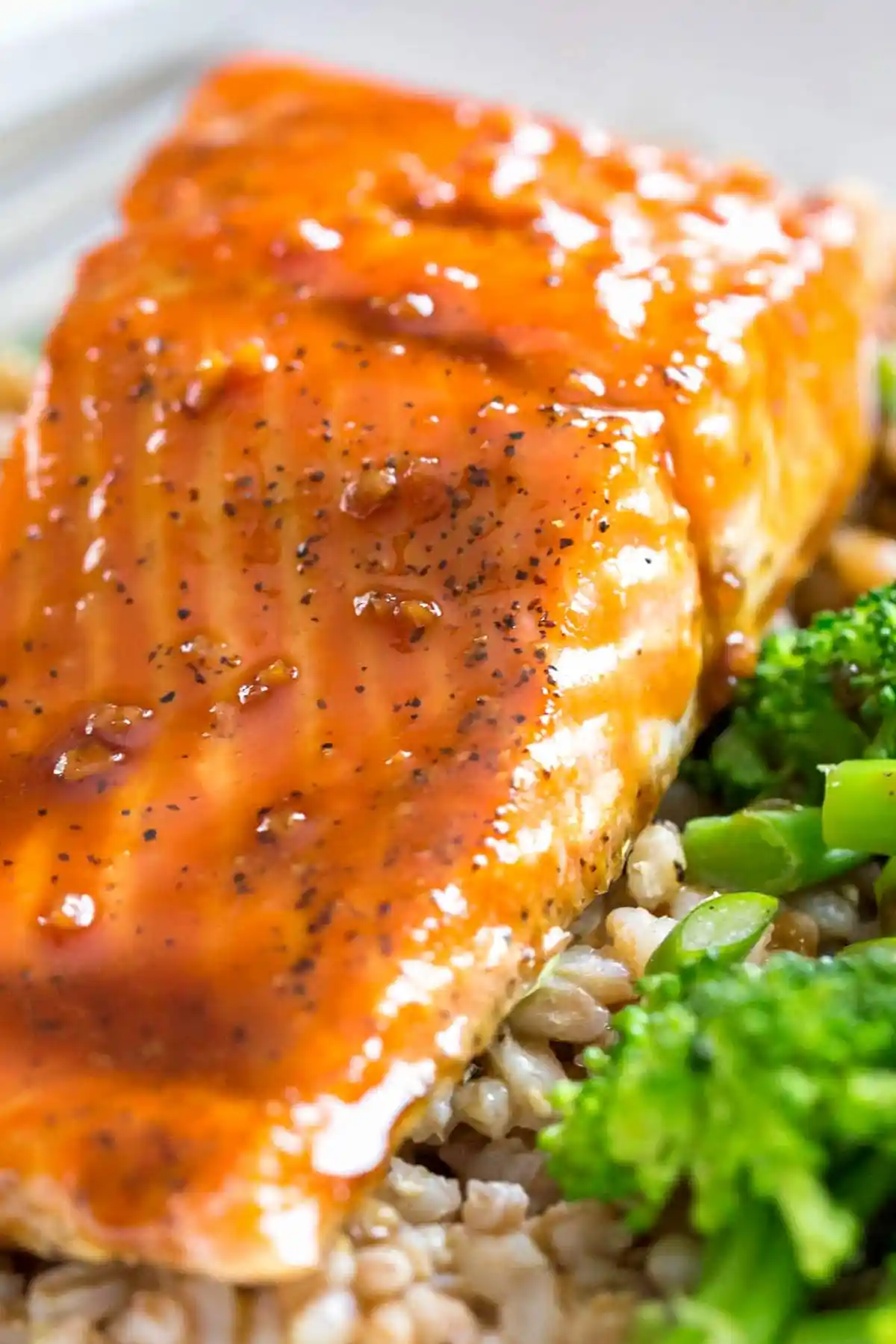
This maple glazed salmon is a quick and efficient sheet pan meal. It balances savory soy sauce with sweet maple syrup for a restaurant-quality finish in under 20 minutes.
List of ingredients
- 4 salmon fillets (1 pound total) – skin-on or skinless both work.
- 1/4 cup maple syrup – use pure maple syrup for the best flavor.
- 3 tablespoons soy sauce – adds a salty, umami depth to the glaze.
- 1 tablespoon Dijon mustard – helps emulsify the sauce and adds tang.
- 2 garlic cloves (minced) – provides a pungent, aromatic base.
step-by-step instructions
- Prepare the oven: Preheat your oven to 375°F and line a large baking sheet with parchment paper for easy cleanup.
- Mix the glaze: In a small bowl, whisk together the maple syrup, soy sauce, Dijon mustard, and minced garlic until the mixture is smooth.
- Prepare the fish: Place the salmon fillets on the prepared baking sheet and spoon approximately one-third of the maple glaze over the top of each fillet.
- Bake and baste: Bake the salmon for 15 to 20 minutes. After the first 10 minutes of cooking, open the oven and apply more of the reserved glaze to the fillets.
- Finish and serve: Once the salmon is cooked through, remove it from the oven and top with the remaining glaze before serving.
Essential Cooking Tips
Use a Digital Meat Thermometer
The most accurate way to prevent overcooking is by using an instant-read thermometer. Aim for an internal temperature of 145°F at the thickest part of the fillet. Removing the fish at 135°F to 140°F allows carryover cooking to reach the target temperature without drying out the meat.
Bring Salmon to Room Temperature
Let your salmon fillets sit on the counter for about 15 to 20 minutes before cooking. This reduces the temperature shock when the fish hits the oven. Room temperature fillets cook more evenly and are less likely to curl at the edges.
Pat the Fillets Dry Before Glazing
Use a paper towel to pat the salmon fillets completely dry on all sides. Removing surface moisture allows the maple glaze to adhere better to the fish. This results in a thicker, more concentrated layer of flavor rather than a watery sauce.
Utilize Parchment Paper
Lining your baking sheet with parchment paper prevents the sugary glaze from sticking to the pan. This makes cleanup significantly faster and ensures the fillets don’t tear when you lift them. Avoid using wax paper, as it can melt at high oven temperatures.
Ensure Even Fillet Sizes
Try to choose salmon fillets that are similar in thickness. If one piece is significantly thinner than the others, it will overcook before the others are done. You can gently press thicker parts of the fillet to flatten them slightly for more uniform cooking.
Position the Oven Rack Correctly
Place your baking sheet on the middle rack of the oven. This ensures the heat circulates evenly around the fish. If you want more caramelization on top, you can move the pan to the upper rack for the last two minutes of cooking.
Ingredient Substitutions
Replace Maple Syrup with Honey
If you do not have maple syrup, honey is an excellent alternative. Honey is slightly thicker and sweeter, which may create a more viscous glaze. You can add a teaspoon of water to thin it out if the consistency is too heavy.
Use Tamari for a Gluten-Free Option
To make this recipe gluten-free, replace the soy sauce with tamari. Tamari has a very similar flavor profile but is brewed without wheat. Coconut aminos are another alternative, though they are slightly sweeter than soy sauce.
Substitute Dijon with Whole Grain Mustard
Whole grain mustard can be used instead of Dijon for a more rustic texture. It provides the same acidic balance to the sugar but adds small, popping seeds of flavor. The flavor profile remains very similar to the original recipe.
Use Garlic Powder for Convenience
If you are out of fresh garlic, you can substitute it with garlic powder. Use 1/2 teaspoon of garlic powder for every two cloves of fresh garlic. Whisk it thoroughly into the glaze to avoid any clumps.
Switch to Brown Rice Syrup
For a different sweetness, brown rice syrup can replace maple syrup. It has a deeper, more molasses-like flavor that complements the soy sauce. This substitution creates a heartier, earthier glaze.
Flavor Variations
Add Lime Zest for Brightness
Grate the zest of one lime into the glaze before brushing it on the fish. The citrus oils cut through the richness of the salmon and the sweetness of the syrup. This is especially effective for summer meals.
Incorporate Red Pepper Flakes for Heat
Adding a pinch of crushed red pepper flakes to the glaze introduces a subtle spicy kick. This heat balances the sweetness of the maple syrup. Adjust the amount based on your preferred spice level.
Use Brown Sugar for Extra Caramelization
Adding a tablespoon of brown sugar to the glaze creates a thicker, more caramelized crust. The molasses in the brown sugar deepens the color of the salmon. This works well if you prefer a stickier finish.
Add Fresh Ginger for an Asian Twist
Stir in one teaspoon of freshly grated ginger to the glaze mixture. Ginger adds a zesty, peppery note that pairs naturally with soy sauce and garlic. It transforms the dish into a more fusion-style meal.
Stir in Lemon Juice for Acidity
Add a tablespoon of fresh lemon juice to the glaze for a sharper tang. This helps break down the richness of the salmon fats. Lemon juice also helps brighten the overall flavor profile of the dish.
Serving Suggestions
Pair with Steamed Broccoli
Steamed broccoli is a classic side that complements the sweet and savory glaze. The green color provides a visual contrast to the orange salmon. Toss the broccoli in a bit of lemon juice and salt to keep it fresh.
Serve Over Coconut Rice
Coconut rice adds a creamy, tropical element that pairs perfectly with maple and soy. Use full-fat coconut milk instead of water when cooking your jasmine rice. This adds a richness that balances the salty soy sauce.
Add a Fresh Cucumber Tomato Salad
A cold salad with cucumbers, cherry tomatoes, and a light vinaigrette provides a refreshing contrast. The acidity of the salad cleanses the palate between bites of the rich salmon. Use a simple dressing of olive oil and apple cider vinegar.
Pair with Creamy Mashed Potatoes
Mashed potatoes provide a comforting base for the extra glaze to soak into. Ensure the potatoes are whipped smooth with a bit of plant-based butter or milk. This creates a hearty, filling dinner option.
Serve with Quinoa or Farro
For a nuttier flavor and more protein, serve the salmon over a bed of cooked quinoa or farro. These grains absorb the excess glaze from the pan. Season the grains with fresh parsley for added color.
Storage and Reheating
Refrigeration Guidelines
Store leftover salmon in an airtight container in the refrigerator. It will stay fresh and safe to eat for up to three days. Allow the salmon to cool completely before sealing the lid to prevent condensation from making the fish soggy.
Freezing Cooked Salmon
You can freeze cooked salmon for up to four months. Wrap the fillets tightly in foil and then place them in a heavy-duty freezer bag. Thaw the salmon overnight in the refrigerator before reheating to preserve the texture.
Best Way to Reheat in the Oven
To reheat salmon without drying it out, use the oven at 275°F. Place the fish on a baking sheet and cover it loosely with foil to trap moisture. Heat for about 10 to 15 minutes or until warmed through.
Reheating in the Microwave
If using a microwave, use a medium power setting rather than high. Heat the salmon in 30-second intervals, checking frequently. This prevents the fish from becoming rubbery or overcooked.
Identifying Salmon Spoilage
Check for a strong, ammonia-like smell or a slimy texture on the surface. If the color has faded significantly or developed grey spots, discard it. When in doubt, it is safer to throw the fish away.
Troubleshooting Common Issues
Preventing the Glaze from Burning
The high sugar content in maple syrup can burn if exposed to too much heat for too long. If the glaze is darkening too quickly, lower the oven temperature by 25°F. You can also loosely cover the pan with aluminum foil to shield the top.
Avoiding Dry or Overcooked Fillets
Dry salmon is usually the result of cooking it too long. Follow the internal temperature guide rather than relying solely on the timer. Remove the fish from the oven slightly before it reaches 145°F, as it continues to cook while resting.
Handling the Salmon Skin
If your salmon has skin, you can leave it on for stability during cooking. The skin protects the flesh from direct heat and retains moisture. You can choose to eat the skin or simply slide the fillet off the skin before plating.
Fixing a Glaze That Is Too Thin
If the glaze seems too watery, simmer it in a small saucepan over medium heat for a few minutes before applying. This reduces the liquid and concentrates the sugars. Be careful not to boil it too long, or it will become too thick to brush.
Preventing Pan Overcrowding
Leave at least an inch of space between each fillet on the baking sheet. Overcrowding the pan creates steam, which prevents the glaze from caramelizing properly. Using two pans is better than crowding one.
Frequently Asked Questions
How do I know if my salmon is done cooking?
Salmon turns from a translucent deep red to an opaque light pink as it cooks. You can also use a fork to gently press the thickest part of the fillet; if it flakes easily along the natural lines, it is done.
Can I eat salmon skin?
Yes, salmon skin is completely safe to eat and contains healthy omega-3 fatty acids. Some people find the texture too scaly when baked, but others enjoy the richness it adds to the fillet.
How long does maple glazed salmon last?
Cooked salmon lasts for up to three days in the refrigerator when stored in an airtight container. Fresh, raw salmon generally only lasts about two days before it needs to be cooked or frozen.
What is the best type of salmon for this recipe?
Atlantic salmon is widely available and has a high fat content that works well with the glaze. Sockeye salmon is a leaner, bolder option that also tastes great, though it may cook slightly faster due to its thinner profile.
Can I cook this in an air fryer?
Yes, you can cook maple glazed salmon in an air fryer at 380°F. Cook for 8 to 12 minutes depending on the thickness, brushing the glaze on halfway through. Be mindful that the air fryer can brown the sugars more quickly than an oven.
Should I salt the salmon before glazing?
Since soy sauce is naturally very salty, you do not need to add much additional salt. A small pinch of salt and black pepper before glazing is sufficient to enhance the flavors without making the dish too salty.
Print
Easy Maple Glazed Salmon
- Total Time: 20 minutes
- Yield: 4 servings 1x
- Diet: General
Description
This maple glazed salmon is an incredibly easy sheet pan dinner and hands down the best way to cook tasty fresh salmon fillets. With mustard, soy sauce, garlic, and maple syrup, you have a delicious recipe that goes great with any sides!
Ingredients
- 4 salmon fillets (1 pound, total)
- 1/4 cup maple syrup
- 3 tablespoons soy sauce
- 1 tablespoon Dijon mustard
- 2 garlic cloves (minced)
Instructions
- Preheat: Preheat oven to 375˚F and line a baking sheet with parchment paper.
- Mix: In a small bowl, whisk together the maple syrup, soy sauce, Dijon, and garlic.
- Prep: Place salmon on baking sheet and top with about 1/3 of the maple glaze, reserving the rest for later.
- Bake: Bake salmon for 15 – 20 minutes, adding more glaze after the first 10 minutes. When salmon is cooked, remove from oven and top with remaining glaze before serving.
Notes
Serve with sides such as broccoli, cucumber-tomato salad, dairy free mashed potatoes, crispy brussels sprouts, or fresh green beans.
- Prep Time: 5 minutes
- Cook Time: 15 minutes
- Category: Mains
- Method: Baking
- Cuisine: American
Nutrition
- Serving Size: 1 fillet
- Calories: 308 kcal
- Sugar: 12 g
- Sodium: 872 mg
- Fat: 11 g
- Saturated Fat: 3 g
- Unsaturated Fat: 8 g
- Trans Fat: 0 g
- Carbohydrates: 15 g
- Fiber: 0.3 g
- Protein: 35 g
- Cholesterol: 94 mg