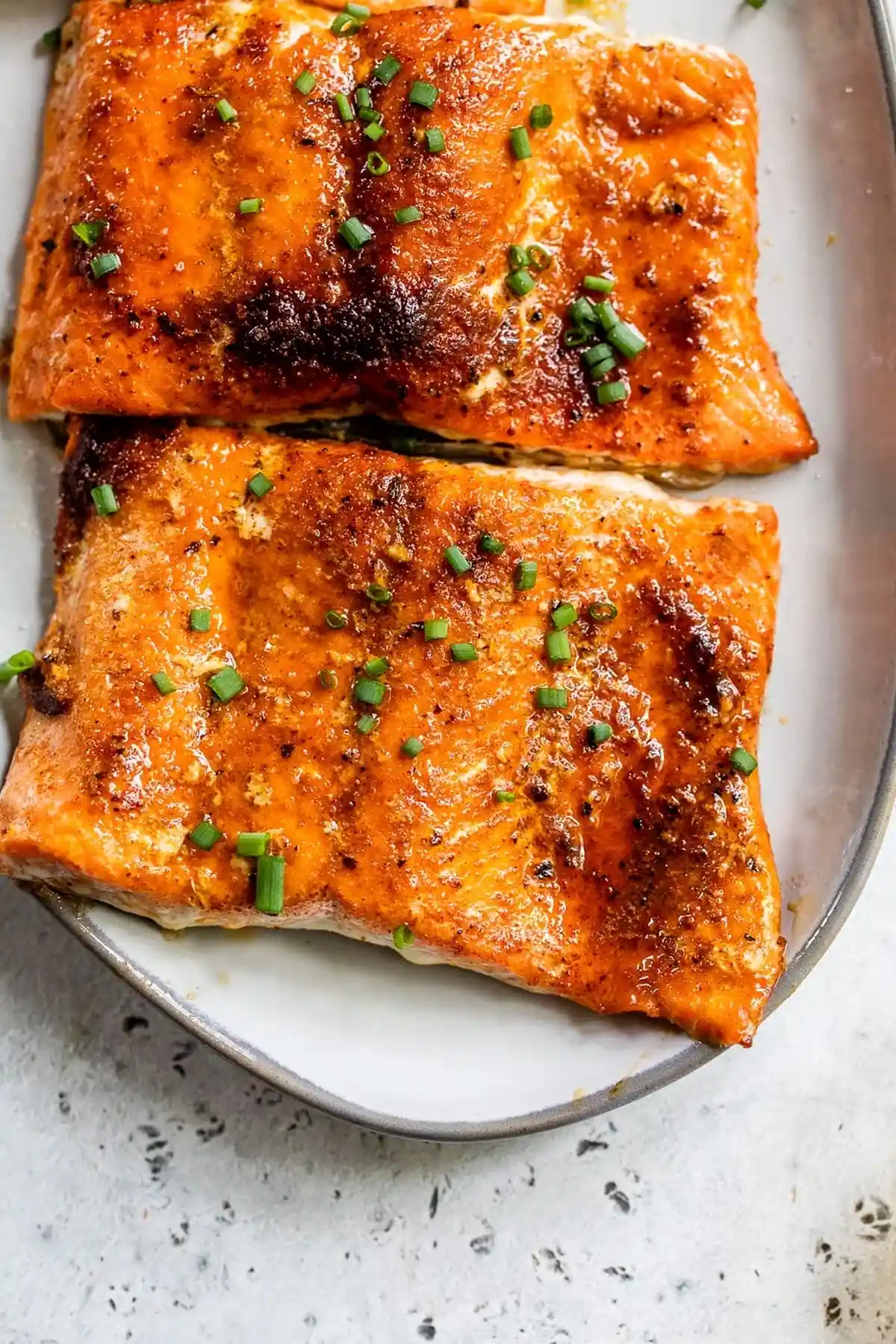
This quick oven-baked salmon combines bold Cajun flavors with a sweet honey butter glaze for a balanced finish. It takes only 20 minutes from start to finish, making it a practical option for busy weeknights. The high-heat roasting method ensures a tender interior and a flavorful crust.
List of ingredients
- 4 salmon fillets (thawed) – use wild-caught for best flavor.
- 1 tbsp olive oil – used to bind the seasoning to the fish.
- 1 1/2 tsp cajun seasoning – provides the spicy and aromatic base.
- 1/2 tsp salt – enhances the overall seasoning profile.
- 2 tbsp butter (softened) – creates the base for the sweet glaze.
- 1 tbsp honey – balances the heat of the Cajun spices.
- 1 tbsp chives (chopped) – adds a fresh, herbaceous garnish.
step-by-step instructions
- Prepare the oven and pan: Preheat your oven to 450°. Line a baking sheet with aluminum foil, leaving a 2-inch overhang on the sides, and place the salmon fillets on the foil skin-side down.
- Season the fillets: Drizzle the salmon with olive oil, then sprinkle evenly with the cajun seasoning and salt. Use your hands to press the spices firmly into the flesh, then fold the foil ends up to loosely cover the fillets.
- Bake the salmon: Place the sheet in the oven and bake for 12-15 minutes, or until the fish flakes easily with a fork. While the salmon is cooking, whisk the softened butter and honey together in a small bowl until smooth.
- Glaze and serve: Remove the salmon from the oven and immediately brush the honey butter mixture over each fillet. Sprinkle with chopped chives and serve while hot.
Professional Baking Techniques
Ensure Salmon is Fully Thawed
Always thaw frozen salmon fillets completely in the refrigerator for 24 hours before cooking. Cooking partially frozen fish leads to uneven heat distribution, resulting in overcooked edges and a raw center. Avoid thawing at room temperature to prevent bacterial growth.
Use a Meat Thermometer for Precision
While flaking is a good indicator, a digital meat thermometer provides the most accuracy. Aim for an internal temperature of 120°F to 130°F for a medium-rare to medium finish. The temperature will rise slightly as the fish rests, reaching the USDA recommended 145°F.
Avoid Overcooking the Fillets
Salmon can turn dry and rubbery very quickly at 450°F. Watch for the white albumin protein beginning to seep out of the flesh, which is a sign that the fish is nearly done. Remove the fillets from the oven as soon as they are opaque throughout the center.
Optimize the Foil Packet Method
Using a loose foil cover creates a steam-roasting effect that keeps the fish moist. Ensure the foil is not sealed airtight, as some steam needs to escape to prevent the fish from boiling rather than roasting. This method also makes cleanup effortless by containing all the oil and spices.
Ingredient Substitutions
Swap Salmon for Other Fish Species
Steelhead trout is an excellent alternative as it has a similar fat content and texture to salmon. For a leaner option, use halibut or cod, though you may need to increase the olive oil slightly to prevent drying. Adjust the baking time for thinner fillets to avoid overcooking.
Alternative Sweeteners for the Glaze
If honey is unavailable, maple syrup provides a similar viscosity and a deeper, woody sweetness. Agave nectar is another viable option for a more neutral sugar profile. All these substitutes work in a 1:1 ratio with the honey.
Replacing Butter with Plant-Based Fats
Ghee provides a nuttier flavor and a higher smoke point than standard butter. For a dairy-free version, use coconut oil or a high-quality vegan butter substitute. These alternatives maintain the richness needed to balance the spicy Cajun rub.
Create a Homemade Cajun Spice Blend
If you do not have a pre-mixed blend, combine paprika, garlic powder, onion powder, oregano, thyme, and a pinch of cayenne. Paprika provides the characteristic red color, while cayenne controls the heat level. Mix these in equal parts and adjust the salt to taste.
Flavor Variations
Add Citrus Zest for Brightness
Grate the zest of one lemon or lime over the fillets after seasoning but before baking. The acidity of the citrus cuts through the richness of the butter and honey. This addition enhances the brightness of the Cajun spices and adds a professional touch.
Increase the Heat Intensity
For those who prefer a spicier dish, add 1/4 teaspoon of crushed red pepper flakes or extra cayenne to the rub. You can also brush a small amount of Sriracha or hot honey onto the fillets before the final butter glaze. Ensure the sweetness of the honey is increased proportionally to balance the extra heat.
Incorporate Different Fresh Herbs
While chives provide a mild onion flavor, flat-leaf parsley offers a cleaner, peppery taste. Fresh cilantro is another great option, especially if you are serving the salmon with rice or beans. Chop the herbs finely and sprinkle them on immediately after glazing.
Use Smoked Paprika for Depth
Replace standard paprika in your rub with smoked paprika to mimic the flavor of a charcoal grill. This adds a depth of earthiness and a subtle wood-smoke aroma to the fillets. It is particularly effective when using the foil packet method in the oven.
Recommended Side Dishes
Hearty Grain Pairings
Spanish rice or a seasoned quinoa pilaf complements the bold Cajun flavors perfectly. The grains absorb the excess honey butter glaze that drips from the fish. For a low-carb option, cauliflower rice sautéed with garlic is a great substitute.
Fresh Vegetable Accompaniments
Roasted asparagus or sautéed spinach provides a nutritional balance to the rich salmon. You can roast asparagus on the same baking sheet as the salmon if you start them a few minutes earlier. Sautéed kale with a splash of lemon juice also pairs well with the spicy rub.
Starchy Sides for Balance
Corn fritters or a creamy mashed potato dish provide a textural contrast to the flaky fish. Sweet potato wedges roasted in the oven are another excellent choice, as their natural sweetness mirrors the honey glaze. Keep the seasoning on the sides simple to let the salmon shine.
Light Salads to Offset Richness
A vinegar-based coleslaw or a crisp kale salad adds a necessary crunch and acidity. The sharpness of the dressing helps cleanse the palate between bites of the buttery fish. Avoid overly creamy dressings that might compete with the honey butter glaze.
Storage and Reheating Guidelines
Refrigerating Leftover Salmon
Place cooked salmon fillets in an airtight glass container to prevent the fish from absorbing other fridge odors. Wrap each fillet individually in foil before placing them in the container to maintain moisture. Store in the refrigerator for up to three days.
Freezing Cooked Fillets
Wrap the cooked salmon tightly in plastic wrap and then in a layer of heavy-duty aluminum foil. Store these packages in a sealed freezer bag for up to four months. Ensure there is as little air as possible in the packaging to avoid freezer burn.
Gently Reheating in the Oven
To maintain the texture, reheat salmon in a 325°F oven for about 10 minutes. Cover the fish loosely with foil to trap moisture and prevent the edges from drying out. This method is superior to the microwave as it preserves the flakiness of the protein.
Microwave Reheating Tips
If using a microwave, use 50% power and heat the fish in 30-second bursts. Place a damp paper towel over the fillet to create a small steam chamber. Overheating in the microwave will make the salmon rubbery and cause the honey glaze to separate.
Troubleshooting Common Issues
Preventing Salmon from Sticking
Always apply olive oil to both the salmon fillet and the aluminum foil. If the fish still sticks, consider using parchment paper underneath the foil. Ensure the oil is spread evenly to create a non-stick barrier between the skin and the metal.
Fixing a Thin Glaze
If the honey butter mixture is too runny, ensure the butter is softened but not completely melted before whisking. If it separates, whisk vigorously or warm it slightly in the microwave for 5 seconds. The goal is a creamy consistency that clings to the fish.
Managing Excess Moisture in the Foil
If you find too much liquid at the bottom of the foil, avoid sealing the packet completely. Leaving a small gap allows excess steam to escape, which helps the spices roast rather than steam. Pat the salmon dry with paper towels before adding the oil and seasoning.
Frequently Asked Questions
Can I pan sear the salmon instead?
Yes, you can pan sear the fillets for a crispier exterior. Heat a skillet over medium-high heat with olive oil, sear skin-side down for 4 minutes, then flip and cook for another 3-4 minutes. Apply the honey butter glaze during the last minute of cooking.
Can I grill the salmon?
Grilling is a great option. Heat your grill to 450°-500°F and place the seasoned fillets skin-side down over direct heat for 6 to 8 minutes. Flip and cook for another 2 to 4 minutes before brushing on the honey butter glaze.
How do I know when the salmon is done cooking?
The salmon is done when the flesh changes from translucent pink to an opaque light pink. When you press the top of the fillet with a fork, the layers should separate easily. An internal temperature of 120°F to 145°F is the definitive measure.
Can I make this in an air fryer?
Yes, air frying works well for this recipe. Place the seasoned fillets in the air fryer basket at 400°F and cook for 8 to 12 minutes depending on thickness. Brush the honey butter glaze on immediately after removing them from the basket.
Print
Zesty Honey Butter Baked Cajun Salmon
- Total Time: 20 minutes
- Yield: 4 servings 1x
- Diet: General
Description
This boldly flavored Baked Cajun Salmon is an easy 15 minute weeknight meal. Seasoned in a zesty cajun seasoning and finished with sweet honey butter, each bite is so well balanced and totally satisfying!
Ingredients
- 4 salmon fillets, thawed
- 1 tbsp olive oil
- 1 1/2 tsp cajun seasoning
- 1/2 tsp salt
- 2 tbsp butter, softened
- 1 tbsp honey
- 1 tbsp chives, chopped
Instructions
- Step 1: Preheat oven to 450°. Line a baking sheet with foil, leaving a 2 inch overhang; place the salmon skin-side down on the foil.
- Step 2: Drizzle the salmon with olive oil, then sprinkle with the cajun seasoning and salt, using your hands to press the seasoning into the salmon. Fold the ends of the foil up over the salmon so the salmon is loosely covered with the foil.
- Step 3: Bake the salmon for 12-15 minutes, or until it’s easy to flake with a fork. While the salmon is baking, whisk the butter and honey together in a small bowl.
- Step 4: As soon as the salmon is done, remove it from the oven and brush it with the honey butter. Sprinkle with fresh chives and enjoy!
Notes
Storage: wrap salmon fillets in foil, then place them in a sealed container and store them in the refrigerator for 3-4 days.
- Prep Time: 5 minutes
- Cook Time: 15 minutes
- Category: Dinner
- Method: Baking
- Cuisine: American
Nutrition
- Serving Size: 1 fillet
- Calories: 341 kcal
- Sugar: 4 g
- Sodium: 416 mg
- Fat: 20 g
- Saturated Fat: 6 g
- Unsaturated Fat: 13 g
- Trans Fat: 1 g
- Carbohydrates: 5 g
- Fiber: 1 g
- Protein: 34 g
- Cholesterol: 109 mg