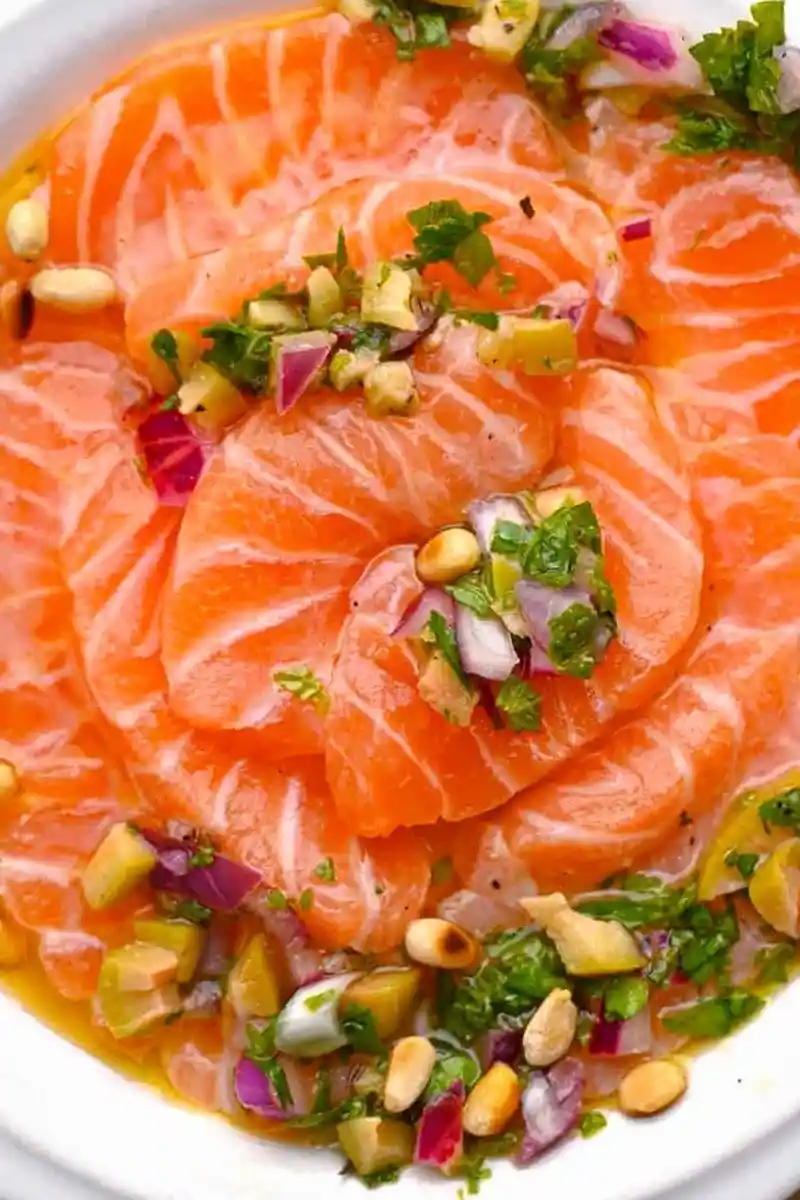
This elegant appetizer features thinly sliced raw salmon topped with a zesty Mediterranean-style dressing. It is a fast preparation that delivers a sophisticated balance of citrus, fresh herbs, and a light crunch.
List of ingredients
- 4 oz salmon, sashimi-grade (sushi-grade) – ensure it is high quality for raw consumption.
- 1 tbsp extra virgin olive oil – provides a smooth, rich base for the dressing.
- 1 tbsp lemon juice (freshly squeezed) – adds necessary acidity to brighten the fish.
- 1/2 tbsp chopped marinated green olives – introduces a salty, briny element.
- 1/2 tbsp chopped red onions – adds a sharp, crisp contrast.
- 1/2 tbsp fresh mint – provides a cooling herbal note.
- 1/2 tbsp fresh parsley – adds a clean, earthy freshness.
- salt and pepper to taste – for essential seasoning.
- 1/2 tbsp toasted pine nuts to garnish – adds a nutty crunch and visual appeal.
step-by-step instructions
- Firm the fish: Place the salmon fillet in the freezer for about 20-30 minutes. This firms up the texture, making it significantly easier to achieve clean, thin slices.
- Prepare the marinade: In a small bowl, whisk together the extra virgin olive oil, lemon juice, chopped mint leaves, parsley, olives, red onion, and lemon zest. Season the mixture with salt and pepper to taste.
- Slice and arrange: Remove the salmon from the freezer and use a very sharp knife to cut it into thin slices. Arrange these slices evenly on a serving platter.
- Marinate and chill: Drizzle the prepared marinade over the salmon slices, ensuring each piece is well coated. Place the platter in the refrigerator for approximately 5 minutes to let the flavors meld. Serve immediately.
Professional Preparation Techniques
Freezing for Precision Slicing
The primary challenge with raw salmon is its softness, which can lead to jagged edges or crushed tissue when slicing. By placing the fillet in the freezer for 20 to 30 minutes, you increase the rigidity of the muscle fibers. This allows the knife to glide through the fish without pulling or tearing the delicate flesh.
Knife Selection and Cutting Motion
A non-serrated, extremely sharp knife is required for this dish. For the best results, use a long, slicing motion—starting from the heel of the knife and pulling back toward you in one fluid stroke. Avoid a chopping or sawing motion, as this will ruin the smooth surface of the sashimi-grade slices.
Maintaining Low Temperatures
Temperature control is critical for both food safety and texture. Keep the salmon chilled until the moment it is sliced, and if possible, refrigerate your dressing bowl. Serving the crudo on a chilled plate helps maintain the firm texture of the fish and keeps the flavors crisp.
Selecting the Right Salmon
Identifying Sashimi-Grade Fish
Not all salmon is safe to eat raw. Look specifically for labels that state ‘sushi-grade’ or ‘sashimi-grade,’ which indicates the fish has been handled and frozen according to strict safety standards to eliminate parasites. Always purchase raw fish from a reputable fishmonger who can verify the sourcing and handling process.
Comparing Coho and Sockeye Varieties
Coho salmon is often preferred for crudo because it offers a balanced fat content and a firm texture. Sockeye salmon is typically leaner and has a deeper red color and a more intense flavor. Depending on your preference, the buttery richness of Coho or the bold punch of Sockeye can change the character of the dish.
Evaluating Freshness Indicators
Fresh sashimi-grade salmon should have a clean, mild scent with no strong ‘fishy’ odor. The flesh should be translucent and firm to the touch, springing back immediately when pressed. Avoid any fillets that show discoloration or have a slimy surface texture.
Alternative Topping and Flavor Variations
Incorporating Microgreens for Texture
To add a modern visual touch and a delicate peppery flavor, sprinkle a handful of microgreens over the finished dish. Pea shoots, micro-cilantro, or radish sprouts work exceptionally well. These greens provide a vertical element to the plating and a fresh, raw contrast to the marinated fish.
Experimenting with Citrus Zest
While lemon is the standard, you can vary the citrus profile by using lime or orange zest. Lime zest provides a sharper, more tropical acidity, while orange zest adds a subtle sweetness. Grate the zest directly over the platter just before serving to release the volatile aromatic oils.
Substituting Toasted Nuts
If pine nuts are unavailable, other toasted nuts can provide a similar crunch. Sliced toasted almonds, crushed pistachios, or walnuts are excellent substitutes. Ensure the nuts are toasted lightly in a dry pan until fragrant to maximize their flavor profile.
Using Herb-Infused Oils
For a more intense herbal experience, replace the standard olive oil with an infused version. Basil oil or dill oil complements salmon perfectly. To make these, blend fresh herbs with oil and strain through a coffee filter for a clear, vibrant green oil.
Adding Pickled Vegetable Accents
Pickled elements provide a sharp acidity that cuts through the fat of the salmon. Thinly sliced pickled radishes, cucumbers, or pickled red onions are ideal accompaniments. These can be placed on top of the salmon or served as a side garnish for added crunch.
Serving and Plating Suggestions
Creating Visual Plating Patterns
Presentation is key for a crudo dish. Arrange the salmon slices in a slightly overlapping shingle pattern or a circular radial design on a large flat platter. This creates an appetizing look and ensures that the dressing is distributed evenly across all slices.
Selecting Accompanying Breads
The richness of the salmon and the acidity of the dressing pair well with crusty, neutral breads. A toasted baguette slice or a piece of sourdough artisan loaf provides the necessary structure to scoop up the marinade. Lightly toast the bread with a brush of olive oil for extra flavor.
Plate Temperature Management
To keep the fish at its optimal temperature, chill your serving platter in the freezer for 10 minutes before plating. This prevents the salmon from warming up during the assembly process and ensures the dish remains refreshing throughout the meal.
Suggested Menu Pairings
Complementary Seafood Main Courses
Since crudo is a light appetizer, follow it with a main course that maintains a similar coastal theme. Grilled white fish with minimal seasoning or a citrus-based salmon pasta are excellent choices. These dishes mirror the brightness of the crudo without overwhelming the palate.
Vegetable-Based Side Dishes
Pair the salmon crudo with light, grain-based or vegetable salads. A Mediterranean quinoa salad with cucumber and feta or a chilled beet salad provides a healthy, earthy balance. These sides complement the delicate nature of the raw fish and the acidity of the dressing.
Refreshing Non-Alcoholic Beverages
Choose beverages that echo the citrus and herbal notes of the recipe. Sparkling water with a fresh squeeze of lemon or lime is a classic choice. A chilled, unsweetened iced tea or a homemade lemonade with a sprig of mint also pairs beautifully with the Mediterranean flavors.
Storage and Safety Guidelines
Raw Fish Handling Precautions
Always use separate cutting boards and knives for raw fish to avoid cross-contamination. Wash all surfaces and utensils with hot, soapy water immediately after the fish has been handled. Keep the fish refrigerated at all times until it is ready to be sliced and plated.
The Importance of Immediate Consumption
The citric acid in the lemon juice begins to ‘cook’ the proteins in the fish, a process similar to ceviche. If left to marinate for too long, the texture will change from buttery and raw to firm and opaque. To maintain the authentic crudo experience, serve the dish within minutes of adding the dressing.
Storing Prepared Marinades
If you wish to prepare the marinade in advance, store it in an airtight glass jar in the refrigerator. Shake the jar vigorously before using to re-emulsify the olive oil and lemon juice. The marinade can be kept for up to two days, though the fresh herbs are most potent when added just before serving.
Common Troubleshooting
Preventing Salmon Slices from Tearing
If your salmon slices are tearing, it is usually due to one of two factors: a dull knife or the fish being too warm. Ensure your knife is honed and the salmon has spent the full 20-30 minutes in the freezer. A firm fillet is the only way to achieve professional, thin slices.
Adjusting Overpowering Citrus Flavors
If the lemon juice is too dominant, you can balance the acidity by adding a tiny pinch of sugar or a small amount of extra olive oil. The fat in the oil coats the palate and softens the sharp edge of the citric acid, creating a more harmonious taste.
Fixing Marinade Separation
Olive oil and lemon juice naturally separate over time. To fix this, whisk the mixture vigorously or shake it in a closed container immediately before drizzling it over the fish. Using a small whisk helps create a temporary emulsion that coats the fish more evenly.
Frequently Asked Questions
Can I use frozen salmon for this recipe?
You should only use salmon that was originally flash-frozen for sushi or sashimi grade. Regular frozen fillets from the grocery store may not have been treated at temperatures low enough to ensure the removal of parasites, making them unsafe for raw consumption.
What is the difference between crudo and ceviche?
The primary difference is the duration and intensity of the acid exposure. Ceviche is marinated for a longer period, allowing the acid to ‘cook’ the fish through denaturation. Crudo is served raw or very lightly marinated, preserving the original texture and flavor of the fresh fish.
How long can the salmon stay at room temperature?
Raw fish should not remain at room temperature for more than two hours. However, for a crudo, the quality and texture degrade much faster. For the best culinary experience and safety, serve the dish immediately after the brief refrigeration period.
Print
Mediterranean Salmon Crudo
- Total Time: 10 minutes
- Yield: 2 servings 1x
- Diet: Pescetarian
Description
This Salmon Crudo is a sophisticated yet easy-to-make dish using raw thinly sliced salmon, topped with the best Mediterranean citrus and herb dressing.
Ingredients
- 4 oz sashimi-grade salmon
- 1 tbsp extra virgin olive oil
- 1 tbsp freshly squeezed lemon juice
- 1/2 tbsp chopped marinated green olives
- 1/2 tbsp chopped red onions
- 1/2 tbsp fresh mint
- 1/2 tbsp fresh parsley
- salt and pepper to taste
- 1/2 tbsp toasted pine nuts
Instructions
- Step 1: Begin by placing the salmon fillet in the freezer for about 20-30 minutes to firm it up for easier slicing.
- Step 2: In a small bowl, whisk together the extra virgin olive oil, lemon juice, chopped mint leaves, parsley, olives, and red onion, and lemon zest. Season the marinade with salt and pepper to taste.
- Step 3: Remove the salmon from the freezer and thinly slice it with a sharp knife. Arrange the slices on a serving platter.
- Step 4: Drizzle the marinade over the salmon slices, ensuring that each slice is well coated. Place the salmon crudo in the fridge and allow to marinate for about 5 minutes to enhance the taste. Enjoy it immediately.
Notes
Salmon should be purchased with a label that states ‘sushi-grade’ or ‘sashimi-grade’ to ensure top quality and safety for raw consumption. Eat immediately after pouring the dressing, as the citrus will cook the salmon quickly.
- Prep Time: 10 minutes
- Cook Time: 0 minutes
- Category: Appetizer
- Method: Raw
- Cuisine: Italian, Mediterranean
Nutrition
- Serving Size: 1 serving
- Calories: 295 kcal
- Sugar: 0.2 g
- Sodium: 115 mg
- Fat: 22 g
- Saturated Fat: 3 g
- Unsaturated Fat: 19 g
- Trans Fat: 0 g
- Carbohydrates: 1 g
- Fiber: 0.4 g
- Protein: 23 g
- Cholesterol: 62 mg