This Orzo Salad is a nutrient-dense, plant-based dish that combines pasta with fresh vegetables and a zesty vinaigrette. It is an efficient option for meal preparation and serves as a versatile side or main course.
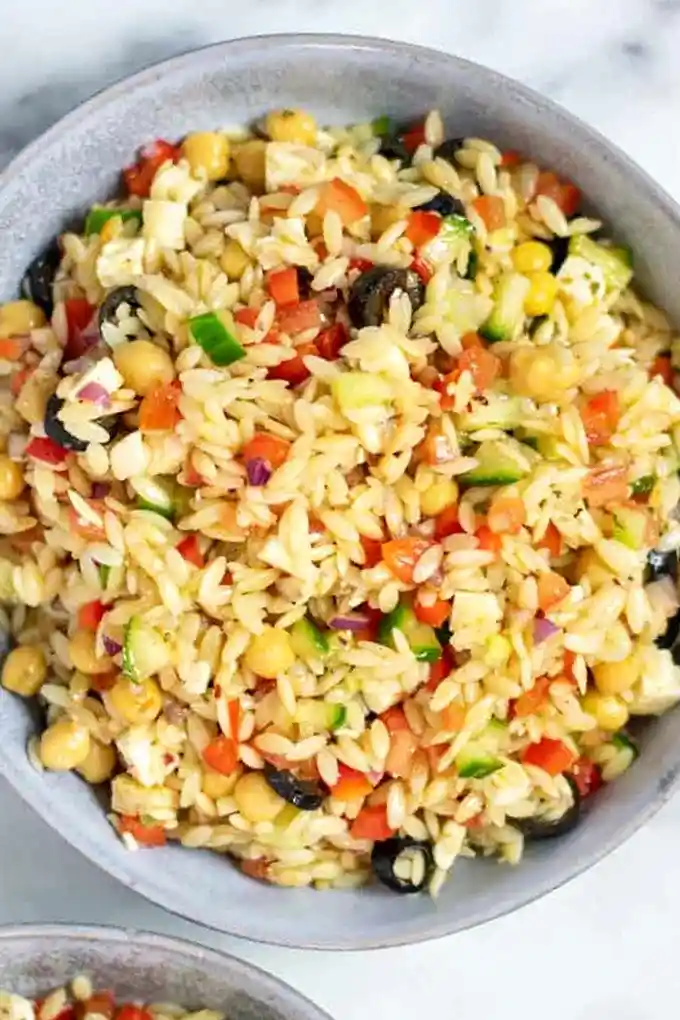
List of ingredients
- 1 cup orzo – small rice-shaped pasta.
- 1/3 cup olive oil – provides a smooth base for the dressing.
- 2 Tbs balsamic vinegar – adds acidity and a slight sweetness.
- 1/2 teaspoon cumin – adds an earthy undertone.
- 1 teaspoon oregano – provides a classic Mediterranean herbal flavor.
- 1 teaspoon smoked paprika – gives a subtle woody, smoky depth.
- 1/4 teaspoon chili flakes – introduces a mild heat.
- 2 cloves garlic, pressed – adds pungent aromatic notes.
- 1 medium red onion, finely diced – offers a crisp texture and mild bite.
- 1/2 cup black olives – provides a salty, briny contrast.
- 1 15 oz chickpeas – adds plant-based protein and heartiness.
- 1/2 cucumber, finely diced – provides freshness and a cooling crunch.
- 2 medium tomatoes, finely diced – contributes juiciness and acidity.
- 1 red bell pepper, finely diced – adds sweetness and color.
- 5 oz vegan feta, cubed – adds creaminess and a salty finish.
- salt, pepper to taste – basic seasoning for flavor balance.
step-by-step instructions
- Cook the Pasta: Boil the orzo according to the package directions. If you are using pre-cooked orzo, proceed directly to the mixing stage.
- Combine Ingredients: In a large mixing bowl, add the diced red bell peppers, diced tomatoes, diced cucumbers, drained chickpeas, finely diced red onions, pressed garlic, chili flakes, smoked paprika, cumin, black olives, cubed vegan feta, olive oil, balsamic vinegar, and the cooked orzo.
- Final Seasoning: Add a pinch of salt and black pepper according to your taste preferences. Mix all components thoroughly until the pasta is evenly coated and serve.
Expert Pasta Preparation Techniques
Cooking Orzo Al Dente
To prevent the salad from becoming mushy, cook the orzo until it is just al dente. Pasta continues to soften slightly as it absorbs the vinaigrette in the refrigerator. Undercooking by one minute ensures a better texture over several days.
Rapidly Cooling the Pasta
Immediately rinse the cooked orzo under cold running water after draining. This stops the cooking process and removes excess surface starch. Removing the starch prevents the pasta from clumping together in the bowl.
Preventing Pasta Adhesion
If you are not mixing the salad immediately, toss the cooled orzo with a teaspoon of olive oil. This creates a thin barrier that keeps the individual grains separate. This is especially useful for large-batch meal prep.
Ingredient Preparation and Selection
Optimizing Tomato Texture
Remove the watery pulp and seeds from the tomatoes before dicing them. This prevents the salad from becoming watery as it sits in the fridge. It keeps the dressing concentrated and the vegetables crisp.
Managing Red Onion Pungency
If the raw red onion flavor is too intense, soak the diced pieces in cold water for ten minutes. Drain and pat them dry before adding them to the bowl. This process removes the harsh sulfur compounds while keeping the crunch.
Preparing Vegan Feta Cubes
Cut the vegan feta into uniform small cubes to ensure an even distribution of creaminess in every bite. Using a sharp knife prevents the soft cheese from smearing. Ensure the feta is cold before cubing for cleaner edges.
Choosing the Right Cucumber
Use English or Persian cucumbers to avoid the need for peeling and seeding. These varieties have thinner skins and smaller seeds. This maintains a consistent crunch throughout the salad.
Flavor Customization and Substitutions
Using Fresh Herb Alternatives
Replace dried oregano with fresh flat-leaf parsley or mint for a brighter, more contemporary flavor profile. Fresh herbs should be folded in at the very end to prevent bruising. Use an equal volume of fresh herbs compared to the dried measurement.
Exploring Different Vinegar Options
Substitute balsamic vinegar with red wine vinegar or apple cider vinegar for a sharper, more acidic taste. Red wine vinegar provides a traditional Mediterranean profile. Apple cider vinegar adds a fruity nuance to the dressing.
Substituting the Protein Source
If chickpeas are unavailable, use cannellini beans or kidney beans for a similar texture. White beans offer a creamier mouthfeel, while kidney beans provide a firmer bite. Ensure all canned beans are thoroughly rinsed to remove excess sodium.
Adjusting the Heat Level
For a milder version, omit the chili flakes entirely or use a small amount of mild paprika. For more heat, replace the flakes with a finely diced fresh serrano pepper. Always taste the dressing before adding more spice.
Serving and Presentation Ideas
Platter Arrangement for Guests
Transfer the salad to a wide, shallow platter rather than a deep bowl. This prevents the heavier ingredients, like chickpeas and feta, from settling at the bottom. Spread the salad evenly to showcase the vibrant colors of the vegetables.
Pairing with Complementary Proteins
Serve this salad alongside grilled tofu skewers or roasted cauliflower steaks for a complete vegan meal. The acidity of the dressing cuts through the richness of grilled proteins. It also pairs well with a side of toasted pita bread.
Adding Final Garnishes
Garnish the finished dish with a sprinkle of toasted sesame seeds or a few fresh basil leaves. A light drizzle of extra virgin olive oil on top just before serving enhances the visual appeal. This adds a professional finish to the presentation.
Storage and Preservation Guidelines
Optimal Refrigerator Life
Store the salad in an airtight container in the refrigerator for up to four days. The flavors typically meld and improve after the first 24 hours. Keep the container sealed to prevent the pasta from drying out.
Selecting the Best Storage Container
Use glass containers instead of plastic to avoid flavor transfer and staining from the balsamic vinegar. Glass also maintains a more consistent internal temperature. This helps keep the vegetables crisp for a longer period.
Avoid Freezing Pasta Salads
Do not freeze this salad, as the freezing and thawing process ruins the texture of the cucumbers and tomatoes. The pasta may also become grainy. Always store fresh and consume within the recommended timeframe.
Refreshing and Reheating Advice
Adjusting Dressing Absorption
Orzo absorbs liquid over time, which can make the salad seem dry on day two or three. Stir in a tablespoon of olive oil or a splash of vinegar to restore the moisture. This refreshes the coating on the pasta grains.
Integrating Fresh Elements
Add a handful of fresh arugula or baby spinach just before serving leftovers. This re-introduces a fresh, peppery element to the dish. It compensates for any loss of crunch in the diced vegetables over time.
Temperature Control for Service
Avoid reheating this salad in a microwave, as the heat will wilt the fresh vegetables and melt the vegan feta. Serve it chilled or at room temperature. If the salad is too cold from the fridge, let it sit out for 15 minutes before eating.
Troubleshooting Common Issues
Correcting a Watery Consistency
If the salad becomes too watery, it is likely due to the salt drawing moisture out of the cucumbers and tomatoes. Carefully drain any excess liquid from the bottom of the bowl. Next time, ensure vegetables are patted dry after dicing.
Fixing a Bland Flavor Profile
If the salad tastes flat, increase the acidity by adding a small amount of lemon juice or more balsamic vinegar. A pinch of extra salt often unlocks the flavors of the cumin and paprika. Stir well to redistribute the seasonings.
Handling Overcooked Pasta
If the orzo is overcooked and soft, avoid over-mixing the salad. Gently fold the ingredients together using a spatula to prevent the pasta from breaking. Adding more crunchy vegetables can help balance the soft texture.
Frequently Asked Questions
Can I use whole wheat orzo for this recipe?
Yes, whole wheat orzo is a suitable substitute and increases the fiber content. Note that whole wheat pasta has a nuttier flavor and may require slightly more cooking time. Adjust the salt in the boiling water accordingly.
How do I keep the salad from getting soggy?
The best way to prevent sogginess is to remove the seeds from the tomatoes and the pulp from the cucumbers. Additionally, ensure the pasta is completely cooled before mixing it with the oil and vinegar. This prevents the pasta from absorbing too much liquid too quickly.
Can I make this recipe without vegan feta?
Yes, the salad remains delicious without feta. You can replace it with diced avocado for creaminess or toasted pine nuts for a different type of richness. Simply omit the feta and adjust the salt slightly to compensate for the loss of saltiness.
Is it possible to make this recipe gluten-free?
To make this gluten-free, replace the wheat-based orzo with a gluten-free orzo alternative made from corn or rice. Follow the specific cooking instructions on the gluten-free pasta package, as cooking times vary significantly. Rinse gluten-free pasta more thoroughly to remove excess starch.
Print
Orzo Salad
- Total Time: 15 minutes
- Yield: 4 servings 1x
- Diet: Vegan
Description
Orzo Salad is an everyday salad recipe made with chickpeas, tomatoes, olives, and aromatic seasonings. Super easy to make and ready in 15 minutes, it is a fresh and satisfying dish perfect for any day.
Ingredients
- 1 cup orzo
- 1/3 cup olive oil
- 2 Tbs balsamic vinegar
- 1/2 teaspoon cumin
- 1 teaspoon oregano
- 1 teaspoon smoked paprika
- 1/4 teaspoon chili flakes
- 2 cloves garlic, pressed
- 1 medium red onion, finely diced
- 1/2 cup black olives
- 1 15 oz can chickpeas
- 1/2 cucumber, finely diced
- 2 medium tomatoes, finely diced
- 1 red bell pepper, finely diced
- 5 oz vegan feta, cubed
- salt, pepper to taste
Instructions
- Cook: Cook orzo according to the package directions.
- Combine: In a large mixing bowl, add bell peppers, tomatoes, cucumbers, chickpeas, red onions, garlic, chili flakes, smoked paprika, cumin, olives, feta, olive oil, balsamic vinegar, and orzo.
- Season: Season with a pinch of salt and pepper, mix well, and enjoy.
Notes
Store the Orzo Salad in the fridge for up to 4 days. You can substitute oregano with parsley or mint. For better texture, remove the pulp from the tomatoes before dicing to prevent the salad from becoming mushy.
- Prep Time: 5 minutes
- Cook Time: 10 minutes
- Category: Salad Recipes
- Method: Mixing
- Cuisine: American
Nutrition
- Serving Size: 1.5 cups
- Calories: 371 kcal
- Sugar: 2 g
- Sodium: 345 mg
- Fat: 11 g
- Saturated Fat: 2 g
- Unsaturated Fat: 9 g
- Trans Fat: 0 g
- Carbohydrates: 45 g
- Fiber: 11 g
- Protein: 19 g
- Cholesterol: 0 mg