This one-pan meal combines tender chicken breasts with a variety of fresh vegetables and pasta. It is a fast dinner option that requires minimal cleanup while delivering a rich, tangy flavor profile.
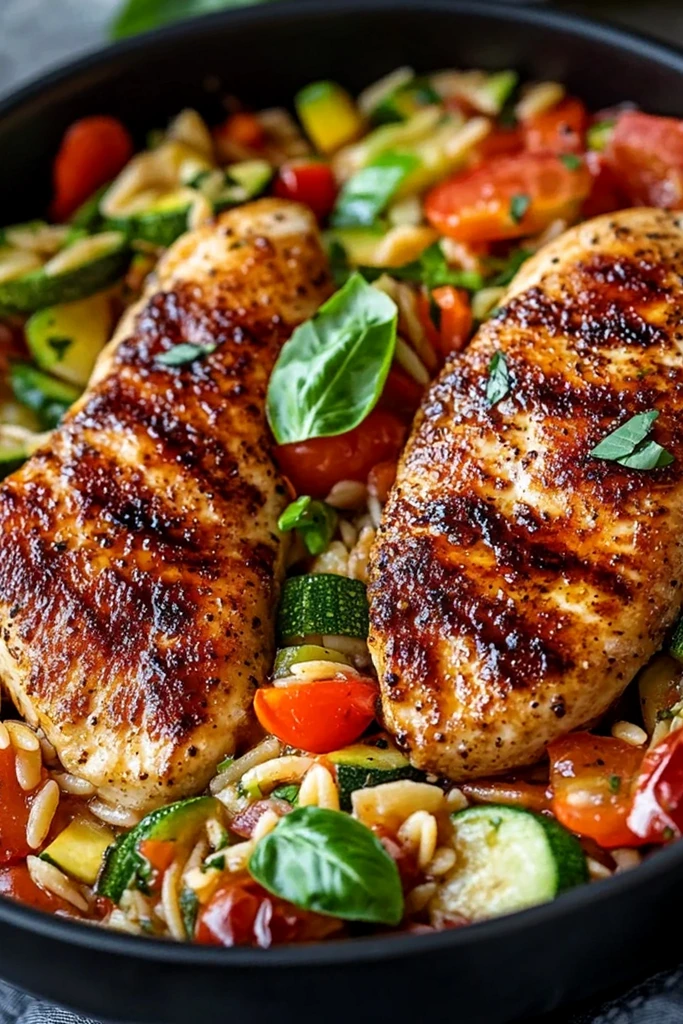
List of ingredients
- 4 boneless, skinless chicken breasts – lean protein that absorbs balsamic flavors.
- 1 cup orzo pasta – small rice-shaped pasta for a hearty texture.
- 2 cups chicken broth – provides a savory liquid base for cooking the pasta.
- 1 cup cherry tomatoes, halved – adds a sweet and acidic burst to the dish.
- 1 zucchini, diced – provides a fresh, mild flavor and soft texture.
- 1 bell pepper, diced – brings sweetness and vibrant color.
- 1 red onion, chopped – adds a mild sharpness and depth of flavor.
- 3 tablespoons balsamic vinegar – the primary tangy and sweet flavoring agent.
- 2 tablespoons olive oil – used for searing chicken and sautéing vegetables.
- 2 cloves garlic, minced – provides an aromatic base for the vegetables.
- 1 teaspoon dried oregano – adds an earthy, herbaceous note.
- Salt and black pepper, to taste – essential for enhancing all other flavors.
- Fresh basil, chopped – used as a fresh, aromatic garnish.
step-by-step instructions
- Sear the Chicken: Heat the olive oil in a large skillet over medium heat. Season the chicken breasts with oregano, salt, and black pepper, then cook for 5–7 minutes on each side until golden brown and cooked through. Transfer the chicken to a plate and keep it warm.
- Sauté the Vegetables: In the same skillet, add the minced garlic, cherry tomatoes, diced zucchini, bell pepper, and chopped red onion. Sauté for 4–5 minutes until the vegetables soften slightly.
- Cook the Orzo: Stir the orzo pasta into the skillet and pour in the chicken broth. Bring the mixture to a boil, then reduce the heat to low, cover, and simmer for 10 minutes or until the orzo is tender and the liquid is mostly absorbed.
- Combine and Glaze: Return the cooked chicken to the skillet and drizzle the balsamic vinegar over the mixture. Let everything simmer together for 2–3 minutes to allow the flavors to blend and the glaze to thicken.
- Garnish and Serve: Sprinkle the chopped fresh basil over the dish and serve immediately while hot.
Cooking Techniques for Optimal Results
Searing the Chicken for Maximum Flavor
To achieve a deep golden crust, pat the chicken breasts dry with a paper towel before seasoning. This removes surface moisture that would otherwise steam the meat instead of searing it. Heat the olive oil until it just begins to shimmer before adding the chicken to the pan. Avoid overcrowding the skillet to ensure the temperature stays high enough for a proper brown sear.
Managing Vegetable Heat and Texture
Maintain a medium heat when sautéing the vegetables to ensure they soften without browning too quickly. Adding the garlic later in the process prevents it from burning, which can impart a bitter taste to the overall dish. Stir the vegetables frequently to ensure even cooking and to prevent the cherry tomatoes from bursting too early. This keeps the colors vibrant and the textures distinct.
Monitoring Orzo Texture and Absorption
Simmer the orzo on low heat and stir occasionally to prevent the pasta from sticking to the bottom of the pan. The orzo is done when it has absorbed most of the chicken broth and reached a tender but firm consistency. If the liquid evaporates too quickly before the pasta is cooked, add an extra quarter-cup of broth. Avoid overcooking the orzo to prevent it from becoming mushy or losing its shape.
Timing the Addition of Fresh Herbs
Add the fresh basil only after the heat has been turned off or right before serving. High heat can cause fresh basil to wilt quickly and lose its bright, aromatic oils. This timing ensures the garnish provides a fresh contrast to the rich balsamic glaze. If you are using parsley as a substitute, the same timing rule applies to maintain the herb’s color.
Ingredient Substitutions and Adaptations
Replacing Chicken with Seafood Options
For a lighter version, you can use shrimp or scallops instead of chicken breasts. Since seafood cooks much faster, sear the shrimp for only 2 minutes per side and remove them from the pan. Return the seafood to the skillet during the final balsamic simmer for 1-2 minutes. This prevents the protein from becoming rubbery or overcooked.
Using Quinoa as a Gluten-Free Alternative
If you prefer a gluten-free option, replace the orzo with quinoa. Rinse the quinoa thoroughly before adding it to the skillet to remove any natural bitterness. Adjust the chicken broth ratio slightly, as quinoa may require slightly more liquid depending on the brand. Simmer the quinoa for about 15 minutes instead of 10 to ensure the grains are fully fluffy.
Substituting Fresh Zucchini and Squash
Yellow squash is an excellent direct substitute for zucchini and provides a similar texture. If you prefer a heartier vegetable, diced eggplant can work well, though it may require an extra minute of sautéing. To avoid eggplant absorbing too much oil, salt the cubes and let them sit for ten minutes before rinsing and cooking. This ensures the vegetable remains firm during the simmering process.
Alternative Vinegar Profiles
While balsamic vinegar is traditional for its sweet-tart balance, apple cider vinegar can provide a fruitier tang. Red wine vinegar offers a sharper, more acidic profile that cuts through the richness of the chicken. If using these alternatives, you may want to add a pinch of brown sugar to mimic the natural sweetness of balsamic. Always drizzle the vinegar at the end to preserve the acidity.
Serving and Pairing Suggestions
Pairing with a Refreshing Side Salad
A crisp green salad dressed in a light lemon vinaigrette provides a refreshing contrast to the savory balsamic glaze. Use a mix of arugula and baby spinach to add a peppery note that complements the oregano in the chicken. Adding sliced cucumbers and radishes to the salad adds a crunchy texture. This combination balances the meal and makes it feel more complete.
Adding Warm Garlic Bread
Serve this dish with toasted baguette slices rubbed with fresh garlic and butter. The crusty bread is perfect for soaking up the remaining balsamic chicken broth left in the skillet. To make it, brush sliced bread with melted butter and garlic powder, then broil for 2 minutes. This adds a satisfying crunch and a rich, buttery flavor to the dinner.
Enhancing with Cheese Toppings
For added richness, sprinkle a tablespoon of crumbled feta or grated Parmesan over the dish before serving. Feta adds a salty, creamy tang that pairs exceptionally well with the balsamic vinegar and cherry tomatoes. Parmesan provides a nutty depth that enhances the savory chicken broth. Avoid stirring the cheese in too early to prevent it from disappearing into the sauce.
Creative Fresh Garnish Ideas
Beyond basil, you can garnish the dish with thinly sliced spring onions or fresh chives for a mild onion flavor. A squeeze of fresh lemon juice over the top just before eating can brighten the heavy flavors. For a bit of heat, a sprinkle of red pepper flakes adds a subtle spicy kick. These additions allow you to customize the dish based on individual taste preferences.
Storage and Reheating Guidelines
Refrigeration Methods for Leftovers
Store any remaining chicken and orzo in an airtight glass container in the refrigerator. This dish stays fresh and flavorful for up to three days when kept at the correct temperature. To prevent the orzo from absorbing all the sauce, drizzle a small amount of olive oil over the top before sealing. Ensure the food is cooled slightly before placing it in the fridge to avoid condensation.
Guidelines for Freezing
It is generally not recommended to freeze this dish because the orzo pasta can become mushy upon thawing. The high starch content of the pasta breaks down during the freezing and thawing process, ruining the texture. If you must freeze it, undercook the orzo slightly during the initial preparation. This ensures it doesn’t overcook when you eventually reheat it.
Stovetop Reheating for Best Texture
The best way to reheat this meal is in a skillet over medium-low heat. Add a splash of chicken broth or water to the pan to loosen the pasta and restore the saucy consistency. Cover the pan with a lid for a few minutes to steam the chicken and vegetables. This method prevents the chicken from drying out and keeps the vegetables tender.
Microwave Reheating Tips
If using a microwave, place the portions in a microwave-safe dish and add a teaspoon of water. Cover the dish with a damp paper towel to trap steam and prevent the chicken from becoming tough. Heat in 30-second intervals, stirring in between, until the center is hot. This prevents hot spots and ensures the orzo is heated evenly throughout.
Meal Preparation and Efficiency
Chopping Vegetables in Advance
To save time during the cooking process, practice mise en place by chopping all vegetables an hour before you start. Store the diced zucchini, bell peppers, and onions in separate containers or piles on a cutting board. Halving the cherry tomatoes ahead of time prevents the sauce from splashing while you are trying to sauté. This organization allows you to focus on the heat management of the skillet.
Portioning for Weekly Meal Prep
Divide the finished meal into four equal portions using leak-proof containers for a week of lunches. Allow the dish to cool to room temperature before closing the lids to maintain the quality of the vegetables. Since this is a one-pan meal, it is highly efficient for those who want to avoid cooking daily. Label each container with the date to ensure freshness.
Pre-mixing the Seasoning
You can create a dry rub by mixing the dried oregano, salt, and black pepper in a small bowl before you begin. This ensures an even distribution of flavor across all four chicken breasts. Applying the seasoning generously to both sides of the meat helps create a more consistent sear. This small step eliminates the need to reach for multiple spice jars while the oil is heating.
Preparing the Liquid Base
Measure out the chicken broth and balsamic vinegar into separate liquid measuring cups before starting the stove. This prevents you from having to measure while the orzo is boiling, which could lead to overcooking the pasta. Having the broth ready ensures a seamless transition from sautéing vegetables to simmering the pasta. It also allows you to quickly add extra broth if the pasta seems too dry.
Troubleshooting Common Issues
Fixing Dry Orzo Pasta
If the orzo has absorbed all the liquid but remains firm or undercooked, add chicken broth in small increments. Add about two to three tablespoons at a time and stir gently over low heat. Keep the skillet covered to allow the steam to penetrate the pasta grains. This restores the creaminess of the sauce without making the dish watery.
Preventing Mushy Vegetables
To prevent the zucchini and peppers from becoming too soft, avoid over-sautéing them before adding the orzo. Remove the vegetables from the pan if they look perfectly tender just before the simmering step. Alternatively, add heartier vegetables like carrots earlier and softer vegetables like zucchini later. This ensures every vegetable maintains a slight bite.
Balancing Overly Tart Flavors
If the balsamic vinegar makes the dish taste too acidic or sharp, balance it with a small amount of sweetness. Stir in a pinch of brown sugar or a teaspoon of honey during the final simmer. A small pat of unsalted butter can also mellow out the acidity and add a velvety texture to the sauce. Taste the dish after each addition to find the right balance.
Avoiding Burnt Garlic
Garlic burns quickly and can make the entire skillet taste bitter. To prevent this, add the minced garlic during the last 60 seconds of sautéing the other vegetables. If the pan is too hot, push the vegetables to the side and add a tiny bit more oil specifically for the garlic. This ensures the garlic becomes fragrant and golden without scorching.
Frequently Asked Questions
Can I use frozen vegetables instead of fresh?
Yes, frozen vegetable mixes can be used as a convenient alternative. Add them to the skillet during the sautéing step and cook until they are heated through and any excess moisture has evaporated. Be mindful that frozen vegetables may release more water, so you might need to simmer the orzo for a minute or two longer to achieve the desired consistency.
Is this recipe suitable for meal prep?
This recipe is excellent for meal prep because it combines protein, carbohydrates, and vegetables in one dish. It holds up well in the refrigerator for several days and is easy to reheat without losing significant flavor. For the best results, store the fresh basil separately and add it to the portion just before eating.
Can I use a different pasta instead of orzo?
You can use other small pasta shapes such as ditalini or acini di pepe. However, you will need to adjust the cooking time based on the specific pasta’s instructions. Since different pastas absorb liquid at different rates, keep an eye on the chicken broth levels. If the pasta is larger, you may need to increase the amount of broth used.
How can I make this dish more filling?
To increase the heartiness of the meal, you can add a can of drained chickpeas or white cannellini beans. Stir these in along with the orzo to add extra protein and fiber. You can also increase the amount of chicken or serve the dish alongside a piece of crusty garlic bread to make it a more substantial dinner.
Print
Savory Balsamic Chicken and Vegetable Orzo Skillet
- Total Time: 35 minutes
- Yield: 4 servings 1x
- Diet: Low Calorie
Description
A quick and delicious recipe for balsamic chicken served with veggie orzo.
Ingredients
- 4 boneless, skinless chicken breasts
- 1 cup orzo pasta
- 2 cups chicken broth
- 1 cup cherry tomatoes, halved
- 1 zucchini, diced
- 1 bell pepper, diced
- 1 red onion, chopped
- 3 tablespoons balsamic vinegar
- 2 tablespoons olive oil
- 2 cloves garlic, minced
- 1 teaspoon dried oregano
- Salt and black pepper, to taste
- Fresh basil, chopped (for garnish)
Instructions
- Step 1: In a large skillet, heat the olive oil over medium heat. Season the chicken breasts with oregano, salt, and black pepper.
- Step 2: Cook the chicken for 5–7 minutes on each side, until golden brown and cooked through. Transfer to a plate and keep warm.
- Step 3: Using the same skillet, add the garlic, cherry tomatoes, zucchini, bell pepper, and red onion. Sauté for 4–5 minutes until the vegetables soften.
- Step 4: Stir in the orzo and pour in the chicken broth. Bring to a boil, then reduce heat to low. Cover and simmer for 10 minutes, or until the orzo is tender and most of the liquid is absorbed.
- Step 5: Return the cooked chicken to the skillet and drizzle with balsamic vinegar. Let everything simmer together for 2–3 minutes to allow the flavors to blend.
- Step 6: Garnish with fresh basil and serve hot.
Notes
Feel free to add other vegetables based on your preference. This dish can be made ahead and reheated for a quick meal.
- Prep Time: 10 minutes
- Cook Time: 25 minutes
- Category: Main Course
- Method: Skillet
- Cuisine: Italian
Nutrition
- Serving Size: 1 serving
- Calories: 400 kcal
- Sugar: 3 g
- Sodium: 600 mg
- Fat: 10 g
- Saturated Fat: 1.5 g
- Unsaturated Fat: 8 g
- Trans Fat: 0 g
- Carbohydrates: 50 g
- Fiber: 3 g
- Protein: 30 g
- Cholesterol: 70 mg