This refreshing dish combines the crunch of a traditional coleslaw with the heartiness of small pasta. It is a versatile side dish that works well for potlucks, barbecues, or a light summer lunch.
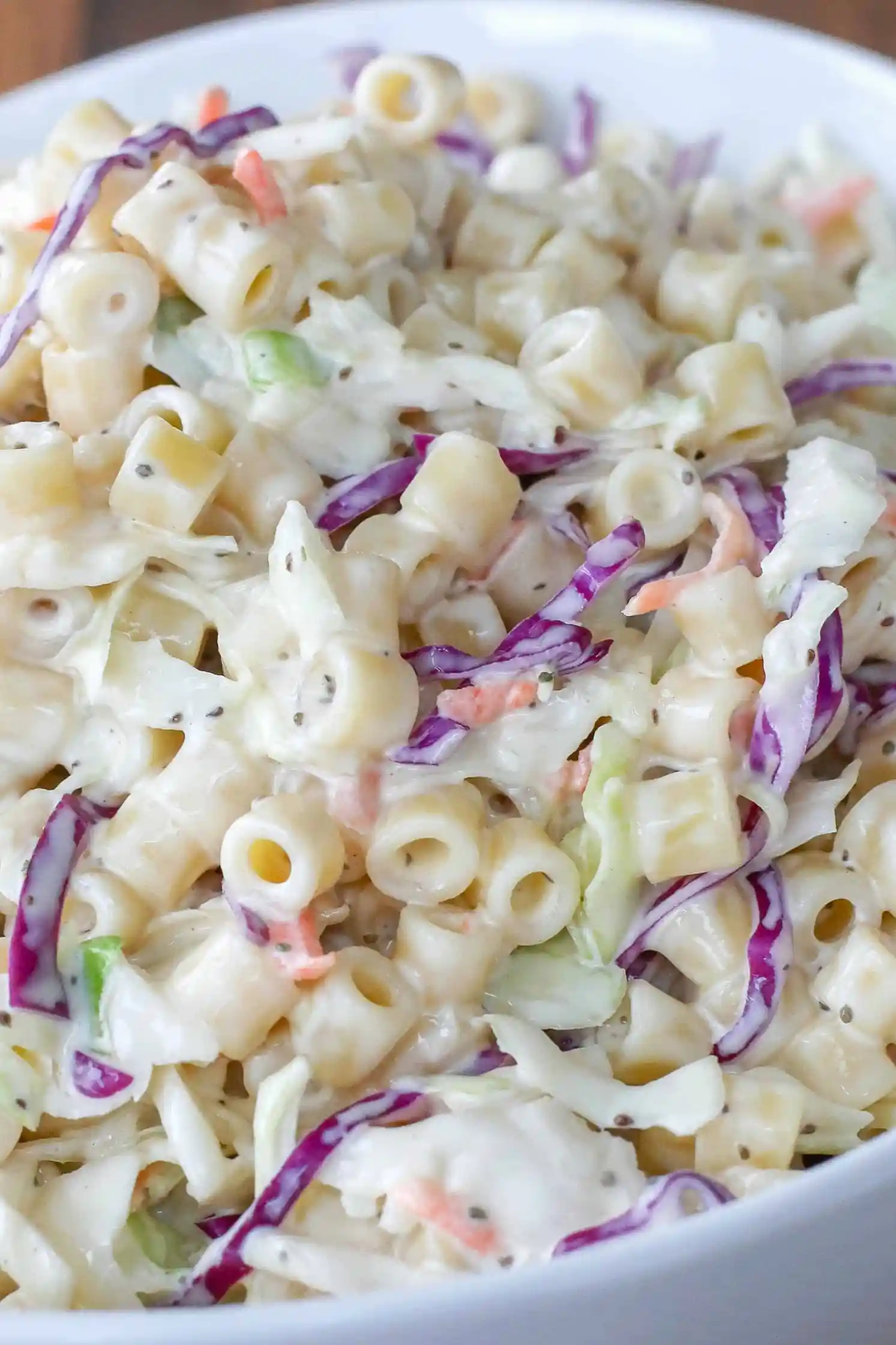
List of ingredients
- 16 ounces ditalini or salad pasta – any small shape works well for consistent coating.
- 1 1/2 cup mayonnaise – provides the creamy base for the dressing.
- 3 tablespoons dijon mustard – adds a sharp, tangy depth.
- 3 tablespoons apple cider vinegar – provides a bright acidity.
- 1/4 cup sugar – balances the vinegar and mustard.
- 1 teaspoon kosher salt – enhances all the flavors.
- 1 teaspoon granulated onion or onion powder – adds a subtle savory note.
- 1 tablespoon celery seeds – provides the classic coleslaw flavor profile.
- 1 16-ounce bag of coleslaw mix – a blend of shredded cabbage and carrots.
step-by-step instructions
- Prepare the pasta: Cook the pasta according to the package directions, drain it thoroughly, and rinse with cold water to stop the cooking process and remove excess starch. Set the pasta aside to cool completely.
- Create the dressing: In a large mixing bowl, stir together the mayonnaise, dijon mustard, apple cider vinegar, sugar, salt, onion powder, and celery seeds until the mixture is smooth and well combined.
- Combine pasta and sauce: Add the cooled pasta to the bowl with the dressing and stir well to ensure every piece of pasta is evenly coated.
- Add the vegetables: Fold in the coleslaw mix and toss the salad thoroughly until the cabbage and carrots are fully integrated with the pasta and dressing.
- Finish and serve: Serve the salad immediately or place it in the refrigerator until you are ready to eat. Give the salad another quick toss before serving to redistribute the dressing.
Pasta Selection and Preparation
Choosing the Ideal Pasta Shape
Ditalini is recommended because its small, tubular shape allows the creamy dressing to coat the surface effectively while remaining bite-sized. If ditalini is unavailable, rotini or small macaroni are excellent alternatives that hold the dressing well in their spirals and curves.
The Importance of Cold Rinsing
Rinsing the pasta with cold water immediately after draining is a critical step for cold salads. This process removes the surface starch that would otherwise make the pasta stick together in a clump and prevents it from continuing to cook through residual heat.
Cooking for Optimal Texture
Aim for a firm al dente texture when boiling the pasta. Since the pasta will sit in an acidic dressing, it will soften slightly over time, so slightly undercooking it ensures the salad maintains a pleasant chew rather than becoming mushy.
Dressing Customization and Flavor Balance
Adjusting the Sweetness and Acidity
The balance between the sugar and apple cider vinegar creates the signature tangy-sweet profile. If you prefer a more savory salad, reduce the sugar to 2 tablespoons, or increase the vinegar for a sharper, more vinegary taste.
Enhancing the Creamy Base
While mayonnaise provides the standard richness, you can replace a portion of it with plain Greek yogurt or sour cream for a lighter feel. These substitutions add an extra layer of tanginess while slightly reducing the overall fat content of the dish.
Adding a Spicy Element
To introduce some heat to the salad, stir in a teaspoon of sriracha, a pinch of cayenne pepper, or some diced jalapeños. This contrast in flavor cuts through the richness of the mayonnaise and adds complexity to the overall taste.
Vegetable Variations and Add-ins
Preparing Fresh Cabbage and Carrots
If you do not have a pre-packaged coleslaw mix, you can shred a head of green cabbage and grate two large carrots. Use a mandoline or a food processor to achieve the thin, consistent strips necessary for a professional texture.
Integrating Colorful Bell Peppers
Adding finely diced red, orange, or yellow bell peppers introduces a vibrant color and a sweet, crisp snap. Dice the peppers very small to match the size of the ditalini pasta for a more uniform eating experience.
Adding Red Onion or Green Onions
For a more pungent flavor, stir in some thinly sliced red onion or chopped green onions. Soaking sliced red onions in cold water for ten minutes before adding them can remove some of the harsh bite while keeping the crunch.
Incorporating Sweet Dried Fruits
Adding a handful of dried cranberries or golden raisins provides bursts of sweetness that complement the celery seeds and vinegar. This variation transforms the dish into a more complex salad suitable for autumn gatherings.
Serving and Pairing Recommendations
Complementing Grilled Proteins
This salad pairs exceptionally well with grilled proteins like lemon-herb chicken, roasted turkey, or grilled fish fillets. The acidity of the dressing acts as a palate cleanser between bites of rich, smoky meat.
Using the Salad as a Sandwich Topper
Because of its creamy consistency and crunch, this pasta salad can be used as a topping for sandwiches or burgers. Spoon it onto a toasted bun to add moisture and texture to a grilled chicken sandwich.
Serving at Outdoor Events
When serving at a picnic or BBQ, keep the salad in a chilled bowl nested inside a larger bowl of ice. This ensures the mayonnaise remains at a safe temperature and the cabbage stays crisp throughout the event.
Storage and Freshness Guidelines
Managing Dressing Absorption
Pasta naturally absorbs liquid over time, which can leave the salad looking dry after a few hours in the fridge. To prevent this, save a small portion of the dressing or add a tablespoon of water or vinegar just before serving to loosen the sauce.
Optimal Refrigeration Timeline
This salad is best consumed within three to five days when stored in the refrigerator. The cabbage will gradually soften as it marinates in the dressing, so eat it sooner if you prefer a maximum crunch.
Selecting the Right Storage Container
Use an airtight glass or BPA-free plastic container to prevent the salad from absorbing other odors in the refrigerator. Pressing a piece of parchment paper directly onto the surface of the salad can also help prevent oxidation.
Refreshing and Maintaining the Salad
Avoiding the Use of Heat
This dish is designed to be served cold, and reheating it will cause the mayonnaise to break and the cabbage to wilt. Never heat this salad; if it is too cold, let it sit at room temperature for ten minutes before serving.
Revitalizing Dry Pasta
If the salad has sat overnight and the pasta has absorbed the sauce, do not add more mayonnaise, as it can become overly heavy. Instead, stir in a splash of apple cider vinegar or a teaspoon of lemon juice to brighten the flavors and loosen the texture.
Troubleshooting Common Issues
Preventing a Watery Consistency
If the salad becomes watery, it is usually because the cabbage has released its moisture. To avoid this, you can toss the coleslaw mix with a pinch of salt in a colander, let it drain for 30 minutes, and pat it dry before adding it to the pasta.
Correcting Overly Sweet Flavors
If the dressing tastes too sweet, increase the amount of dijon mustard or add an extra teaspoon of apple cider vinegar. The acidity and bitterness of the mustard will neutralize the excess sugar.
Keeping the Cabbage Crisp
To ensure the cabbage remains very crunchy for an event, prepare the dressing and cook the pasta in advance. Combine the pasta and dressing, but wait to fold in the coleslaw mix until 30 minutes before serving.
Frequently Asked Questions
Can I make this salad dairy-free?
Yes, you can make this salad dairy-free by using a plant-based mayonnaise. Since the other ingredients are naturally dairy-free, this simple swap makes the recipe suitable for those avoiding dairy products.
How long does it stay fresh in the fridge?
The salad remains fresh and safe to eat for up to five days. However, the texture of the cabbage is most satisfying within the first 48 hours after preparation.
Which vinegar is the best substitute for apple cider vinegar?
White distilled vinegar is the best substitute for a sharper taste, while rice vinegar offers a milder, slightly sweeter alternative. Avoid using balsamic vinegar, as its dark color and strong flavor will overwhelm the salad.
Can I use a different pasta if I don’t have ditalini?
Absolutely. Any small pasta such as orzo, shells, or macaroni will work. Just ensure the pasta is small enough to be balanced with the shredded cabbage and carrots.
Is it possible to freeze this pasta salad?
No, this salad cannot be frozen. The mayonnaise-based dressing will separate and the cabbage will lose its structure and become mushy upon thawing.
Print
Creamy Coleslaw Pasta Salad
- Total Time: 25 minutes
- Yield: 12 servings 1x
- Diet: General
Description
Tangy, slightly sweet dressing is tossed with crisp cabbage and bite-size pasta to make this unexpected and delicious pasta salad.
Ingredients
- 16 ounces ditalini or salad pasta
- 1 1/2 cup mayonnaise
- 3 tablespoons dijon mustard
- 3 tablespoons apple cider vinegar
- 1/4 cup sugar
- 1 teaspoon kosher salt
- 1 teaspoon granulated onion or onion powder
- 1 tablespoon celery seeds
- 1 16-ounce bag of coleslaw mix
Instructions
- Step 1: Cook the pasta according to package directions, drain and rinse with cold water. Set aside.
- Step 2: In a large bowl, stir together the mayonnaise, mustard, vinegar, sugar, salt, onion, and celery seeds.
- Step 3: Add the pasta to the bowl and stir well to coat.
- Step 4: Add the coleslaw mix and toss to combine thoroughly.
- Step 5: Serve immediately or refrigerate until ready to serve. Toss again before serving.
Notes
If making this salad more than a few hours in advance, the pasta will absorb more of the sauce. To keep it creamy, store the dressing separately and toss just before serving.
- Prep Time: 15 minutes
- Cook Time: 10 minutes
- Category: Salad
- Method: Mixing
- Cuisine: American
Nutrition
- Serving Size: 1 serving
- Calories: 363 kcal
- Sugar: 7 g
- Sodium: 425 mg
- Fat: 22 g
- Saturated Fat: 3 g
- Unsaturated Fat: 19 g
- Trans Fat: 0 g
- Carbohydrates: 35 g
- Fiber: 2 g
- Protein: 6 g
- Cholesterol: 12 mg