This creamy tuna pasta salad is an ideal choice for a light lunch or a refreshing summer dinner. It combines protein and vegetables in a simple, chilled preparation that is easy to assemble.
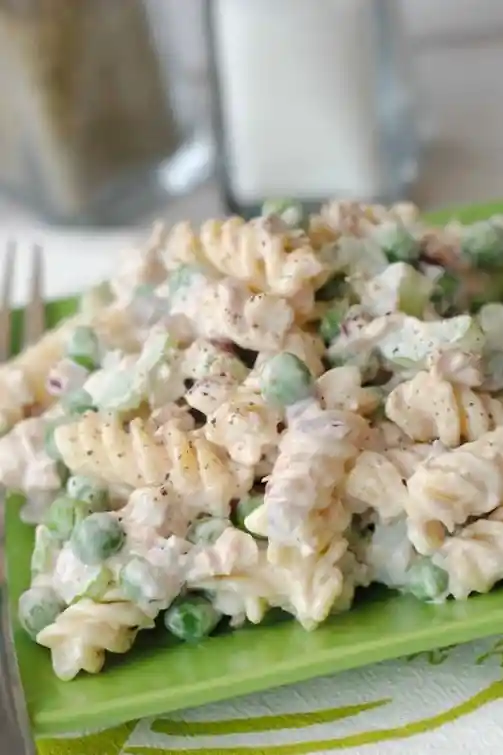
List of ingredients
- 12 oz. rotini or other small shell pasta noodles – provides a sturdy base that holds the dressing.
- 2 – 5 oz. cans tuna in water – ensure they are drained well to prevent excess moisture.
- 2 medium celery stalks – sliced thin for a refreshing crunch.
- 1 small red onion – diced finely to add a sharp, savory flavor.
- 15 oz. can sweet peas – well drained to maintain the texture.
- 1 cup mayonnaise – creates a rich and creamy binding agent.
- 1 Tbsp lemon juice – adds a bright acidity to balance the richness.
- Salt and pepper to taste – essential for seasoning the overall dish.
step-by-step instructions
- Cook the pasta: Bring a large pot of water to a boil. Add the 12 oz of uncooked rotini noodles and boil for about 8-9 minutes. Drain the noodles and rinse them immediately with cool water to stop the cooking process and prevent them from becoming mushy.
- Combine ingredients: Once the noodles have cooled completely, transfer them into a large mixing bowl. Add the drained tuna, sliced celery, diced red onion, drained peas, mayonnaise, lemon juice, salt, and pepper.
- Mix the salad: Gently stir all the components together until they are well combined and the pasta is evenly coated in the dressing.
- Chill for flavor: Cover the bowl and place the salad in the refrigerator to cool for at least one hour. This step allows the flavors to meld and integrate.
- Serve: Dish the salad out as a light main course, a side dish, or transport it to a summer gathering.
Optimal Preparation Techniques
Selecting the Best Pasta Shape
Rotini or small shell pasta are the best choices because their spirals and hollow centers trap the mayonnaise and small vegetable pieces. This ensures that every bite contains a balanced mix of flavors and dressing. Avoid using long noodles like spaghetti, as they are difficult to mix and serve in a salad format.
Managing the Pasta Cooking Time
Always aim for an al dente texture by following the lower end of the recommended boiling time. Overcooked noodles will break apart or turn mushy during the mixing and chilling process. Firm pasta maintains its structure and provides a better contrast to the creamy tuna mixture.
Rinsing Noodles for Better Texture
Rinsing the cooked pasta under cool running water is a critical step for cold salads. This removes excess surface starch, which prevents the noodles from sticking together in a clump. It also immediately lowers the temperature, ensuring the mayonnaise does not melt or separate when mixed in.
Ensuring Tuna is Fully Drained
Use a fine-mesh strainer or press the tuna firmly against the lid of the can to remove as much water as possible. Excess liquid from the tuna will dilute the dressing and make the salad watery over time. Dry tuna allows the mayonnaise and lemon juice to adhere better to the pasta.
Ingredient Substitutions and Swaps
Substituting Mayonnaise with Greek Yogurt
For a tangier and lower-calorie alternative, you can replace the mayonnaise with plain Greek yogurt. Use a 1:1 ratio to maintain the same consistency and creaminess. Note that Greek yogurt has a more pronounced acidity, so you may want to reduce the amount of lemon juice used.
Using Sandwich Spread as a Dressing
If available at your store, sandwich spread is an excellent replacement for the combination of mayonnaise and lemon juice. This condiment already contains the sweet and tangy notes needed for a balanced pasta salad. Simply replace the one cup of mayo and one tablespoon of lemon juice with one cup of sandwich spread.
Replacing Red Onion with Green Onions
If the flavor of raw red onion is too intense, substitute it with sliced green onions or chives. Green onions provide a milder, fresher onion taste that complements the tuna without overpowering the other ingredients. Use about three to four stalks, thinly sliced, to achieve the desired flavor.
Using Frozen Peas Instead of Canned
Frozen peas often have a brighter color and a firmer snap than canned versions. To use them, thaw the peas under cold water and pat them dry with a paper towel before adding them to the bowl. This prevents unwanted moisture from entering the salad.
Choosing Alternative Tuna Varieties
While tuna in water is standard for a lighter salad, tuna packed in olive oil can add a richer flavor. If using oil-packed tuna, reduce the amount of mayonnaise by a few tablespoons to avoid making the salad overly greasy. Ensure the oil is well-drained before mixing.
Ways to Enhance the Flavor
Incorporating Fresh Parsley or Dill
Adding two tablespoons of chopped fresh parsley or dill can elevate the freshness of the dish. Parsley adds a clean, grassy note, while dill provides a classic pairing for tuna and lemon. Stir the herbs in at the very end of the mixing process to keep them vibrant.
Adding Hard-Boiled Eggs for Richness
Chopped hard-boiled eggs add a layer of creaminess and extra protein to the salad. Use two large eggs, boiled for 10 minutes and cooled before dicing. Gently fold the eggs into the salad at the end to avoid breaking the yolks too much.
Including a Pinch of Garlic Powder
A half-teaspoon of garlic powder can add a subtle savory depth to the dressing. Mix the powder directly into the mayonnaise before combining it with the pasta to ensure it is distributed evenly. This enhances the overall flavor profile without the sharpness of raw garlic.
Using Fresh Lemon Zest for Brightness
In addition to lemon juice, adding the zest of one lemon provides a concentrated citrus aroma. The zest contains essential oils that offer a more complex flavor than the juice alone. Grate the zest directly over the mixing bowl before stirring.
Adding Sliced Black Olives
Sliced black olives add a salty, briny element that contrasts well with the sweetness of the peas. Use about a quarter cup of drained, sliced olives for a Mediterranean twist. This adds visual contrast and a burst of savory flavor to each spoonful.
Serving and Presentation Ideas
Pairing with Fresh Leafy Greens
Serve a scoop of tuna pasta salad on a bed of fresh romaine lettuce or baby spinach. The crispness of the greens complements the creamy texture of the pasta. This transforms the salad from a side dish into a complete, light meal.
Using the Salad as a Wrap Filling
This recipe works exceptionally well as a filling for whole-wheat wraps or large flour tortillas. Add a few slices of avocado or cucumber to the wrap for added crunch and creaminess. It is a convenient option for portable lunches or picnics.
Serving in Individual Cups for Parties
For potlucks or parties, portion the salad into small clear plastic cups or ramekins. Garnish each cup with a single pea or a slice of red onion on top for a professional look. This makes the salad easy for guests to grab without needing a serving spoon.
Adding a Garnish of Paprika
Dust the top of the finished salad with a small pinch of smoked or sweet paprika. This provides a pop of red color that makes the dish more visually appealing. The subtle smokiness of the paprika also enhances the flavor of the tuna.
Storage and Maintenance
Using Airtight Storage Containers
Store the tuna pasta salad in a glass or high-quality plastic airtight container to keep it fresh. This prevents the salad from absorbing odors from other foods in the refrigerator. It also protects the pasta from drying out due to air exposure.
Determining the Shelf Life
This salad is best consumed within three to four days of preparation. Because it contains mayonnaise and fish, it is important to keep it consistently refrigerated. Discard any leftovers that have been stored beyond this timeframe to ensure food safety.
Preventing the Pasta from Drying Out
Pasta tends to absorb the dressing as it sits in the fridge, which can lead to a dry salad. If the salad looks dry before serving, stir in an extra tablespoon of mayonnaise or a splash of lemon juice. This restores the creamy consistency without altering the flavor significantly.
Properly Chilling for Flavor Fusion
Do not skip the chilling phase, as the flavors need time to penetrate the pasta. A minimum of one hour is recommended, but overnight chilling often yields the best results. The cold temperature also firms up the dressing, giving the salad a more cohesive texture.
Troubleshooting Common Issues
Fixing a Watery Salad Consistency
If the salad becomes watery, it is usually due to improperly drained tuna or peas. To fix this, you can stir in a small amount of extra mayonnaise or a teaspoon of cornstarch dissolved in a tiny bit of water and heated. Alternatively, simply drain any excess liquid from the bottom of the container before serving.
Adjusting the Level of Creaminess
If the salad feels too heavy or overly creamy, stir in an extra tablespoon of lemon juice or a teaspoon of apple cider vinegar. The acidity cuts through the fat of the mayonnaise, brightening the overall taste. If it is not creamy enough, add mayonnaise one tablespoon at a time until the desired consistency is reached.
Mellowing the Raw Onion Flavor
If the red onion tastes too sharp, you can soak the diced onions in cold water for ten minutes before adding them to the salad. Drain and pat them dry before mixing. This process removes the harsh sulfur compounds while keeping the crunch and color.
Preventing Mushy Pasta Noodles
If you find your noodles are too soft, ensure you are not overcooking them in the pot. Always test the pasta two minutes before the suggested time. Additionally, ensure the pasta is completely cooled before adding the mayonnaise, as heat can soften the starch further.
Frequently Asked Questions
Can I use whole wheat pasta?
Yes, whole wheat pasta is a great substitute for traditional white pasta. It adds more fiber and a nuttier flavor to the dish. Keep in mind that whole wheat pasta may require a slightly different cooking time and may absorb more dressing.
Should I soak the onions in water?
Soaking the onions is optional but recommended if you prefer a milder onion taste. It reduces the pungent bite of the raw red onion without removing its characteristic flavor. Simply rinse them under cold water and pat dry.
Can I make this recipe without mayo?
You can replace mayonnaise with Greek yogurt, avocado puree, or a mixture of olive oil and lemon juice. However, the texture will be less creamy and more like a traditional vinaigrette-based pasta salad. Adjust the seasonings to compensate for the lack of salt found in mayo.
How do I store leftovers safely?
Store leftovers in an airtight container in the coldest part of your refrigerator. Ensure the container is sealed tightly to prevent cross-contamination. Always use a clean spoon to serve the salad to avoid introducing bacteria.
Is it possible to freeze this salad?
No, this salad should not be frozen. The mayonnaise will separate and break when thawed, and the vegetables like celery and onion will lose their crisp texture. The pasta can also become grainy or mushy after freezing and thawing.
Print
Creamy Tuna Pasta Salad
- Total Time: 1 hour 25 minutes
- Yield: 4 servings 1x
- Diet: General
Description
A perfect, light and refreshing lunch or dinner for you to enjoy this summer.
Ingredients
- 12 oz. rotini or other small shell pasta noodles
- 2 – 5 oz. cans tuna in water (drained well)
- 2 medium celery stalks (sliced)
- 1 small red onion (diced)
- 15 oz. can sweet peas (well drained)
- 1 cup mayonnaise
- 1 Tbsp lemon juice
- Salt and pepper to taste
Instructions
- Boil: Bring a large pot of water to a boil. Add in the 12 oz of uncooked rotini noodles and allow them to boil for about 8-9 minutes. Drain and rinse with cool water.
- Combine: Once the noodles have cooled, place them into a large mixing bowl and add in the tuna, celery, red onion, peas, mayonnaise, lemon juice and salt and pepper to taste. Gently stir to combine all the ingredients, mixing well.
- Chill: Cover and place the salad in the fridge to cool for at least an hour, and to allow the flavors to mix.
- Serve: Serve Tuna Pasta Salad as an easy light lunch or dinner, or as a side dish, or take it to summer potluck.
Notes
If your grocery store carries “sandwich spread,” that is a great alternative to mayonnaise in this recipe.
- Prep Time: 10 minutes
- Cook Time: 15 minutes
- Category: Main Course
- Method: Mixing
- Cuisine: American
Nutrition
- Serving Size: 1 serving
- Calories: 810 kcal
- Sugar: 8 g
- Sodium: 750 mg
- Fat: 38 g
- Saturated Fat: 6 g
- Unsaturated Fat: 32 g
- Trans Fat: 0 g
- Carbohydrates: 50 g
- Fiber: 6 g
- Protein: 20 g
- Cholesterol: 50 mg