This creamy lemon pasta is a fast and refreshing meal perfect for busy weeknights. It combines the brightness of fresh citrus with a rich, velvety parmesan sauce for a balanced flavor profile.
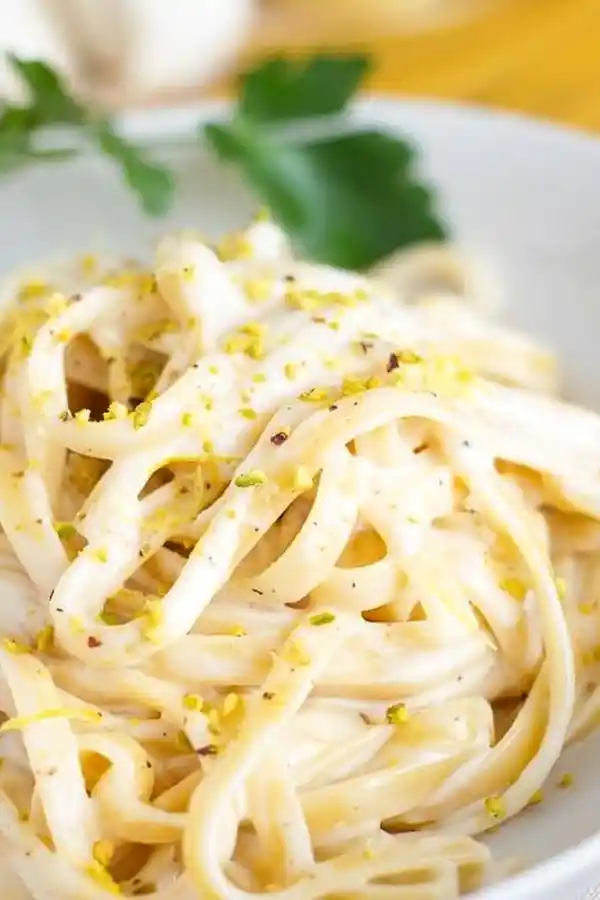
List of ingredients
- 1 big organic lemon – use the zest for flavor and decoration.
- 12 oz fettuccine pasta or spaghetti (340 g) – long noodles work best.
- 6 tbsps salted butter (80 g) – cubed for easier emulsification.
- 1 cup cream (250 ml) – heavy cream provides the best texture.
- 1/2 tsp maple syrup or honey (optional) – balances the acidity of the lemon.
- 3 tbsps cream cheese or goat cheese (about 50 g) – adds tanginess and thickness.
- 3/4 cup parmesan cheese (90 g) – freshly grated for better melting.
- Salt to taste – for seasoning the sauce and pasta water.
- Chopped pistachios (optional) – for added crunch and color.
- Lemon zest – reserved for the final garnish.
- Black pepper – freshly cracked for a sharp finish.
step-by-step instructions
- Zest the lemon: Grate the zest of one big organic lemon. Set a small portion aside to use for the final presentation.
- Boil the pasta: Cook the pasta in a large pot of heavily salted boiling water. Stir occasionally and cook until very al dente, as the pasta will finish cooking inside the sauce.
- Prepare the base: While the pasta cooks, combine the cream, lemon zest, and honey in a pot. Cook over medium heat, whisking frequently, until the liquid just begins to simmer, which usually takes about 2 minutes.
- Emulsify the butter: Lower the heat to medium-low. Whisk in the cubed butter one tablespoon at a time until fully melted and the sauce is creamy and emulsified. Remove the pot from the heat.
- Combine with pasta water: Just before the pasta reaches al dente, scoop out 1 1/2 cups of the starchy cooking liquid. Stir 3/4 cup (180 ml) of this liquid into the cream sauce and return the pot to medium heat.
- Thicken the sauce: Stir in the cream cheese or goat cheese until fully combined and smooth.
- Toss the pasta: Use tongs to transfer the cooked pasta directly into the sauce pot. It is acceptable if some pasta water transfers with the noodles.
- Finish with cheese: Cook for one minute while tossing frequently. Gradually add the grated Parmesan cheese over about 3 minutes until the cheese melts and the sauce becomes creamy.
- Adjust consistency: If the sauce is too thick, stir in an additional 1 to 2 tablespoons of reserved pasta water. Ensure the sauce remains slightly loose, as it will thicken as it cools.
- Final seasonings: If using fresh herbs, toss them in now. Taste the pasta and add salt if necessary.
- Plate and garnish: Divide the pasta between two bowls. Season with freshly cracked black pepper and top with the reserved lemon zest and chopped pistachios.
Optimizing Your Ingredient Selection
Selecting the Right Lemons
Always choose organic lemons because the recipe requires the zest, which is the outermost layer of the peel. Look for lemons with a rough, textured skin rather than a smooth one, as these typically contain more essential oils for a stronger aroma.
Choosing High-Quality Parmesan
Purchase a wedge of real Parmesan cheese and grate it yourself right before cooking. Pre-grated cheeses often contain anti-clumping agents like cellulose, which can prevent the cheese from melting smoothly into the sauce.
The Best Type of Cream
Use heavy cream or double cream to ensure the sauce remains stable and velvety. Lower-fat alternatives may break or separate when combined with the acidity of the lemon and the heat of the stove.
Butter Preferences
Salted butter is recommended to enhance the savory notes of the cheese. If using unsalted butter, you will need to increase the amount of salt added to the final sauce to maintain the flavor balance.
Protein Pairing Options
Adding Sautéed Chicken Breast
Season chicken breast strips with salt and pepper, then sauté them in a separate pan with a bit of olive oil until golden and cooked through. Place the cooked chicken on top of the plated pasta to maintain the texture of the meat.
Integrating Grilled Shrimp
Marinate shrimp in garlic and lemon juice before grilling or searing them quickly over high heat. Add the shrimp to the bowls just before serving to prevent them from overcooking in the hot pasta.
Pairing with Pan-Seared Salmon
Sear a salmon fillet skin-side down until crisp, then finish it in the oven. Place the fillet atop the creamy lemon pasta, as the richness of the salmon complements the acidity of the lemon sauce.
Vegetable Enhancements
Adding Fresh Asparagus Tips
Blanch asparagus tips in the same boiling water as the pasta during the last 2 minutes of cooking. Drain them and toss them into the sauce along with the pasta for a fresh, crunchy contrast.
Incorporating Sautéed Zucchini
Thinly slice zucchini into rounds or half-moons and sauté them in butter until tender and slightly browned. Fold the zucchini into the pasta at the final stage of cooking for a seasonal touch.
Mixing in Baby Spinach
Add a handful of fresh baby spinach to the pot immediately after adding the pasta to the sauce. The residual heat will wilt the spinach quickly without overcooking it, adding color and nutrients to the dish.
Mastering the Sauce Emulsion
The Role of Pasta Cooking Water
The starchy water reserved from the pasta pot is essential for binding the fats from the butter and cream to the noodles. This starch acts as an emulsifier, preventing the sauce from separating and ensuring it clings to the pasta.
Gradual Butter Incorporation
Whisking in the butter one tablespoon at a time prevents the sauce from breaking. This slow process allows the fat to integrate evenly into the cream base, resulting in a glossy, professional finish.
Managing Temperature
Keep the heat at medium-low when adding the cheeses to prevent the sauce from curdling. High heat can cause the proteins in the cheese and cream to clump, destroying the smooth texture of the sauce.
Pasta Shape Considerations
Using Long Noodles
Fettuccine, spaghetti, and linguine are ideal for this recipe because their surface area allows the creamy sauce to coat the strands evenly. These shapes provide a consistent bite and a classic presentation.
Adapting for Short Pasta
Shapes like penne, rotini, or rigatoni also work well as they capture the sauce inside their ridges and hollow centers. If using short pasta, you may need a slightly thinner sauce to ensure every piece is well-coated.
Storage and Reheating Guide
Storing Pasta in the Refrigerator
Place leftover pasta in an airtight container and refrigerate for up to three days. Note that the pasta will absorb much of the sauce while sitting in the fridge, making it appear dry.
Reheating for Maximum Creaminess
Reheat the pasta in a pan over low heat rather than in the microwave. Add a splash of water, milk, or cream to the pan to loosen the sauce and restore its original velvety consistency.
Freezing Considerations
This dish is not recommended for freezing because the cream and cheese based sauce tends to separate upon thawing. For the best quality, consume the pasta within a few days of preparation.
Common Cooking Troubleshooting
Fixing a Separated Sauce
If the sauce looks grainy or separates, whisk in a tablespoon of warm pasta water or cream over very low heat. Constant whisking helps re-emulsify the fats and liquids into a smooth mixture.
Adjusting a Sauce That Is Too Thick
If the sauce becomes too heavy or sticky, stir in more reserved pasta water one tablespoon at a time. Remember that the sauce continues to thicken as it cools, so it should look slightly thinner than your desired final result while in the pot.
Balancing Overly Acidic Flavors
If the lemon flavor is too intense, add a tiny bit more maple syrup or honey to neutralize the acidity. Alternatively, adding an extra tablespoon of butter or parmesan can mellow out the sharpness of the citrus.
Frequently Asked Questions
Can I use a different cheese instead of cream cheese?
Yes, goat cheese is an excellent substitute that adds a slightly more earthy and tart flavor. You can also use a small amount of mascarpone for an even richer, sweeter taste.
What can I use if I do not have heavy cream?
Half-and-half can be used, although the sauce will be slightly less thick. If using a thinner substitute, you may need to increase the amount of parmesan or cream cheese to maintain the desired consistency.
Is it necessary to use organic lemons?
Since the recipe uses the zest, organic lemons are preferred to avoid consuming pesticides or wax coatings found on conventionally grown citrus.
How do I prevent the pasta from becoming mushy?
Pull the pasta out of the boiling water 1 to 2 minutes before the package instructions suggest. Finishing the cooking process in the sauce allows the noodles to absorb the flavors without becoming overcooked.
Can I make this recipe vegan?
You can substitute the butter with vegan butter, the cream with cashew cream, and the cheeses with nutritional yeast or vegan parmesan alternatives. Use a similar emulsification technique with the pasta water.
Print
Creamy Lemon Pasta (Pasta al Limone)
- Total Time: 20 minutes
- Yield: 2 servings 1x
- Diet: Vegetarian
Description
The best Pasta Al Limone Recipe with a simple creamy lemon sauce made with parmesan cheese, fresh lemon and cream.
Ingredients
- 1 big organic lemon
- 12 oz fettuccine pasta
- 6 tbsps salted butter
- 1 cup cream
- 1/2 tsp maple syrup or honey
- 3 tbsps cream cheese or goat cheese
- 3/4 cup parmesan cheese
- salt to taste
- chopped pistachios
- lemon zest
- black pepper
Instructions
- Zest: Grate the zest of 1 big organic lemon.
- Boil: Cook pasta in a large pot of boiling heavily salted water, stirring occasionally, until very al dente.
- Simmer: Add the cream to the pot with the lemon zest and honey; cook over medium heat, whisking often, until liquid is just beginning to simmer. Whisk in the cubed butter 1 Tbsp. at a time until melted and sauce is creamy and emulsified. Remove from heat.
- Combine: Scoop out 1 1/2 cups pasta cooking liquid. Add ¾ cup pasta cooking liquid to the cream sauce and return to medium heat. Add the cream cheese and stir to combine. Transfer the cooked pasta to the pot with sauce.
- Finish: Cook a minute tossing the pasta often and add the grated Parmesan little by little, until cheese is melted and sauce is creamy. Thin with pasta cooking liquid if needed.
- Serve: Divide the pasta among two bowls. Season with freshly cracked black pepper, then top with reserved lemon zest and chopped pistachios.
Notes
Use organic lemons with rough skins for more essential oil. Use freshly grated parmesan from a block. Fresh herbs like mint, basil, or flat-leaf parsley can be added at the end. Avoid dried herbs.
- Prep Time: 5 minutes
- Cook Time: 15 minutes
- Category: Main Course
- Method: Stovetop
- Cuisine: Italian
Nutrition
- Serving Size: 1 serving
- Calories: 698 kcal
- Sugar: 8 g
- Sodium: 820 mg
- Fat: 61 g
- Saturated Fat: 35 g
- Unsaturated Fat: 26 g
- Trans Fat: 0 g
- Carbohydrates: 160 g
- Fiber: 5 g
- Protein: 25 g
- Cholesterol: 150 mg