Prepare a high-protein, Korean-inspired meal in just 15 minutes. These ground beef bowls provide a savory and sweet flavor profile that is perfect for busy weeknights.
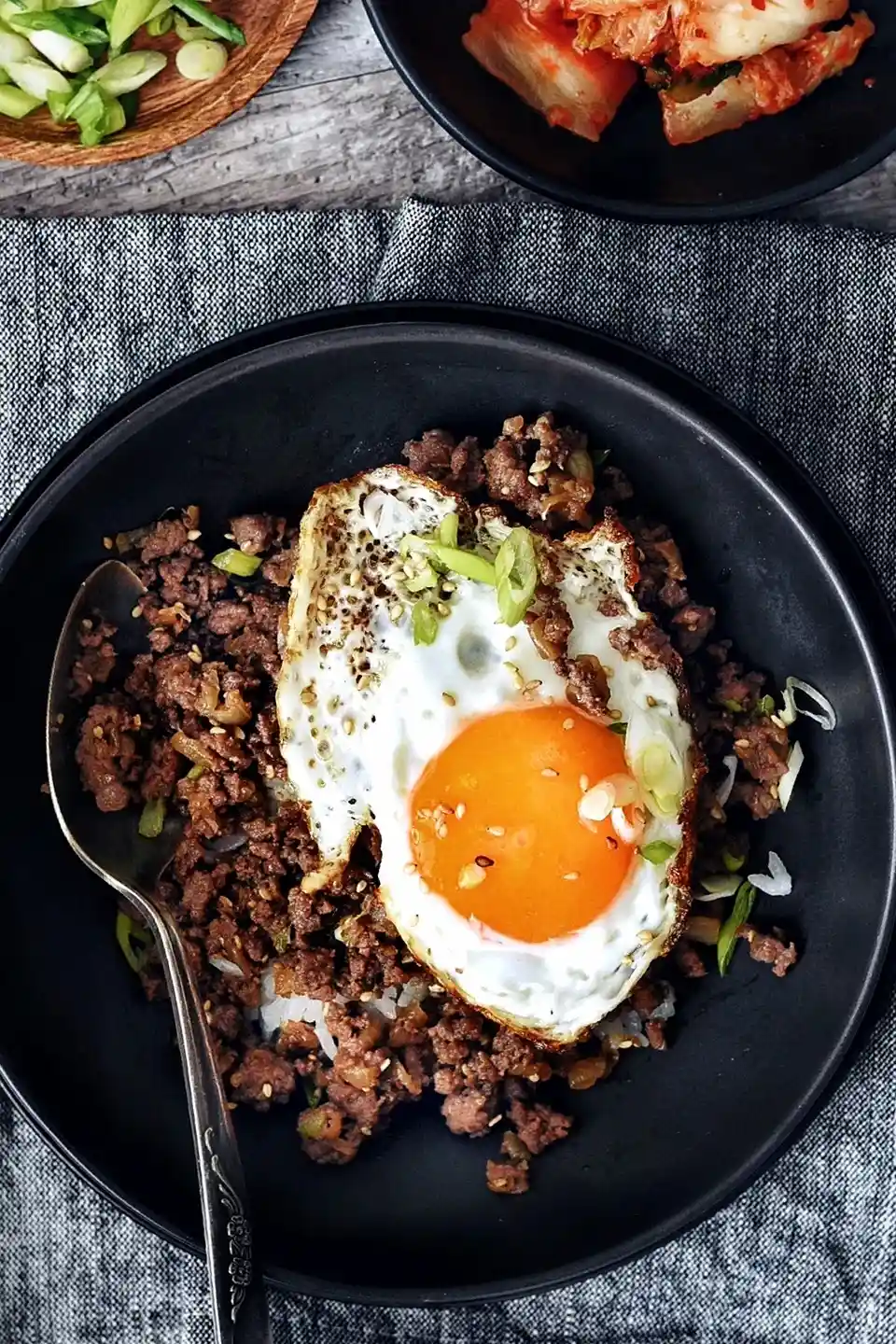
List of ingredients
- 1 lb extra lean ground beef – ensures the dish is not overly greasy.
- 1/2 large onion, grated – creates a juicy pulp for the marinade.
- 4 cloves garlic, minced – provides a strong aromatic base.
- 3 Tbsp soy sauce – use regular soy sauce for full saltiness.
- 1 1/2 Tbsp sugar – adds the necessary sweetness to the bulgogi flavor.
- 1 Tbsp white grape juice or water with a pinch of sugar – used as a non-alcoholic substitute for Mirin.
- 1 Tbsp sesame oil – adds a distinct nutty aroma.
- 1-2 Tbsp Gochujang – optional, for those who prefer a spicy kick.
- 1/2 large onion, diced – for sautéing in the pan.
- 4 cups cooked rice – white, brown, or purple rice all work well.
- 4 sunny side up eggs – for added protein and a creamy texture.
- 2 green onions, chopped – used for fresh garnish.
step-by-step instructions
- Prepare the Rice: Cook your rice according to the package directions so it is ready by the time the beef is finished.
- Prep the Onion: Use a box grater to grate half of a large onion into a juicy pulp. Dice the remaining half of the onion into medium pieces.
- Marinate the Meat: In a large bowl, combine the ground beef, grated onion pulp, minced garlic, soy sauce, sugar, white grape juice (or sugar-water), and sesame oil. Mix thoroughly with a fork or your hands and set it aside.
- Sauté the Diced Onion: Heat a wok or cast iron skillet over medium heat. Add 1-2 tablespoons of a neutral oil, such as grapeseed oil, and sauté the diced onion for about 2 minutes until it becomes soft and translucent.
- Brown the Beef: Increase the heat to medium-high and add the marinated ground beef. Break up large chunks with a wooden spoon or metal spatula. Continue cooking for 8-10 minutes until the initial liquid evaporates and the meat is dark brown with crispy edges.
- Final Garnish: Remove the pan from the heat. Stir in the chopped green onions and a sprinkle of sesame seeds.
- Assemble the Bowls: Divide the cooked rice evenly among four bowls. Scoop the ground beef bulgogi over the rice and top each bowl with a sunny side up egg.
Recommended Cooking Equipment
Cast Iron Skillet Utility
A cast iron skillet is ideal for this recipe because it retains heat exceptionally well. This allows the ground beef to sear and caramelize quickly, which is essential for achieving the traditional bulgogi flavor.
Wok Benefits
A wok is highly effective due to its sloping sides and ability to distribute high heat. It makes it easier to stir-fry the beef and evaporate the released liquids rapidly, preventing the meat from steaming.
Box Grater for Onion Pulp
Using a box grater transforms the onion into a fine pulp that integrates directly into the meat. This method ensures that the onion flavor is evenly distributed and helps tenderize the beef during the short marination.
Ingredient Substitutions and Modifications
Alternative Ground Meats
If you prefer a leaner or different protein, ground turkey or ground chicken can be used. These options are generally lower in fat, so you may need to add an extra teaspoon of sesame oil to maintain the richness.
Low-Carb Rice Alternatives
For a lower-carbohydrate version, replace white rice with cauliflower rice or quinoa. Sauté cauliflower rice briefly in a pan with a bit of salt before adding the beef on top.
Sugar Replacements
Brown sugar can be used instead of white sugar to add a slightly deeper, molasses-like sweetness. For a sugar-free option, a small amount of maple syrup or a compatible sweetener can work, though the caramelization process may differ.
Soy Sauce Alternatives
Coconut aminos can be used as a substitute for soy sauce for those avoiding soy. Note that coconut aminos are less salty, so you may need to add a pinch of salt to the marinade to balance the flavors.
Flavor Enhancement Strategies
Adding Heat with Gochujang
Gochujang is a fermented Korean chili paste that adds depth and spice. Adding 1-2 tablespoons to the marinade creates a fiery profile that complements the sweetness of the sugar and the saltiness of the soy sauce.
Incorporating Fresh Ginger
Adding one teaspoon of freshly grated ginger to the marinade provides a zesty, warm note. This cuts through the richness of the beef and adds another layer of traditional Korean aromatic flavor.
Toasting Sesame Seeds
lightly toasting white sesame seeds in a dry pan before garnishing enhances their nutty flavor. This simple step provides a more professional finish and a subtle crunch to each bite.
Adding a Splash of Rice Vinegar
A teaspoon of rice vinegar added at the end of cooking provides a bright acidity. This helps balance the sweetness of the marinade and makes the overall dish taste lighter.
Serving and Pairing Ideas
Pairing with Kimchi
Serving these bowls with a side of fermented kimchi adds a sour and spicy element. The acidity of the kimchi acts as a palate cleanser against the savory, caramelized beef.
Adding Steamed Green Vegetables
Steamed broccoli, bok choy, or snap peas provide a healthy contrast to the rich meat. These vegetables add color to the bowl and provide necessary fiber to make the meal more balanced.
Lettuce Wrap Presentation
Instead of rice, use large leaves of red leaf lettuce or perilla leaves as wraps. Place a spoonful of the beef in the center and top with a slice of egg for a refreshing, low-carb appetizer.
Roasted Seaweed Wraps
Use sheets of roasted seaweed (gim) to scoop up the beef and rice. The saltiness of the seaweed complements the soy-based marinade and adds a crispy texture to the meal.
Storage and Meal Prep Advice
Refrigeration Guidelines
Store leftover beef and rice in separate airtight containers in the refrigerator. When stored properly, the beef will remain fresh for 3 to 4 days.
Freezing the Beef
The cooked ground beef bulgogi freezes well for up to one month. To avoid freezer burn, freeze the meat in a vacuum-sealed bag or a heavy-duty freezer container, leaving a small amount of headspace.
Best Reheating Methods
Reheat the beef in a skillet over medium heat with a splash of water to restore moisture. For the rice, microwave it with a damp paper towel over the top to keep the grains fluffy.
Preparing the Marinade in Advance
You can mix the marinade and beef up to 24 hours before cooking. Store the mixture in the fridge to allow the flavors to penetrate the meat more deeply, which results in a more intense taste.
Cooking Troubleshooting
Preventing Greasy Results
Use extra-lean ground beef to minimize the amount of rendered fat in the pan. If too much oil accumulates during cooking, carefully spoon it out or pat the meat with a paper towel before adding the garnish.
Achieving Maximum Caramelization
Ensure the pan is very hot before adding the beef and avoid overcrowding the skillet. If the pan is too cool, the meat will boil in its own juices rather than searing and browning.
Managing Liquid Release
Ground beef naturally releases a significant amount of water when cooked. Be patient and keep the heat at medium-high, stirring occasionally, until the liquid fully evaporates and the edges start to crisp.
Preventing Garlic Burn
Since the garlic is mixed into the marinade with the meat, it is less likely to burn than if it were sautéed alone. However, ensure you stir the meat constantly to keep the small garlic bits moving.
Frequently Asked Questions
How do I store leftovers?
Place the cooked beef and cooked rice in separate airtight containers and keep them in the refrigerator for 3 to 4 days.
Does this freeze well?
Yes, the beef freezes well for up to one month. It is recommended to freeze the beef separately from the rice to maintain the texture of both components.
What is the best rice for bulgogi?
Short-grain white rice or Korean purple rice are the most traditional choices because their slight stickiness helps hold the beef and egg toppings.
Can I use lean beef?
Yes, extra-lean ground beef is highly recommended to prevent the final dish from becoming too oily or greasy.
Can I make this without a wok?
Yes, a cast iron skillet or a heavy-bottomed stainless steel frying pan works perfectly as long as it can reach and maintain high heat.
Print
Quick Korean-Style Ground Beef Bowls
- Total Time: 15 minutes
- Yield: 4 servings 1x
- Diet: Dairy-free
Description
An easy and delicious weeknight favorite: Korean Ground Beef Bulgogi Bowls. All the traditional flavors of bulgogi made with ground beef. Lots of protein and lots of flavor, without the need for Asian pear.
Ingredients
- 1 lb extra lean ground beef
- 1/2 large onion, grated
- 4 cloves garlic, minced
- 3 Tbsp soy sauce
- 1 1/2 Tbsp sugar
- 1 Tbsp apple juice
- 1 Tbsp sesame oil
- 1–2 Tbsp Gochujang
- 1/2 large onion, diced
- 4 cups cooked rice
- 4 sunny side up eggs
- 2 green onions, chopped
Instructions
- Cook rice: Cook rice, according to package directions.
- Prep onion: Grate 1/2 onion on a box grater so that it becomes juicy, onion pulp. Dice the other 1/2 onion in a medium dice.
- Marinate ground beef: In a large bowl, add ground beef, grated onion, garlic, soy sauce, sugar, apple juice, and sesame oil. Mix until well combined with hands or a fork. Set aside.
- Cook: Heat a wok or cast iron skillet on medium heat. Add 1-2 Tbsp neutral oil and swirl around in the pan. Add diced onion and saute until soft and translucent, about 2 minutes.
- Brown meat: Increase the heat to medium-high heat. Add the marinated ground beef and keep cooking, breaking apart big chunks with a metal spatula or wooden spoon. Keep cooking until most of the liquid has evaporated and the meat has turned dark brown in color with crispy edges, about 8-10 minutes.
- Garnish: Remove from heat and add green onion and sesame seeds.
- Assemble: Evenly divide rice among 4 bowls. Evenly divide ground beef bulgogi over the rice. Top with a fried egg.
Notes
Use a wok or cast iron skillet for a charred, smoky flavor. Ensure the beef is cooked until caramelized and crispy for the best results. Reheats well and is great for meal prep.
- Prep Time: 5 minutes
- Cook Time: 10 minutes
- Category: Dinner, Lunch, Main Course
- Method: Stir-frying
- Cuisine: Korean
Nutrition
- Serving Size: 1 bowl
- Calories: 504 kcal
- Sugar: 7 g
- Sodium: 928 mg
- Fat: 14 g
- Saturated Fat: 5 g
- Unsaturated Fat: 9 g
- Trans Fat: 0.4 g
- Carbohydrates: 56 g
- Fiber: 1 g
- Protein: 36 g
- Cholesterol: 234 mg