This one-pot ground beef orzo is a filling meal that combines savory meat with tender pasta and fresh spinach. It is an efficient choice for busy evenings since it requires minimal cleanup and cooks in only 30 minutes.
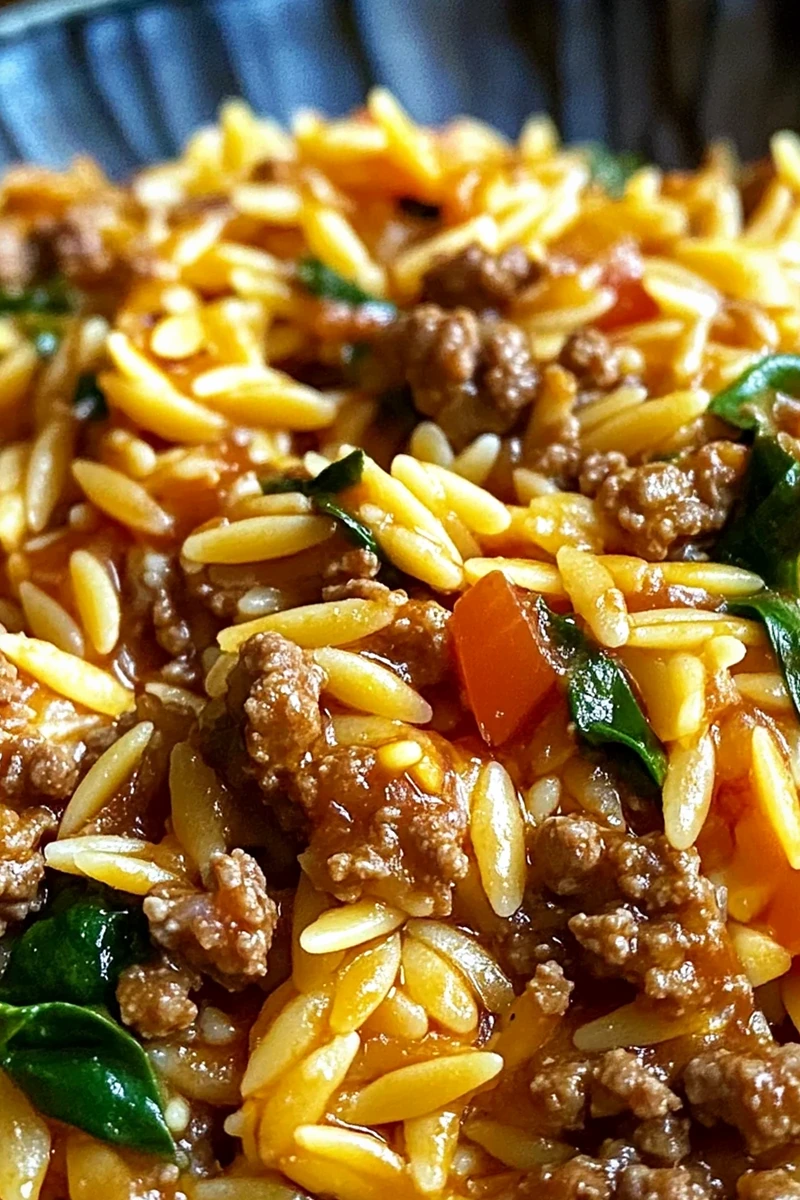
List of ingredients
- 1 lb lean ground beef – provides the main protein and savory base.
- 1 cup orzo pasta – small rice-shaped pasta that absorbs the broth.
- 1 medium onion, finely chopped – adds aromatic depth to the sauce.
- 3 cloves garlic, minced – provides a pungent, savory flavor.
- 1 can (14.5 oz) diced tomatoes with herbs – adds acidity and moisture.
- 2 cups low-sodium beef broth – used to cook the pasta and build richness.
- 2 cups fresh spinach – adds color and essential nutrients.
- 1 tsp Italian seasoning – a blend of basil, oregano, and thyme for herb flavor.
step-by-step instructions
- Prep: Begin by chopping the onion and mincing the garlic cloves.
- Sauté Onion: Heat olive oil in a large skillet over medium heat and sauté the onion until it becomes translucent.
- Brown Beef: Add the lean ground beef to the skillet, season with salt and pepper, and cook until the meat is fully browned.
- Simmer Aromatics: Stir in the minced garlic and the canned diced tomatoes with herbs, allowing the mixture to simmer for 2 to 3 minutes.
- Cook Orzo: Pour in the orzo pasta and the low-sodium beef broth, bring the liquid to a boil, then reduce the heat to simmer for 10 to 12 minutes until the pasta is tender.
- Finish: Stir in the fresh spinach and Italian seasoning, cooking only until the spinach has wilted.
Professional Cooking Techniques
Searing the Beef for Maximum Flavor
Ensure the skillet is well-heated before adding the lean ground beef. Cook the meat without stirring too frequently to allow a brown crust to form. This process creates a deeper flavor profile that permeates the entire dish.
Sautéing Aromatics for Depth
Cooking the onion and garlic before adding the liquids allows their natural sugars to caramelize. This step removes the raw bite of the onion and creates a sweeter, more complex base. Always add garlic after the onions to prevent it from burning.
Regulating the Simmer for Perfect Orzo
Once the broth reaches a boil, immediately drop the heat to a simmer. A gentle bubble ensures the orzo cooks evenly without evaporating the liquid too quickly. This prevents the pasta from becoming mushy or sticking to the bottom.
Maintaining the Liquid Ratio
Use a precise measuring cup for the beef broth to ensure the pasta hydrates correctly. Too little liquid will leave the orzo hard, while too much will create a soup-like consistency. If the pan looks dry before the pasta is tender, add a tablespoon of water.
Timing the Addition of Spinach
Stir in the fresh spinach at the very end of the cooking process. The residual heat of the pasta and sauce is sufficient to wilt the leaves. Overcooking the spinach can lead to a loss of color and a mushy texture.
Ingredient Substitutions and Alternatives
Using Ground Turkey or Chicken
You can replace the lean ground beef with ground turkey or ground chicken for a leaner protein option. These meats have a milder flavor, so you may want to add an extra pinch of salt. The cooking time remains the same as beef.
Substituting Kale or Swiss Chard
If you do not have spinach, kale or Swiss chard are excellent nutrient-dense alternatives. Because these greens are heartier, add them 2 to 3 minutes before the orzo is finished. This ensures they soften properly without overcooking the pasta.
Using Vegetable Broth for a Lighter Base
Low-sodium vegetable broth can be used instead of beef broth for a lighter flavor profile. This is a useful swap if you want to reduce the heaviness of the dish. The liquid ratio remains 2 cups for 1 cup of orzo.
Swapping Orzo for Other Small Pastas
Ditalini or acini di pepe are suitable replacements if orzo is unavailable. These small shapes behave similarly in a one-pot method. Check the package instructions, as some smaller pastas may require slightly more broth.
Using Crushed Tomatoes Instead of Diced
Crushed tomatoes provide a smoother, more uniform sauce compared to diced tomatoes. This variation results in a creamier coating for the orzo. The acidity levels remain similar, keeping the flavor balance intact.
Flavor Variations to Enhance the Dish
Adding Hard Cheeses for Saltiness
Grate fresh Parmesan or Pecorino Romano over the dish just before serving. These cheeses add a salty, nutty dimension that complements the Italian seasoning. Stirring the cheese in at the end prevents it from separating.
Incorporating Zucchini or Carrots
Finely diced carrots or zucchini can be sautéed along with the onions. These vegetables add natural sweetness and increase the overall nutritional value. Ensure they are diced small so they cook at the same rate as the onion.
Using Fresh Lemon Juice for Brightness
A squeeze of fresh lemon juice added at the end cuts through the richness of the beef. This brightness highlights the fresh spinach and herbs. It is a simple way to balance the savory notes of the beef broth.
Adding Red Pepper Flakes for Heat
If you prefer a spicy kick, stir in a pinch of red pepper flakes during the garlic and tomato step. This distributes the heat evenly throughout the sauce. Adjust the amount based on your heat tolerance.
Creating a Creamier Texture
Stir in a splash of heavy cream or a dollop of mascarpone cheese after the pasta is cooked. This transforms the dish into a creamy pasta skillet. Reduce the amount of Parmesan if you choose this option to avoid over-salting.
Serving and Pairing Suggestions
Pairing with Crisp Green Salads
Serve the orzo with a side of mixed greens and a light vinaigrette. The acidity of the salad balances the density of the beef and pasta. A Caesar salad with crunchy croutons also provides a nice textural contrast.
Serving with Garlic-Infused Bread
Toasted garlic bread or soft focaccia is ideal for soaking up the remaining tomato sauce. Warm the bread in the oven until the edges are crisp. This adds a satisfying crunch to the overall meal.
Adding Roasted Vegetable Sides
Roasted broccoli or steamed asparagus are healthy additions that provide color to the plate. Toss them in olive oil and garlic to match the flavors of the main dish. These sides add a fresh, earthy element to the meal.
Plating and Garnishing Techniques
Spoon the orzo into wide bowls to showcase the spinach and beef. Garnish with chopped fresh parsley or basil leaves for a professional look. A final sprinkle of black pepper adds a subtle heat and visual appeal.
Storage and Reheating Methods
Proper Refrigeration Techniques
Place leftovers in an airtight container once the dish has cooled to room temperature. This prevents moisture loss and keeps the pasta from drying out. Store in the refrigerator for up to 3 to 4 days.
Freezing the Dish for Long-Term Storage
Portion the orzo into freezer-safe containers and label them with the date. This dish can be frozen for up to 3 months without significant quality loss. Leave a small amount of space at the top of the container for expansion.
Reheating via Microwave
Place a portion in a microwave-safe bowl and cover it loosely with a lid. Heat in 1 to 2 minute intervals, stirring in between. Add a tablespoon of water or broth to restore the creamy consistency.
Reheating on the Stovetop
Heat the orzo in a small skillet over low to medium heat. Stir frequently to ensure the beef and pasta heat evenly. Add a splash of beef broth to prevent the pasta from sticking to the pan.
Using the Oven for Large Portions
Preheat the oven to 350°F and place the orzo in an oven-safe baking dish. Cover the top with aluminum foil to trap the moisture. Heat for 20 to 25 minutes until the center is hot.
Troubleshooting and Common Questions
Why is my orzo still hard?
The most common cause is insufficient liquid or too high a heat setting which evaporates the broth. Add an extra 1/4 cup of beef broth and simmer for another 2 to 3 minutes. Keep the pan covered to trap the steam.
How do I fix a dry consistency?
If the dish looks too thick after cooking, stir in a small amount of warm broth or water. This loosens the sauce without diluting the flavor. Do this just before serving to maintain the right texture.
Can this be prepared in advance?
Yes, you can cook the beef and aromatic base a day early. When ready to serve, add the orzo, broth, and spinach to the skillet. This reduces the active cooking time on the day of the meal.
What is a substitute for Italian seasoning?
You can create your own blend using equal parts dried basil, oregano, and thyme. If those are unavailable, a pinch of dried rosemary and parsley will work. Fresh herbs added at the end are also a great alternative.
How do I reduce excess fat in the pan?
If the ground beef releases too much oil, carefully spoon out the excess fat before adding the garlic and tomatoes. Alternatively, you can blot the browned meat with a paper towel. This ensures the sauce is not greasy.
Print
One-Pot Ground Beef Orzo Meal
- Total Time: 30 minutes
- Yield: 4 servings 1x
- Diet: General
Description
Ground Beef Orzo is a hearty and satisfying meal perfect for busy weeknights or cozy family dinners. This one-pan dish combines tender orzo pasta with seasoned ground beef, fresh spinach, and rich tomatoes, creating a delightful blend of flavors that will please everyone at the table.
Ingredients
- 1 lb lean ground beef
- 1 cup orzo pasta
- 1 medium onion, finely chopped
- 3 cloves garlic, minced
- 1 can (14.5 oz) diced tomatoes with herbs
- 2 cups low-sodium beef broth
- 2 cups fresh spinach
- 1 tsp Italian seasoning
Instructions
- Step: Prep your ingredients by chopping the onion and mincing the garlic.
- Step: In a large skillet over medium heat, sauté the onion in olive oil until translucent.
- Step: Add the ground beef, season with salt and pepper, and cook until browned.
- Step: Stir in the garlic and diced tomatoes; simmer for 2–3 minutes.
- Step: Pour in orzo and beef broth; bring to a boil then reduce heat to simmer for about 10–12 minutes until orzo is tender.
- Step: Stir in fresh spinach and Italian seasoning; cook until spinach wilts.
Notes
Allowing the dish to sit for a few minutes after cooking allows flavors to meld beautifully.
- Prep Time: 10 minutes
- Cook Time: 20 minutes
- Category: Main
- Method: Sautéing
- Cuisine: Italian
Nutrition
- Serving Size: 1 cup (245g)
- Calories: 350 kcal
- Sugar: 4 g
- Sodium: 490 mg
- Fat: 15 g
- Saturated Fat: 6 g
- Unsaturated Fat: 8 g
- Trans Fat: 0 g
- Carbohydrates: 34 g
- Fiber: 3 g
- Protein: 22 g
- Cholesterol: 70 mg