This slow cooker lasagna provides a convenient way to enjoy a classic pasta dish without the labor of traditional layering. It is an ideal option for busy weeknights or high-protein meal prep for the whole family.
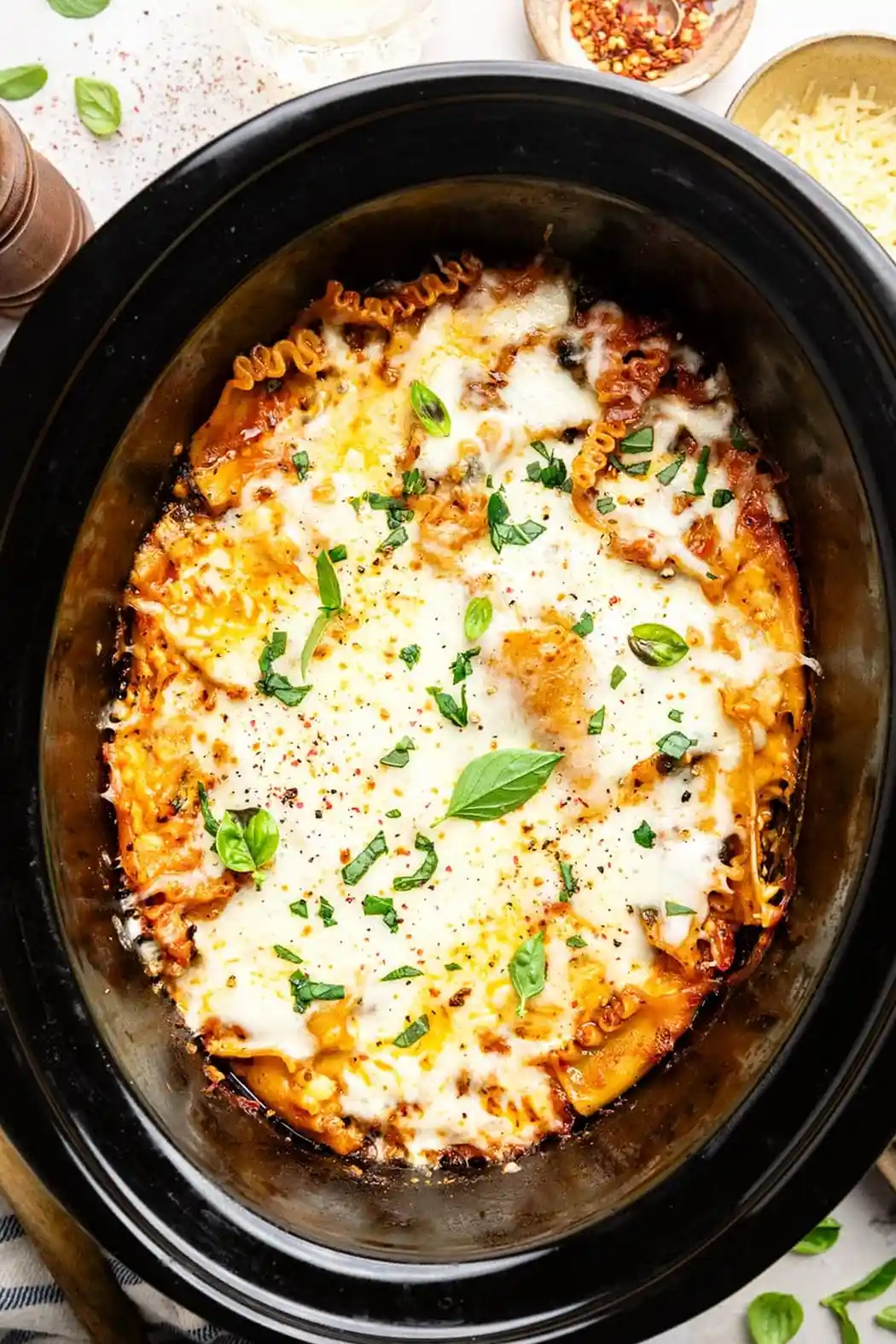
List of ingredients
- 1 teaspoon avocado oil or olive oil – used for sautéing the beef and aromatics.
- 1 lb lean ground beef (90-93% lean) – provides the primary protein and savory base.
- 1/2 medium yellow onion, finely diced (3/4 cup) – adds aromatic sweetness.
- 5 garlic cloves, minced (approx. 1.5 tablespoons) – provides a pungent, savory flavor.
- 2 teaspoons dried Italian seasoning – a blend of herbs for traditional pasta flavor.
- 1/2 teaspoon fine salt – enhances all other flavors.
- 1/4 teaspoon black pepper – adds a mild spicy note.
- 1 (24-ounce) jar marinara sauce – the base for the red sauce.
- 1 1/2 cups water – essential for cooking the uncooked noodles in the slow cooker.
- 3 ounces fresh spinach, roughly chopped (2 large handfuls) – adds nutrients and color.
- 8 ounces uncooked lasagna noodles, broken into small pieces – use regular noodles, not no-boil varieties.
- 8 ounces (2 cups) shredded mozzarella cheese, divided – for creaminess and a melted topping.
- 1 cup cottage cheese, lightly drained – provides a creamy texture and extra protein.
- 1/3 cup shredded Parmesan cheese – adds a salty, nutty finish.
- Fresh basil leaves – optional garnish for a fresh herbal touch.
step-by-step instructions
- Brown the meat: Heat a large skillet over medium-high heat and spray generously with cooking spray. Add the ground beef, diced onion, minced garlic, Italian seasoning, salt, and pepper. Use a spoon or spatula to break up the meat as it cooks, stirring occasionally for 8-10 minutes until the onions soften and the beef is fully cooked. Drain any excess fat from the pan.
- Prepare the slow cooker: Mist the interior of the slow cooker insert with cooking spray to prevent sticking. Pour the cooked ground beef and vegetable mixture into the bottom of the pot.
- Add sauce and pasta: Pour the marinara sauce, water, chopped spinach, broken lasagna noodles, and 1 1/2 cups of the shredded mozzarella cheese over the meat. Stir the mixture well to ensure the noodles are evenly distributed and submerged.
- Incorporate the cheese: Dollop the drained cottage cheese over the top of the mixture. Very gently fold the cottage cheese into the sauce and noodles, being careful not to mix it completely so that creamy pockets remain.
- Add final topping: Sprinkle the remaining mozzarella cheese (approximately 1/2 to 3/4 cup) and the shredded Parmesan cheese evenly across the top.
- Slow cook: Cover the slow cooker with the lid and set the heat to LOW. Cook for 3-4 hours, or until the lasagna noodles are tender. Turn off the heat once the desired noodle consistency is reached.
- Garnish and serve: If desired, garnish the dish with fresh basil leaves and a sprinkle of additional Parmesan cheese before serving.
Cooking Success Tips
Maximize Your Marinara Sauce
To ensure no sauce is wasted, use the empty marinara jar to measure your water. Pour the 1 1/2 cups of water directly into the jar after emptying the sauce, then shake or swirl it vigorously. This rinses out the remaining sauce clinging to the glass and integrates it into the dish.
Ensure Proper Noodle Texture
Breaking the lasagna noodles into smaller pieces is critical for this recipe. Since you are not layering them in traditional sheets, smaller pieces allow the noodles to be fully submerged in the liquid. This prevents dry edges and ensures every piece cooks evenly.
Managing Beef Fat Content
Using 90-93% lean ground beef prevents the lasagna from becoming too greasy. If you use a lower lean percentage, it is imperative to drain the fat thoroughly after browning the meat. Excess oil in a slow cooker can separate and pool on top of the cheese.
Optimizing Moisture Levels
Since the noodles are uncooked, the water is necessary for hydration. However, the amount of liquid can vary based on the brand of marinara sauce. If your sauce is exceptionally thin, you may reduce the water by 1/4 cup to avoid a soupy consistency.
Customizing Your Ingredients
Gluten-Free Pasta Alternatives
This recipe works well with gluten-free lasagna noodles or gluten-free bow-tie pasta. When using gluten-free varieties, break the noodles into larger pieces rather than tiny bits to maintain structural integrity. Note that gluten-free noodles often cook faster, so you may need to reduce the slow cooker time by 30 minutes.
Substituting Ricotta for Cottage Cheese
If you prefer a more traditional texture, you can substitute the 1 cup of cottage cheese with part-skim ricotta cheese. Ricotta provides a smoother consistency compared to the curds of cottage cheese. Use a 1:1 ratio for the substitution without changing other ingredients.
Adding Extra Vegetable Varieties
To increase the nutrient density, you can add finely diced carrots or zucchini to the skillet while browning the beef. Ensure the vegetables are diced small enough to blend into the sauce. Sautéing them first ensures they soften properly during the slow cooking process.
Lean Protein Substitutions
While ground beef is traditional, lean ground turkey or ground chicken can be used as alternatives. These proteins are leaner and may require an extra teaspoon of oil during the browning phase. Ensure the meat is fully browned before transferring it to the slow cooker.
Serving and Pairing Suggestions
Optimal Serving Vessels
Because this is a slow-cooker version rather than a baked layered version, the texture is softer and less sturdy. Serving the lasagna in shallow bowls instead of on flat plates helps contain the sauce and cheese. This makes the meal easier to eat and prevents the sauce from spreading.
Fresh Salad Pairings
The richness of the cheese and beef pairs well with a crisp, acidic salad. A Caesar salad with a lemon-based dressing or a Green Goddess salad provides a fresh contrast. The acidity in these salads helps cut through the heaviness of the mozzarella and Parmesan.
Roasted Vegetable Sides
For a more substantial meal, serve the lasagna alongside roasted vegetables. Sautéed asparagus, roasted broccoli, or Parmesan roasted Brussels sprouts add a savory, earthy element. These sides provide essential vitamins and a different texture than the soft pasta.
Garlic Bread Options
Toasted garlic bread is a classic accompaniment for soaking up extra marinara sauce. You can use a gluten-free olive bread or a toasted baguette brushed with garlic butter. Warming the bread in the oven for 5-7 minutes provides a crunchy contrast to the creamy lasagna.
Storage and Preservation
Refrigeration Guidelines
Once the lasagna has cooled to room temperature, transfer the leftovers into airtight meal prep containers. Store them in the refrigerator for up to 4 days. Ensure the containers are sealed tightly to prevent the pasta from absorbing fridge odors.
Long-Term Freezing Instructions
This dish can be frozen for up to 2 months. Portion the lasagna into individual freezer-safe containers to make reheating easier. Leave a small amount of space at the top of the container to allow for expansion during the freezing process.
Proper Thawing Process
To maintain the best texture, thaw frozen leftovers in the refrigerator for 24 to 48 hours before heating. Avoid thawing in the microwave from frozen, as this can lead to uneven heating and rubbery noodles. Slow thawing preserves the moisture in the sauce.
Reheating for Best Texture
Warm individual servings in the microwave on high heat for 1-2 minutes. If the lasagna appears dry after reheating, add a teaspoon of water or a small amount of extra marinara sauce. This restores the creamy consistency of the cheese and sauce.
Troubleshooting Common Issues
Addressing Overcooked Noodles
If the noodles become too soft or mushy, it is likely they cooked for too long. To prevent this, start checking the noodles at the 3-hour mark. Once they reach an al dente state, turn off the slow cooker immediately, as carry-over heat will continue to cook them.
Fixing a Thin or Watery Sauce
If the sauce is too thin, it may be due to excess moisture from the spinach or cottage cheese. To thicken the sauce, you can stir in an extra handful of Parmesan cheese or let the dish sit for 10-15 minutes after cooking. This allowing the starches from the pasta to set.
Preventing Burnt Edges
Burnt edges can occur if the slow cooker is set to HIGH or if the pot is not properly greased. Always use the LOW setting for this recipe to ensure gentle heating. Misting the sides of the insert with cooking spray creates a barrier that prevents the sauce from sticking and burning.
Frequently Asked Questions
Can I use no-boil noodles for this recipe?
No, no-boil noodles are not recommended for this specific method. They are designed for oven-baking with a high volume of sauce and may result in a gummy or uneven texture in a slow cooker. Regular lasagna noodles, broken into pieces, provide a better bite.
Is it possible to cook this on the High setting?
It is recommended to stick to the LOW setting to ensure the noodles cook evenly without the edges burning. Cooking on HIGH can cause the sauce to reduce too quickly, leading to dry noodles and a scorched bottom.
How do I prevent the cottage cheese from disappearing?
The key is to fold the cottage cheese in very gently rather than stirring it vigorously. By dolloping it on top and lightly folding, you create pockets of creaminess that remain distinct throughout the dish, mimicking the layers of traditional lasagna.
Print
Slow Cooker Cheesy Lasagna
- Total Time: 4 hours
- Yield: 8 servings 1x
- Diet: High Protein
Description
This delicious version of lasagna cooks right in the slow cooker, making it simple and great for busy weeknights, comfort food meals, and potluck parties.
Ingredients
- 1 teaspoon avocado oil or olive oil
- 1 lb lean ground beef (90-93% lean)
- ½ medium yellow onion, diced finely (¾ cup)
- 5 garlic cloves, minced (~1 ½ tablespoons)
- 2 teaspoons dried Italian seasoning
- ½ teaspoon fine salt
- ¼ teaspoon black pepper
- 1 (24-ounce) jar marinara sauce
- 1 ½ cups water
- 3 ounces fresh spinach (2 large handfuls), roughly chopped
- 8 ounces uncooked lasagna noodles, broken into small pieces
- 8 ounces (2 cups) shredded mozzarella cheese, divided
- 1 cup cottage cheese, lightly drained
- ⅓ cup shredded Parmesan cheese
- Fresh basil leaves, optional for garnish
Instructions
- Step: Place a large skillet over medium-high heat. When the skillet is hot, spray generously with cooking spray then add the ground beef, onion, garlic, Italian seasoning, salt, and pepper. Use a spoon or spatula to break up the meat as it cooks, stirring occasionally, for 8-10 minutes or until the onions start to soften and the beef is cooked through. Drain excess fat, if there is quite a bit in the pan.
- Step: Mist the slow cooker insert with cooking spray then add the cooked ground beef and vegetable mixture to the bottom.
- Step: Next, add the marinara sauce, water, spinach, noodles, and 1 1/2 cups shredded mozzarella cheese to the slow cooker. Stir well to combine.
- Step: Dollop the cottage cheese over the top of the meat and noodle mixture then very gently fold it into the mixture – being careful not to mix completely.
- Step: Sprinkle the remaining mozzarella cheese (about ½-¾ cup) and ⅓ cup shredded parmesan cheese on top and cook on LOW for 3-4 hours or until the noodles are tender. Turn off the heat and serve.
- Step: Garnish with fresh basil and additional parmesan cheese, if desired, and serve.
Notes
Tip: Add the water directly to the empty sauce jar and shake to get all of the sauce from the jar before pouring it into the crockpot. If gluten-free is needed, use gluten-free lasagna noodles or gluten-free bow-tie pasta. You may substitute part-skim ricotta cheese for the cottage cheese.
- Prep Time: 30 minutes
- Cook Time: 4 hours
- Category: Main Course
- Method: Slow Cooker
- Cuisine: Italian-American
Nutrition
- Serving Size: 1 1/3 cups
- Calories: 380 kcal
- Sugar: 6 g
- Sodium: 699 mg
- Fat: 15 g
- Saturated Fat: 6 g
- Unsaturated Fat: 9 g
- Trans Fat: 0 g
- Carbohydrates: 31 g
- Fiber: 3 g
- Protein: 30 g
- Cholesterol: 57 mg