These Korean BBQ chicken bowls provide a balanced, restaurant-quality meal that is ready in just 30 minutes. The combination of spicy gochujang and fresh vegetables creates a satisfying dinner perfect for busy weeknights.
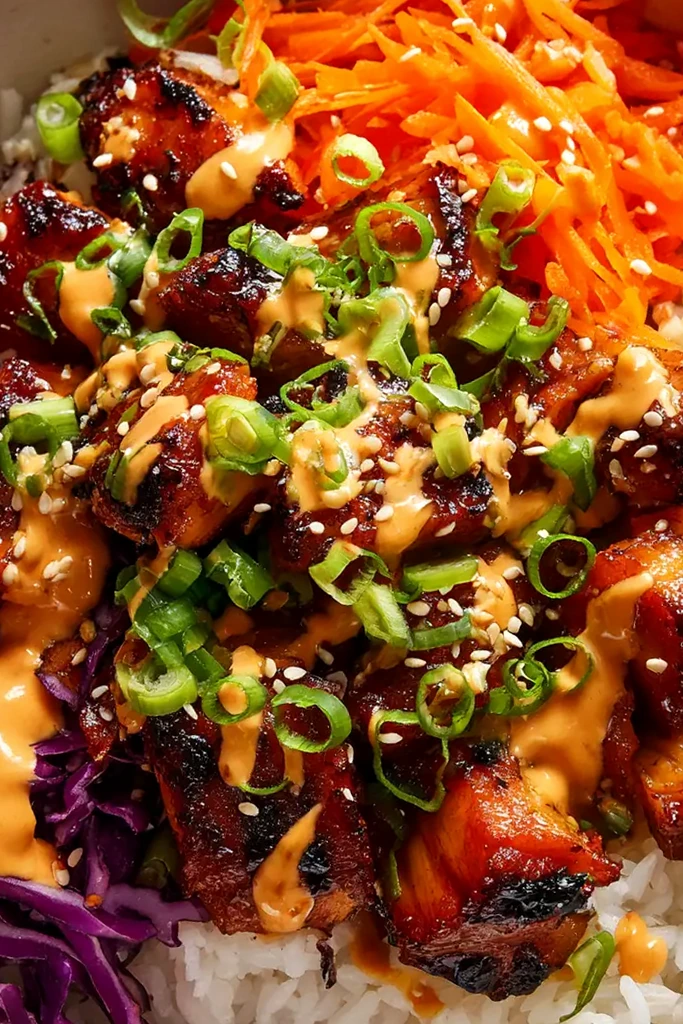
List of ingredients
- 1.5 lbs boneless, skinless chicken thighs – cut into 1-inch pieces for even cooking.
- 1/4 cup low-sodium soy sauce – provides the savory base without excessive salt.
- 3 tbsp gochujang – Korean chili paste for heat and depth.
- 2 tbsp brown sugar – packed, used for sweetness and caramelization.
- 1 tbsp sesame oil – adds a distinct nutty aroma.
- 3 cloves garlic – minced finely for maximum flavor.
- 1 tsp fresh ginger – grated for a bright, zesty kick.
- 1 tsp rice vinegar – balances the sweetness with a hint of acidity.
- 4 cups cooked rice – served as the hearty base for the bowls.
- 1 cup cucumber – thinly sliced for a refreshing crunch.
- 1 cup shredded carrots – adds color and a mild sweetness.
- 1 cup cooked edamame – shelled, for added plant-based protein.
- 1/2 cup kimchi – optional, for a fermented tang.
- 1 tbsp sesame seeds – toasted, used as a final garnish.
- 2 tbsp green onions – sliced thinly for a fresh finish.
step-by-step instructions
- Prepare the marinade: In a medium bowl, whisk together the gochujang, low-sodium soy sauce, sesame oil, brown sugar, minced garlic, grated ginger, and rice vinegar until the mixture is smooth.
- Marinate the chicken: Add the bite-sized chicken pieces to the bowl and toss until completely coated. Cover the bowl and refrigerate for at least 30 minutes, or up to 4 hours for deeper flavor.
- Sear the chicken: Heat a large skillet over medium-high heat. Add the chicken in a single layer, cooking for 3-4 minutes per side until the meat is cooked through and the sauce has caramelized.
- Assemble the bowls: Divide the cooked rice among four bowls. Place the caramelized chicken on top and arrange the cucumber, carrots, edamame, and kimchi around the sides. Garnish with sesame seeds and green onions.
Cooking Techniques for Better Results
Avoid Crowding the Pan to Ensure Searing
Cooking the chicken in small batches prevents the meat from steaming in its own juices. A single layer allows the high heat to caramelize the sugars in the gochujang, creating a sticky glaze and charred edges.
Maintain Uniform Chicken Sizes
Cutting the chicken thighs into consistent 1-inch pieces ensures that every piece cooks at the same rate. This prevents smaller pieces from drying out while larger pieces remain undercooked.
Utilize the Full Marination Window
While a 30-minute soak works, marinating for 2 to 4 hours allows the salt and acids to penetrate deeper into the meat. This process breaks down muscle fibers, resulting in a more tender texture.
Control Pan Temperature with Oil
Ensure your skillet is hot before adding the chicken to prevent sticking. You can test the heat by dropping a small amount of oil into the pan; if it shimmers or swirls rapidly, it is ready for the meat.
Ingredient Customizations and Swaps
Substituting Chicken Breast for Thighs
Chicken breast is a leaner alternative but can dry out quickly. To keep it juicy, reduce the cooking time slightly and ensure the pieces are cut slightly larger than 1 inch.
Adjusting the Spice Level with Gochujang
If the recipe is too spicy, reduce the gochujang to 2 tablespoons and add a teaspoon of honey. To increase the heat, add a pinch of red pepper flakes or an extra tablespoon of chili paste.
Using Alternative Base Grains
Brown rice or quinoa can be used as a healthier substitute for white rice. For a more authentic texture, use short-grain sushi rice or sticky rice, which pairs better with the thick sauce.
Incorporating Different Fresh Vegetables
Sautéed spinach or steamed broccoli are excellent additions that complement the Korean flavor profile. Sliced red bell peppers also add a nice sweetness and vibrant color to the bowl.
Swapping Soy Sauce for Coconut Aminos
For a soy-free version, replace the low-sodium soy sauce with an equal amount of coconut aminos. This provides a similar savory taste with slightly less salt and a hint of sweetness.
Preparation and Storage Guide
Meal Prepping for the Week
Cook the chicken and rice in bulk and store them in airtight containers. Keep the fresh vegetables, such as cucumbers and carrots, in separate containers to ensure they stay crisp until serving.
Optimizing Refrigerator Storage
Stored components will remain fresh in the refrigerator for up to 4 days. Always cool the cooked rice and chicken to room temperature before sealing them in containers to prevent condensation.
Reheating for Maximum Texture
Reheat the chicken and rice in a microwave with a damp paper towel over the top to maintain moisture. Avoid microwaving the fresh vegetables or kimchi to preserve their raw texture and nutritional value.
Freezing Marinated Chicken
You can freeze the chicken immediately after adding the marinade in a freezer-safe bag. Thaw it in the refrigerator overnight before cooking to maintain the quality of the meat.
Serving and Presentation Ideas
Creating a Bibimbap Style Arrangement
Instead of mixing the ingredients, arrange the vegetables in distinct colorful sections around the perimeter of the bowl. Place the chicken in the center for a visually appealing, professional presentation.
Adding Texture with Toasted Nuts
Crushed peanuts or toasted cashews can be added for an extra layer of crunch. These nuts complement the sweetness of the brown sugar and the heat of the chili paste.
Pairing with a Side Soup
Serve these bowls with a side of mild miso soup or a clear vegetable broth. This helps cleanse the palate between the spicy chicken and the fermented kimchi.
Plating for Family Style Dining
Arrange the rice on a large platter and place the cooked chicken on top. Serve the sliced vegetables and kimchi in separate small bowls so guests can customize their own portions.
Troubleshooting Common Issues
Preventing the Sauce from Burning
The high sugar content in the marinade can cause the sauce to burn if the heat is too high. If the glaze darkens too quickly, lower the heat to medium and add a splash of water to the pan.
Managing Excess Moisture in the Pan
If too much liquid accumulates in the skillet, the chicken will boil rather than sear. Increase the heat and allow the liquid to reduce until it thickens into a syrupy glaze that clings to the meat.
Fixing an Overly Salty Marinade
If the sauce tastes too salty, add a teaspoon of rice vinegar or a small amount of extra brown sugar. This balances the sodium levels with acidity and sweetness.
Ensuring Chicken is Fully Cooked
Use a meat thermometer to ensure the chicken reaches an internal temperature of 165 degrees Fahrenheit. If the exterior is charred but the inside is raw, cover the pan with a lid for 2 minutes to trap heat.
Frequently Asked Questions
Can I use a different chili paste?
If you cannot find gochujang, a mixture of Sriracha and a small amount of miso paste can mimic the flavor. However, gochujang provides a unique fermented depth that is hard to replicate perfectly.
How do I store the fresh vegetables?
Store sliced cucumbers and carrots in airtight containers with a damp paper towel to keep them hydrated. Do not dress them in vinegar or salt until just before serving to avoid wilting.
Is this recipe suitable for slow cookers?
While you can slow cook the chicken in the marinade, you will lose the caramelized char. For the best result, sear the chicken in a pan even if you used a slow cooker for the initial tenderness.
What is the best type of rice to use?
Short-grain white rice is ideal because its sticky texture holds onto the thick BBQ sauce. Jasmine rice is a great alternative for those who prefer a fluffier, more aromatic grain.
Can I make the marinade in advance?
Yes, you can prepare the marinade up to 3 days in advance and store it in a jar. Simply pour it over the chicken when you are ready to start the marination process.
How do I make the cucumbers more flavorful?
Toss the sliced cucumbers in a mixture of rice vinegar, a pinch of sugar, and a pinch of salt. Let them sit for 10 minutes to create a quick-pickled side that cuts through the richness of the chicken.
Do I need to peel the ginger?
Yes, peel the ginger using the edge of a spoon to remove the skin before grating. This ensures you only get the flavorful pulp without the woody exterior.
Can I use honey instead of brown sugar?
Honey works well as a replacement and will provide a similar level of sweetness and shine. Be aware that honey can burn slightly faster than brown sugar, so monitor the pan closely.
Print
Quick and Flavorful Korean BBQ Chicken Bowls
- Total Time: 30 minutes
- Yield: 4 servings 1x
- Diet: Dairy-Free
Description
A quick and easy recipe for Korean BBQ Chicken Bowls, featuring tender chicken in a sweet and spicy gochujang sauce with fresh vegetables over rice. Perfect for a 30-minute weeknight dinner.
Ingredients
- 1.5 lbs boneless, skinless chicken thighs (cut into 1-inch pieces)
- 1/4 cup low-sodium soy sauce
- 3 tbsp gochujang (Korean chili paste)
- 2 tbsp brown sugar (packed)
- 1 tbsp sesame oil
- 3 cloves garlic (minced)
- 1 tsp fresh ginger (grated)
- 1 tsp rice vinegar
- 4 cups cooked rice (for serving)
- 1 cup cucumber (thinly sliced)
- 1 cup shredded carrots
- 1 cup cooked edamame (shelled)
- 1/2 cup kimchi (optional)
- 1 tbsp sesame seeds (for garnish)
- 2 tbsp green onions (sliced, for garnish)
Instructions
- Step: In a medium bowl, whisk together the gochujang, low-sodium soy sauce, sesame oil, brown sugar, minced garlic, grated ginger, and rice vinegar until smooth.
- Step: Add the bite-sized chicken pieces to the marinade and toss to coat completely. Cover and refrigerate for at least 30 minutes, or up to 4 hours.
- Step: Heat a large skillet over medium-high heat. Add the chicken in a single layer (work in batches if needed) and cook for 3-4 minutes per side, until cooked through and caramelized.
- Step: Divide the cooked rice among four bowls. Top with the Korean BBQ chicken, then arrange the cucumber, carrots, edamame, and kimchi around the chicken. Garnish with sesame seeds and green onions before serving.
Notes
For the best flavor, use chicken thighs as they stay more tender and juicy. Adjust the amount of gochujang to control the spice level of your dish. Store leftover components in separate airtight containers in the refrigerator for up to 4 days.
- Prep Time: 15 minutes
- Cook Time: 15 minutes
- Category: Dinner
- Method: Sautéing
- Cuisine: Korean
Nutrition
- Serving Size: 1 bowl
- Calories: 580 kcal
- Sugar: 18 g
- Sodium: 920 mg
- Fat: 18 g
- Saturated Fat: 5 g
- Unsaturated Fat: 13 g
- Trans Fat: 0 g
- Carbohydrates: 55 g
- Fiber: 7 g
- Protein: 38 g
- Cholesterol: 110 mg