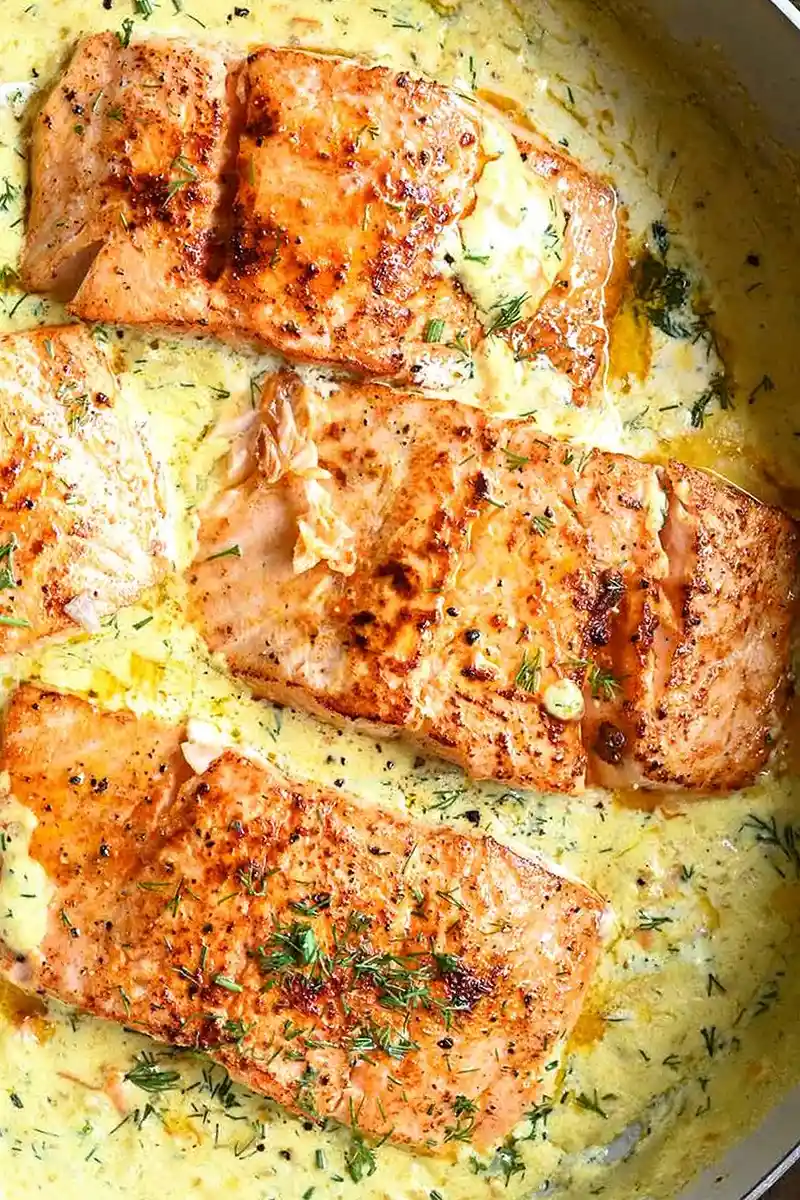
This efficient recipe delivers tender salmon fillets coated in a rich, herbal cream sauce. It is a perfect weeknight meal that balances the richness of heavy cream with the brightness of fresh dill.
List of ingredients
- 4 skinless salmon fillets – ensure they are similar in size for even cooking.
- ½ tsp garlic powder – adds a savory, concentrated depth to the crust.
- ½ tsp sweet paprika – provides a vibrant color and subtle sweetness.
- ½ tsp black pepper (divided) – used for initial seasoning and final garnish.
- ½ tsp salt (divided) – used for seasoning the fish and adjusting the sauce.
- 1 tbsp olive oil – used for searing the fillets at high heat.
- 1 tbsp unsalted butter – adds richness and helps with browning.
- 2 garlic cloves (minced) – provides an essential aromatic base.
- 1 yellow onion (diced) – adds a mild sweetness to the sauce.
- 1 carrot (peeled and grated) – adds texture and nutritional value.
- ⅛ tsp ground turmeric – provides a warm, golden hue to the sauce.
- 1 tbsp all-purpose flour – serves as the thickening agent for the sauce.
- ½ cup vegetable broth – creates a savory liquid foundation.
- ¾ cup heavy cream – ensures a velvety and rich texture.
- 1 tbsp lemon juice – balances the fats and brightens the flavor profile.
- 2 tbsp chopped dill – fresh herb for the signature aromatic finish.
- freshly ground black pepper – for a sharp, spicy finish on top.
step-by-step instructions
- Prepare the fillets: Pat the salmon fillets completely dry with paper towels. Season both sides evenly with garlic powder, sweet paprika, ¼ teaspoon salt, and ¼ teaspoon black pepper.
- Prepare the vegetables: Peel and grate the carrot. Dice the yellow onion, mince the garlic cloves, and chop the fresh dill.
- Sear the salmon: Heat the olive oil and butter in a large nonstick skillet over medium-high heat. Add the salmon fillets and sear for 3 minutes per side until golden. Remove the fillets from the skillet and set them on a clean plate.
- Sauté the aromatics: In the same skillet, add the grated carrot, minced garlic, and diced onion. Sauté for 3 minutes, then stir in the turmeric and the remaining salt and black pepper.
- Thicken the base: Add the all-purpose flour and stir well to incorporate it into the vegetables. Pour in the vegetable broth and simmer for 1 minute, stirring constantly to prevent lumps.
- Create the cream sauce: Pour in the heavy cream and bring the mixture to a gentle simmer. Stir in the chopped dill and lemon juice, then taste and adjust the salt level. If the sauce becomes too thick, stir in a small splash of additional cream.
- Combine and finish: Return the seared salmon fillets to the skillet. Simmer for an additional 3 minutes to ensure the fish is cooked through and coated. Garnish with extra fresh dill and freshly ground black pepper.
Professional Searing Techniques
Bring Fish to Room Temperature
Remove the salmon fillets from the refrigerator about 15 minutes before cooking. This prevents the center of the fish from remaining raw while the outside overcooks. It ensures a more uniform internal temperature throughout the fillet.
The Importance of Drying the Surface
Always pat the salmon dry with paper towels before adding seasonings. Excess moisture on the surface of the fish creates steam instead of a sear. A dry surface allows the Maillard reaction to occur, creating a crispy, golden-brown crust.
Monitoring the Flip Point
Avoid flipping the salmon too early to prevent it from sticking. Watch the sides of the fillet; when the color changes from pink to opaque about halfway up the side, it is time to flip. This usually happens around the 3-minute mark on medium-high heat.
Managing Pan Temperature
Use a heavy-bottomed nonstick skillet to distribute heat evenly. If the butter begins to brown too quickly or smoke, reduce the heat slightly. Consistent heat prevents the butter from burning and ensures the fish sears without scorching.
Sauce Customization and Variations
Using Different Fresh Herbs
While dill is the classic choice, you can substitute it with fresh parsley or chives for a different flavor profile. Parsley offers a clean, grassy taste, while chives provide a mild onion-like punch. Use the same quantity as the dill for a balanced result.
Lowering the Fat Content
To reduce the richness, replace the heavy cream with half-and-half or a mixture of whole milk and a small amount of cornstarch. Note that the sauce will be thinner and less velvety. For a dairy-free version, use full-fat coconut cream, though this will alter the taste.
Incorporating Leafy Greens
Add a handful of fresh baby spinach or chopped kale to the sauce just before returning the salmon to the pan. Simmer the greens for 1 to 2 minutes until they wilt. This adds color and nutrients without overpowering the dill flavor.
Adjusting the Acidity
If the sauce feels too heavy, increase the lemon juice by a teaspoon. The citric acid cuts through the fat of the cream and the oil of the salmon. Alternatively, a teaspoon of white wine vinegar can provide a sharper tang.
Recommended Side Dish Pairings
Buttered and Mashed Potatoes
The creamy sauce pairs exceptionally well with buttered baby potatoes or smooth mashed potatoes. These starches soak up the extra sauce, making the meal more filling. Season the potatoes with salt and white pepper to complement the dill.
Steamed Grains
Serve the salmon over a bed of steamed basmati rice, quinoa, or pearl couscous. Grains provide a neutral base that allows the complex flavors of the turmeric and dill to stand out. For extra flavor, cook the rice in a light vegetable broth.
Fresh Vegetable Accompaniments
Steamed asparagus, broccoli, or sautéed green beans offer a crisp contrast to the rich sauce. These vegetables provide a necessary crunch and a hit of freshness. Toss them in a bit of lemon butter to mirror the flavors in the salmon sauce.
Crusty Bread Options
Garlic bread or a toasted baguette slice is ideal for cleaning the plate of any remaining cream sauce. The crunch of the toasted bread contrasts with the tenderness of the fish. A sourdough loaf also works well due to its slight acidity.
Storage and Food Safety
Refrigeration Guidelines
Place leftover salmon and sauce in an airtight container and store it in the refrigerator for up to two days. Ensure the food is cooled slightly before sealing to prevent excessive condensation. Keep the container in the coldest part of the fridge.
Proper Reheating Methods
Reheat the dish over medium-low heat in a covered nonstick skillet. Add a tablespoon of water or cream to loosen the sauce, as dairy tends to thicken when chilled. Heat for about 7 minutes or until the internal temperature of the fish reaches 145 degrees Fahrenheit.
Why Freezing is Not Recommended
Avoid freezing this recipe because the cream-based sauce often separates upon thawing. The emulsion of fat and water in the cream breaks down, leading to a grainy texture. The salmon texture also becomes mushy after the freezing and thawing process.
Managing Fish Freshness
Always check the salmon for a mild, sea-like scent before cooking. Avoid fillets that have a strong fishy odor or a slimy texture. Store raw salmon on the bottom shelf of the refrigerator to prevent cross-contamination.
Cooking Troubleshooting
Preventing Sauce Curdling
Curdling happens when the cream is boiled too vigorously or if the acidity of the lemon juice is added to boiling cream. Keep the sauce at a gentle simmer rather than a rolling boil. Stir in the lemon juice at the very end to maintain the emulsion.
Fixing a Thin Sauce
If the sauce is too thin after simmering, allow it to cook for another 2 to 3 minutes without a lid. This allows more moisture to evaporate, naturally thickening the liquid. Alternatively, whisk in a tiny pinch of additional flour mixed with cold water.
Handling Stuck Salmon
If the salmon sticks to the pan, do not force it off with a spatula. Let it cook for another 30 to 60 seconds; the fish will naturally release from the pan once the crust has formed. Ensure the oil is shimmering hot before adding the fish.
Balancing Over-Salted Sauce
If you accidentally add too much salt, stir in an extra tablespoon of heavy cream or a squeeze more lemon juice. The fat in the cream and the acid in the lemon help mask the saltiness. Avoid adding water, as this will dilute the flavor.
Frequently Asked Questions
Can I use frozen salmon fillets?
Yes, but you must thaw them completely in the refrigerator overnight before cooking. Pat them extremely dry after thawing, as frozen fish tends to release more moisture than fresh fish. This ensures you still get a proper sear.
Which cut of salmon is best for this recipe?
Center-cut fillets are best because they have a uniform thickness, which ensures even cooking. Atlantic salmon is a popular choice for its fat content and tenderness. Sockeye salmon also works but cooks faster due to its leaner profile.
Can I use dried dill instead of fresh?
You can use dried dill, but the flavor is less bright and more concentrated. Use one tablespoon of dried dill for every two tablespoons of fresh dill. For the best results, add dried dill earlier in the sauté process to wake up the oils.
Is it possible to make this in an oven?
You can sear the salmon in a pan and then move the whole skillet into the oven to finish. However, the sauce is best made on the stovetop to control the thickening process. If using an oven, keep a close eye on the cream to prevent it from breaking.
Can I replace the vegetable broth?
Yes, you can use a mild mushroom broth or even water in a pinch. Vegetable broth provides the best balance of savory notes. Avoid using a broth with too much salt, as the sauce already contains salt and seasoned fish.
How do I know when the salmon is perfectly done?
The salmon is done when the internal temperature reaches 145 degrees Fahrenheit. Visually, the flesh should be opaque and flake easily with a fork. Avoid overcooking, as this makes the salmon dry and tough.
What if I don’t have a nonstick skillet?
You can use a stainless steel or cast iron skillet, but you must increase the amount of oil or butter. Ensure the pan is very hot before adding the fish to create a natural non-stick layer. Be prepared for slightly more cleanup.
Print
Pan-Seared Salmon with Creamy Dill Sauce
- Total Time: 30 minutes
- Yield: 4 servings 1x
- Diet: General
Description
A delicious, fail-proof dish that’s ready in just 20 minutes. The salmon is seared until crispy on the outside and juicy in the middle, then smothered in a divine sauce enhanced with fresh dill for a fine dining touch. Serve it with buttered potatoes for a quick yet satisfying dinner.
Ingredients
- 4 skinless salmon fillets
- ½ tsp garlic powder
- ½ tsp sweet paprika
- ½ tsp black pepper (divided)
- ½ tsp salt (divided)
- 1 tbsp olive oil
- 1 tbsp unsalted butter
- 2 garlic cloves (minced)
- 1 yellow onion (diced)
- 1 carrot (peeled and grated)
- ⅛ tsp ground turmeric
- 1 tbsp all-purpose flour
- ½ cup vegetable broth
- ¾ cup heavy cream
- 1 tbsp lemon juice
- 2 tbsp chopped dill (more for serving)
- freshly ground black pepper (for serving)
Instructions
- Step: Pat the salmon fillets dry. Season both sides with garlic powder, sweet paprika, ¼ teaspoon salt and ¼ teaspoon black pepper. Peel and grate the carrot. Dice the onion, mince the garlic cloves and chop the dill.
- Step: Heat oil and butter over medium high in a large nonstick skillet. Add salmon fillets and sear 3 minutes per side. Remove from skillet onto a clean plate.
- Step: Add carrot, garlic and onion. Sauté for 3 minutes. Add turmeric, and the remaining salt and black pepper.
- Step: Add flour and stir until incorporated. Add vegetable broth and simmer for 1 minute while stirring constantly.
- Step: Pour in cream, bring to a simmer. Add dill and lemon juice. Stir until combined. Taste and adjust salt. If the sauce thickens too much, add a splash of cream.
- Step: Return salmon to the skillet and simmer for 3 minutes. Finish off with dill and freshly ground black pepper. Enjoy!
Notes
For a different twist, try this recipe with chicken. To add greens, toss in a handful of spinach once the sauce is nearly done. Serve with mashed potatoes, buttered baby potatoes, rice, or crusty bread.
- Prep Time: 10 minutes
- Cook Time: 20 minutes
- Category: Main Course
- Method: Pan-searing
- Cuisine: Polish
Nutrition
- Serving Size: 1 fillet
- Calories: 481 kcal
- Sugar: 3 g
- Sodium: 499 mg
- Fat: 33 g
- Saturated Fat: 14 g
- Unsaturated Fat: 17 g
- Trans Fat: 0.1 g
- Carbohydrates: 8 g
- Fiber: 1 g
- Protein: 36 g
- Cholesterol: 152 mg