This efficient one-pan meal combines buttery salmon, roasted baby potatoes, and tender asparagus for a complete dinner. It is designed for easy weeknight preparation with minimal cleanup required.

List of ingredients
- 1 ½ pound baby potatoes – halved or quartered for even roasting.
- 1 tablespoon high heat oil – such as avocado or canola oil.
- ½ cup salted butter – softened to room temperature.
- ¼ teaspoon kosher salt – for seasoning the potatoes.
- 2 tablespoons garlic – minced or pressed.
- ½ teaspoon black pepper – divided between potatoes and butter.
- ½ teaspoon dried thyme – adds an earthy note to the salmon.
- ½ teaspoon red pepper flakes – provides a mild spicy kick.
- 1 teaspoon fresh lemon zest – for bright citrus flavor.
- 4 teaspoons lemon juice – plus optional lemon slices for garnish.
- 2 tablespoons fresh parsley – finely minced.
- 24 ounces salmon – divided into 4 filets.
- 1 ½ pounds asparagus – with woody ends trimmed off.
step-by-step instructions
- Prepare the oven and pan: Position the oven rack in the center and preheat the oven to 425ºF. Line a large rimmed sheet pan with parchment paper or aluminum foil for easy cleanup.
- Season the potatoes: Melt 2 tablespoons of butter in a medium bowl. Stir in the oil, ¼ teaspoon kosher salt, ¼ teaspoon black pepper, and 2 teaspoons of the minced garlic.
- Initial roast: Toss the baby potatoes in the butter mixture until well coated. Spread them out in a single layer on the sheet pan and roast for 20 minutes.
- Create the compound butter: While potatoes roast, combine the remaining softened butter, ¼ teaspoon black pepper, the remaining minced garlic, red pepper flakes, lemon zest, lemon juice, and parsley in a small bowl. Stir until the ingredients are fully integrated.
- Arrange the pan: Once the potatoes have roasted for 20 minutes, push them to one side of the pan. Place the asparagus on the opposite side and position the salmon fillets in the center.
- Apply seasonings: Pat the salmon flesh dry with paper towels. Place one tablespoon of the compound butter on each fillet and spread it evenly with a knife. Dollop the remaining butter mixture over the asparagus.
- Final bake: Top the salmon with lemon slices if desired. Return the pan to the oven and bake for 9-10 minutes.
- Finish and check: Use a meat thermometer to ensure the salmon reaches an internal temperature of 145ºF. Optionally, broil the pan for 30-60 seconds to brown the tops before serving warm.
Essential Preparation Techniques
Tempering Salmon for Even Cooking
Remove the salmon fillets from the refrigerator about 30 minutes before you plan to cook them. This allows the fish to reach room temperature, which prevents the exterior from overcooking before the center is done. It also helps the salmon maintain its shape during the roasting process.
Ensuring Proper Moisture Removal
Use a paper towel to pat the surface of the salmon fillets completely dry before applying the butter. Excess moisture creates steam, which can prevent the butter from adhering properly and stops the fish from searing. Dry fish ensures the compound butter stays on top and creates a better texture.
Standardizing Potato Sizes
Cut all potatoes into uniform pieces, approximately ¾ inch if using larger varieties. Consistent sizing ensures that every potato piece cooks at the same rate. This prevents the smaller pieces from burning while the larger ones remain raw in the center.
Selecting the Right Asparagus Thickness
Choose asparagus spears that are medium to thick in diameter rather than very thin ones. Thicker spears hold up better under the high heat of the oven and are more likely to remain al dente. Very thin spears may overcook and become mushy during the final baking stage.
Ingredient Substitutions and Alternatives
Using Different Potato Varieties
While baby potatoes are ideal, Yukon Gold or red potatoes work well as alternatives. If using larger potatoes, ensure they are diced into small, equal cubes to match the 20-minute initial roast time. Sweet potatoes can be used but may require an extra 5-10 minutes of roasting before adding the salmon.
Alternative Green Vegetable Options
If asparagus is unavailable, replace it with trimmed green beans or broccolini. Broccolini should be added at the same time as the salmon, but you may need to increase the final bake time by 2-3 minutes. Brussels sprouts should be halved and roasted with the potatoes for the first 10 minutes before adding the fish.
Different Fish Selection
Arctic char or steelhead trout are excellent substitutes for salmon as they have similar fat content and cooking times. If using a leaner white fish like cod or halibut, reduce the final baking time by 2-4 minutes to avoid drying out the meat. Ensure the fillets are of similar thickness for consistent results.
Butter Alternatives for Dietary Needs
For a dairy-free version, use a high-quality plant-based butter stick that is designed for baking. Ensure the substitute has a high smoke point to withstand the 425ºF oven temperature. Margarines may lack the depth of flavor provided by salted butter in this specific recipe.
Herb Variations for Different Flavors
Replace the dried thyme with dried oregano or rosemary for a more Mediterranean flavor profile. Fresh dill is another great addition to the compound butter, as it pairs naturally with salmon and lemon. Use equal proportions of fresh herbs to maintain the butter consistency.
Customizing the Flavor Profile
Increasing the Heat Level
To make the dish spicier, increase the red pepper flakes to a full teaspoon or add a pinch of cayenne pepper to the potato mixture. You can also drizzle a small amount of sriracha or hot honey over the salmon after it comes out of the oven for a sweet-heat finish.
Enhancing Citrus Brightness
For a more intense lemon flavor, add a teaspoon of fresh lime zest in addition to the lemon zest. You can also squeeze fresh lemon juice over the entire pan immediately after removing it from the oven. This adds a layer of fresh acidity that cuts through the richness of the butter.
Using Different Garlic Preparations
If you prefer a milder garlic taste, use sliced garlic cloves instead of minced garlic. For a more intense, pungent flavor, use a garlic press to create a paste. This allows the garlic to blend more seamlessly into the compound butter.
Storage and Reheating Guidance
Proper Refrigeration Methods
Store leftovers in an airtight container in the refrigerator for up to three days. Keep the salmon, potatoes, and asparagus in separate compartments or layers to prevent the fish from making the vegetables overly soggy. Ensure the food is cooled slightly before sealing the lid.
Optimal Reheating Techniques
The best way to reheat this meal is in the oven or an air fryer at 300°F for 5-8 minutes. This preserves the texture of the potatoes and prevents the salmon from becoming rubbery. Avoid using a high-power microwave, as it often overcooks the fish and makes the asparagus limp.
Preventing Overcooked Fish During Reheat
When reheating salmon, add a small pat of fresh butter or a teaspoon of water to the pan. This introduces moisture that steams the fish gently as it warms up. Remove the salmon from the heat as soon as it is warmed through to avoid losing the flaky texture.
Advanced Planning and Preparation
Make-Ahead Compound Butter
The garlic-lemon butter can be prepared up to three days in advance and stored in the fridge. Simply roll it into a log using parchment paper or store it in a small airtight container. Let it soften for 15 minutes before applying it to the salmon.
Prepping Vegetables in Advance
You can wash and trim the asparagus and halve the potatoes several hours before cooking. Store the potatoes in a bowl of cold water in the fridge to prevent oxidation. Drain and pat them dry thoroughly before tossing them in the oil and butter mixture.
Troubleshooting Common Issues
What to Do if Potatoes Are Still Hard
If the potatoes are not tender after the initial 20 minutes, leave them in for an additional 5-10 minutes before adding the salmon. You can also increase the potato size consistency by cutting them smaller. If the salmon is done but potatoes are still firm, move the salmon to a plate and return the vegetables to the oven.
Preventing Salmon from Drying Out
Always use a meat thermometer to check for an internal temperature of 145ºF. If you do not have a thermometer, check if the salmon flakes easily with a fork at the thickest part. Remove the fish immediately once it reaches this stage, as carry-over cooking will continue to raise the temperature.
Fixing Mushy Asparagus
If your asparagus consistently comes out too soft, add it to the pan 3-5 minutes after the salmon. This staggers the cooking time and ensures the asparagus remains crisp. Avoid overcrowding the pan, as this creates steam and prevents the vegetables from roasting.
Frequently Asked Questions
Can I use frozen salmon for this recipe?
Yes, but you must thaw the salmon completely in the refrigerator overnight before cooking. Cooking salmon from frozen will result in uneven cooking, where the outside is overdone while the center remains raw. Pat the thawed fillets very dry to ensure the butter adheres.
Do I need to peel the baby potatoes?
No, the skins of baby potatoes are thin and edible, providing extra nutrients and a better texture when roasted. Scrubbing them clean under cold water is sufficient. Peeling is only necessary if you are using larger, thick-skinned potatoes.
What is the best way to measure the garlic?
Using a garlic press provides the most consistent distribution of flavor in the butter. If mincing by hand, ensure the pieces are very small so they do not burn in the high heat of the oven. For 2 tablespoons, you will typically need 4 to 6 large cloves.
Can I use a different oil for the potatoes?
Any oil with a high smoke point will work, such as grapeseed, peanut, or refined coconut oil. Avoid using extra virgin olive oil for the initial potato roast, as its lower smoke point may cause it to smoke at 425ºF. You can use olive oil if you reduce the temperature slightly, though this may affect the roast time.
Print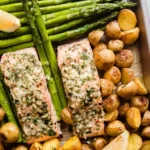
Sheet Pan Garlic Butter Salmon with Roasted Potatoes and Asparagus
- Total Time: 40 minutes
- Yield: 4 servings 1x
- Diet: Pescatarian
Description
Garlic butter salmon, asparagus, and roasted potatoes all made on one sheet pan! The easiest weeknight-friendly salmon dinner recipe!
Ingredients
- 1 ½ pound baby potatoes, halved or quartered
- 1 tablespoon high heat oil
- ½ cup salted butter, softened
- ¼ teaspoon kosher salt
- 2 tablespoons garlic, minced or pressed
- ½ teaspoon black pepper
- ½ teaspoon dried thyme
- ½ teaspoon red pepper flakes
- 1 teaspoon fresh lemon zest
- 4 teaspoons lemon juice
- lemon slices, optional
- 2 tablespoons fresh parsley, minced
- 24 ounces salmon (4 filets)
- 1 ½ pounds asparagus, woody ends removed
Instructions
- POTATOES: Position a rack in the center of the oven and preheat the oven to 425ºF. Line a large sheet pan with parchment paper or foil. In a medium bowl, melt 2 tablespoons of butter. Add the oil, ¼ teaspoon kosher salt, ¼ teaspoon black pepper, and 2 teaspoons minced garlic and stir to combine. Toss potatoes in this mixture then transfer to the sheet pan and spread the potatoes out. Roast the potatoes for 20 minutes.
- SALMON + ASPARAGUS: While potatoes are roasting, add the remaining softened butter to a small bowl, add ¼ teaspoon black pepper, minced garlic, red pepper flakes, lemon zest, lemon juice, parsley, and stir to combine. When the potatoes are done, push to one side of the sheet pan. Place the asparagus on the other side. Place the salmon fillets in the center and make sure to pat the flesh dry. Then, place a tablespoon of the prepared butter on each fillet and spread with a knife. Dollop the remaining butter mixture over asparagus.
- BAKE: Top salmon with lemon slices, if desired. Place the sheet pan back in the oven for about 9-10 minutes. When the salmon is done, check to make sure it registers at least 145ºF on a meat thermometer. I like to hit the broil setting for a quick 30-60 seconds to give it a bit more color but that is optional. Serve warm!
Notes
It’s essential to remove the salmon fillets from the refrigerator at least 30 minutes prior to cooking. Cooking times may vary if you do not bring the salmon to temperature first.
- Prep Time: 10 minutes
- Cook Time: 30 minutes
- Category: Fish & Seafood
- Method: Roasting
- Cuisine: American
Nutrition
- Serving Size: 1 filet with vegetables
- Calories: 651 kcal
- Sugar: 5 g
- Sodium: 780 mg
- Fat: 38 g
- Saturated Fat: 14 g
- Unsaturated Fat: 24 g
- Trans Fat: 0 g
- Carbohydrates: 39 g
- Fiber: 8 g
- Protein: 42 g
- Cholesterol: 115 mg