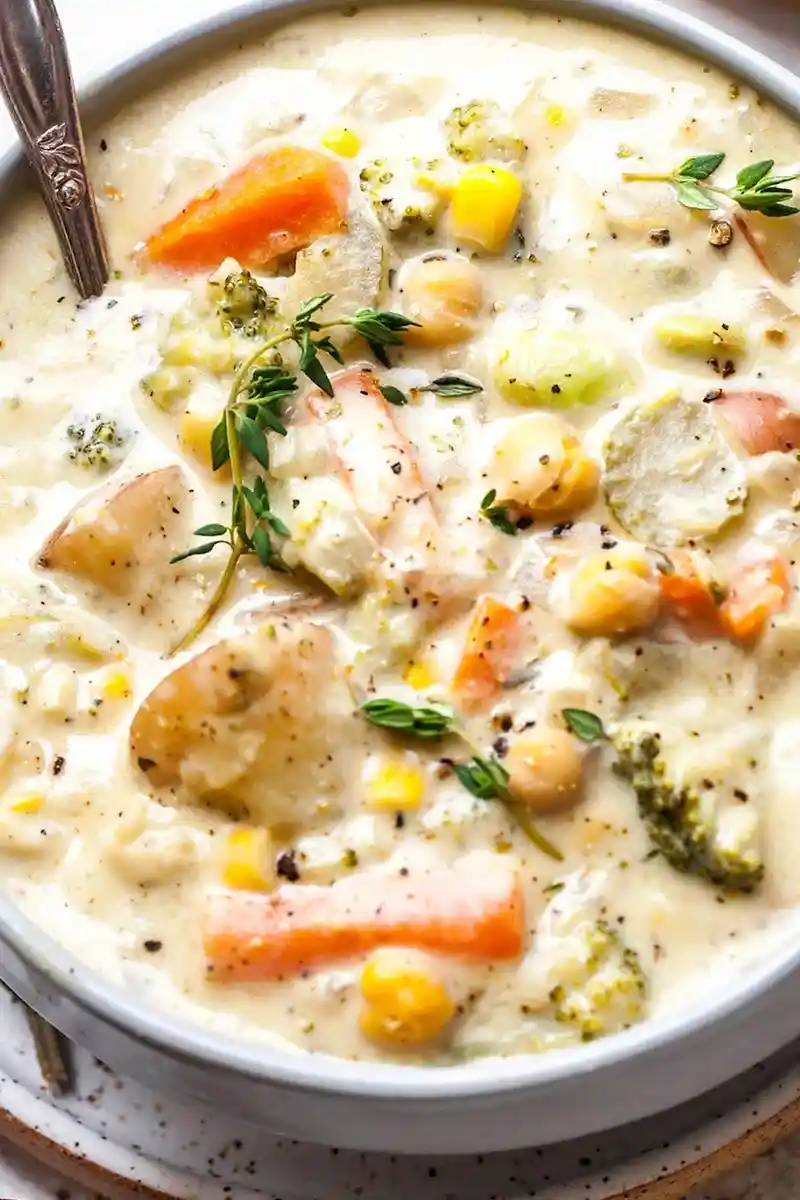
This hearty vegan vegetable soup uses a blended cashew base to achieve a rich, velvety texture without any dairy. It is a nutrient-dense, one-pot meal that is perfect for cold weather and easy weeknight preparation.
List of ingredients
- 1 cup raw cashews – used to create the creamy base.
- 2 Tbsp. extra-virgin olive oil – for sautéing the aromatics.
- 1 medium yellow onion, finely chopped – provides a foundational savory flavor.
- 1 cup diced celery – adds crunch and aromatic depth.
- 12 oz. baby red potatoes, quartered – cut into bite-size pieces if they are larger.
- 3 cloves garlic, minced – for pungent, aromatic flavor.
- 2 tsp. dried oregano – adds an earthy, herbal note.
- 1 tsp. kosher salt – to enhance all the flavors.
- 3/4 tsp. cracked black pepper – for a mild spicy kick.
- 8-10 sprigs fresh thyme – provides a fresh, woody aroma.
- 1 (1-lb.) bag mixed frozen vegetables – California Blend or Garden Blend work best.
- 1 (15-oz.) can chickpeas, rinsed and drained – for added plant protein and fiber.
- 4 cups lower-sodium vegetable broth – the liquid base for the soup.
step-by-step instructions
- Soak Cashews: Place raw cashews in a bowl and pour in 2 cups of hot water. Let them soak while you prepare the rest of the ingredients to ensure they blend smoothly.
- Sauté Aromatics: Heat olive oil in a large soup pot or Dutch oven with a lid over medium heat. Add the chopped onion and celery, cooking for 5 to 6 minutes until they become softened.
- Cook Base Vegetables: Add the quartered potatoes, minced garlic, dried oregano, and fresh thyme sprigs. Stir frequently and cook for another 5 minutes to allow flavors to merge.
- Incorporate Mix-ins: Stir in the frozen mixed vegetables, drained chickpeas, salt, and black pepper.
- Simmer the Soup: Pour in the vegetable broth and bring the mixture to a boil, scraping the bottom of the pot to release any browned bits. Reduce the heat to medium-low, cover partially, and simmer for 20 to 25 minutes until the potatoes are tender.
- Blend the Cream: Transfer the soaked cashews and their soaking liquid into a blender. Blend on high speed until the mixture is completely smooth and resembles cashew milk.
- Thicken the Soup: Pour the blended cashew mixture into the pot. Simmer gently without a lid for about 8 to 10 minutes until the soup reaches your desired thickness.
- Final Touch: Remove the bare thyme stems from the pot. Adjust the salt and pepper to taste, then ladle into bowls and add your favorite garnishes.
Ingredient Selection Guide
Choosing Between California and Garden Frozen Blends
A California blend typically includes cauliflower, broccoli, and carrots, which adds a distinct heartiness. A garden blend often features peas and corn, providing a slightly sweeter profile and different textures.
Selecting the Right Baby Potatoes
Baby red potatoes are ideal because their waxy texture helps them hold their shape during simmering. If you use yellow potatoes, ensure they are cut into uniform sizes to avoid some pieces becoming mushy while others stay hard.
The Importance of Raw Cashews
Always use raw, unsalted cashews for the cream base to avoid an overly salty or roasted taste. Raw cashews blend into a neutral, creamy liquid that mimics heavy cream perfectly.
Using Low-Sodium Vegetable Broth
Using a lower-sodium broth allows you to control the salt level of the final dish. This prevents the soup from becoming too salty as the liquid reduces during the final thickening stage.
Nutritional Substitutions
Using Full-Fat Coconut Milk for a Nut-Free Version
If you have a nut allergy, replace the 1 cup of cashews and soaking water with 1 cup of full-fat canned coconut milk. This provides a similar creaminess, though it may add a very subtle coconut flavor to the soup.
Replacing Potatoes with Cauliflower for Low-Carb Needs
To reduce the carbohydrate count, swap the baby red potatoes for one medium head of cauliflower cut into small florets. This keeps the chunky texture of the soup while significantly lowering the starch content.
Swapping Chickpeas for Other White Beans
While chickpeas provide a great bite, you can use Cannellini, Great Northern, or navy beans. These white beans blend well with the creamy base and offer a similar protein and fiber profile.
Using Dried Thyme Instead of Fresh
If fresh thyme is unavailable, use 1 teaspoon of dried thyme. Because dried herbs are more concentrated, you only need a small amount to achieve the same earthy flavor.
Advanced Cooking Techniques
Properly Sautéing the Aromatic Base
Cook the onions and celery until they are translucent rather than browned. This ensures the base flavor is sweet and savory without introducing any bitter burnt notes to the broth.
Achieving a Perfectly Smooth Cashew Cream
Use a high-speed blender and blend for at least 60 seconds to ensure no grit remains. If your blender is less powerful, you can strain the mixture through a fine-mesh sieve before adding it to the pot.
Deglazing the Pot for Depth of Flavor
When you add the broth, use a wooden spoon to scrape the bottom of the pot. This process, called deglazing, incorporates the caramelized vegetable bits into the soup for a richer taste.
Controlling the Simmer Temperature
Keep the soup at a gentle simmer rather than a rolling boil after adding the cashew cream. Excessive heat can cause the plant-based cream to separate or thicken too quickly.
Serving and Pairing Ideas
Enhancing the Dish with Fresh Herb Garnishes
A sprinkle of freshly chopped parsley or chives adds a bright contrast to the creamy texture. These fresh greens lift the earthy flavors of the oregano and thyme.
Pairing with Crusty Toasted Breads
Serve this soup with a side of toasted sourdough or a warm baguette. The acidity of sourdough complements the richness of the cashew cream exceptionally well.
Adding Texture with Crackers or Croutons
Crushed whole-grain crackers or homemade garlic croutons provide a necessary crunch. This contrast in texture makes the meal feel more substantial and satisfying.
Complementary Side Salad Options
A simple arugula salad with a lemon vinaigrette is a great pairing. The sharpness of the lemon cuts through the creaminess of the soup, balancing the overall meal.
Storage and Preservation
Guidelines for Refrigeration
Store leftovers in airtight glass containers in the refrigerator for up to five days. Ensure the soup has cooled significantly before sealing the lid to prevent condensation buildup.
Freezing for Long-Term Storage
This soup freezes well because it contains no dairy. Let it cool completely and transfer it to freezer-safe containers or gallon-sized freezer bags for up to three months.
Preventing Freezer Burn with Proper Headspace
Leave about one inch of space at the top of your storage container before freezing. This allows the liquid to expand as it freezes, preventing the lid from popping or the container from cracking.
Using an Ice Bath for Rapid Cooling
To cool the soup quickly before storing, place the pot in a sink filled with ice water. Stir the soup every few minutes to distribute the heat and bring the temperature down safely.
Effective Reheating Methods
Stovetop Reheating for Best Consistency
Thaw the soup in the refrigerator overnight and reheat it in a saucepan over medium heat. Stir frequently to ensure the cashew cream is evenly distributed and does not stick to the bottom.
Microwave Heating for Individual Portions
Heat individual servings in a microwave-safe bowl. Stop every 30 to 60 seconds to stir the soup, which prevents hot spots and ensures the vegetables heat through evenly.
Adjusting Liquid After Reheating
Plant-based creams often thicken as they cool. If the soup is too thick after reheating, stir in a tablespoon of water or vegetable broth to restore the original consistency.
Preventing Separation During Heating
Avoid boiling the soup during the reheating process. Gently warming it ensures the emulsion of the cashew cream remains stable and smooth.
Make-Ahead Strategies
Preparing the Cashew Base in Advance
You can blend the cashew cream a day early and store it in a jar in the fridge. Simply stir it well before adding it to the simmering vegetables on the day of serving.
Pre-Chopping Vegetables for Faster Prep
Dice your onions, celery, and potatoes a few hours before cooking. Store them in separate containers to reduce your active kitchen time during the dinner rush.
Freezing in Single-Serve Portions
Freeze the soup in individual portions using silicone molds or small containers. This makes it easy to grab a single serving for lunch without reheating the entire pot.
Timing the Final Simmer
You can cook the soup up until the cashew blending step. Add the cashew cream and perform the final 10-minute simmer right before serving for the freshest flavor.
Troubleshooting Common Issues
Fixing a Soup That Is Too Thin
If the soup isn’t thick enough, simmer it uncovered for an additional 5 to 10 minutes to reduce the liquid. Alternatively, mash a few of the potatoes against the side of the pot to release more starch.
Adjusting Overly Salty Broth
If the soup tastes too salty, add a splash of water or a small amount of unsalted vegetable broth. Adding a squeeze of lemon juice can also help mask excess saltiness.
Dealing with Gritty Cashew Cream
If the cream feels gritty, it means the cashews weren’t blended enough. You can use an immersion blender directly in the pot to further smooth out the texture.
Saving Overcooked Vegetables
If the vegetables become too soft, blend a small portion of the soup and stir it back in. This turns the soft vegetables into a thickener, improving the overall body of the soup.
Frequently Asked Questions
Are frozen vegetables as nutritious as fresh?
Yes, frozen vegetables are often flash-frozen at peak ripeness, preserving their nutrients. In some cases, they can be more nutritious than fresh produce that has traveled long distances.
Is this soup naturally gluten-free?
Yes, all the ingredients used in this recipe are naturally gluten-free. Just ensure your vegetable broth brand is certified gluten-free if you have a severe sensitivity.
Can I use a slow cooker for this recipe?
You can slow cook the vegetables and broth on low for 6-8 hours. However, you must still blend the cashews separately and stir them in during the last 30 minutes of cooking.
How do I make the soup even thicker?
For a denser consistency, increase the cashew amount to 1.5 cups or blend a cup of the cooked potatoes into the cashew cream before adding it back to the pot.
Print
Creamy Vegan Vegetable Soup
- Total Time: 50 minutes
- Yield: 5 servings 1x
- Diet: Vegan, Gluten-Free
Description
Creamy Vegetable Soup (without cream) is a vegan and gluten-free favorite that comes together in one pot. Filled with fiber and plant protein, this hearty and healthy soup is pure comfort.
Ingredients
- 1 cup raw cashews
- 2 Tbsp. extra-virgin olive oil
- 1 medium yellow onion, finely chopped
- 1 cup diced celery
- 12 oz. baby red potatoes, quartered
- 3 cloves garlic, minced
- 2 tsp. dried oregano
- 1 tsp. kosher salt
- 3/4 tsp. cracked black pepper
- 8–10 sprigs fresh thyme
- 1 (1-lb.) bag mixed frozen vegetables
- 1 (15-oz.) can chickpeas, rinsed and drained
- 4 cups lower-sodium vegetable broth
Instructions
- Step 1: Place cashews in a bowl and add 2 cups HOT water. Let soak while you prepare remainder of recipe.
- Step 2: Heat oil in a large soup pot or Dutch oven with a fitted lid over medium. Add onions and celery; cook 5 to 6 minutes, until softened. Add potatoes, garlic, oregano, and thyme; cook 5 more minutes, stirring often. Stir in frozen vegetables, chickpeas, salt, and pepper.
- Step 3: Add broth and bring mixture to a boil, scrapping up any browned bits on the bottom of pan. Reduce heat to medium-low and simmer, partially covered, 20 to 25 minutes, until potatoes are tender.
- Step 4: Transfer cashews and soaking liquid to a blender and blend on HIGH until smooth. Pour cashew mixture into soup and gently simmer, uncovered, until soup starts to thicken, about 8 to 10 minutes.
- Step 5: Remove bare thyme stems and adjust seasonings as needed. Ladle soup into bowls and add garnishes of choice.
Notes
Refrigerate leftovers for up to 4 days. Freeze for up to 3 months. Thaw in the refrigerator overnight and reheat in a saucepan over medium heat or in the microwave.
- Prep Time: 10 minutes
- Cook Time: 40 minutes
- Category: Soup
- Method: Simmering
- Cuisine: American
Nutrition
- Serving Size: 2 scant cups
- Calories: 354 kcal
- Sugar: 9 g
- Sodium: 660 mg
- Fat: 16 g
- Saturated Fat: 2.5 g
- Unsaturated Fat: 13.5 g
- Trans Fat: 0 g
- Carbohydrates: 42 g
- Fiber: 9 g
- Protein: 11 g
- Cholesterol: 0 mg