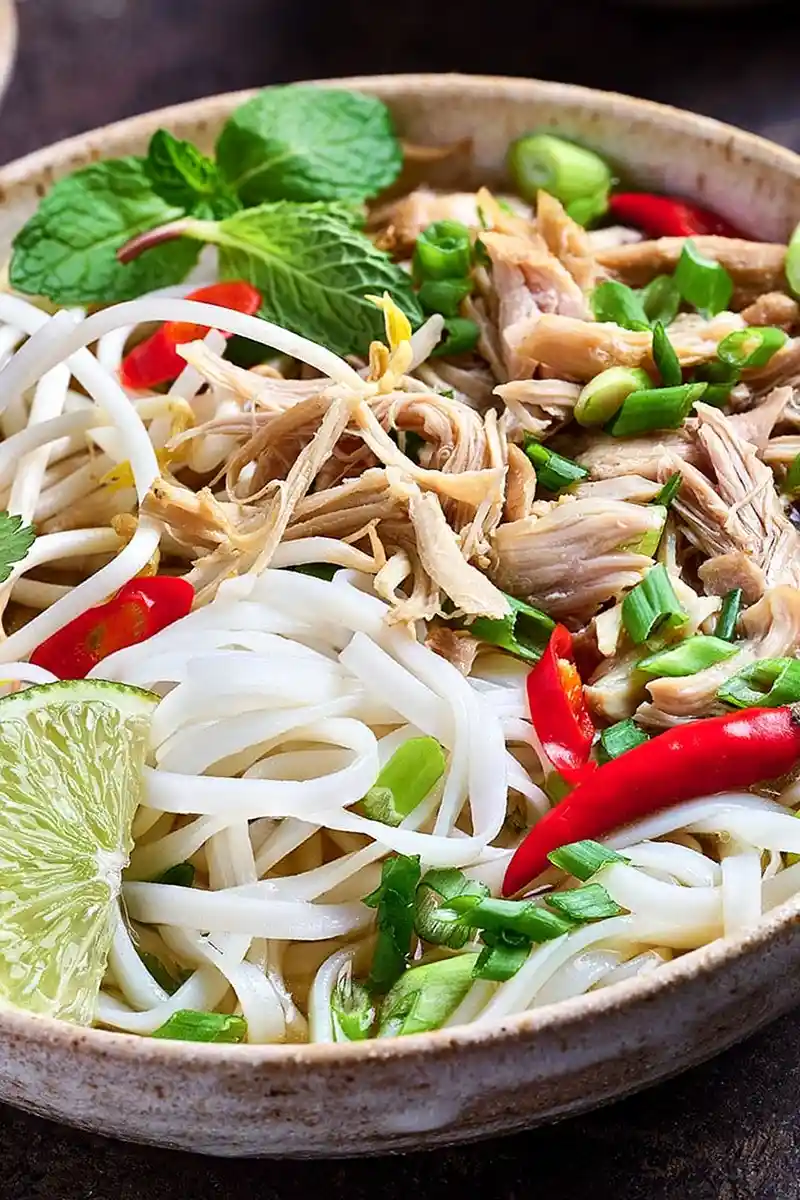
This Instant Pot Pho provides a rich, aromatic Vietnamese-style broth in a fraction of the traditional cooking time. It combines tender chicken thighs with rice noodles and fresh herbs for a comforting and nutritious meal.
List of ingredients
- 1 tablespoon canola or vegetable oil – used for sautéing aromatics.
- 1 large onion, quartered – provides a sweet, savory base.
- 1 (2-inch) piece ginger, sliced – adds warmth and zing.
- 2 cloves garlic, smashed – enhances the aromatic profile.
- 1 small bunch of cilantro – adds a fresh, herbal note to the broth.
- 3 whole cloves – contributes a pungent, warm spice.
- 2 star anise pods – provides the signature liquorice flavor of pho.
- 1 cinnamon stick – adds woody sweetness.
- 1 teaspoon fennel seeds – offers a subtle, sweet anise-like taste.
- 1 teaspoon ground coriander (or 1 teaspoon coriander seeds) – adds a light, citrusy flavor.
- 1/2 teaspoon black peppercorns – provides a mild, spicy bite.
- 6 chicken thighs, bone-in, skin off – ensures a rich broth and juicy meat.
- 5 cups chicken stock – the primary liquid base for the soup.
- 2 tablespoons fish sauce – adds essential salty and umami depth.
- 1 1/2 teaspoons brown sugar – balances the salty and spicy notes.
- Kosher salt and freshly ground black pepper – adjusted to taste.
- 8 ounces dry rice noodles – the traditional gluten-free noodle base.
- 1 cup bean sprouts – adds a fresh, crunchy texture.
- 2 cups mixed fresh herbs (fresh Thai basil leaves, fresh torn mint leaves, cilantro) – provides aromatic freshness.
- 1/4 cup scallions, thinly sliced – used for a mild onion garnish.
- 1-2 Thai bird chili pepper, thinly sliced – adds heat for those who prefer spice.
- 1-2 limes, cut into wedges – provides essential acidity to brighten the broth.
step-by-step instructions
- Sauté Aromatics: Set your Instant Pot to the saute setting. Heat the canola oil, then add the quartered onion, sliced ginger, and smashed garlic. Cook while stirring frequently until the vegetables are browned, which usually takes about 4-5 minutes.
- Toast Spices: Stir in the cilantro, whole cloves, star anise pods, cinnamon stick, fennel seeds, coriander, and black peppercorns. Press the cancel button to turn off the saute function.
- Pressure Cook: Add the bone-in chicken thighs, chicken stock, fish sauce, brown sugar, 1/2 teaspoon of salt, and 2 cups of water into the pot. Select the manual setting and cook on high pressure for 18 minutes. Once the timer finishes, perform a quick-release to vent the pressure according to your manufacturer’s instructions.
- Prepare Chicken: Open the pressure cooker lid and transfer the cooked chicken thighs to a plate. Use two forks to shred the meat or slice it thinly, and discard the bones. Set the meat aside for serving.
- Refine Broth: Strain the broth through a fine-mesh sieve lined with cheesecloth to remove all solids and discard them. Skim any excess fat from the surface of the liquid and discard it. Season the broth with salt and pepper, or add more fish sauce if more depth is needed. Return the clear broth to the Instant Pot and keep it on the warm setting.
- Cook Noodles: Bring a large pot of water to a boil. Cook the dry rice noodles according to the package instructions until tender, then drain them well.
- Assemble and Serve: Divide the cooked noodles and shredded chicken into serving bowls. Pour the hot broth over the ingredients and serve immediately. Garnish each bowl with bean sprouts, fresh herbs, scallions, sliced chili peppers, and lime wedges.
Maximizing Broth Flavor and Clarity
Toasting Whole Spices for Depth
Toasting the star anise, cinnamon, and cloves in oil before pressure cooking is critical. This process releases the essential oils trapped within the spices, creating a more complex and fragrant base. Without this step, the spices may taste raw or muted in the final soup.
Utilizing Bone-In Chicken Thighs
Using bone-in thighs instead of boneless breasts provides a significant increase in gelatin and flavor. The marrow and connective tissue in the bones break down under high pressure, resulting in a richer, more mouth-coating broth. Dark meat also stays tender and resists drying out during the cooking process.
Effective Fat Skimming Techniques
To achieve a professional, clear broth, it is important to remove the oil that rises to the top. You can use a wide spoon to skim the fat or use a piece of paper towel gently touched to the surface. This ensures the broth tastes clean and the flavors of the spices are not masked by excess grease.
The Role of Cheesecloth Straining
A simple sieve is often not enough to catch the small fragments of coriander seeds or fennel. Lining your sieve with a double layer of cheesecloth ensures that every bit of sediment is removed. This results in a translucent, polished broth that is characteristic of authentic Vietnamese pho.
Rice Noodle Preparation Guide
Choosing the Right Noodle Width
For chicken pho, medium-width flat rice noodles are traditional. If you use noodles that are too thin, they may overcook and break during the assembly process. If they are too thick, they may not absorb the broth as effectively.
Preventing Noodle Mushiness
Rice noodles cook very quickly and can become gummy if left in boiling water too long. It is best to cook them slightly under the package directions. Since they will be placed in steaming hot broth, they will finish softening in the bowl without becoming mushy.
Avoiding Noodle Clumping
Once drained, rice noodles tend to stick together due to their starch content. To prevent this, you can rinse them briefly under cold water or toss them with a tiny amount of neutral oil. This keeps the strands separate and makes the dish easier to eat.
Timing the Boil for Service
Noodles should be cooked as close to serving time as possible. If they sit for too long before the broth is added, they will lose their elasticity. Coordinate the noodle boiling with the final straining of the broth to ensure maximum freshness.
Customizing Toppings and Garnishes
Balancing Acidity with Fresh Lime
The rich, fatty nature of the chicken broth requires a sharp contrast to feel balanced. Squeezing fresh lime wedges into the bowl right before eating cuts through the richness. This acidity brightens the herbal notes and enhances the savory elements of the fish sauce.
Incorporating Fresh Thai Basil and Mint
Thai basil provides a distinct anise-like flavor that complements the star anise in the broth. Fresh mint adds a cooling element that offsets the heat of the chilies. Using a combination of at least two different fresh herbs ensures a more authentic and layered taste.
Managing Heat with Bird’s Eye Chilies
Thai bird’s eye chilies are significantly hotter than jalapeños. If you prefer a milder heat, remove the seeds from the chilies before slicing. For those who enjoy a spicy kick, adding several thin slices directly into the broth allows the heat to infuse the liquid.
The Texture of Bean Sprouts
Bean sprouts provide a necessary crunch that contrasts with the soft noodles and tender chicken. To keep them crisp, add them raw to the top of the bowl. The heat of the broth will slightly wilt them while maintaining their structural integrity.
Storage and Reheating Instructions
Refrigerating Broth and Meat
Store the strained broth and the shredded chicken together in an airtight container in the refrigerator for up to two days. Keeping the chicken submerged in the broth prevents the meat from oxidizing and drying out. Store the cooked noodles separately to prevent them from absorbing all the liquid.
Freezing the Pho Base
The broth and chicken can be frozen in a freezer-safe container for up to two months. When thawing, move the container to the refrigerator overnight for a slow, safe defrost. Avoid thawing in the microwave to prevent the chicken from becoming rubbery.
Proper Reheating Methods
The best way to reheat the broth is in a pot over medium heat on the stove. This allows you to skim any fat that has solidified during cooling. Avoid overheating the broth to a rolling boil, as this can cause the delicate spice flavors to dissipate.
Preparing Fresh Components for Leftovers
Never store the fresh herbs, bean sprouts, or lime wedges with the broth. These should be kept fresh in the refrigerator and added only when you are ready to serve the reheated soup. This ensures the final bowl tastes as fresh as the first batch.
Troubleshooting and Common Questions
What if my broth is too salty?
If the fish sauce or stock makes the broth overly salty, you can dilute it with a small amount of hot water. Adding an extra squeeze of lime juice can also help mask the saltiness by introducing acidity. Avoid adding more sugar, as this may make the broth taste syrupy.
Can I make this in a slow cooker?
While possible, a slow cooker will not produce the same depth of flavor in the same timeframe. To mimic the pressure cooker results, you would need to simmer the broth on low for 6-8 hours. The high pressure of the Instant Pot is what forces the spice flavors into the liquid so quickly.
How do I prevent the chicken from overcooking?
Stick strictly to the 18-minute pressure cooking time. Overcooking chicken thighs can lead to meat that falls apart too much or becomes stringy. A quick-release is essential to stop the cooking process immediately once the timer goes off.
What is a good substitute for fish sauce?
If fish sauce is unavailable, you can use a combination of soy sauce and a pinch of salt. While it won’t have the exact fermented funk of fish sauce, it provides the necessary umami. For a vegan-friendly alternative, a light soy sauce or liquid aminos works well.
Can I use chicken breasts instead of thighs?
You can use breasts, but they are much leaner and more prone to drying out. If using breasts, reduce the pressure cooking time to about 10-12 minutes to avoid a rubbery texture. For the best broth flavor, always include at least some bone-in dark meat.
Why is my broth cloudy?
Cloudiness usually occurs if the broth is boiled too vigorously or if the solids were not strained properly. Using a cheesecloth liner for your sieve is the most effective way to remove the fine particles that cause cloudiness. Skimming the foam and fat from the top also helps achieve a clearer appearance.
Print
Instant Pot Chicken Pho
- Total Time: 35 minutes
- Yield: 6 servings 1x
- Diet: Gluten-Free
Description
This easy Instant Pot Pho (pressure cooker pho) is made with tender chicken, rice noodles and fresh herbs in a rich and flavorful savory broth. This warming Vietnamese noodle soup is made in a fraction of the time thanks to the Instant Pot.
Ingredients
- 1 tablespoon canola or vegetable oil
- 1 large onion, quartered
- 1 (2-inch) piece ginger, sliced
- 2 cloves garlic, smashed
- 1 small bunch of cilantro
- 3 whole cloves
- 2 star anise pods
- 1 cinnamon stick
- 1 teaspoon fennel seeds
- 1 teaspoon ground coriander (or 1 teaspoon coriander seeds)
- 1/2 teaspoon black peppercorns
- 6 chicken thighs, bone-in, skin off
- 5 cups chicken stock
- 2 tablespoons fish sauce
- 1 1/2 teaspoons brown sugar
- Kosher salt and freshly ground black pepper (to taste)
- 8 ounces dry rice noodles
- 1 cup bean sprouts
- 2 cups mixed fresh herbs (fresh Thai basil leaves, fresh torn mint leaves, cilantro)
- 1/4 cup scallions, thinly sliced
- 1–2 Thai bird chili pepper, thinly sliced
- 1–2 limes, cut into wedges
Instructions
- Step: Set your Instant Pot to the saute setting. Heat the canola oil; add the onion, ginger and garlic. Cook, stirring frequently, until browned, about 4-5 minutes.
- Step: Stir in the cilantro, whole cloves, star anise pods, cinnamon, fennel seeds, coriander and peppercorns. Press cancel to turn the saute option off.
- Step: Add the chicken thighs, chicken stock, fish sauce, brown sugar, 1/2 teaspoon of salt and 2 cups of water into the pot. Select the manual setting and cook on high pressure for 18 minutes. When finished cooking, do a quick-release to release the pressure according to the manufacturer’s directions.
- Step: Open the pressure cooker and transfer the chicken to a plate. You can slice the chicken or using two forks, shred the chicken and discard the bones. Set the shredded chicken aside.
- Step: Strain the broth through a fine-mesh sieve lined with cheesecloth; discard the solids. Skim any remaining fat from the surface and discard; season with salt and pepper to taste. You can also season with additional fish sauce, if desired. Return the broth to the instant pot and keep warm.
- Step: In a large pot of boiling water, cook the noodles according to package instructions; drain well.
- Step: To serve, divide the noodles and shredded chicken into serving bowls. Pour the hot broth over and serve immediately, garnished with bean sprouts, fresh herbs, scallions, chili peppers and lime wedges.
Notes
Use skinless, bone-in chicken thighs for best results; chicken legs, drumsticks, or bone-in breast can also be used. Cook the noodles as close to serving time as possible. This recipe is compatible with a 6 Qt pressure cooker or larger.
- Prep Time: 10 minutes
- Cook Time: 25 minutes
- Category: Main Course, Soup
- Method: Pressure Cooking
- Cuisine: Vietnamese
Nutrition
- Serving Size: 1 bowl
- Calories: 388 kcal
- Sugar: 6 g
- Sodium: 932 mg
- Fat: 10 g
- Saturated Fat: 2 g
- Unsaturated Fat: 7 g
- Trans Fat: 1 g
- Carbohydrates: 46 g
- Fiber: 3 g
- Protein: 28 g
- Cholesterol: 103 mg